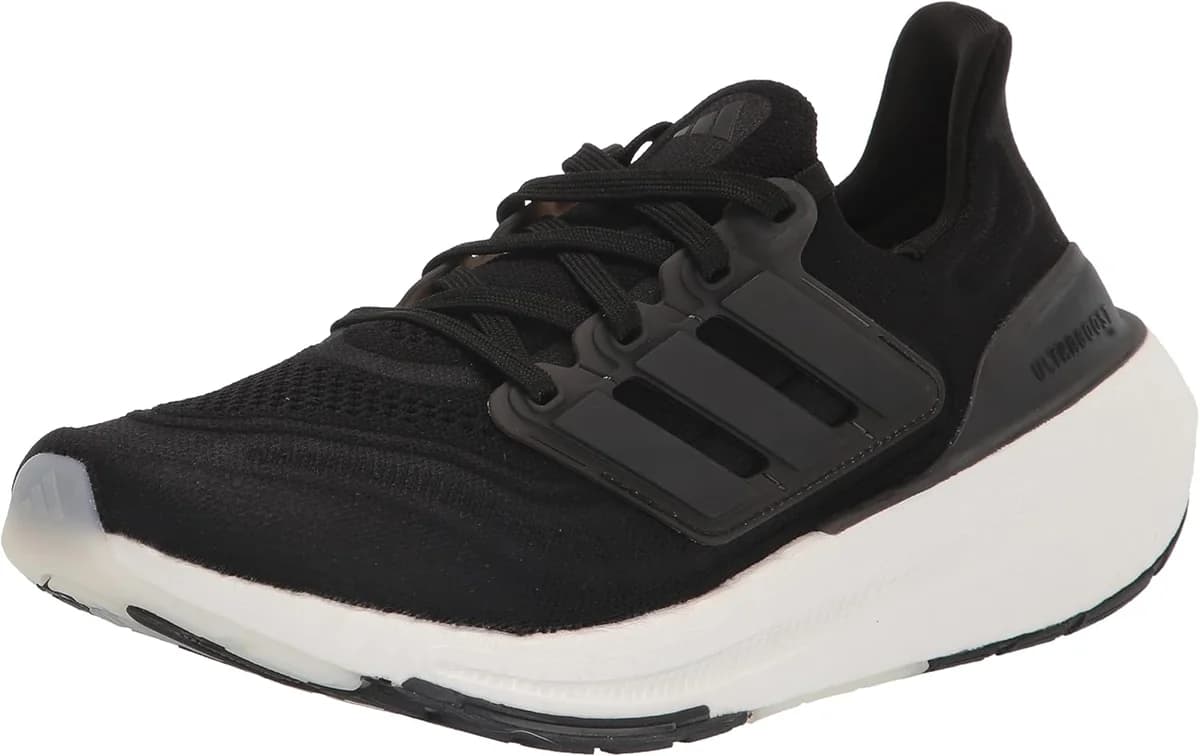
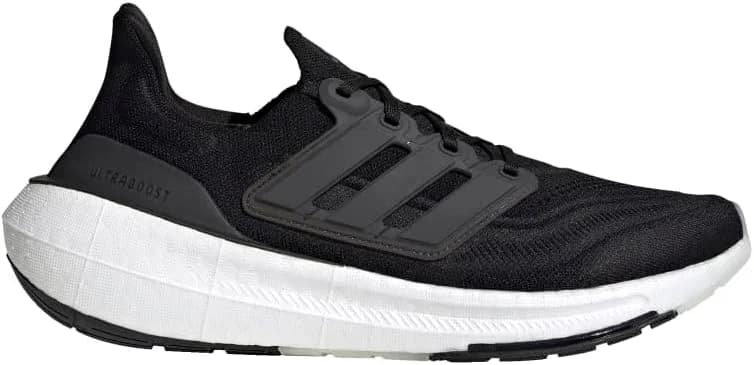
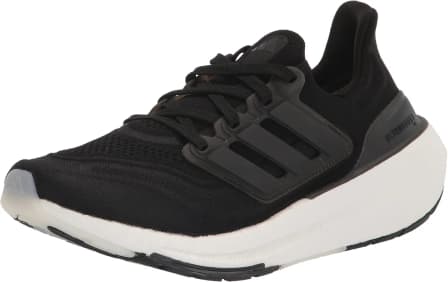
adidas Ultraboost Light
Plush, responsive cushioning and secure sock‑fit praised for comfort, but narrow fit and durability issues warrant cautious purchase.
The adidas Ultraboost Light is a cushioned daily trainer that feels like a polished upgrade to a classic — think luxe comfort for long walks and recovery miles. Aimed at runners and commuters who crave plush support without racing frills, reviewers praise its Light BOOST midsole, PRIMEKNIT+ sock-like upper, and Continental outsole for dependable grip; experts note measured weight savings and a firmer forefoot than older Boosts. Users report narrow toe fit and durability hiccups that temper value against a premium price, yet its blend of comfort and style keeps it compelling — purchase judgment hinges on fit and longevity.
Find Yours
What type of running do you mostly do?
Answer to find your best matches.

The Field
Browse top contenders, or compare all options ranked by score and key attributes.
5 Options
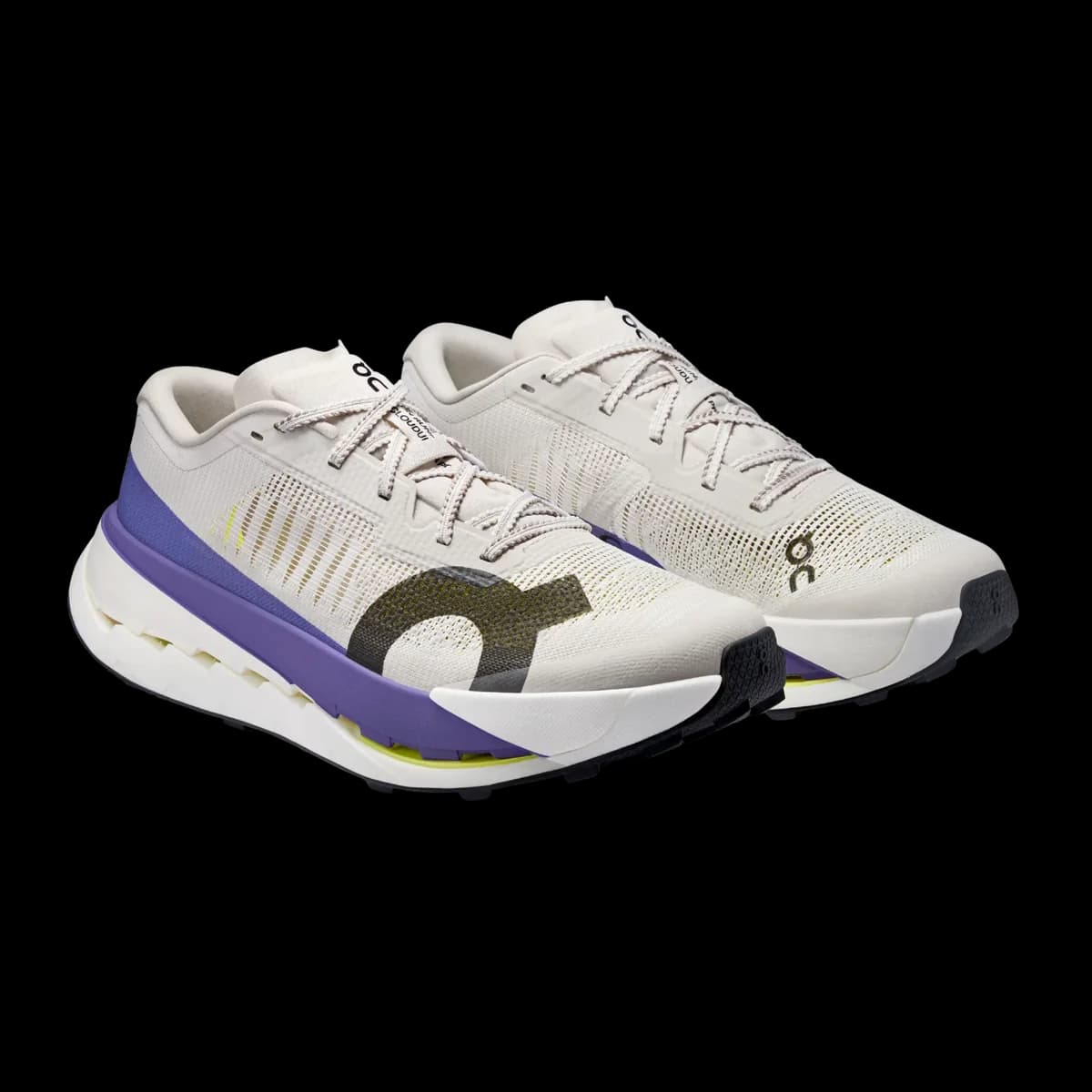
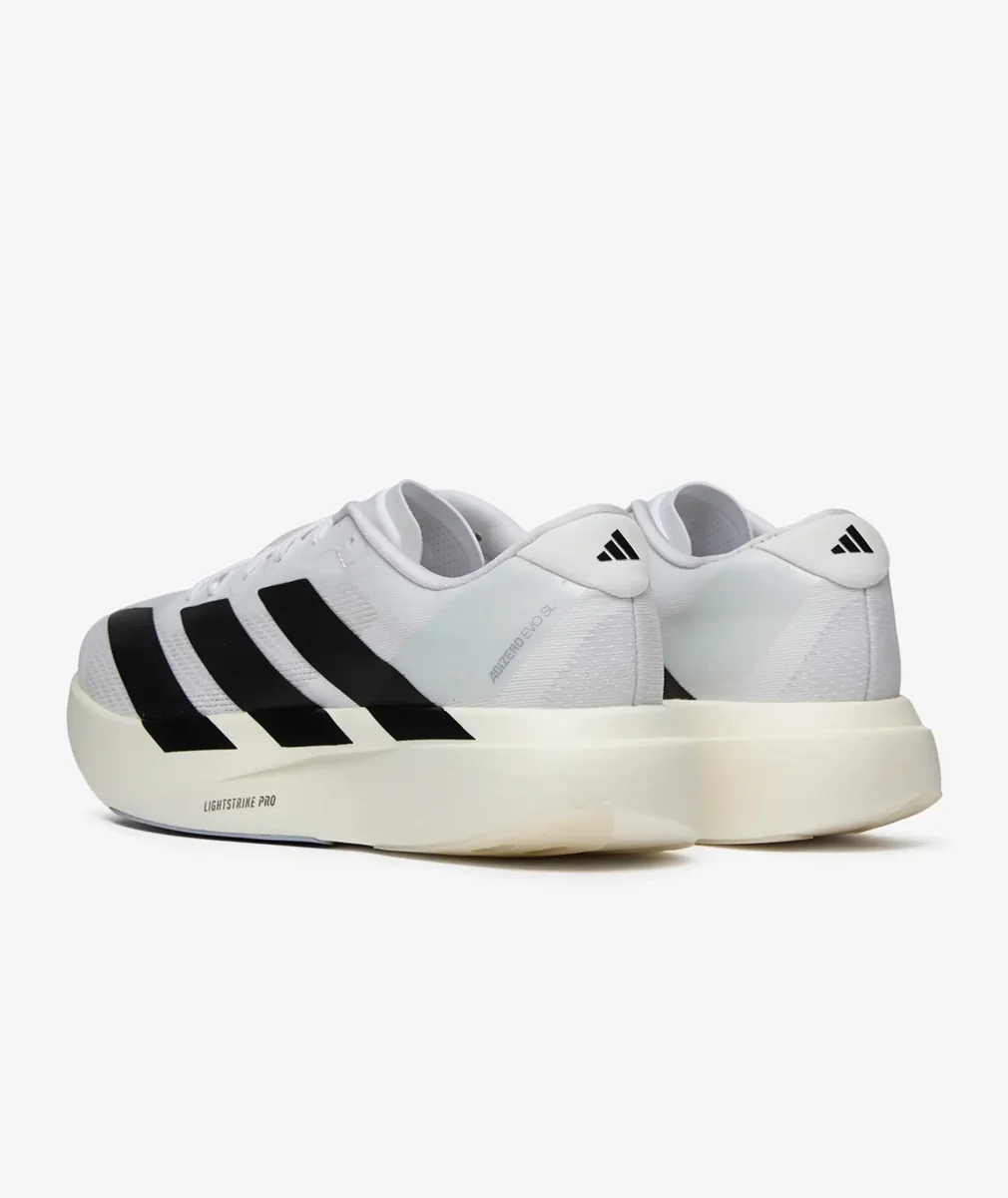
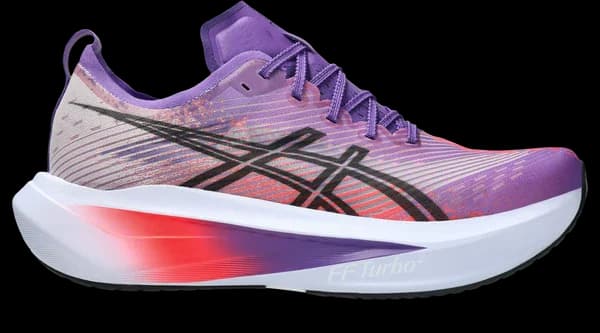
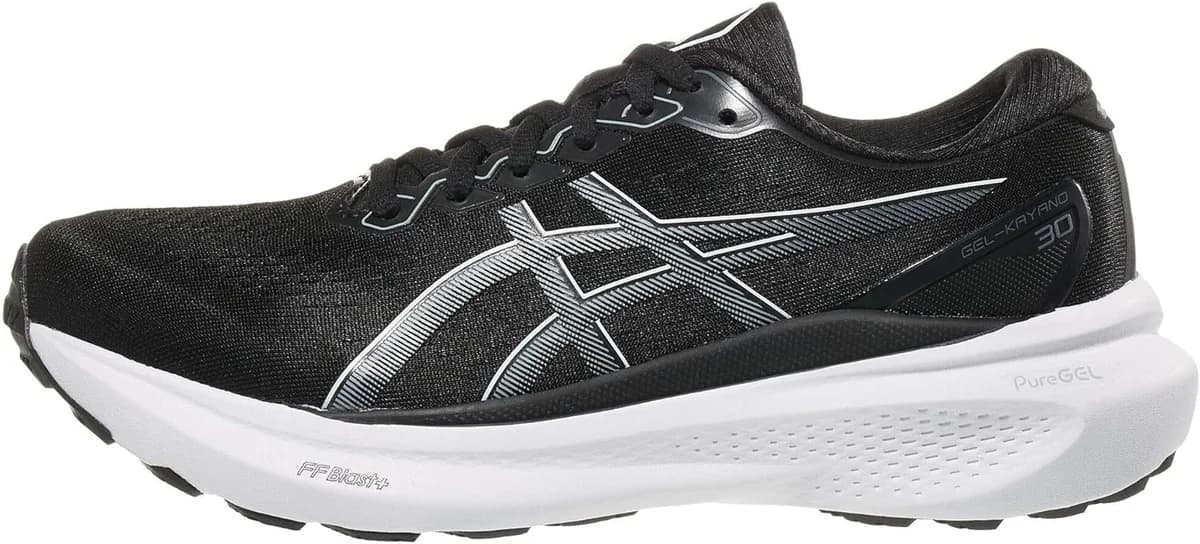

The Scoreboard
Does this improve your life? Considers, health, habits, and environmental impact.
Benefits
Soft BOOST midsole reduces impact, keeps feet comfortable during long walks or runs
Firm heel lock and arch support stabilize stride, helpful during recovery or injury rehab
Stylish PRIMEKNIT look fits casual wear, gym, and travel without standing out awkwardly
Light BOOST foam gives responsive rebound, making walks and tempo runs feel livelier
Partial recycled yarn and lower carbon footprint make wearing them feel socially responsible
Trade-Offs
Toe box runs narrow; toes feel pinched on long walks or daily wear without relief
Sock-like collar can rub Achilles during faster paces, causing hotspots or blisters over time
Firmer forefoot and high drop can leave forefoot strikers sore on repeated tempo efforts
Some users report sole separation or edge chipping after weeks, causing unstable walking or repairs
 Alternatives


Join the Circle
Where real meets deal
Know what's worth buying-and when.
Tips, special offers, and rewards for buying and sharing.

Publications
11 LEADING PUBLICATION REVIEWS

Runner’s World praises the adidas Ultraboost Light as a noticeably nimbler, lighter evolution of Boost that keeps the model’s signature plush, protective ride while shaving weight and a small share of carbon emissions. Morgan Petruny and testers highlight improved rearfoot stability (thanks to a firmer-infused Boost and the LEP midsole element) and a comfortable, cushioned feel ideal for long daily miles and recovery runs, though it’s still not a speed-focused trainer. The sock-style upper divides opinion—some find its stretchy wrap supportive, others report heel slip and Achilles rubbing—and the toebox runs a bit narrow for wider feet. Overall, the review is positive but measured: the Ultraboost Light is recommended as a luxe, versatile everyday trainer rather than a racer.
By Morgan Petruny
RunRepeat praises the adidas Ultraboost Light as a thoughtful return to the line’s running roots: plush, bouncy Light Boost foam delivers excellent energy return and comfy heel cushioning, stability from a wide midsole, and durable outsole performance. The review is upbeat but measured — applauding its long-run comfort, cold-weather softness, roomy toebox, and reliable traction, while clearly warning that the shoe is heavier than the name implies and offers noticeably less forefoot cushioning and pop. That high 11.9 mm drop favors heel strikers but can stress knees/hips and make the shoe unsuitable for mid/forefoot strikers or tempo-focused sessions. Fit runs half-size small with a snug sock-like upper that can cause hot spots at higher paces. Overall, the reviewer recommends it as a durable, daily neutral trainer best suited to heel-striking, long-distance runners who prioritize plush heel cushioning and stability over forefoot responsiveness.
By Jens Jakob Andersen
RoadTrailRun praises the adidas Ultraboost Light as a meaningful, well-executed update that finally turns the iconic Ultraboost into a genuinely runnable trainer. The multi-tester panel is upbeat about the dramatic ~2–2.7 oz weight drop, the livelier Light Boost TPU foam, secure Primeknit upper, and the stable, well-matched LEP plate/outsole geometry that favors heel strikers and delivers quick transitions. Critics consistently note the thin forefoot—only ~20 mm stack—which limits versatility for mid/forefoot strikers and longer runs, and the shoe still isn’t among the lightest in absolute terms at ~10.3–11.3 oz. Unique insights: the rear clip is subtly effective rather than intrusive, the outsole uses a layered “crystal”/Continental rubber combo that grips well (but traps small stones), and the foam trades plushness for quicker rebound. Overall the tone is positive and measured—enthusiastic about the platform’s potential while candid about forefoot cushioning and role limitations.
By Sam Winebaum
Brandon Law from Running Shoes Guru finds the adidas Ultraboost Light a well-built, stable trainer that trims weight versus prior Ultraboosts but sacrifices the plush, bouncy cushioning many expect. He praises improved heel lockdown, smooth transitions, durability and overall stability, noting the new Light Boost midsole makes the shoe firmer and better suited to moderately paced or uptempo runs than slow, easy efforts. Criticisms focus on its firm, flat ride, relatively heavy overall mass for a modern trainer, limited breathability, lack of versatility, and high price versus softer, more energetic competitors. Law frames the Ultraboost Light as more of a durable, lifestyle-minded trainer than a top-tier performance or long-distance shoe — a refined but ultimately less fun Ultraboost that will suit runners who prioritize stability and build quality over plush comfort.
By Brandon Law
Matt Klein from DOCTORS OF RUNNING praises the Ultraboost Light as the first Ultraboost that genuinely approaches being a runnable shoe, celebrating its substantial weight reduction, cushioned rearfoot, and snappy forefoot courtesy of the new Light Boost and LEP plate. He conveys measured enthusiasm — impressed by improved daily-training performance, stability from a wide sole and heel counter, and thoughtful DPT-level analysis on how reduced mass aids running economy — while noting clear caveats: the low-volume Primeknit can feel compressive until broken in, the upper can allow some movement on faster efforts, and at ~10.3 oz (men’s 9) it’s not as light as the name implies for true speed work. Overall he recommends it as a comfortable, stable daily trainer that narrows the gap between Ultraboost casuals and proper running shoes, but not a replacement for dedicated racing models.
By Matthew Klein
Cory Smith assesses the adidas Ultraboost Light as a thoughtful, measured improvement on a beloved classic. He’s pleased that adidas trimmed weight and preserved the plush Boost-like feel, calling it “a welcome improvement” that keeps the Ultraboost character while making it better for everyday miles, recovery runs, and long runs. Testing over two months on varied paces and surfaces, Smith praises the Primeknit upper’s comfort and the updated Boost Light midsole’s responsiveness, but repeatedly notes the shoe remains relatively heavy compared with modern competitors and has a snug, low-volume toe box that may feel tight for some. His tone is appreciative but restrained: enthusiastic about incremental gains for Ultraboost fans, yet realistic that faster runners or those seeking very light trainers may prefer alternatives.
By Cory Smith
Rachael Schultz from Business Insider praises the adidas Ultraboost Light as her go-to walking shoe after testing 20 pairs over 50 miles. She’s enthusiastic about its featherlight 9.2-ounce weight, roomy breathable Primeknit+ upper, and responsive BOOST midsole that kept her feet pain-free on long walks and felt energetic with each step. Schultz cites a podiatrist to support claims about cushioning and fit, notes the shoe’s fashionable simplicity and 25 colorways, and highlights sustainability details (Parley Ocean Plastic and recycled rubber). Criticisms are measured: the knit upper may lack durability for heavy users, and the roomy fit or plastic lace closures could be problematic for very narrow or very wide feet. Overall the review is warm and approving—strongly recommending the Ultraboost Light for most walkers while honestly flagging fit and durability edge cases.
By Rachael Schultz
Christa Sgobba from SELF praises the adidas Ultraboost Light as a versatile, comfort-first everyday running shoe that doubles well for walking, travel, and low-impact workouts. She describes a month of varied real-world testing (road runs, non-technical trails, elliptical intervals, and strength sessions) and highlights its women-specific fit, plush yet responsive Primeknit upper, substantial foam for energy return, and surprising stability for a neutral shoe. Criticisms are measured: the shoe runs slightly large for some, lacks the pronounced “bounce” of race-focused carbon-plated models, and isn’t ideal for heavy lifting or speed workouts. Overall the tone is upbeat and appreciative—enthusiastic about its comfort, style, and multi-use appeal while honestly noting trade-offs for racers or lifters.
By Christa Sgobba
Live Science’s Nick Harris-Fry assesses the adidas Ultraboost Light as a meaningful refinement of the Ultraboost line: noticeably lighter than the Ultraboost 22, stylish, durable, and broadly useful for easy runs and casual wear. The reviewer is mildly enthusiastic—calling it the best Ultraboost in years—while staying measured about limits: the ride is firmer and less plush than competitors (Nike Invincible 3, Asics Gel‑Nimbus 25), the bulky shape and toe-box snugness curb its suitability for fast sessions or racing, and it’s pricey for a cushioned trainer. Notable insights include measured weight reduction via new Light BOOST foam (UK men’s 9 = 314g), the Linear Energy Push shank that aids transitions, gender-specific women’s fit, and Continental rubber durability. Overall the tone is appreciative but balanced—recommended for style-minded runners who want a stable, durable easy trainer, but not the top pick purely for performance or value.
By Nick Harris-Fry
Ally Head from Marie Claire UK praises the adidas Ultraboost Light as a reliably comfortable, springy, and stylish all‑rounder that finally feels noticeably lighter than previous Ultraboost iterations. Writing as a Health Editor and nine‑time marathoner who’s tested every Ultraboost since 2015, she highlights real-world gains—30% lighter construction, a perceptible 4% increase in energy return, breathable knit upper, narrow heel fit that avoided her usual blisters, and easy slip‑on convenience—while noting the grip isn’t exceptional for trail use and earlier, cheaper Ultraboost versions remain a sensible buy if weight isn’t your priority. The tone is appreciative and experienced, combining enthusiast endorsement with measured caveats and direct sourcing from adidas for design intent.
By Ally Head
John Xavier from The Hindu highlights the adidas Ultraboost Light as a comfortable, well-built city running shoe with standout heel cushioning and secure, sock-like uppers—but stops short of wholehearted praise. The reviewer is mildly enthusiastic about fit and ankle stability, noting reliable transitions between road surfaces and tidy knit construction, but criticizes the shoe’s flashy colourway and that the new Boost feels less responsive in the midfoot and forefoot. After ~40–50 km of evening road runs, the author found the shoe heavier than advertised and lacking the fore/midfoot bounce and rocker feel that would make it ideal for road runners. Overall the tone is measured and balanced: approving of comfort and stability, but reserved because of weight and uneven cushioning distribution.
By John Xavier

YouTube
13 LEADING EXPERT & INFLUENCER REVIEWS
 Seth James DeMoor
Seth James DeMoor finds the adidas Ultraboost Light comfortable and durable for easy-day runs, praising the PRIMEKNIT+ upper’s heel padding, Light BOOST cushioning, and Continental rubber outsole, but criticizes the dated midfoot “cage,” heavy weight (~282g/10 oz), and steep €190/$190 price—overall a measured, favorable recommendation.
Seth FowlerSeth Fowler praises the adidas Ultraboost Light as a notably comfortable update—highlighting the new Light BOOST midsole, PRIMEKNIT+ upper, soft heel pillows, and Continental outsole—while offering measured reservations about pricing, reduced breathability versus older Ultra Boosts, and a firmer ride compared to Nike ZoomX.
The Run TestersThe Run Testers find the adidas Ultraboost Light a familiar, likable update—noticeably lighter and more responsive than the Ultraboost 22, comfortable for easy runs with smooth transitions and PRIMEKNIT+ fit, but still heavy for its class, firm underfoot, and potentially narrow—best for fans of the Ultraboost line.
Road Runner SportsRyan from Ryan's Running Reviews finds the adidas Ultraboost Light a big step forward—lighter, bouncier Boost Light with PRIMEKNIT+ lockdown and Continental rubber—yet critiques its firm forefoot, pronounced 10mm drop, bulky mid-foot LEP plate, and ankle-collar irritation; he prefers the HOKA Clifton 9 as the more versatile daily trainer.
REIAlan from REI praises the adidas Ultraboost Light as a comfortable, surprisingly running-capable shoe—highlighting Light BOOST’s lighter, responsive midsole, PRIMEKNIT+ with FORGE 2.0 and the extra eyelet for a more secure fit—while noting modest, measured energy damping in the forefoot and a simple four-eyelet lace setup.
Hes KicksHes Kicks praises the adidas Ultraboost Light COLD.RDY 2.0 for its lighter Light BOOST responsiveness, roomy detached (winged) tongue, Continental WinterGrip outsole, and excellent winter warmth—calling it stylish and supportive—while warning it runs snug for some, is too warm for summer, and isn’t fully waterproof (Gore‑Tex preferred).
Dr Cy (The Running Doc)Ronnie Dock (Dr Cy) finds the adidas Ultraboost Light (Ultraboost 23) a stylish, stable, and noticeably lighter daily trainer with great lockdown and responsive bounce, but he warns it’s firmer and less plush than the Ultraboost 22—better for casual wear, gym, and medium-paced runs than long-distance cushioning.
It's Matt BMatt B praises the adidas Ultraboost Light for its snappy, protective ride, Light BOOST midsole, PRIMEKNIT+ one-piece upper and Continental rubber outsole, noting superior responsiveness (thanks to the Linear Energy Push/LIP system) and breathability versus the Nike Infinity Run 4; he still flags limited weight savings, firmer-than-expected cushioning, and occasional tongue pressure from the bootie fit.
The Sole DropSammy from The Sole Drop praises the adidas Ultraboost Light as a noticeably lighter, supremely comfortable Ultraboost with plush Light BOOST, improved stepping comfort, breathable PRIMEKNIT upper, Continental rubber outsole, and snug sock-like fit—minor critiques: pronounced heel geometry, firm plate feel, and high price (€190 / £190).
Running Shoe GeekRunning Shoe Geek praises the adidas Ultraboost Light for its lighter Light BOOST midsole, balanced medium ride, supportive PRIMEKNIT+ bootie upper, and versatile daily-training comfort, while noting a break-in period, firmer forefoot for faster paces, and that heel‑biased runners will benefit most. Overall upbeat and measured.
Elliot PageElliot Page praises the Ultraboost Light as a clear, measured improvement—lighter, more comfortable, with refreshed Light BOOST, PRIMEKNIT+ upper and Continental rubber outsole—while noting modest visual changes, questionable claimed "30% lighter" math, high price, and that owners of UltraBoost 21/22 may not need to upgrade.
cowfreekicksCal Free Kicks finds the Ultraboost Light competent but underwhelming: he praises the PRIMEKNIT+ upper, heel padding, LEP propulsion and lighter Boost midsole, yet calls the ride firmer and less "cloud-like," notes only modest overall weight savings (~330 g), limited breathability, and rates it 3/5—a measured, skeptical take.
FRESHFRESH praises the Ultraboost Light's updated Light BOOST and PRIMEKNIT+ fit, calling it stylish and similar to the Ultraboost 21, but notes minimal perceived weight reduction and snug PRIMEKNIT+—recommends trying in-store and sizing up (often a full size) to avoid tightness.

Social
2 INFLUENCER REVIEWS
 Shibani Gharat
Shibani Gharat notes she’s long used Ultraboosts and appreciates the new Ultraboost Light’s lighter Light Boost midsole, improved heel lock, stability, durability, and solid build—she’s used them for easy and 15–18 km runs—but flags the firmer ride and stiff upper that make them better for moderate paces than relaxed easy runs. Overall, she likes the shoe’s performance and durability but prefers the classic Ultraboost for comfort; recommendation is conditional—good as a daily or tempo trainer, but not her top pick for easy, cushioned miles.
 runpackfr
runpackfr highlights the Ultraboost Light’s standout featherweight feel and sock-like, elastic mesh—comfortable and great for grip thanks to the Continental sole—while noting the cushioning still feels relatively firm, a recurring Ultraboost trait. Overall, runpackfr leans positive: recommends the shoe for runners wanting a light, snug fit and reliable traction, but cautions those seeking plush, soft cushioning it may feel a bit stiff.

Store Reviews
CUSTOMER REVIEWS FROM 1 STORE
Amazon reviewers overwhelmingly praise the Ultraboost Light for its plush cushioning, lightweight feel, and everyday versatility. Many users say the shoes cushion long walks, all-day standing, and light runs without causing foot pain, and several note improved stride and reduced fatigue. Reviewers who work long shifts or logged high daily mileage highlight strong arch support and shock absorption that helped with prior foot issues. Shoppers also compliment the shoe’s looks and value, with some buying multiple pairs for rotation. At the same time, a number of customers report durability problems—peeling or crumbling foam and sole separation after weeks or months—so some buyers urge caution if you need long-lasting wear. Fit impressions vary: some callers praise a secure, snug fit while others recommend sizing up because the toe box runs narrow. A few reviewers mention the design’s trade-offs, saying the latest styling sacrificed the sleeker appearance of earlier Ultraboost generations but delivered extra lift and comfort ideal for daily wear rather than high-performance racing.
4.4 Stars / Many verified reviews

Forum Reviews
CUSTOMER REVIEWS FROM 1 FORUM
Redditors have mixed but slightly positive views on the adidas Ultraboost Light: many praise its comfort, plush Boost feel, slip-on Primeknit upper and Continental rubber outsole for walking and casual running, calling it a lightweight, comfortable everyday trainer. Criticisms focus on inconsistent Adidas sizing, firmer or degraded Boost in newer iterations, occasional heel chafing, toe-box fit issues, and that Ultraboost models are more lifestyle than true high-performance running shoes. Experienced runners often recommend alternatives for dedicated running, while casual wearers and some upgraders appreciate the comfort and would rebuy despite flaws.
Many comments

In-Depth Review

Highlights
- •Light BOOST midsole responsivenessPlush, springy cushioning with rebound
- •Sock-like PRIMEKNIT+ upper and lockdownSecure, bootie-style fit
- •Stable rearfoot and arch supportFirm heel cup and LEP geometry
- •Continental outsole tractionReliable grip across surfaces
- •Marketed as lighter BOOST constructionPerceived weight savings versus older Ultraboosts
- •Lower-carbon materials and recycled yarnPartial Parley ocean plastic content

Considerations
- •Reported premature sole and foam wearSole separation and foam chipping reported
- •Snug, low-volume toe fitMany recommend sizing up
- •Firm forefoot and high drop10–11.9mm drop feels heel-biased
- •Ankle collar can cause Achilles rubbingSock-like collar may irritate
- •Limited real-world weight savingsPerceived weight remains relatively high
- •Premium pricing relative to alternativesHigh retail cost for trainer segment
Adidas, long synonymous with cushioned classics, has retuned its Ultraboost line into a lighter, more performance-minded daily trainer—positioned as a premium pick for runners and walkers who want plush comfort without a race‑shoe feel. Built around Light BOOST TPU foam for pronounced rebound, a snug PRIMEKNIT+ bootie for lockdown, and a reworked LEP/Linear Energy Push geometry, it’s aimed at heel‑strikers, recovery miles, and style‑conscious commuters. Compared with earlier Ultraboosts it’s noticeably livelier and lighter, though reviewers flag a firmer forefoot and a higher 10–11.9 mm drop that biases the ride rearward. With a Continental rubber outsole and partial exposed foam, it balances traction and weight savings—while raising questions about long‑term wear. If you prize cushioned stability for steady paces, this shoe is worth a close look; skim the sections below on energy return, fit, support, stack height, outsole durability, and mass to see if it’s your next go‑to pair.
Midsole cushioning and energy return
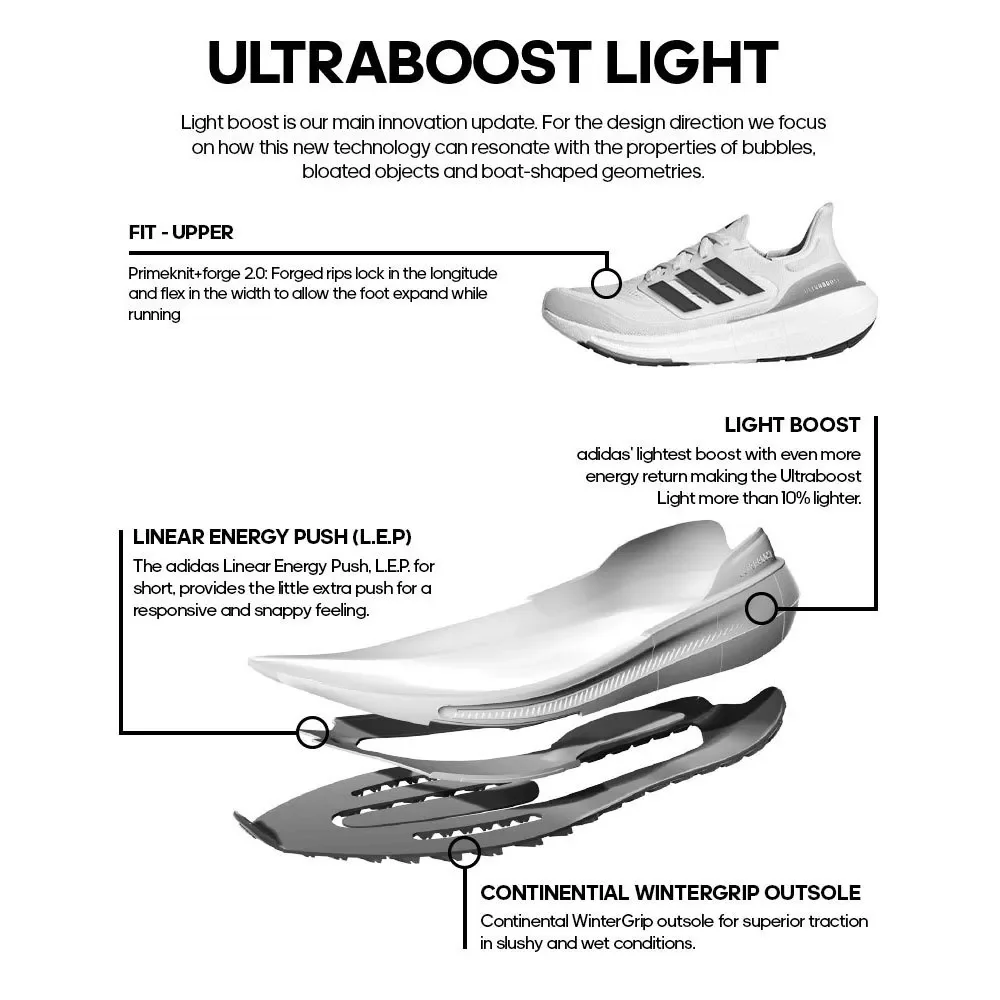
The Light BOOST midsole is the headline act: it feels springy yet slightly firmer than classic BOOST, delivering noticeable rebound in heel and forefoot (lab figures cite ~70% forefoot energy return) that translates to peppy daily miles. Runners report a livelier ride without the soggy feel—adidas’ Light BOOST TPU foam trims weight while preserving bounce, though experts flag a firmer forefoot trade-off for long tempo efforts. Overall, it’s a cushioned, efficient platform that balances plush comfort with responsive propulsion near the end of the stride.
Outsole traction and durability
Continental rubber gives predictable grip across surfaces and a reassuringly durable impression underfoot, though real-world reports vary—some users praise long-lasting traction while others cite premature sole separation or foam edge chipping after months. The partially covered outsole exposes Light BOOST foam in zones for weight savings but may trade longevity in high-wear areas; buy from reputable sellers and rotate pairs to protect your long-term value.
Upper fit and lockdown
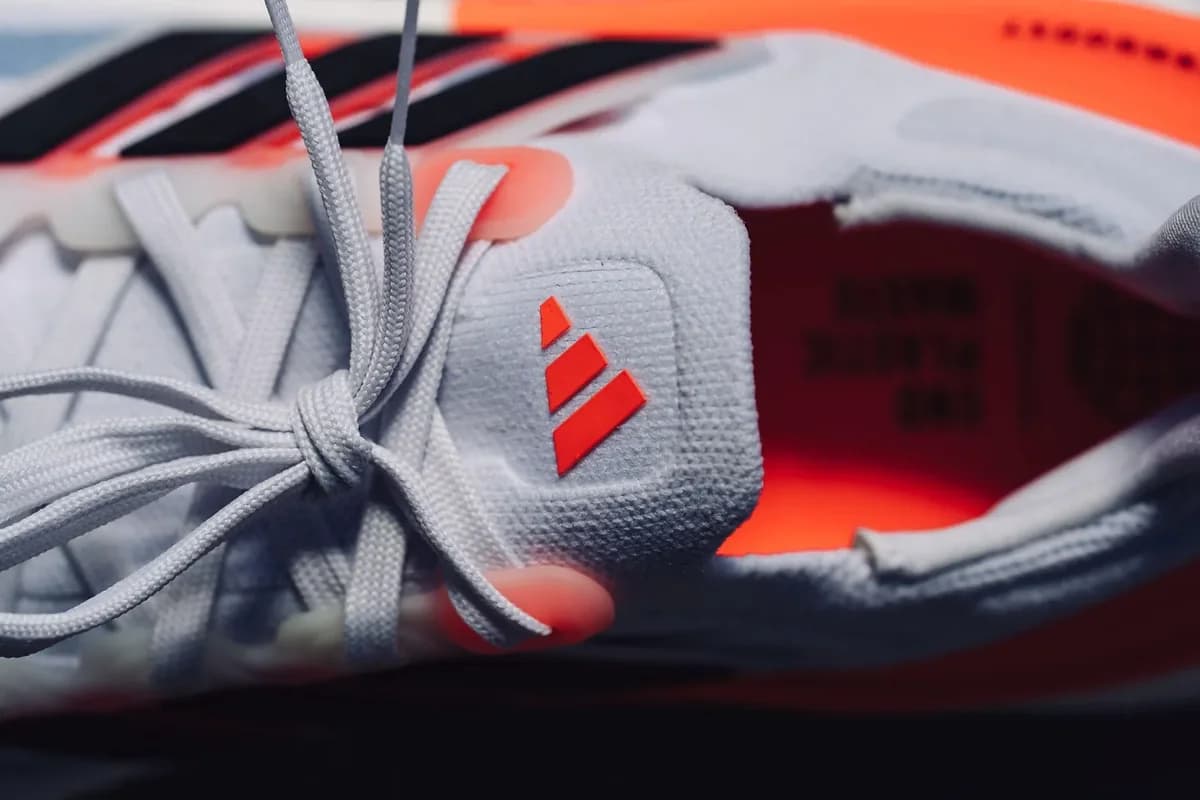
The PRIMEKNIT+ upper with FORGE 2.0 wraps the foot like a sock: secure lockdown and an extra eyelet improve midfoot hold, but the low-volume geometry can feel snug in the toe box, prompting many to try a half or full size up. Testers note minimal slippage and a tidy heel clip, yet some users report Achilles rubbing during fast reps. It’s a polished, modern fit that rewards precise sizing and delivers consistent bootie-style comfort.
Support and stability
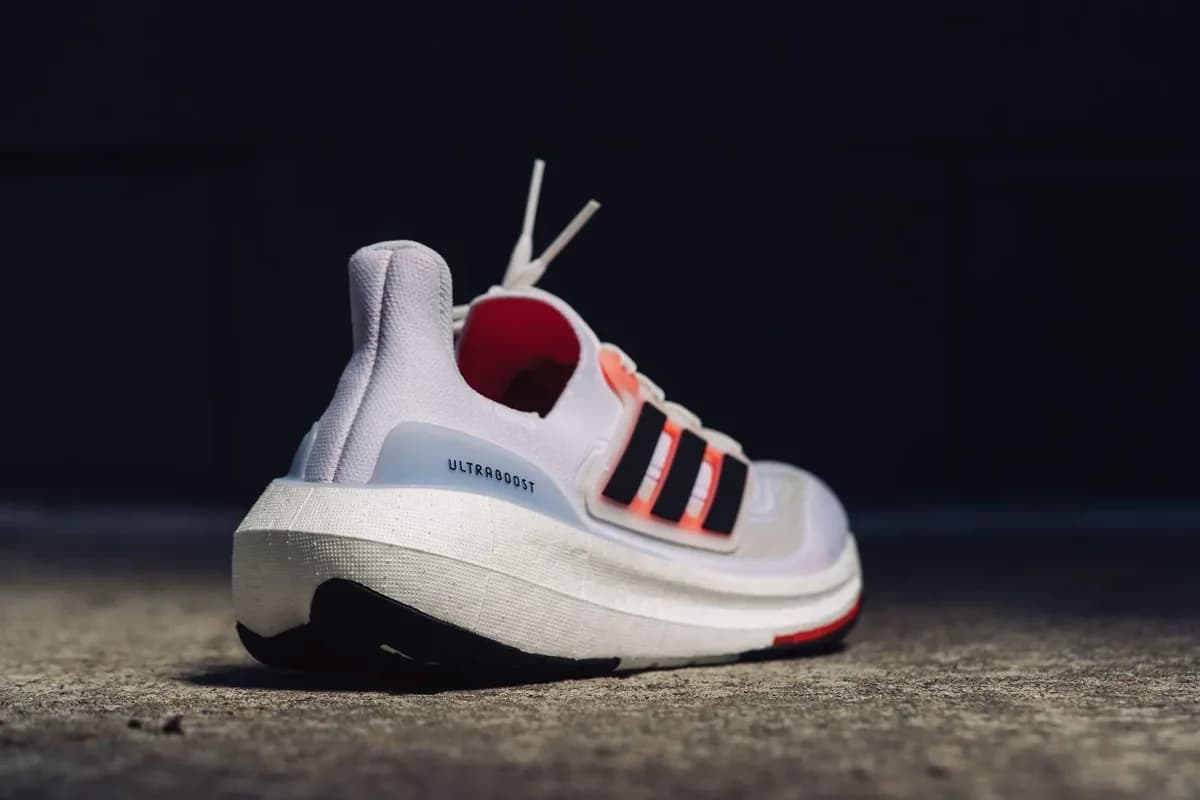
This Ultraboost leans on structure—reworked LEP/Linear Energy Push geometry and a firmer rearfoot deliver a stable, planted feel that comforts heel strikers and those needing arch support. The wide midsole and solid heel cup reduce wobble on long walks and recovery runs, though the platform’s high drop shifts load rearward, which some say stresses knees on faster efforts. For everyday training and rehab use it’s reliably stable and confidence-inspiring.
Stack height and heel-to-toe drop
With roughly 29mm heel and 19mm forefoot stack, the Ultraboost Light sports a pronounced 10–11.9mm drop that favors heel-first landings and softens impact for long miles. That geometry creates a cushioned, lifted ride but compromises forefoot feel and midfoot turnover for faster work—experts note the shoe’s heel-bias and recommend it for recovery or steady paces rather than minimalist or low-drop needs. It’s comfortable, but purpose-built.
Conclusion
Think of this as a friendly verdict: the shoe’s heart is a lively midsole that actually propels you—its Light BOOST rebound gives pep without mush, though the firmer forefoot feel curbs long tempo sessions. The knit upper hugs like a slipper with surgical intent—excellent sock-like lockdown but plan for a narrow toe box if you value room. Structurally, the LEP-backed geometry delivers dependable rearfoot stability, pairing well with the shoe’s high 10–11.9mm drop that favors heel strikers over forefoot racers. Underfoot, Continental rubber supplies solid grip, yet exposed foam zones bring real durability questions worth noting. Weight is trimmed versus earlier Ultraboosts, but don’t expect featherlight race‑shoe numbers—think refined daily trainer. Pick these if you want cushioned, stable miles and style; pass if you chase maximal forefoot pop or long-term ruggedness. Overall: a confident, calibrated everyday shoe that earns its place for steady runners and walkers.

Feature Scores
This reflects reviews and ratings from established critics, journalists, and users who have evaluated the item. Their opinions provide a comprehensive assessment.
Performance
Cushioning
4/5
Responsiveness
4/5
Durability
3/5
Traction
5/5
Fit Consistency
3/5
Value
Price to Quality Ratio
4/5
Price Accessibility
3/5
Warranty Support
3/5
Design
Aesthetic Appeal
4/5
Ergonomic Fit
4/5
Upper Craftsmanship
4/5
Health
Breathability
4/5
Arch Support
4/5
Injury Risk Mitigation
4/5
Hypoallergenic Materials
TBD
Safety
Reflective Visibility
1/5
Slip Resistance
4/5
Foot Protection
4/5
Stability Control
4/5
Sustainability
Recycled Materials Use
4/5
Product Longevity
3/5
Packaging Sustainability
3/5
End-of-Life Recyclability
TBD
Experience Style
Ease of Use
4/5
Adjustability
4/5
Customization Options
3/5
Feature Richness
4/5

Specifications
This section outlines the product's key facts, covering essential features, details, dimensions, materials, and any unique characteristics that define its functionality and usability.
Performance
Value
Design
Safety
Sustainability
Experience Style

Frequently Asked Questions
8 Questions
Find Yours
What type of running do you mostly do?
Answer to find your best matches.