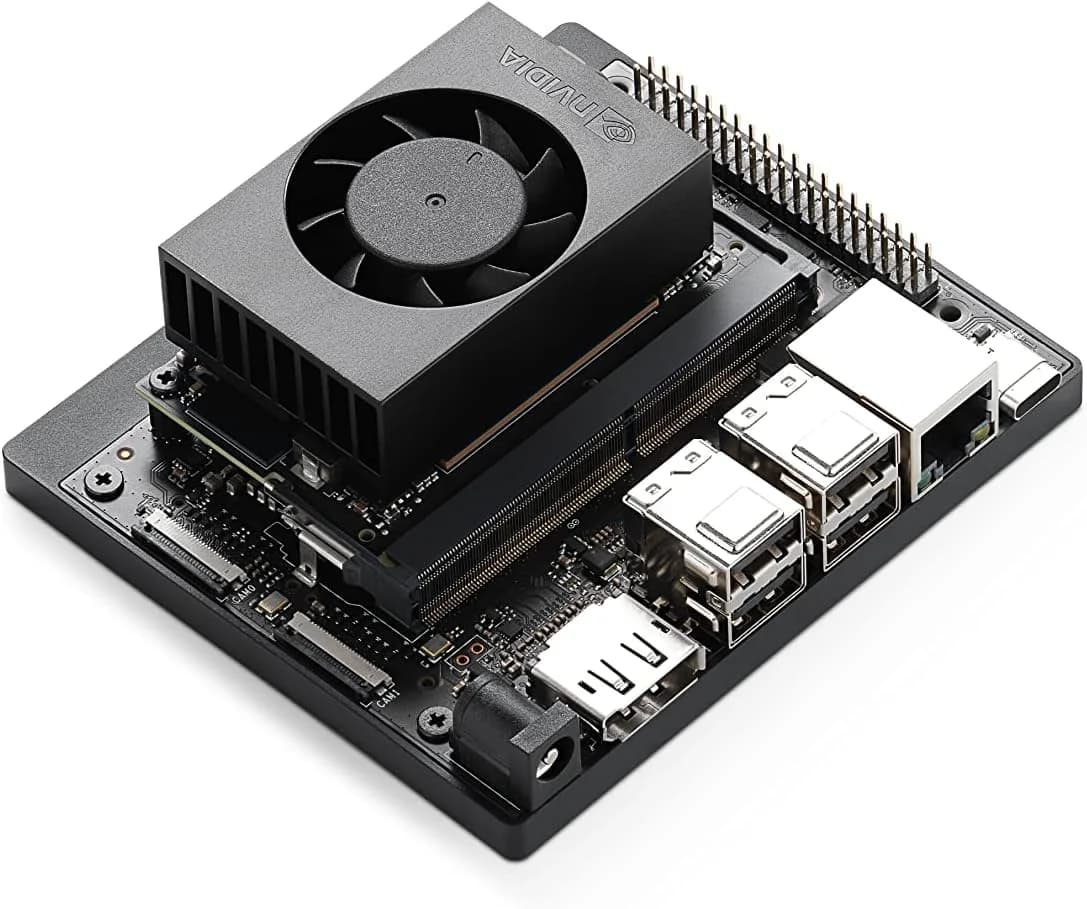
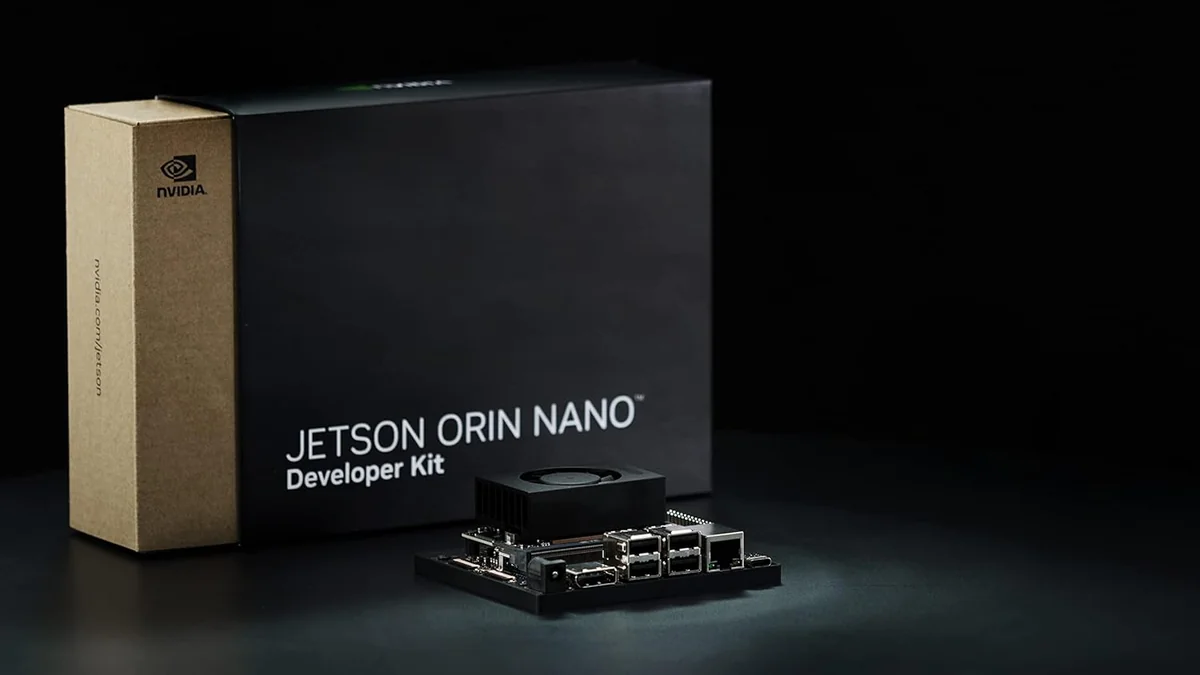
NVIDIA Jetson Orin Nano Super Developer Kit
Powerful AI performance and versatile I/O impress developers, though setup complexity challenges beginners.
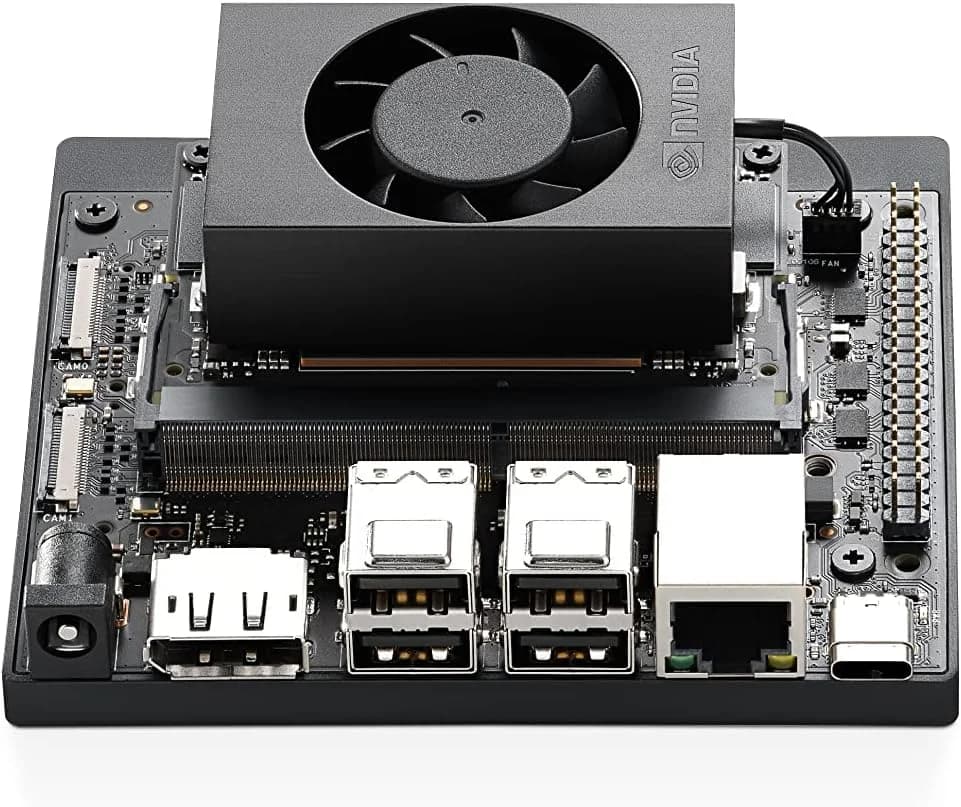
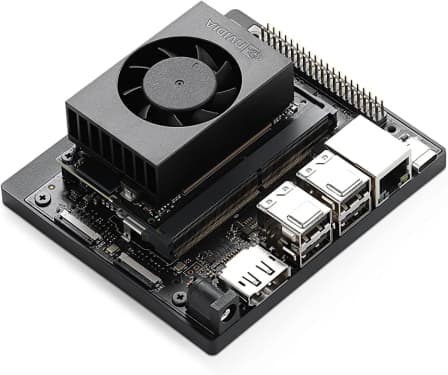
The NVIDIA Jetson Orin Nano Super Developer Kit is a compact AI powerhouse designed for developers craving serious edge computing muscle without breaking the bank. Boasting a 67 TOPS AI performance boost and an Ampere GPU with 1024 CUDA cores, it handles local large language models and vision tasks like a champ. Users applaud its modular SO-DIMM design and rich I/O options but wrestle with a steep Linux-flavored setup and firmware quirks. Its quiet fan mode demands manual tweaks to avoid throttling, balancing efficiency with power. At $249, it delivers strong value for committed tinkerers ready to unlock next-gen AI magic on the edge.
Find Yours
What is the primary purpose for your Single Board Computer?
Answer to find your best matches.

The Field
Browse top contenders, or compare all options ranked by score and key attributes.
3 Options

The Scoreboard
Does this improve your life? Considers, health, habits, and environmental impact.
Benefits
Runs LLMs locally on the Ampere module, keeping sensitive data off cloud servers.
67 TOPS Ampere compute reduces inference latency, improving real-time robotics perception and safety.
Operates in 7–25W range, enabling battery-powered devices and lower operational energy use.
Compute-module design and carrier board enable module swaps, extending lifespan and reducing replacements.
Trade-Offs
Unlike plug-and-play SBCs, JetPack and firmware flashing demand Linux knowledge, causing frustration.
Quiet fan defaults and power modes can cause throttling, heat stress, and shortened component life.
8GB RAM limits model sizes, forcing NVMe swap and SSD use, increasing wear and energy.
Semiconductor fabrication emits heavily — a drawback if prioritizing low embodied-carbon electronics.
 Alternatives


Join the Circle
Where real meets deal
Know what's worth buying-and when.
Tips, special offers, and rewards for buying and sharing.

Publications
4 LEADING PUBLICATION REVIEWS

Kangalow from JetsonHacks highlights the NVIDIA Jetson Orin Nano Super Developer Kit as a compelling upgrade, emphasizing its significant price cut to $249 alongside a notable performance boost thanks to a new 25 Watt power mode. The review conveys a generally positive and appreciative tone, celebrating the improved memory bandwidth, CPU, and GPU frequencies that deliver 30-70% better performance over the original 15 Watt mode. While the reviewer expresses some skepticism about benchmarks’ real-world relevance, they acknowledge faster inferencing times as a clear benefit. Unique insights include a detailed explanation of NVIDIA’s chip production challenges, supply chain complexities, and the rationale behind pricing and performance rollout, which adds depth and context often missing in typical reviews. The reviewer also addresses common misconceptions and consumer frustrations with pricing, urging readers to consider the broader industry realities. Overall, the review is enthusiastic yet measured, portraying the Orin Nano Super as a strong value proposition for developers seeking enhanced power at a more accessible price.
By Kangalow
Jean-Luc Aufranc from CNX Software highlights the NVIDIA Jetson Orin Nano Super Developer Kit as a significant upgrade over its predecessor, delivering 1.7 times more generative AI performance at roughly half the price, making it an attractive option for edge AI and robotics developers. The review emphasizes the impressive hardware improvements—boosted CPU and GPU frequencies, increased memory bandwidth, and a new 25W power mode—while noting that much of the performance gain comes from software updates available to existing Jetson Orin Nano users. The author provides detailed specifications and compares the kit favorably against competitors like the Radxa Fogwise Airbox, underscoring NVIDIA’s strong developer ecosystem and AI software stack. While pricing for production modules remains unclear, the review cautiously suggests the devkit is primarily aimed at developers. Overall, the tone is positive and informative, balancing enthusiasm for the product’s capabilities with practical insights about software support and market positioning.
By Jean-Luc Aufranc
StorageReview highlights the NVIDIA Jetson Orin Nano Super Developer Kit as a compact yet powerful edge AI platform that balances high performance with energy efficiency and affordability at $249. The review enthusiastically details its robust AI capabilities, including a 6-core Arm CPU and a 1024-core NVIDIA Ampere GPU delivering 67 TOPS, making it suitable for complex tasks like large language model inference. Unique insights include an innovative workaround for the device’s 8GB memory limit by pairing it with a massive 122TB Solidigm D5-P5336 QLC SSD, enabling the handling of models far larger than typically possible on such hardware. While the reviewer acknowledges performance constraints when running extremely large models, they emphasize the Nano Super’s versatility across diverse real-world applications—from robotics and smart surveillance to environmental monitoring and industrial automation. The review strikes a balanced tone, praising the device’s integration options, connectivity, and scalability, while candidly discussing limitations and power considerations, ultimately portraying the Jetson Orin Nano Super as a compelling choice for advanced edge AI deployments.
By Kevin O'Brien and Divyansh Jain
Cliff Robinson from ServeTheHome highlights the NVIDIA Jetson Orin Nano Super Developer Kit’s remarkable performance leap, achieved through a Jetpack software update rather than hardware changes. He praises the surprising 57-70% boost in INT8 TOPS and a 50% increase in memory bandwidth, all within the same 25W power envelope and existing hardware. This upgrade, delivered without requiring users to repurchase modules, is seen as a significant value proposition, especially as robotics and AI applications grow. However, Robinson also raises thoughtful skepticism about why such performance was not unlocked earlier if the hardware was always capable, suggesting a missed opportunity or strategic delay. Despite this curiosity, he views the price cut and performance gains as a positive move that could accelerate adoption in robotics development. The review balances enthusiasm for the upgrade with critical insight into NVIDIA’s approach, making it a nuanced and informative assessment.
By Cliff Robinson

YouTube
8 LEADING EXPERT & INFLUENCER REVIEWS
 Gary Explains
Gary Explains praises the NVIDIA Jetson Orin Nano Super Developer Kit for its significant 1.7x AI performance boost achieved through software updates, not new hardware, and its affordable $250 price. He highlights its ability to run large language models locally and in clusters, emphasizing flexibility and scalability for edge AI projects despite modest speed trade-offs in multi-node setups.
ETA PRIMEETA Prime praises the NVIDIA Jetson Orin Nano Super Developer Kit for its impressive AI performance boost, affordability, and versatile I/O, highlighting smooth local LLM (Llama 3.2) execution and surprising PS3 emulation on ARM. While noting some latency and software limitations, he emphasizes its value for AI development and desktop use.
Dave's GarageDave from Dave’s Garage enthusiastically praises the NVIDIA Jetson Orin Nano Super Developer Kit as a powerful, compact AI platform ideal for edge computing. He highlights its 1024 CUDA cores, seamless integration with NVIDIA’s AI ecosystem, and practical use in real-time vehicle detection and running large language models locally, while candidly sharing setup challenges and performance trade-offs.
Jeremy MorganJeremy Morgan praises the NVIDIA Jetson Orin Nano Super Developer Kit for its impressive AI performance, compact design, and quiet operation at an affordable $250 price point. He highlights smooth setup with JetPack 6 and effective handling of 1–3 billion parameter LLaMa models but notes occasional system lockups and power-related errors, framing it as a promising R&D device for edge AI experimentation.
Alex ZiskindAlex Ziskind praises the NVIDIA Jetson Orin Nano Super Developer Kit for its solid AI inference capabilities and CUDA support at a competitive price point, highlighting its suitability for prototyping generative AI models. However, he notes setup complexity, higher power consumption compared to a Mac Mini, and limited RAM as trade-offs, emphasizing its niche appeal for developers needing NVIDIA’s ecosystem and scalability.
Bijan BowenBijan Bowen praises the NVIDIA Jetson Orin Nano Super Developer Kit as a powerful, affordable edge AI platform ideal for generative AI projects. He provides a thorough, hands-on setup tutorial covering OS installation, NVMe expansion, and running local LLMs and Stable Diffusion. While setup complexity and occasional software quirks are noted, his tone remains encouraging and detailed, making it accessible for motivated beginners.
GigabyteLabsGigabyteLabs praises the NVIDIA Jetson Orin Nano Super Developer Kit for its impressive hardware and AI capabilities at an affordable price, highlighting smooth SSD installation and effective use of Jetson Containers for AI apps like Ollama. However, they caution about software instability and firmware update issues, emphasizing the need for troubleshooting and treating it as a true developer kit.
SYNACK TimeBen from SYNACK Time provides a detailed, hands-on walkthrough of the NVIDIA Jetson Orin Nano Super Developer Kit, highlighting its compact hardware, OS installation via microSD, and migration to a faster NVMe SSD. He offers practical tips on memory optimization, MAXN performance mode, and running local LLMs with jetson-containers, balancing enthusiasm with clear setup challenges.

Social
3 INFLUENCER REVIEWS
 Cytron Việt Nam
Cytron Việt Nam highlights the NVIDIA Jetson Orin Nano Super Developer Kit’s ability to run DeepSeek R1 for AI tasks offline, preserving data privacy without internet connectivity. They provide detailed setup steps and note current CPU-only performance limits and occasional inaccuracies in politically sensitive queries, showing balanced insight. Overall, Cytron Việt Nam presents the Orin Nano Super as a capable, privacy-conscious AI platform with room for improvement, especially in GPU utilization. They recommend it with practical caveats and useful resources, making it a thoughtful choice for users willing to navigate setup complexity and current limitations.
JagatReviewJagatReview highlights the NVIDIA Jetson Orin Nano Super as a significant upgrade over its predecessor, emphasizing its 1.7x improved generative AI inference performance, 50% higher memory bandwidth, and enhanced software optimizations for AI development. The review details key specs like the 8GB memory and Ampere GPU, presenting a clear, informative overview. Overall, JagatReview presents the Jetson Orin Nano Super as a compelling, cost-effective developer kit priced around $249, well-suited for AI developers seeking improved efficiency and power. While the tone is mostly factual and measured, the review conveys confidence in the product’s value without overstating its benefits or ignoring its niche focus.
AleksiAeroFPVAleksiAeroFPV shares their curiosity-driven experiment of integrating the NVIDIA Jetson Orin Nano Super into a drone, highlighting its compact AI capabilities, versatile ports, and significant price drop from $500 to $250. While the review is exploratory and enthusiastic, it focuses more on potential and setup challenges than detailed performance insights. Overall, AleksiAeroFPV’s tone is optimistic and intrigued, inviting viewers to follow along the build process rather than delivering a full verdict. The post suggests promise in the Jetson Orin Nano Super for drone applications but stops short of a definitive recommendation, emphasizing hands-on discovery over polished conclusions.

Store Reviews
CUSTOMER REVIEWS FROM 1 STORE
Amazon reviewers praise the NVIDIA Jetson Orin Nano Super Developer Kit for its impressive power and speed, especially when handling advanced AI workloads like local LLM inference, vision models, and robotics applications. Many highlight its solid build quality and compact design, noting logical placements for NVMe drives and SD cards, as well as a well-organized UEFI BIOS with TPM 2.0 support. Users successfully run diverse AI frameworks such as PyTorch and experiment with edge computing pipelines, appreciating the device’s capability to maintain stability under heavy loads. However, customers frequently report a steep learning curve during setup, describing the process as frustrating and time-consuming. They emphasize the necessity of using a real Ubuntu 22.04 host machine and Nvidia’s SDK Manager, often recommending direct NVMe installation over SD cards to avoid complications. Firmware updates pose additional challenges, with some users encountering outdated firmware out of the box and difficulties upgrading. Software support and documentation receive mixed feedback; while some find the official Nvidia examples and tutorials helpful, others struggle with broken links, buggy SDKs, and poorly maintained code samples, which hinder smooth deployment of AI applications. Reviewers also point out that the device’s fan defaults to a quiet mode, causing thermal throttling unless manually adjusted, which impacts sustained performance. The CSI-2 camera ports prove tricky to use unless cameras are UVC compatible, limiting some vision-related projects. Despite these hurdles, many users consider the kit a versatile and cost-effective platform for AI experimentation and embedded edge computing once they overcome initial setup obstacles. Overall, Amazon customers recognize the Jetson Orin Nano Super Developer Kit as a powerful and dependable tool for serious AI developers willing to invest time in mastering its software environment.
4.2 Stars / Some verified reviews

Forum Reviews
CUSTOMER REVIEWS FROM 1 FORUM
Reddit users generally view the NVIDIA Jetson Orin Nano Super Developer Kit as a compact, affordable, and capable device well-suited for AI development and edge computing tasks, with praise for its performance relative to size and price. Many appreciate its ability to run Linux smoothly and support for AI workloads like object detection and local language models, though setup can be challenging and often requires a secondary computer. Some users highlight limitations in VRAM and processing speed, noting it’s not ideal for heavy or general-purpose computing compared to traditional GPUs. Upgraders emphasize the ease of firmware updates to unlock enhanced features, while new shoppers weigh its value against more powerful but costlier alternatives, recognizing it as a specialized tool rather than a mainstream desktop replacement.
Many comments

In-Depth Review

Highlights
- •AI performance upliftMarketed as 67 TOPS
- •On‑device generative AIAdvertised to run LLMs on-device
- •Higher memory bandwidthCompany highlights 102 GB/s bandwidth
- •Configurable power envelopeDesigned to operate 7W–25W
- •Modular compute form factorPromoted as upgradeable SO‑DIMM module
- •Rich I/O and expansionPromoted as having multiple M.2/CSI

Considerations
- •Complex setup and flashingRequires JetPack flashing; Linux required
- •Firmware update frictionShips needing firmware updates
- •Documentation and SDK gapsExamples and guides often incomplete
- •Thermal defaults may throttleFan defaults quiet causing throttling
- •Limited onboard memory8 GB RAM restricts large models
- •Camera compatibility complexitiesNon‑UVC cameras need extra setup
NVIDIA’s latest edge AI marvel steps up with a 67 TOPS performance boost, cleverly unlocked through software finesse rather than fresh silicon. Designed for developers and robotics enthusiasts craving serious AI muscle on a budget, this compact powerhouse blends an Ampere GPU and 6-core ARM CPU with 8 GB of blazing-fast LPDDR5 memory at 102 GB/s bandwidth—a leap over its predecessor. Its modular SO-DIMM form factor invites future upgrades, while versatile I/O options, including dual MIPI CSI-2 camera ports and multiple M.2 slots, fuel rapid prototyping across vision AI and sensor-heavy projects. Thermal management strikes a balance between whisper-quiet operation and manual tweaks to unleash full power under load—a nod to efficiency without sacrificing punch. Whether you’re orchestrating local large language models or real-time robotics tasks, this kit’s design punches well above its weight class. Ready to see how it pulls off such feats? Let’s unpack what makes this developer kit the “mini supercomputer” turning heads in edge AI circles today.
Thermal and Power Management
The compact design packs configurable power modes from a whisper-quiet 7W up to a turbocharged 25W, enabling efficiency or raw horsepower on demand. However, default fan settings lean toward quiet operation at the cost of thermal throttling under heavy loads—manual fan adjustments become essential for sustained peak performance during intense inference runs. Despite some grumbles about cooling nuances and occasional system quirks reported by experts, this flexible thermal envelope is perfect for battery-powered robots craving energy-efficient yet potent AI action.
Memory Capacity and Bandwidth
With 8 GB LPDDR5 RAM clocking 102 GB/s bandwidth, this kit flexes serious muscle for memory-intensive AI tasks. The generous bandwidth helps keep those transformer models humming without choking on data bottlenecks—a crucial win when juggling concurrent workloads or high-res inputs. Users praise the upgrade from 68 to 102 GB/s as transformative, though power users note the fixed RAM cap can limit massive model hosting unless paired cleverly with external SSDs. Still, it balances speed and capacity smartly for advanced prototyping needs.
AI Throughput (TOPS)
Strap in for a 67 TOPS AI performance boost, a quantum leap over its predecessor, thanks to savvy software tweaks rather than new silicon. This powerhouse Ampere GPU with 1024 CUDA cores fuels impressive generative AI feats like vision transformers and local large language models, delivering smooth multitasking across pipelines. While some skeptics question real-world gains versus benchmarks, user feedback confirms the Jetson Orin Nano Super’s status as an edge computing titan. It's truly a mini supercomputer that punches well above its weight class.
I/O and Storage Expandability
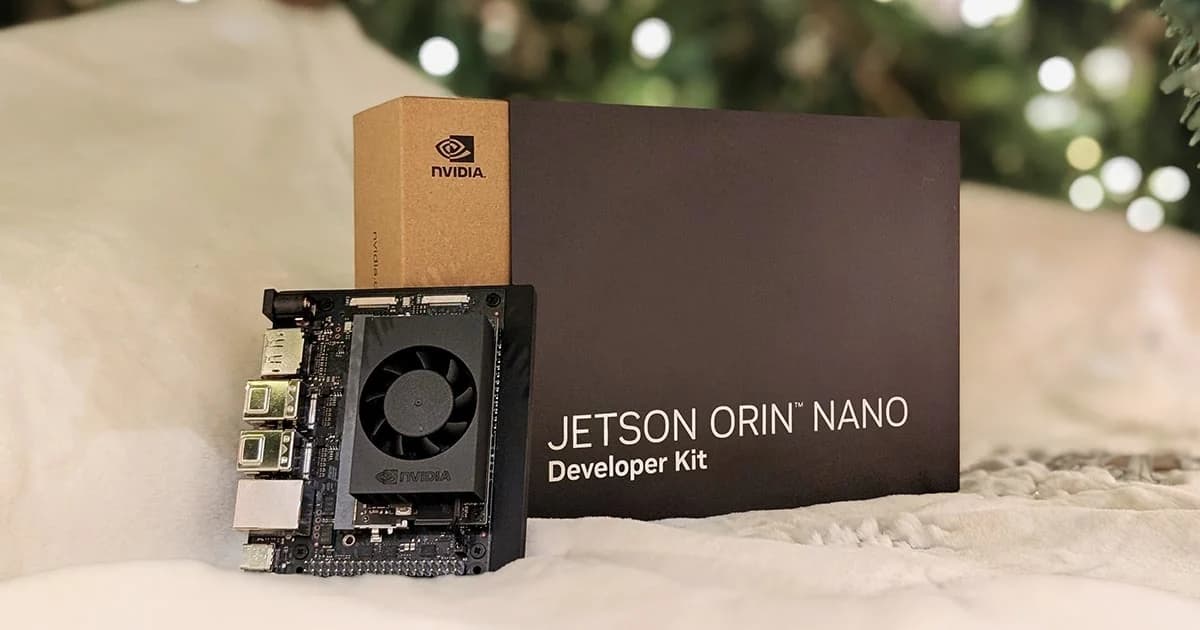
Connectivity fans rejoice: dual MIPI CSI-2 ports support multi-lane camera modules while four USB3 Type-A ports plus one USB-C feed versatile peripherals effortlessly into your setup—ideal for rich sensor arrays or speedy NVMe SSD storage expansions via M.2 slots galore (Key-M/Key-E). This expansive I/O landscape accelerates rapid prototyping workflows but demands Linux familiarity due to tricky firmware flashing steps highlighted by many reviewers; still, it empowers developers hungry for customizable edge deployments without compromise.
Conclusion
The Orin Nano Super doesn’t just raise the bar—it reinvents it with 67 TOPS of AI throughput that punches well above its compact size. Its 8 GB LPDDR5 memory and 102 GB/s bandwidth keep data flowing smoothly, crucial for juggling heavy generative AI workloads without a hiccup. While the thermal management leans quiet by default, a quick fan tweak unlocks full throttle power, perfect for those who demand both stealth and speed. The board’s generous I/O spread and M.2 slots fuel creativity, though navigating its Linux-flavored setup requires patience and some savvy hands-on time. Dual MIPI CSI-2 camera ports add versatile vision input options but can trip up if you stray from UVC standards. All wrapped in a modular SO-DIMM form factor boasting solid build quality that invites future upgrades—this kit is tailor-made for developers ready to wrestle complexity into high-performance edge magic. For those craving raw muscle fused with flexibility, this is an edge contender worth your toolkit space.

Feature Scores
This reflects reviews and ratings from established critics, journalists, and users who have evaluated the item. Their opinions provide a comprehensive assessment.
Performance
CPU Performance
4/5
GPU Performance
4/5
Memory Capacity
3/5
Thermal Management
3/5
I/O Throughput
4/5
Durability
4/5
Value
Price
5/5
Availability
4/5
Long-term Software Support
4/5
Bundled Accessories
3/5
Design
Form Factor Versatility
5/5
Build Quality
4/5
Cooling Options
4/5
Port Layout Ergonomics
4/5
Health
Material Safety Compliance
TBD
Surface Temperature
3/5
Noise Emissions
4/5
Safety
Electrical Protection
3/5
ESD Protection
3/5
Regulatory Certifications
3/5
Power Supply Safety
3/5
Sustainability
Energy Efficiency
4/5
Repairability
4/5
Recyclability
3/5
Experience Style
Out of the Box Ease of Use
2/5
Customizability
5/5
Community Documentation
4/5
Peripheral Ecosystem
4/5

Specifications
This section outlines the product's key facts, covering essential features, details, dimensions, materials, and any unique characteristics that define its functionality and usability.
Performance
Value
Design
Safety
Sustainability
Experience Style

Frequently Asked Questions
10 Questions
Find Yours
What is the primary purpose for your Single Board Computer?
Answer to find your best matches.