
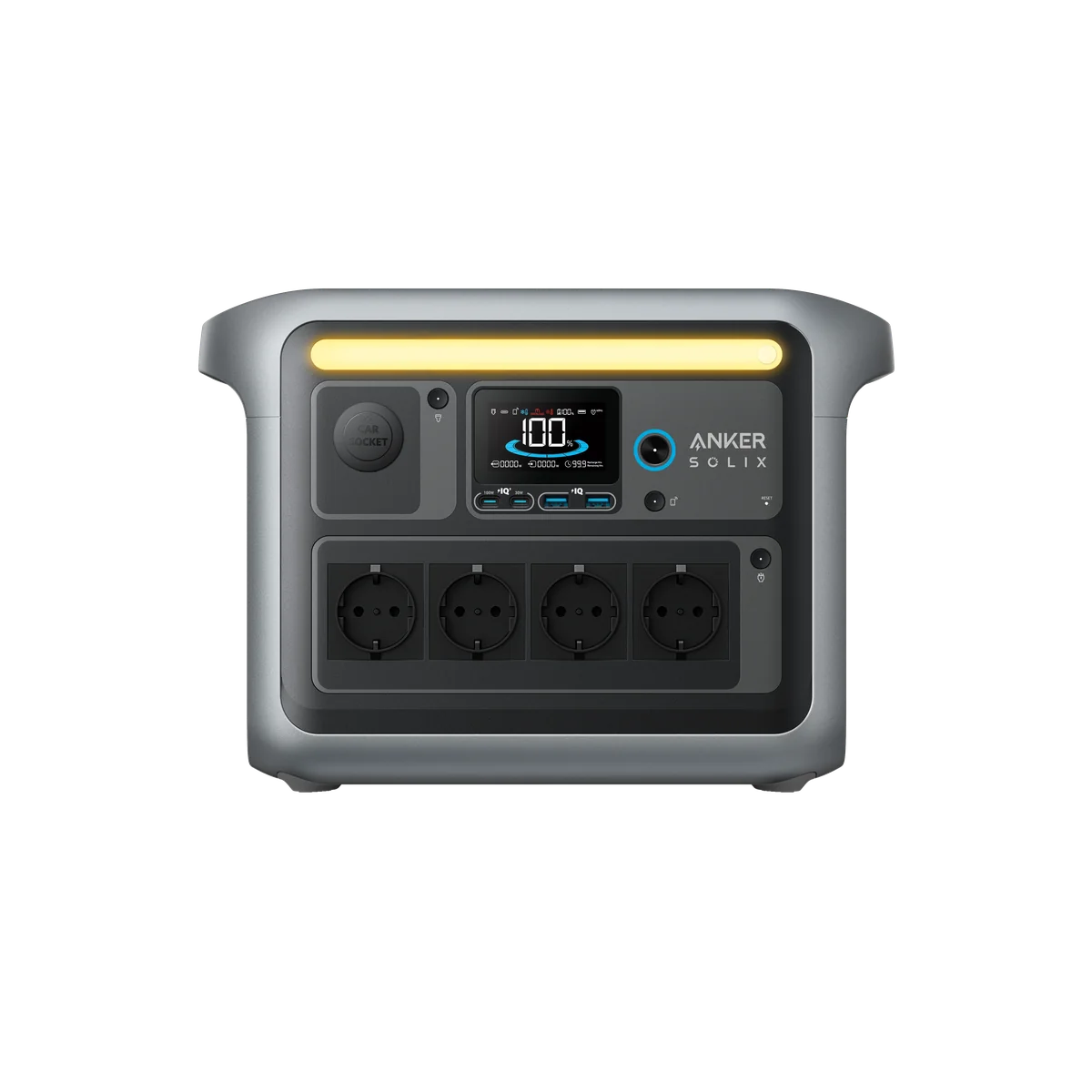
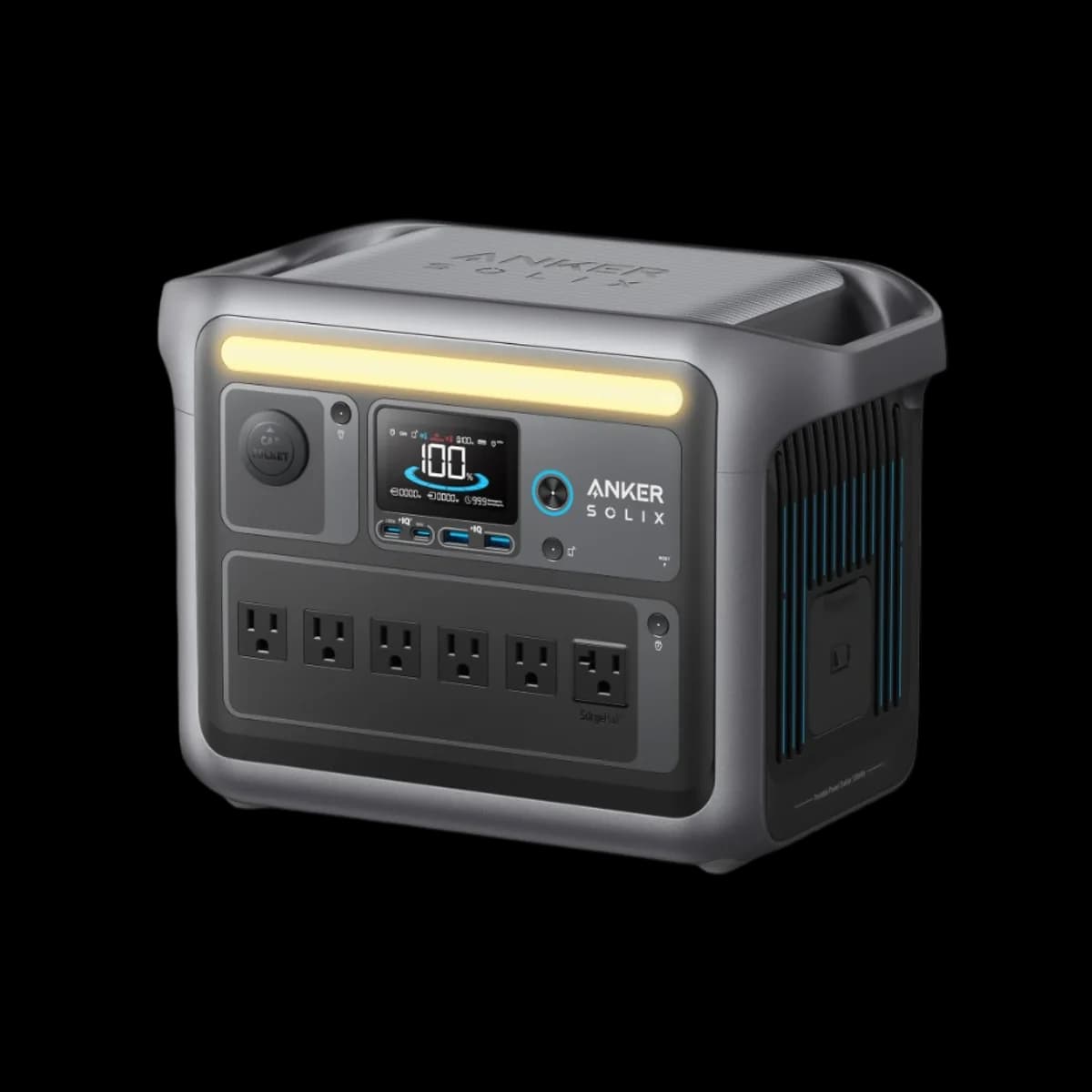
Anker SOLIX C1000
Sub‑hour AC charging, 1,056Wh LiFePO4, 1,800W output—fast, portable backup with some fan noise.
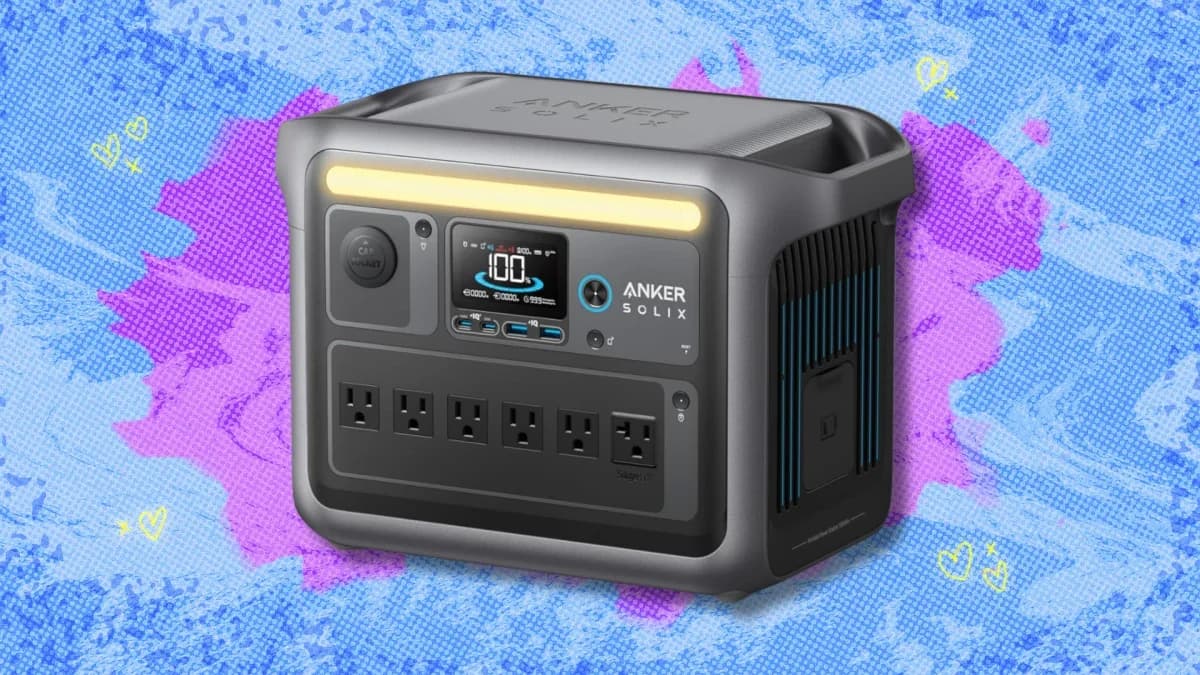
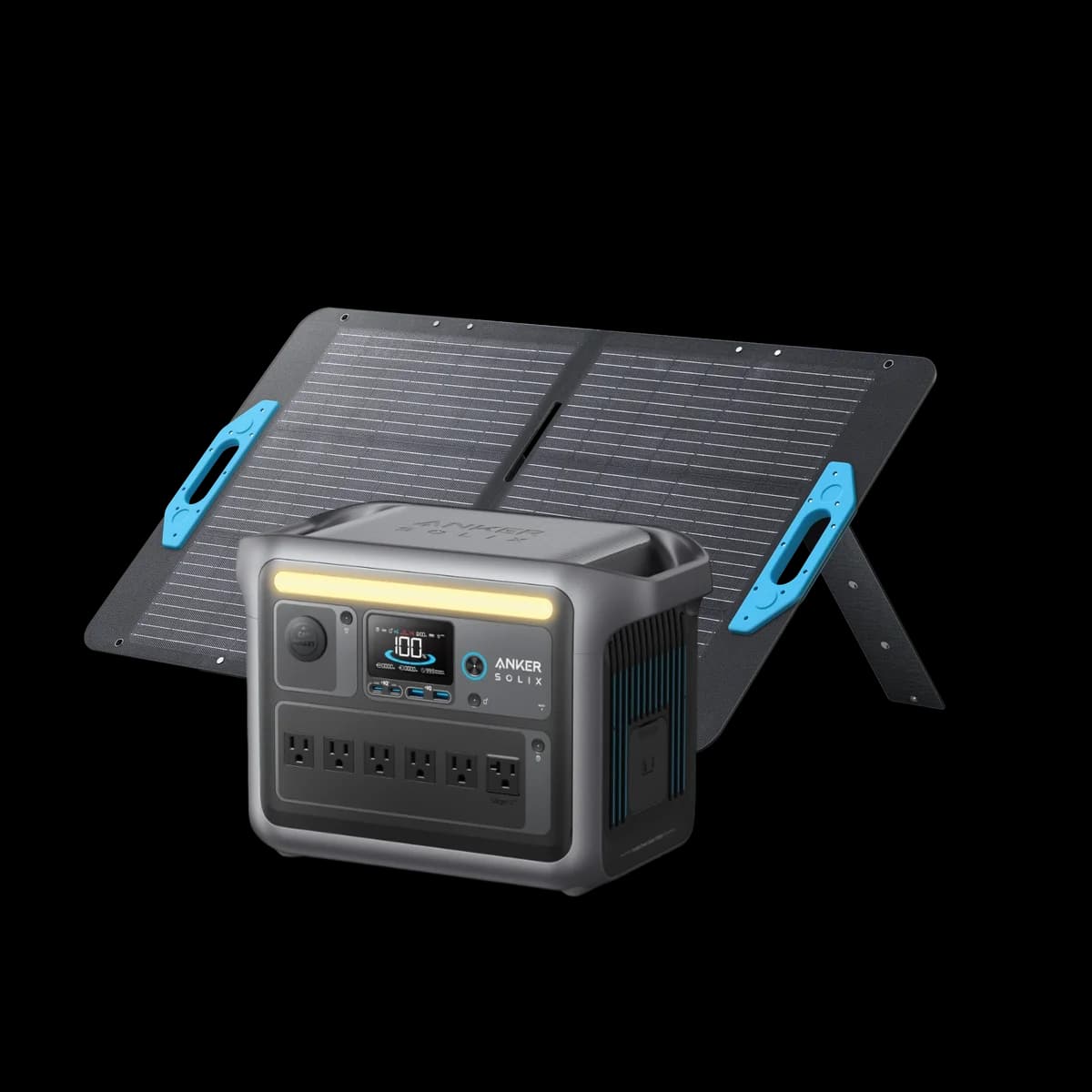
The Anker SOLIX C1000 is the compact, fast‑charging power station that promises to get you back to full power in under an hour and keep weekend campers and short‑outage homeowners moving, offering a practical mix of 1,056Wh LiFePO4 capacity, 1,800W continuous output, and sub‑hour AC recharge. Experts praise the build, inverter muscle, and the longevity of the battery, while users generally confirm the speedy AC top‑ups and useful app controls but flag louder fans during heavy use and realistic limits to the 600W solar input claim depending on panels and conditions. At its price point it feels like strong value for portable backup and RV use, especially if you accept the tradeoffs of weight and noise, and ultimately its overall recommendation hinges on how much you prioritize quick recharges, expandability, and quiet operation.
Find Yours
What is the primary application for your power converter?
Answer to find your best matches.

The Scoreboard
Does this improve your life? Considers, health, habits, and environmental impact.
Benefits
Get back to full power in under an hour—less downtime between uses.
Run fridge, CPAP, and lights reliably during outages for practical peace of mind.
Monitor and adjust charging remotely—fewer surprises and smarter power management on trips.
About 15% smaller than rivals, easier to fit in cars and storage spaces.
Eleven outputs handle laptops, phones, fridges and camping gear without juggling adapters.
Trade-Offs
Fast charging or heavy use spins fans loud enough to interrupt nearby conversations.
At ~28 lb, single-person lifts feel awkward and strain backs on frequent moves.
Small panels deliver far less than rated, leaving you waiting for full charges.
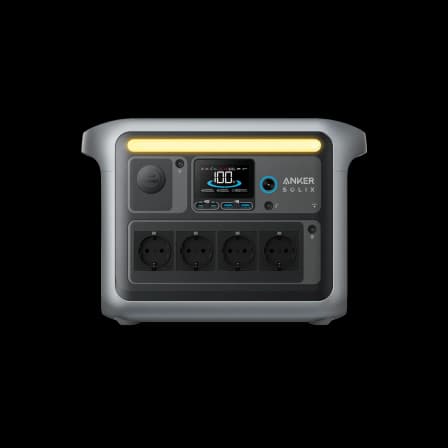
 Alternatives


Join the Circle
Where real meets deal
Know what's worth buying-and when.
Tips, special offers, and rewards for buying and sharing.

Publications
9 LEADING PUBLICATION REVIEWS

Notebookcheck’s Marcus Schwarten comes away generally positive but measured about the Anker Solix C1000 Gen 2. He praises its faster-than-ever charging, higher continuous output, lighter, more compact design and good efficiency, calling it a versatile 1 kWh solar generator that’s competitively priced; however, he’s equally clear about trade-offs—losing battery expandability and the front LED light, plus noticeable noise at high loads—and flags unanswered long-term battery-life questions despite manufacturer cycle claims. The review balances real test data (charging times, measured Wh in/out, 45 dB noise) with practical usability notes (app controls, USB upgrades, lack of covered ports), so the tone is appreciative but cautious: this is a strong, fast little power station if you can live without modular expansion and onboard lighting.
By Marcus Schwarten
How-To Geek’s Cory Gunther is clearly impressed and enthusiastic about the Anker SOLIX C1000. He calls it a powerful, well-refined portable station that “just works,” praising rapid 58-minute HyperFlash charging, a robust 1,800W continuous (with a 2,400W SurgePad) output, smart app control, useful LED lighting, and a sensible port layout—features he tested in real scenarios from charging a MacBook and ebike to running heaters and a Keurig. Criticisms are minor and practical: it’s a bit bulky, the housing is plastic, and high-speed charging makes the fans loud. Overall the tone is upbeat and confident: Gunther treats the C1000 as a real step up in usability and performance, recommending it as a premium, versatile choice for camping, RVs, or home backup despite its price and occasional fan noise.
By Cory Gunther
Trusted Reviews' Simon Handby is clearly impressed overall and leans positive about the Anker SOLIX C1000. He praises its compact design, strong 1.8kW output, fast charging (even beating Anker’s claim), solid efficiency figures, UPS capability, and useful app features, calling it brilliant for light-to-medium home backup and camping; conversely he flags its modest ~1kWh capacity, louder fans under heavy load, inability to charge from mains and DC simultaneously, and that it won’t replace washers or heaters. Unique takeaways include measured round-trip efficiency tests, real-world kettle/microwave stress checks, and an accidental drop test that suggested solid build quality. Overall the tone is upbeat and confident: Handby recommends the C1000 as a smart, portable, and well-rounded mid-duty power station while noting clear limits for heavier-duty needs.
By Simon Handby
Edgar Cervantes at Android Authority is clearly enthusiastic about the SOLIX C1000 Gen 2. He praises its rare balance of true portability and high output—calling it his go-to for road trips, remote work, and even impromptu small concerts—thanks to a 1,024Wh battery, 2,000W output, fast 1,600W input, five AC outlets and UPS support. He backs claims with practical anecdotes (car trips, camping, running a kettle, topping an Everfrost cooler, and powering audio gear) and compares it to heavier rivals, arguing the C1000 hits the sweet spot for most users. Criticisms are mild but real: limited USB ports, no ambient light, and no battery expansion, plus reliance on the stock cable for peak charging. Overall his tone is excited but measured—he recommends it enthusiastically for people who want ample power in a genuinely portable package, especially at sale prices.
By Edgar Cervantes
T3’s Derek Adams is clearly impressed and enthusiastic about the Anker Solix C1000. He praises its compact but solid build, generous array of ports (notably four AC outlets and multiple USB options), strong 1,056Wh capacity with optional expansion, fast recharge, UPS capability and surprisingly quiet yet robust performance under heavy loads—calling it a “beast” that handled a demanding home-power test without tripping. His tone is upbeat and admiring, while still practical: he warns it’s heavy for long carries, more costly than petrol generators, and unlikely to run very high-draw appliances like tumble dryers. He also flags real-world caveats (recharge limits, seasonal storage care) and urges clearer appliance energy labeling, but concludes the unit is easy to use, reliable and a top choice for camping, RVs or home backup.
By Derek Adams
GearJunkie’s Karuna Eberl is plainly enthusiastic about the Anker Solix C1000. After months of real-world testing—from Baja dirt roads to alpine valleys—she praises its balance of size, power, and build quality, calling it versatile, expandable, and impressively fast to recharge; she appreciates LFP chemistry, a roomy 1,800W inverter, IP67 rating, and convenient handling. Her tone is warm and personal—she treats the unit like a trusted companion—while still noting practical downsides: a bulky expansion-cable, limited runtime even with the add-on for heavy multiday van use, and that larger models may suit entrenched van campers better. Overall, the review reads as a confident recommendation for tent, truck, and day-trip users who want strong performance without lugging heavyweight gear, especially if you value expandability and faster recharge over maximum single-unit capacity.
By Karuna Eberl
GearLab’s Kenji Mowrey is clearly impressed overall. He frames the Anker Solix C1000 as a near-ideal mid‑size power station—compact for its capacity, fast to recharge, and versatile for camping, job sites, and short outages—praising its bright display, useful built‑in light, sturdy handles, and strong size‑to‑power ratio. He candidly points out its loud fan at high loads and its price as the main drawbacks, but treats them as manageable trade‑offs given the fast charging, UPS capability, and option to expand capacity. Practical test details (897Wh usable, 33‑minute max‑load run, 65–88 minute charge times) back up the enthusiasm, and he recommends the Gen‑2 model if buying now. Overall tone is positive and confident, leaning toward recommendation with a few reasonable caveats.
By Kenji Mowrey
Chris Wedel at Android Police comes away genuinely impressed and recommends the Solix C1000. He praises its compact, well-built design, fast sub‑hour recharge, LiFePO4 battery longevity, robust 1800W output with 2400W surge, plenty of ports, useful app connectivity and a 20ms UPS mode—calling it a practical, portable workhorse for camping, storm prep, or running tools. He does flag a few quibbles: the port layout separating outlets from USB/display, a desire for extra DC outputs and wireless charging, and the expansion battery’s extra cost and delayed availability. Overall the tone is upbeat and confident: the unit’s power, recharge speed, and battery chemistry win him over, making it his recommended pick for anyone upgrading or buying their first midsize power station.
By Chris Wedel
TechRadar’s Collin Probst is clearly enthusiastic about the Anker Solix C1000. He praises its compact size, reliable build, excellent port selection (including a 100W USB‑C), and easy Wi‑Fi/Bluetooth control, and values it as a trusted UPS for a power-hungry home workstation and many other uses. He emphasizes real-world confidence—running a dense desk setup and outdoor tools—plus straightforward expandability via an external 1056Wh battery. The main caveat mentioned is price—often near $1,000 though deals can drop it significantly—but otherwise the tone is strongly favorable and personal: this is a unit he depends on daily and recommends as a baseline for portable power stations.
By Collin Probst

YouTube
12 LEADING EXPERT & INFLUENCER REVIEWS
 Jasonoid - Solar Power, Batteries, and More!
Jasonoid is broadly positive about the Anker SOLIX C1000. He praises its fast AC charging, efficient LFP battery, strong 1,800W inverter, useful app controls and solar friendliness, calling it a versatile mid‑size option for camping or backup; he ran thorough DC/AC, load, UPS and solar tests with encouraging efficiency numbers. He flags real issues too — loud fans under heavy load, limited 12V cigarette output (138W) and no simultaneous AC+DC charging, plus some inverter noise/interference — but concludes it’s a capable, well‑priced unit with practical tradeoffs depending on your needs.
Minute Man SolarBen is positive about the C1000 Gen 2. He praises its quiet operation, strong 2,000W inverter, intuitive screen and app, fast charging/value at sale price, and real-world efficiency (~83%), but flags unclear peak surge specs, limited solar voltage headroom (60V), no expansion-battery option, and occasional missing adapters. He ran extensive tests (fridge runtime, discharge/idle draws, noise), thinks it’s a great portable backup for most users—especially at the sale price—while cautioning power-hungry or modular users to consider alternatives with higher solar input or expansion capability.
Footprint Hero with Alex BealeAlex Beale is upbeat about the SOLIX C1000. He praises Anker’s fast, plug‑and‑play solar workflow but emphasizes you can save hundreds by using compatible off‑brand panels with an inexpensive XT60‑to‑MC4 adapter; he walks viewers through reading VOC/ISC specs and testing panel compatibility, showing similar or better real‑world output from cheaper panels. His tone is practical and slightly skeptical of brand lock‑in—accepting of Anker’s convenience but urging cost‑smart DIY choices and careful spec checks for safe, effective solar charging.
Outdoor AutoNate Mueller is clearly positive about the Anker SOLIX C1000. He praises its fast sub‑hour AC charging, intelligent “brain” and app control, LiFePO4 longevity, and expandability for overlanding, calling those features game‑changers for convenience and safety. He also warns loudly about cheap knockoffs—poor battery management, noisy/overheating external power bricks, and rapid self‑discharge—urging buyers to prioritize watt‑hours, battery chemistry, ports, and a quality BMS. Overall Nate recommends the SOLIX C1000 for weekend campers and expandable longer trips while advising careful shopping to avoid dangerous, low‑quality alternatives.
ReeWray OutdoorsReeWray Outdoors is clearly impressed and leans positive. He praises the C1000’s fast UltraFast AC charging, high usable capacity (~90%), polished app, solid build, SurgePad utility, and 5-year warranty, calling it a great midrange value; criticisms are measured — fan noise at high loads, lack of DC barrel ports, no way to disable the SurgePad voltage throttling, and that AC takes priority over solar (no dual-charge). Tests and real-world demos back his views, so his overall sentiment is favorable and confident, recommending it for most camping, RV, and backup uses while flagging a few practical caveats.
AllOffroad 4x4Stefan Fischer is generally positive about the Anker SOLIX C1000. He praises its rugged build, quiet high‑speed charging, real-world usable capacity (about 896Wh), versatile ports, useful app features, and strong value, but calls out a major flaw: flaky app authentication that can lock you out in the field and complicate vehicle charging. His hands‑on field testing (drop, heater and solar loads, noise and efficiency measurements) makes his recommendation measured—he’s keeping it in his kit—while urging Anker to fix the app and add practical features like cycle count and more robust offline controls.
Tiny House ExpeditionAlexis and Christian are upbeat about the Anker SOLIX C1000. They praise its sub‑hour UltraFast AC recharge, 600W solar input, 1,056Wh capacity and useful app/UPS features, calling it compact yet powerful for tiny‑house, van, and camping use. They caution about matching solar array size, note weight/installation quirks (30A wiring), and say the expansion battery makes it a better full‑time tiny‑home solution. Overall their tone is positive and practical—impressed by speed, longevity (LiFePO4) and ports, while reminding viewers to size systems and expect some real‑world tradeoffs.
GoTechGeekGoTechGeek is clearly impressed. He calls the Anker SOLIX C1000 fast, roomy, and easy to use—praising sub‑hour UltraFast AC charging, the app controls, accessible port layout (six AC outlets, USB‑C, USB‑A), LiFePO4 longevity, and expandable options—after three months of hands‑on use. He demos Wi‑Fi pairing, charging rates (up to ~1,300W UltraFast), and brightness controls, and only cautions about battery wear from constant UltraFast use. Disclosure: the unit was sent for review and he uses an affiliate link. Overall enthusiastic and practical: a well‑rounded pick for camping, RVs, and home backup.
OverlandNomadDavid from Overland Nomad is clearly impressed and enthusiastic about the Anker SOLIX C1000. He praises its LiFePO4 safety, blazing sub‑hour AC recharge, 600W solar input, versatile port layout, solid build and intuitive Anker app, and demonstrates it running heavy loads (fridge, InstaPot, air fryer). He calls it one of his favorites while noting minor gripes like a small screen, screen timeout, fan noise under load, and its ~28 lb heft. Overall his tone is strongly positive and hands‑on—he trusts its durability and recommends it for camping, overlanding, and backup use.
Field view AdventuresField View Adventures is upbeat about the Anker SOLIX C1000. He praises its fast sub‑hour AC charging, solid 1,056Wh capacity, useful app control, quiet fans, surge handling (up to 2,400W), and practical portability for camping or van life, and he ran real tests (MacBook, straighteners, heater, toaster). He warns realistically about runtime when running heavy loads, notes solar/charge conditions affect speeds, and discloses Anker sent the unit; overall his tone is positive and hands‑on—impressed but pragmatic about limits like weight and how quickly a full load will drain the battery.
Tommy CallawayTommy Callaway is strongly negative about the Anker SOLIX C1000. He says it bricked during a simple overload test—rendering the unit unusable—and calls that failure unacceptable even if replaced under warranty. He contrasts that with EcoFlow and DJI units, praising EcoFlow’s XBoost, solar inputs, app, and UPS features, and highlights Anker’s app-gated fast-charge annoyance. Overall Tommy warns buyers the C1000’s safety/firmware may be unreliable in real use, framing the brick as a deal‑breaker despite prior praise for its output.
4wdTALK4wdTALK comes away clearly impressed. He’s relied on the Anker SOLIX C1000 for six months and praises its dependable performance, UltraFast AC charging, compact portability, and real-world versatility (movie nights, inflating SUPs, running a diesel heater, and powering Starlink). He repeatedly calls it dependable and convenient, notes the helpful Anker app and durable LiFePO4 chemistry, and accepts the ~27.5 lb weight as reasonable. He discloses an Amazon affiliate link, but otherwise offers a warm, firsthand endorsement—few complaints beyond expected size/weight and nothing that diminished his regular use.

Forum Reviews
CUSTOMER REVIEWS FROM 1 FORUM
Redditors are mostly positive but cautious about the Anker SOLIX C1000. Many praise fast charging, solid inverter performance, LFP battery stability, and portable 1kWh convenience for camping or short outages, while others warn it’s too small for whole-home backup and call out design tradeoffs like missing expansion/light-bar and occasional fan/firmware quirks. Users debate input/solar details and UPS switchover timing—acceptable for consumer gear but borderline for sensitive networking. In short, it’s well-liked as a portable, value-packed power station for modest loads, but not the solution if you need long runtimes or house-level resilience.
Many comments

In-Depth Review

Highlights
- •Ultra-fast chargingMarketed as sub-hour AC charging
- •Long-life batteryManufacturer claims ~3,000 LiFePO4 cycles
- •High inverter outputDesigned to supply 1,800W continuous
- •Solar fast inputAdvertised to accept up to 600W

Considerations
- •Charging conditions matterUltraFast needs app and ideal temps
- •Solar performance variesReal output depends on panels/weather
- •Constrained runtime≈1 kWh limits long high‑draw use
- •Fan noise under loadActive cooling can be noticeably loud
Folks have been quick to notice this model from a trusted brand that’s pitching speed and portability over brute‑force capacity. Positioned as a mid‑size, app‑savvy power station for campers, RVers, and homeowners who want fast turnaround between uses, it aims to bridge short‑term backup and mobile power needs. In the sections ahead we'll examine its headline strengths — like the sub‑hour UltraFast AC recharge, the 1,056Wh LiFePO4 pack with ~3,000 cycle life, and the 1,800W continuous/2,400W surge capability — alongside practical tradeoffs such as real‑world 600W solar input variability and the unit’s forced‑air cooling and fan noise. Compared with its Gen‑2 sibling and competing midrange units, this model leans toward quick recharges and a robust inverter rather than maximum modular expansion, making it ideal for short outages, van‑life trips, and power‑dense weekend use. Read the upcoming sections if you care about runtime, recharge strategy, or quiet nights—your use case will tell you which headline matters most.
Thermal management and noise
Active cooling lets the unit sustain high charge and discharge rates, but the forced‑air fan can become noticeably loud under heavy loads or during UltraFast charging, a point repeatedly called out in tests and user reports. The thermal system protects longevity and enables the fast AC charging profile, yet that comes with a trade‑off in noise and occasional fan‑cycling behavior that some users find intrusive in quiet campsites or bedrooms. If near‑silent operation is a priority, plan placement and expect audible cooling activity during peak use.
Battery chemistry and life
The SOLIX C1000 uses LiFePO4 cells which trade lower energy density for much better thermal stability and longevity, and Anker rates the pack for about 3,000 cycles and a multi‑year lifespan. Independent tests and reviewer experiences generally back up strong cycle life and usable capacity (roughly ~90% usable in tests), though long‑term real‑world degradation beyond a year is still being observed by a handful of users and experts. This chemistry choice matters for safety, frequent fast charging, and predictable end‑of‑life planning.
Solar charging reality
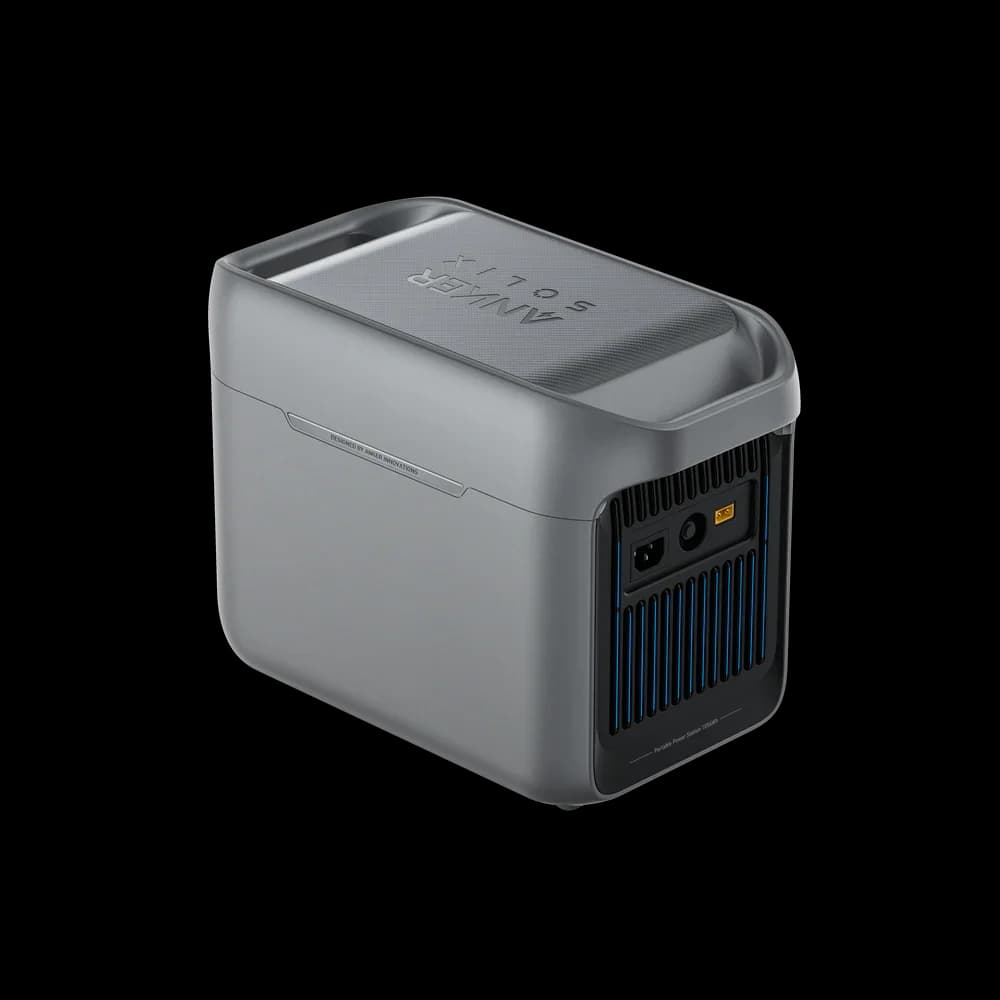
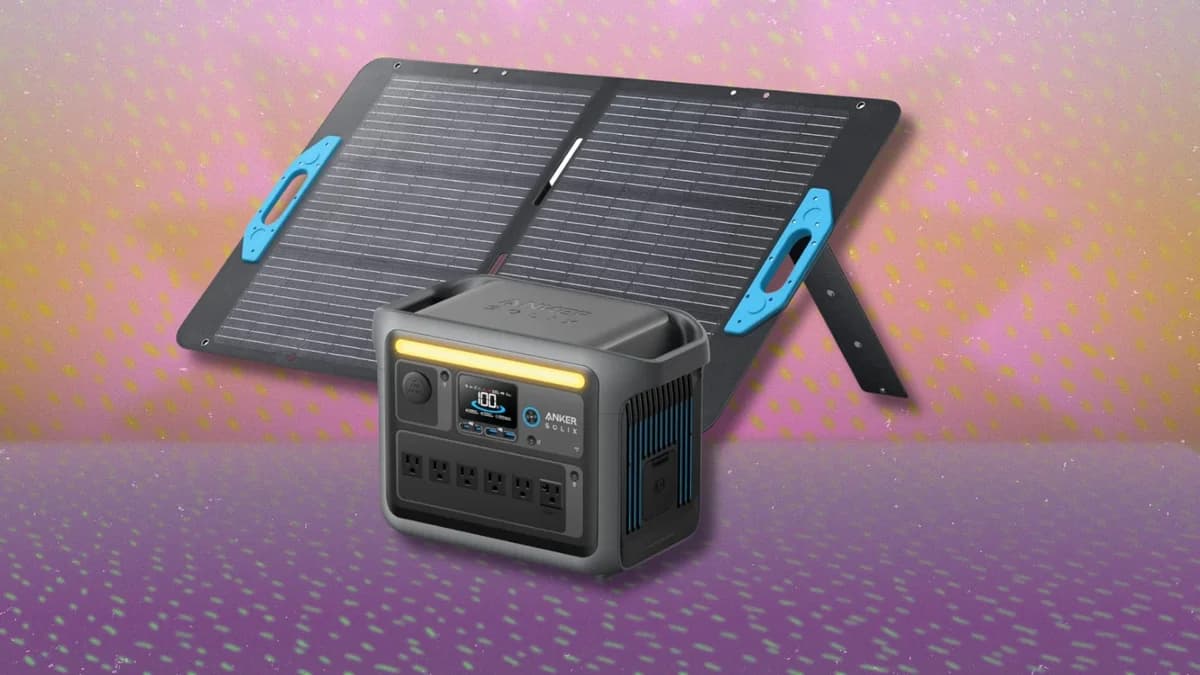
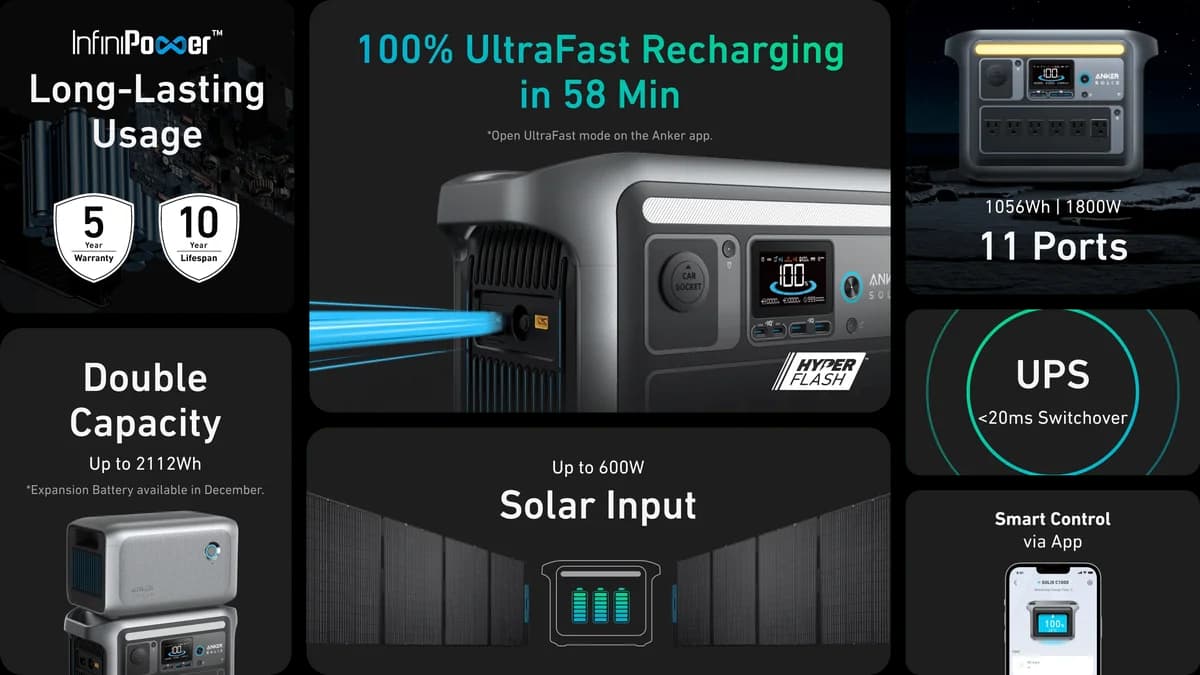
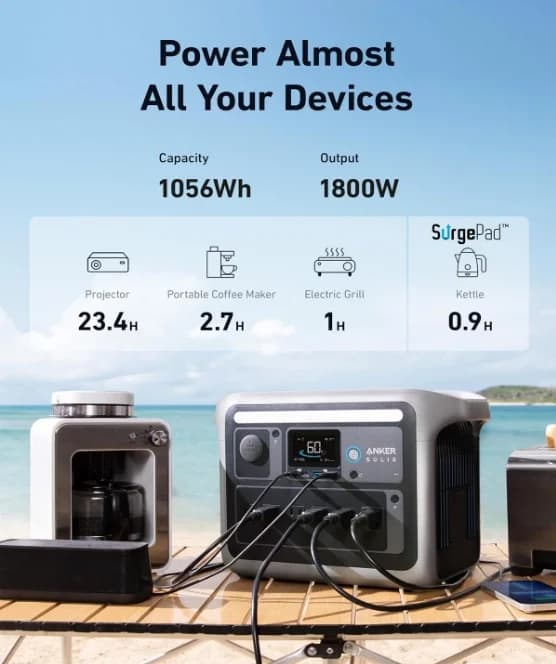
Anker advertises up to 600W solar input and a roughly 1.8‑hour full solar recharge at max solar, but real output depends heavily on panel choice, orientation, and weather, and reviewers frequently warn small panel setups fall far short of rated watts. The unit accepts XT‑60 solar connections and supports 11–60V input, which gives flexibility, yet experts advise using larger or multiple panels and checking VOC specs to actually approach the claimed throughput. In short, solar works well with a correctly sized array, but brand claims are optimistic for casual 100–200W setups.
Ports and distribution
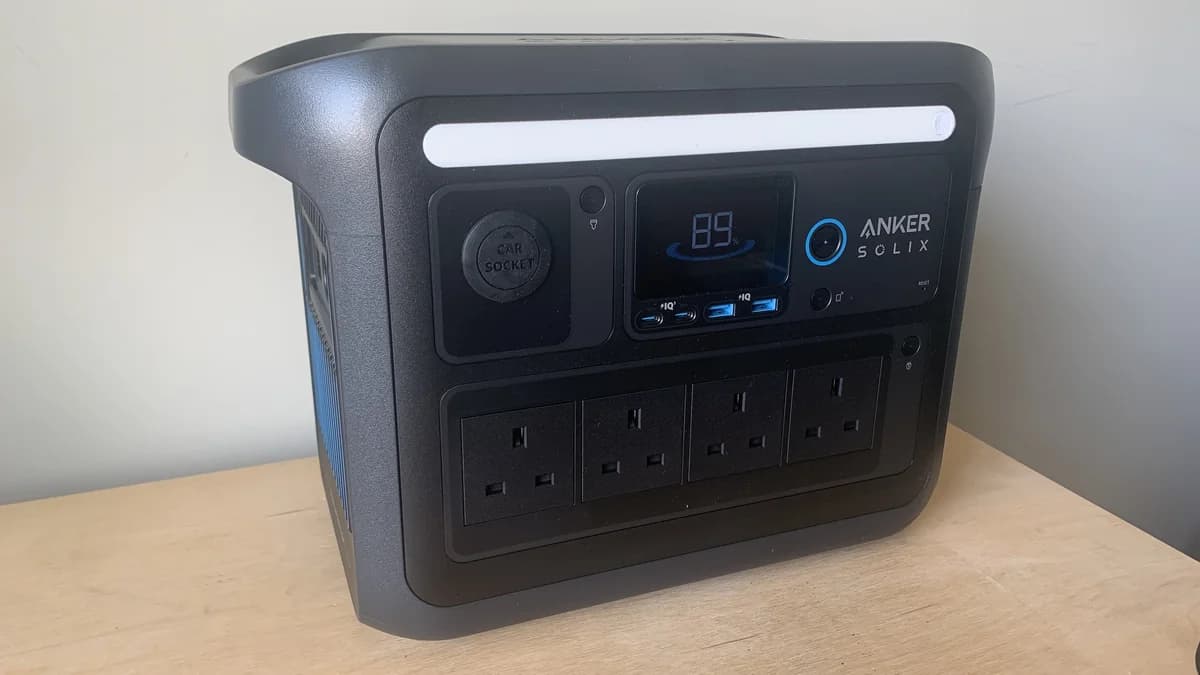
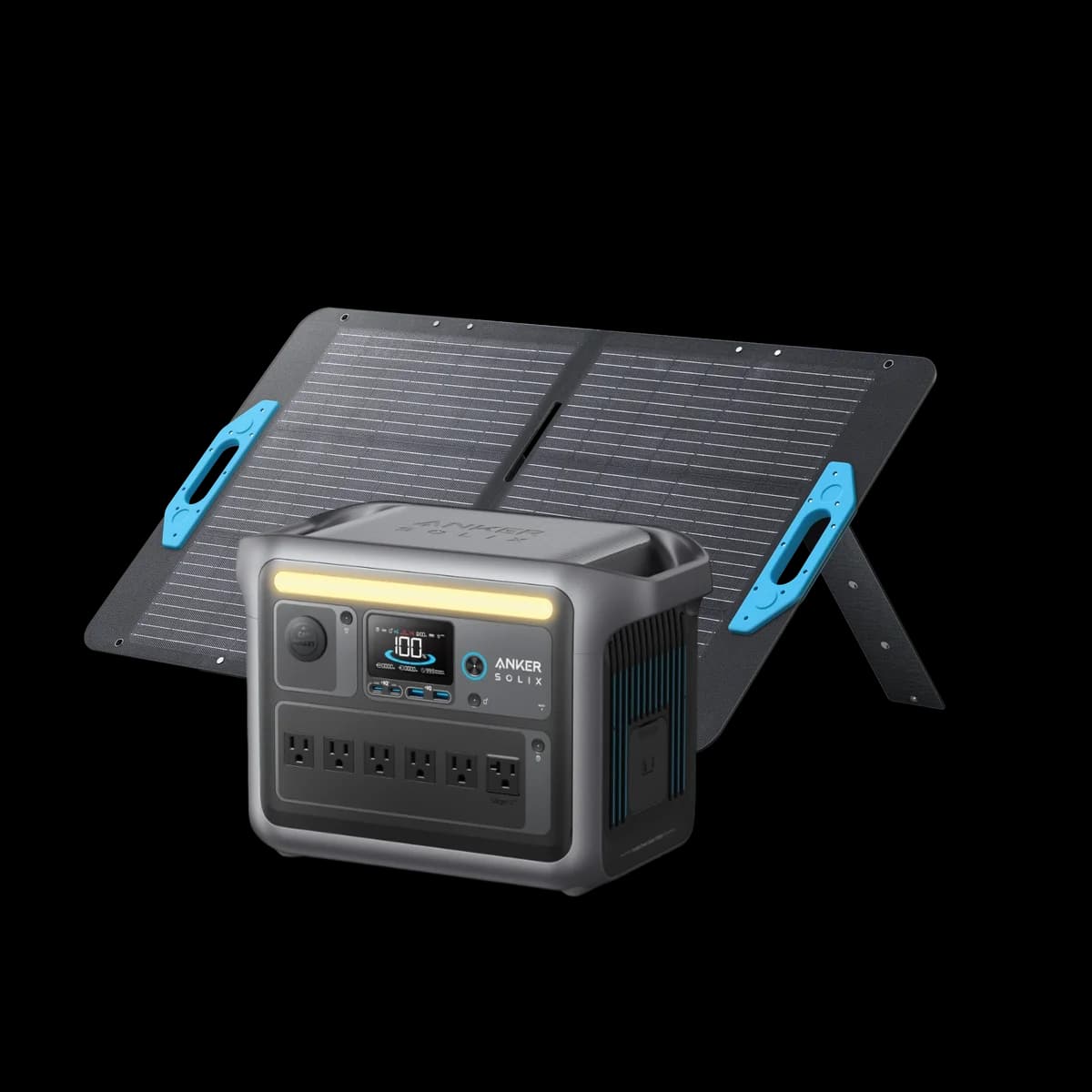
The station provides an 11‑port array including multiple AC outlets, high‑power USB‑C, USB‑A and a 12V accessory port, letting you run laptops, phones, fridges and small appliances without constant adapter juggling. Reviewers praise the layout and number of outputs, though some note limited DC barrel options and a modest cigarette‑style 12V limit, so heavy simultaneous DC draws can be constrained by distribution. App monitoring helps you see real‑time loads and avoid overloading specific circuits, which improves practical usability.
Output power and surge
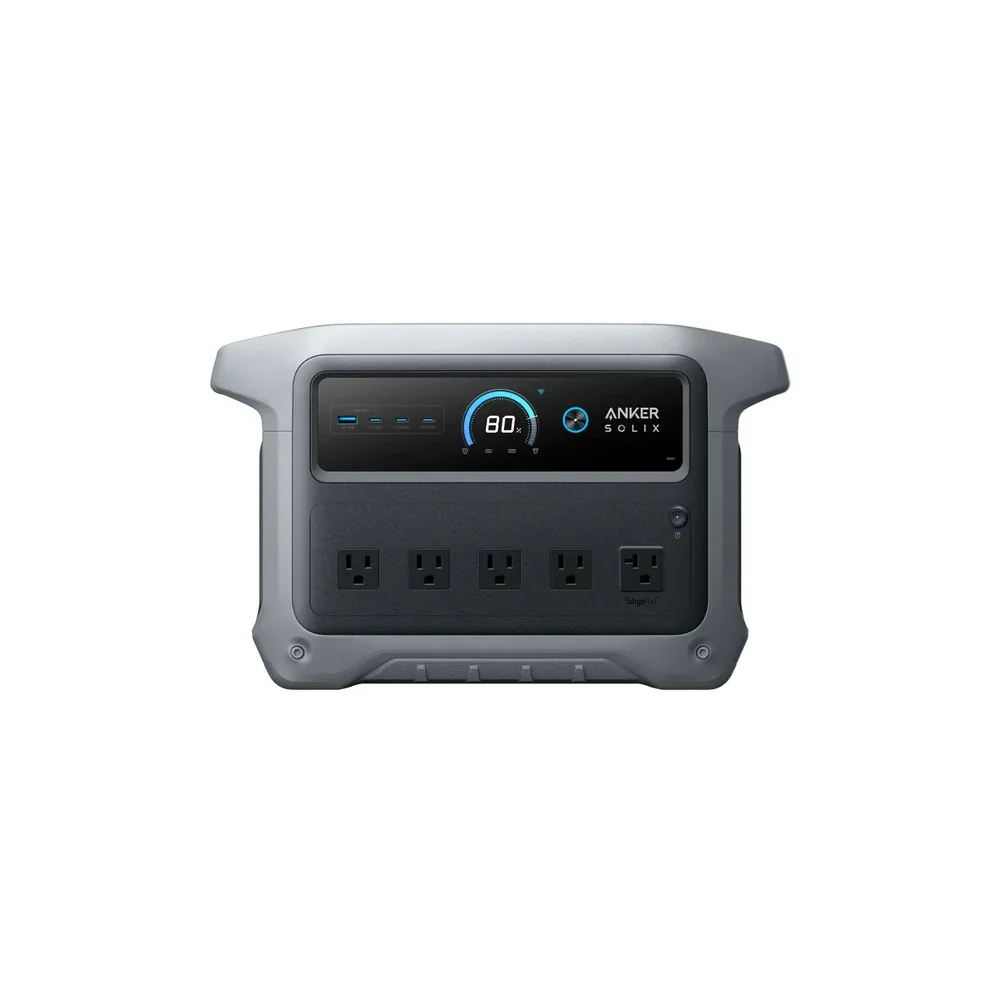
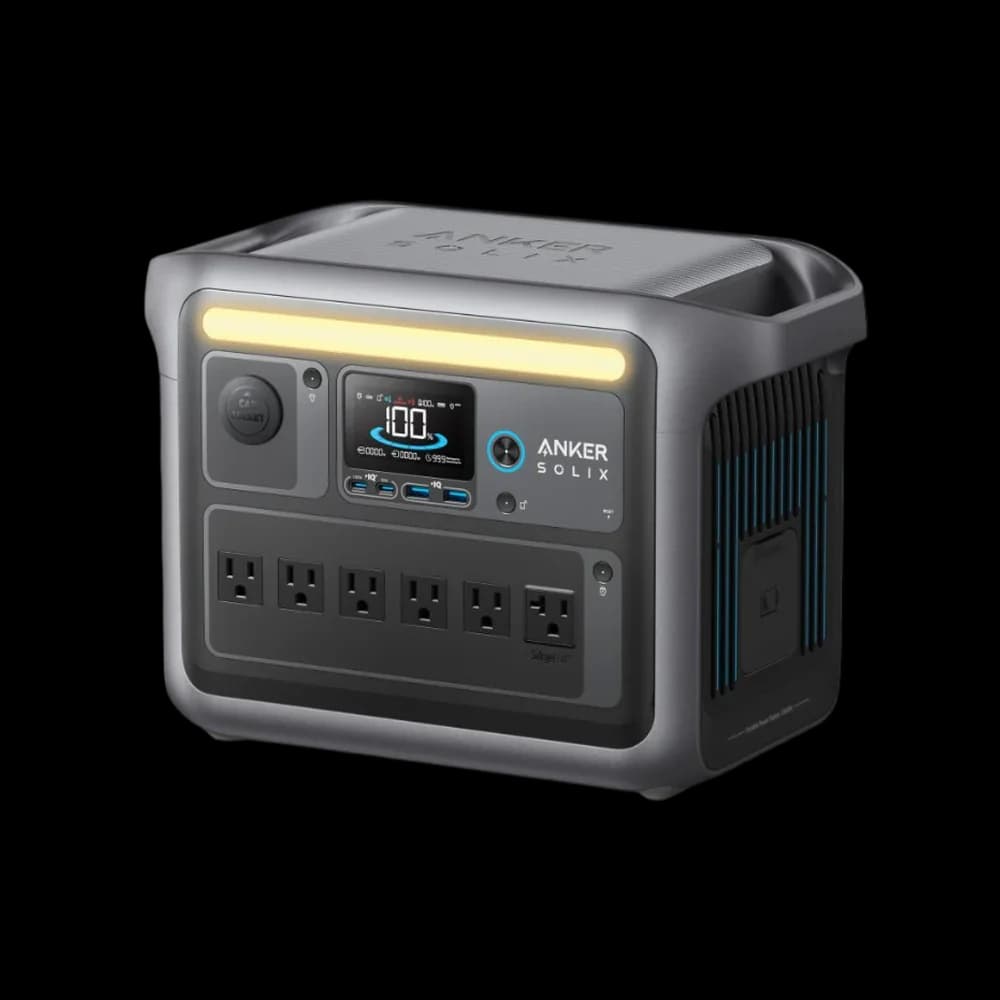
With a 1,800W continuous inverter and a 2,400W SurgePad for starting loads, the unit runs most household appliances and handles start‑up spikes for fridges and power tools; reviewers routinely cite successful fridge and freezer runs as evidence. The SurgePad is useful but not intended for delicate precision gear, and a few reviewers noted inverter noise or interference under certain loads, so sensitive audio or instrumentation may need extra filtering. Overall, the powertrain balances mid‑weight portability with solid real‑world appliance compatibility.
Fast AC recharging
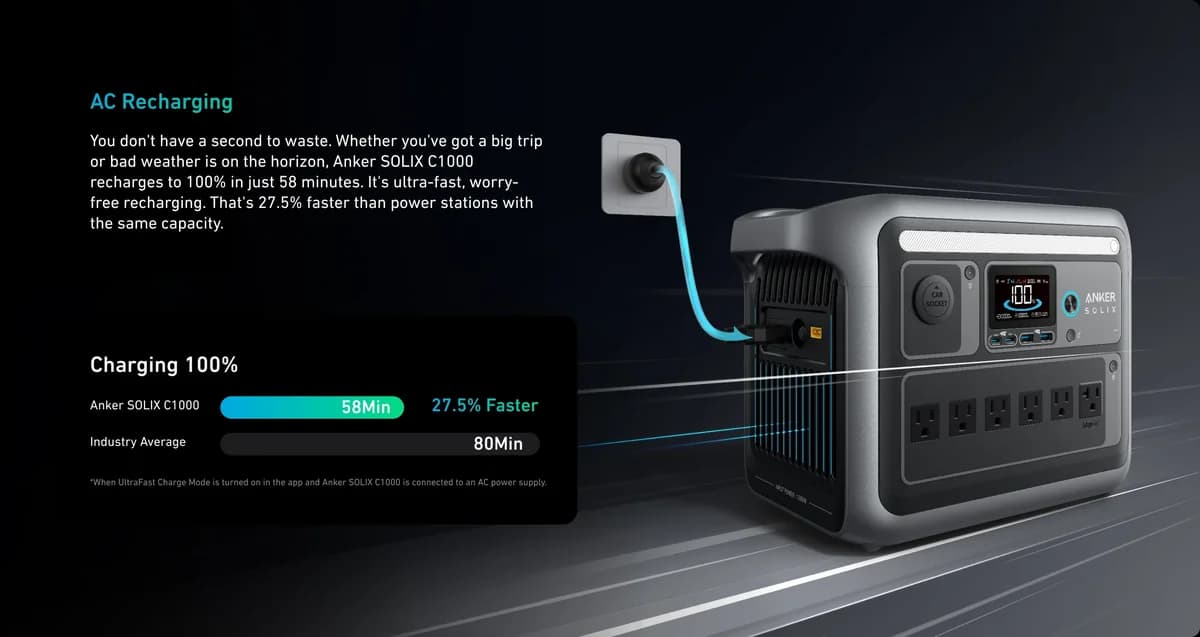
This unit charges remarkably quickly under the right conditions, delivering 80% in ~43 minutes when UltraFast is enabled via the Anker app and ambient temperatures are within the recommended range. That advertised sub‑hour full charge claim (listed as 58 minutes) is supported by reviewer tests when AC input is unrestricted, though real‑world charging can be longer if you have a load, cooler temps, or firmware/app hiccups. Be aware the UltraFast mode requires the app and a smartphone to activate, which some reviewers called inconvenient or flaky in the field.
Conclusion
Reading the evidence like a savvy buddy who took notes, here's the practical verdict: the C1000 shines for people who prize blistering charging speed (sub‑hour AC when you enable UltraFast via the app) and a durable LiFePO4 battery that supports long cycle life, while its 1,800W continuous/2,400W surge inverter handles startup-heavy appliances admirably; however, realistic solar input often falls short of the 600W claim unless you invest in a properly sized array, and the clever port layout can be constrained by overall distribution under heavy simultaneous draws. Reviewers and users both praise the fast turnaround and app visibility but flag the forced‑air cooling—expect noticeable fan noise during fast charging or high loads. So, if you want fast, reliable mid‑day recharge and solid appliance support for camping, RV or short outage duty, this is a smart, well‑balanced choice with tradeoffs that match its practical value.

Feature Scores
This reflects reviews and ratings from established critics, journalists, and users who have evaluated the item. Their opinions provide a comprehensive assessment.
Performance
Output Power Capacity
4/5
Conversion Efficiency
4/5
Voltage Regulation Accuracy
4/5
Transient Response
4/5
Thermal Management
4/5
EMI Performance
3/5
Reliability
4/5
Value
Price-to-Performance
4/5
Warranty Coverage
5/5
Energy Cost Savings
4/5
Spare Parts Availability
3/5
Design
Form Factor
4/5
Connector Options
4/5
Build Quality
4/5
Health
Hazardous Materials Content
4/5
Surface Heat Exposure
4/5
Acoustic Emissions
3/5
Safety
Overcurrent Protection
4/5
Voltage Protection
4/5
Isolation and Touch Protection
4/5
Certifications Compliance
4/5
Sustainability
End-of-life Recyclability
3/5
Recyclable Materials Use
3/5
Packaging Waste
3/5
Experience Style
Installation Complexity
4/5
User Interface
4/5
Modularity
4/5

Specifications
This section outlines the product's key facts, covering essential features, details, dimensions, materials, and any unique characteristics that define its functionality and usability.
Performance
Value
Design
Safety
Sustainability
Experience Style

Frequently Asked Questions
11 Questions
Find Yours
What is the primary application for your power converter?
Answer to find your best matches.