
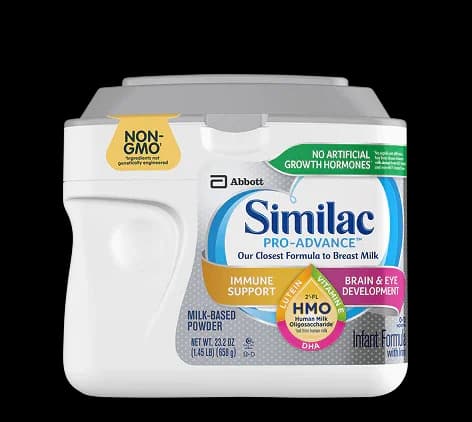
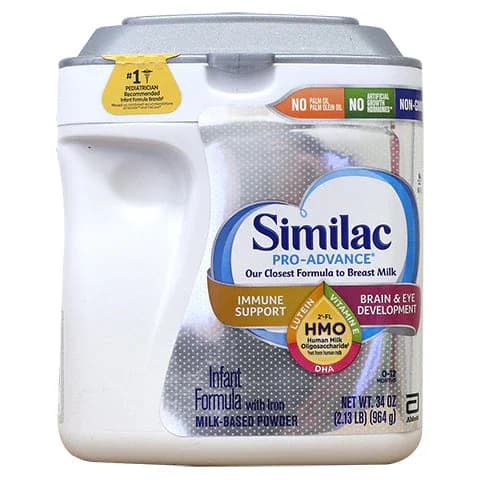
Similac Pro-Advance Infant Formula
Breast‑milk‑inspired, non‑GMO formula with 2’-FL HMO, DHA and ready‑to‑feed convenience; tolerance varies.
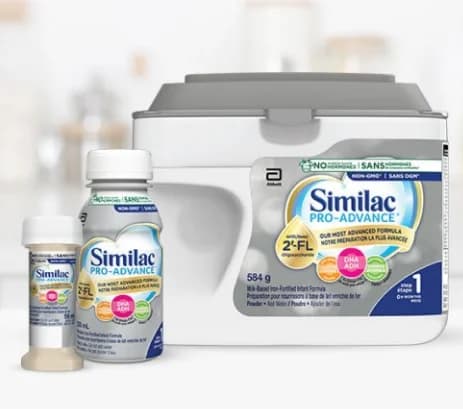
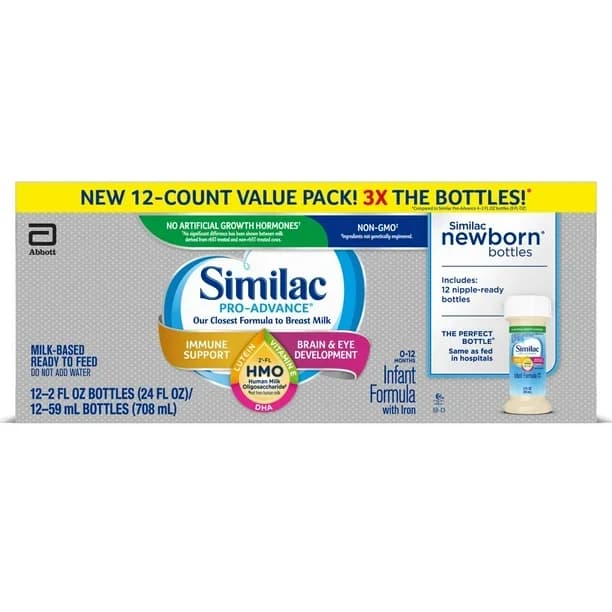
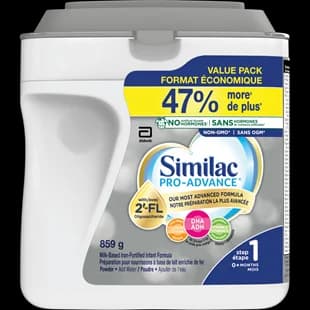
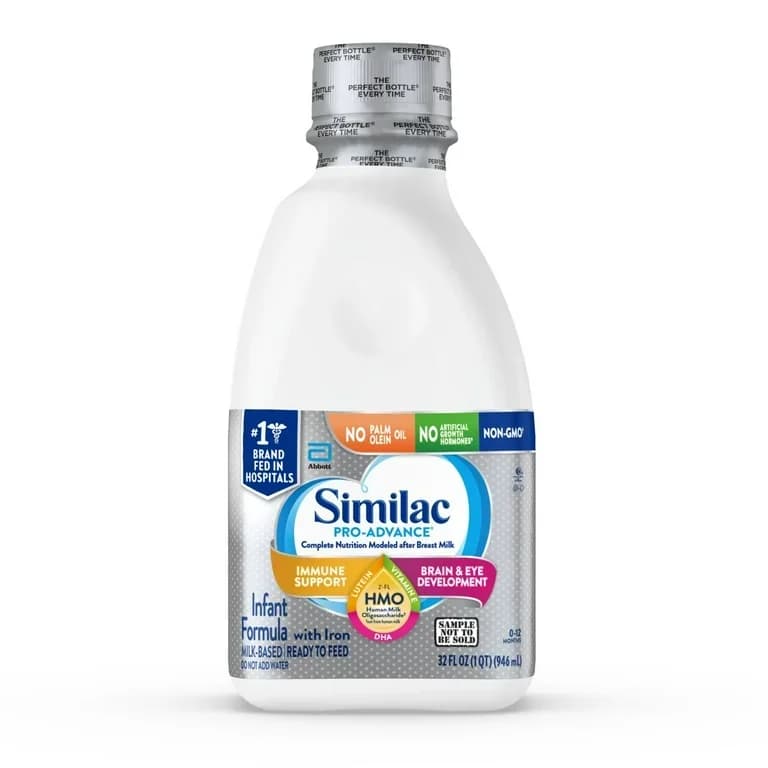
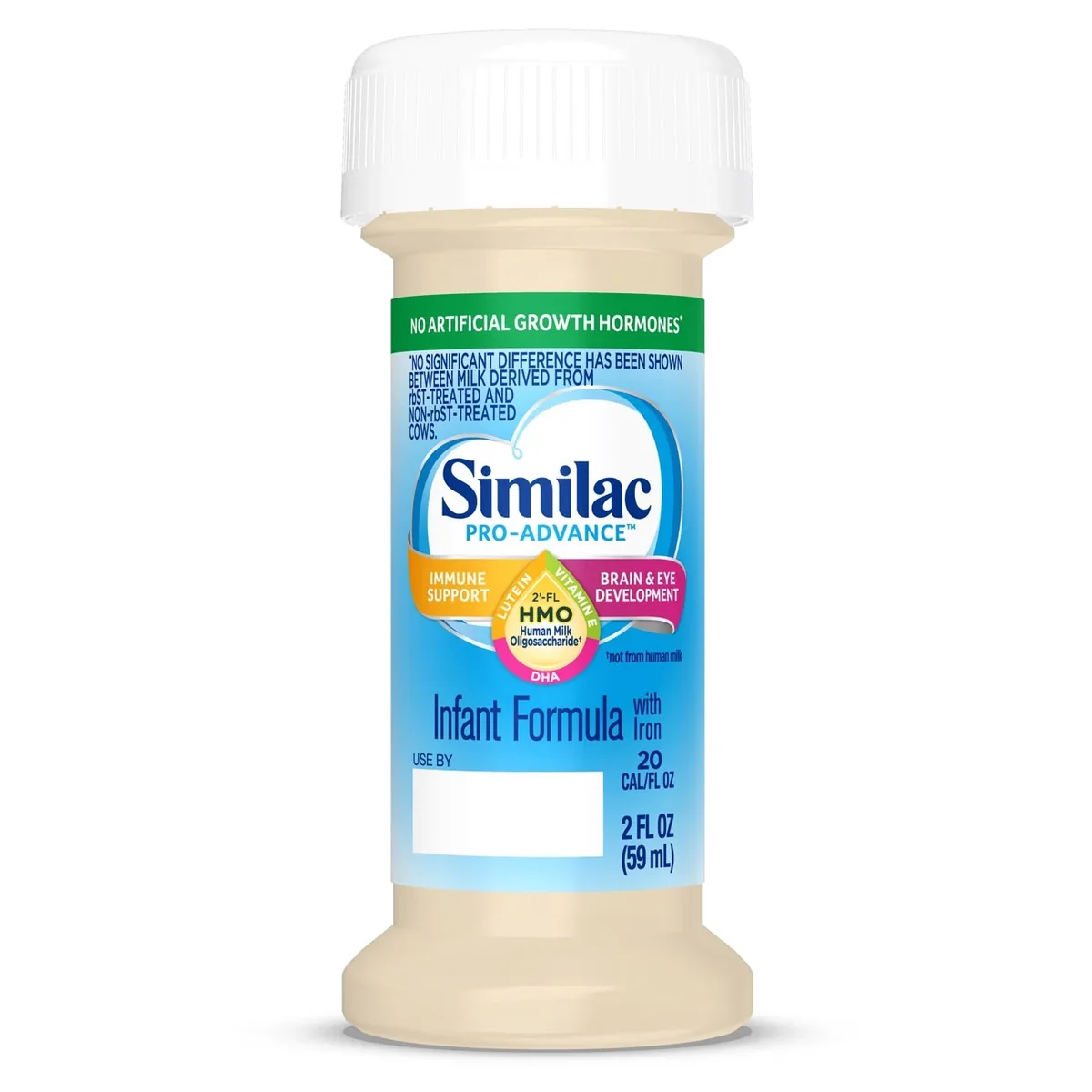
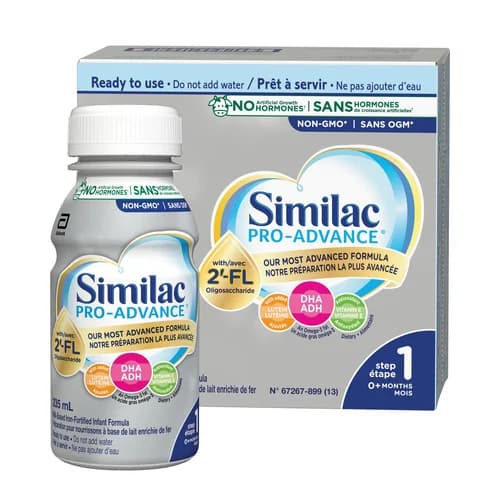
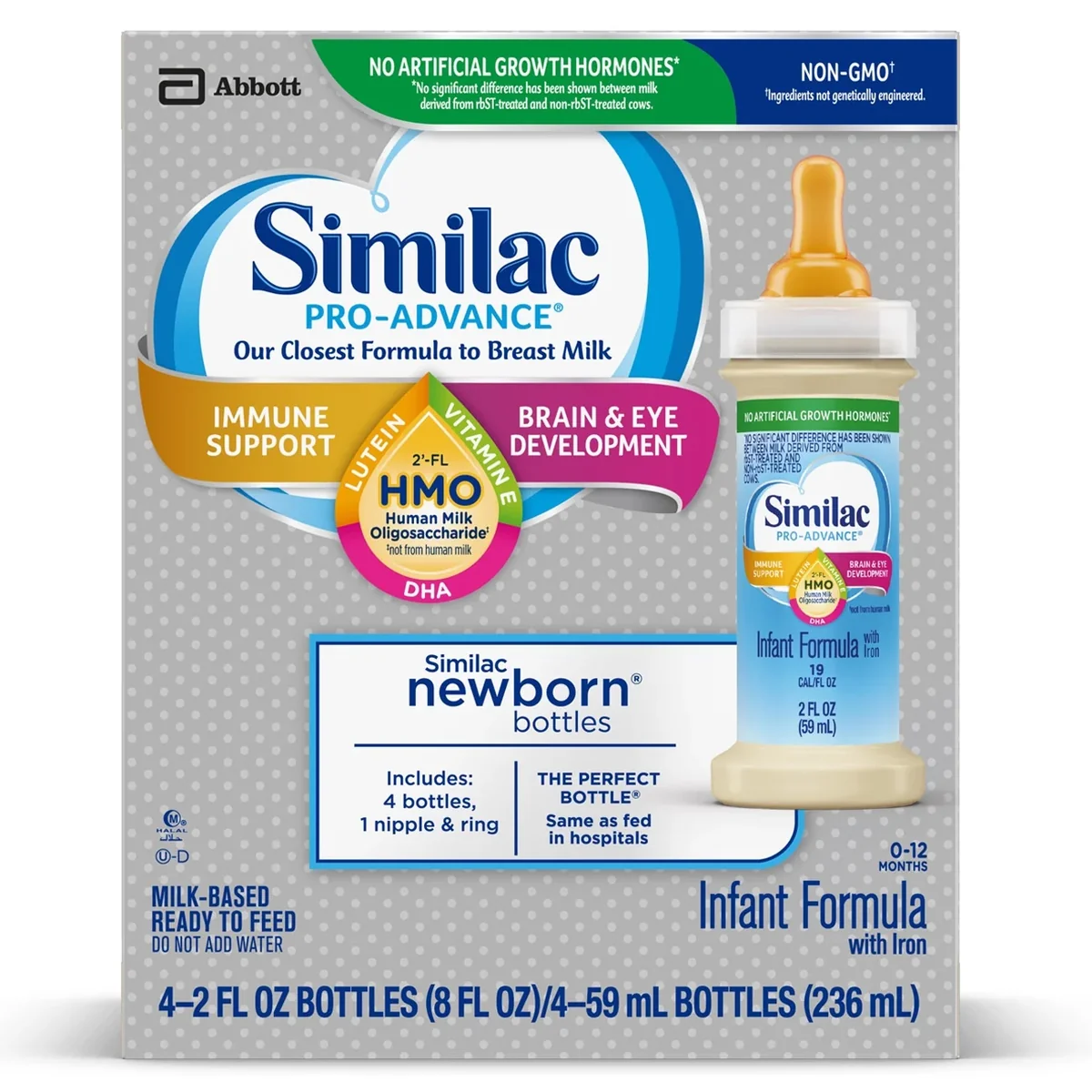
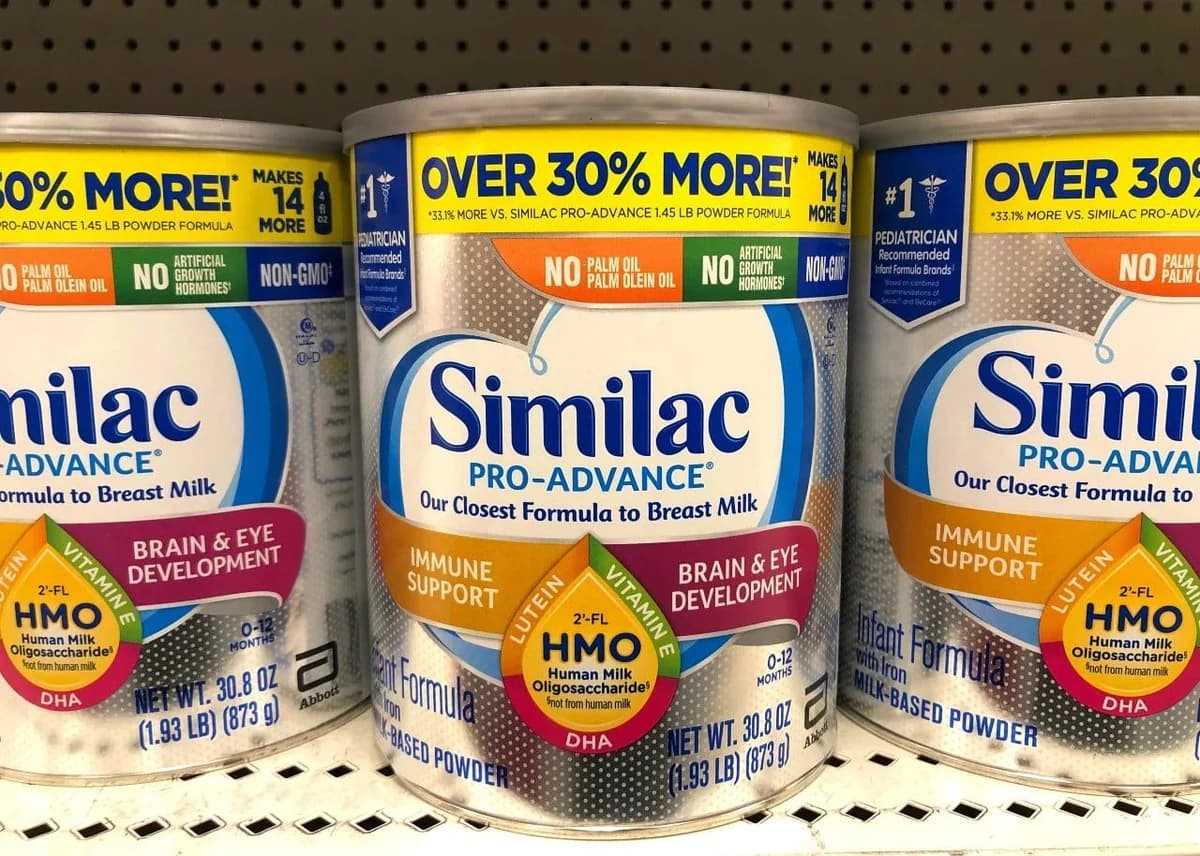
The Similac Pro-Advance is the milk-based, non-GMO infant formula that advertises a breast‑milk‑inspired blend built to reassure parents seeking a reliable alternative when breastfeeding falls short. Aimed at caregivers who want immune support via 2’-FL HMO, easy travel or night feeds, and brain and eye nutrients like DHA and lutein, it blends hospital-aligned familiarity with modern ingredient marketing. Experts generally applaud the HMO inclusion but caution about limited dosing, while users report both smoother weight gain and occasional digestive sensitivity after switching, so brand claims meet mixed real-world feedback. Consider cost versus convenience, and try the ready-to-feed format if tolerance is a concern, weighing ingredient benefits against price and your baby’s reaction before deciding. Overall purchasing fit depends on tolerance, budget, and value placed on the formula’s highlighted features.
Find Yours
What is your primary concern when choosing a formula?
Answer to find your best matches.

The Scoreboard
Does this improve your life? Considers, health, habits, and environmental impact.
Benefits
2’-FL HMO provides breast-milk-like immune support, giving parents extra reassurance daily.
DHA, lutein, and vitamin E support cognitive and visual development during first year.
Non-GMO label and transparent ingredients ease health-conscious parents' buying decisions.
Milk-based, similar to hospital formulas—smooth switches for babies already on Similac.
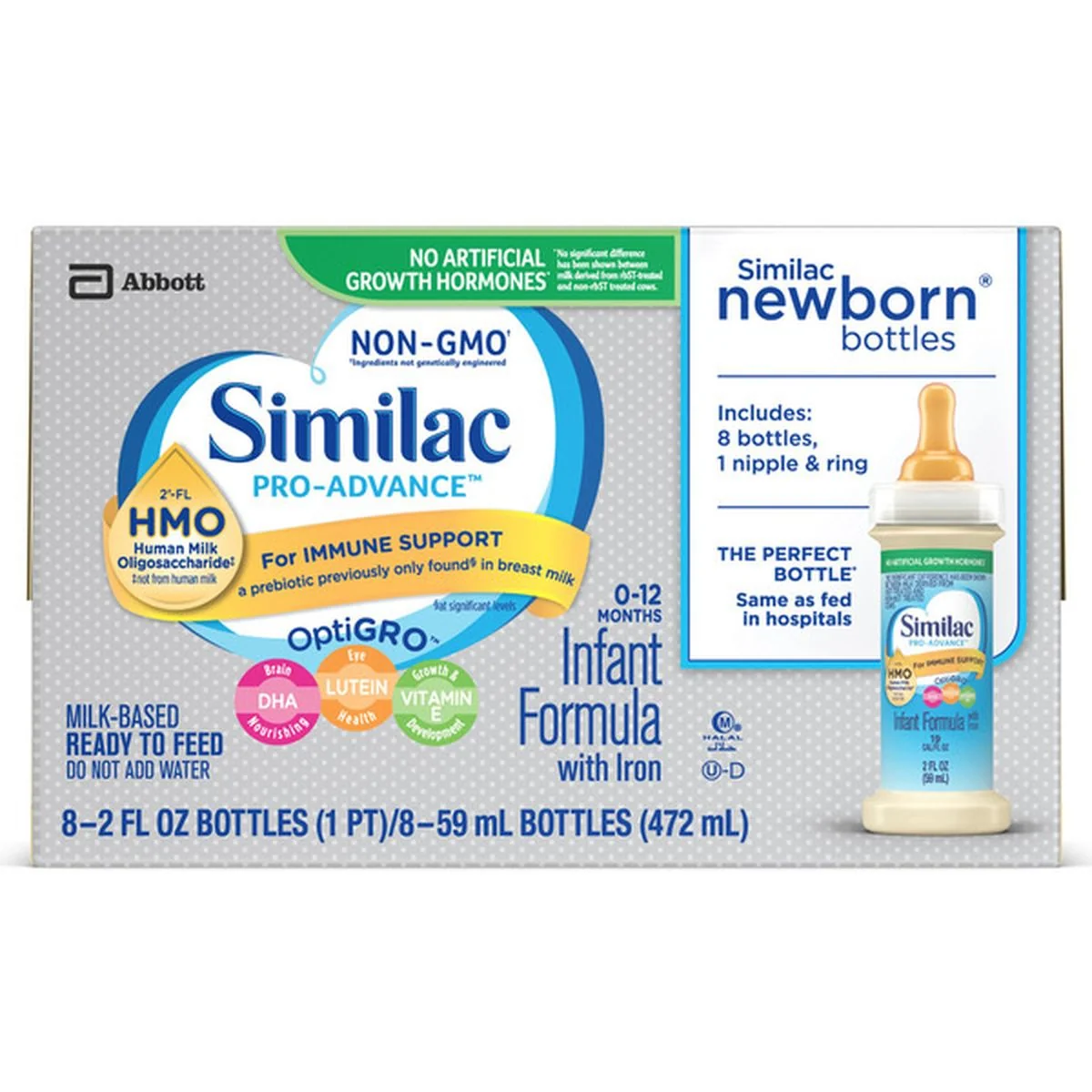
Available powder and ready-to-feed options make travel and night feeds simpler.
Trade-Offs
Some babies get extra gas or fussiness in days after switching, disrupting sleep and feeds.
A portion of infants experience constipation or loose stools, creating messy, frequent diaper changes.
Contains milk and soy—unsafe for allergic infants, causing reactions that require switching formulas.
 Alternatives


Join the Circle
Where real meets deal
Know what's worth buying-and when.
Tips, special offers, and rewards for buying and sharing.

Publications
1 LEADING PUBLICATION REVIEWS

Mars & Stars Baby comes down mildly positive on Similac Pro-Advance. The reviewer appreciates Pro-Advance’s non-GMO label and the added human milk oligosaccharide prebiotic that makes it feel closer to breastmilk, and praises the convenience of ready-to-feed liquid vs. cheaper powder—calling Pro-Advance a worthwhile pick if those features matter. At the same time the tone is measured: the author emphasizes that nutritional content is largely the same as Similac Advance, points to cost as the deciding factor for their family, and frames Pro-Advance’s advantages as preferences rather than necessities. Practical tips about buying from the manufacturer, preparation, and feeding reinforce a pragmatic, parent-first perspective rather than promotional zeal. Overall the sentiment is approving but financially pragmatic—Pro-Advance is recommended for parents who value non-GMO and prebiotics, but not deemed essential for everyone.
By MarsStarsBaby

YouTube
3 LEADING EXPERT & INFLUENCER REVIEWS
 Baby Formula Expert
Dr. Bridget Young is broadly positive and cautiously optimistic about Similac Pro‑Advance. She praises the addition of 2’-FL HMO as a meaningful, research-backed step toward breast‑milk‑like immune support and notes Similac kept the rest of the formula unchanged (so current Similac users can switch easily), but she tempers enthusiasm—reminding parents HMOs are only one of many oligosaccharides in breast milk, dosing is limited, microbiome shifts may cause transient gas, and more long‑term evidence is needed. Overall she recommends it for existing Similac feeders but urges care when switching brands and watching for tolerance.
Dr Hazem RagabDr. Hazem Ragab feels cautiously positive about Similac Pro‑Advance. He presents it as a solid, milk‑based, non‑GMO formula comparable to Enfamil NeuroPro, praising its DHA/ARA, 2’-FL HMO and prebiotic blend for immune and developmental support, but notes it lacks MFGM and has similar milk/soy allergy limitations. His tone is measured—informative rather than enthusiastic—concluding both formulas are good choices while slightly favoring Enfamil for its added MFGM and broader feature set.
trymypriceonlinetrymypriceonline is cautiously critical of Similac Pro‑Advance. They tested it head‑to‑head with Enfamil NeuroPro and found the baby reacted worse to Similac—more gas and irritability—so they preferred Enfamil for this infant. The video acknowledges Similac’s immune‑focused 2’-FL HMO positioning and non‑GMO, DHA/lutein benefits but questions Pro‑Advance’s digestive claims for their child and flags added sugars versus Enfamil’s no‑added‑sugar formula. Overall, the channel recommends trying different Similac products before judging the brand and picked the formula that made the baby happier.

Social
1 INFLUENCER REVIEW
 theformulafairy
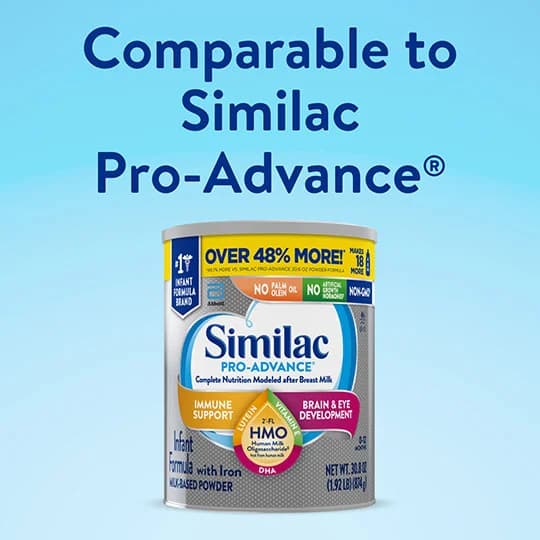
theformulafairy is upbeat and recommends the Costco generic as a smart, cheaper swap for Similac Pro-Advance. She emphasizes that this specific generic matches Pro-Advance’s recipe but uniquely lacks palm oil, and highlights the price: a 42‑oz bulk tub for about $20 versus a 20‑oz Pro‑Advance can for roughly $30. She frames it as an excellent, money-saving alternative if you can find it, while noting availability is limited to Costco and wishing she had access herself.

Store Reviews
CUSTOMER REVIEWS FROM 1 STORE
Many Walmart shoppers used Similac Pro‑Advance when breastfeeding fell short or hospitals suggested a switch. Across reviews the formula often solved weight and fussiness issues, mixed easily for travel (ready‑to‑feed and single‑serve packs were praised), and helped some babies with digestion and immunity, but a clear pattern of stomach problems also appears: multiple caregivers reported gas, constipation, projectile vomiting or diarrhea after switching to Pro‑Advance or its powder form, with a few noting the ready‑to‑feed version was gentler. Cost and availability come up repeatedly as downsides, and several parents describe reverting to other Similac variants or returning to breastfeeding when issues emerged.
4.3 Stars / Some verified reviews

Forum Reviews
CUSTOMER REVIEWS FROM 1 FORUM
Redditors generally feel positive about Similac Pro‑Advance but pragmatic about switching. Many report babies tolerate it well and see no major differences versus store-brand “Pro‑Advance” generics or the newer Similac 360 — users praise its nutrition and say generics save a lot of money. Criticisms center on occasional spit‑up, gassiness for some infants, and confusion over the product shift to 360 Total Care; a few parents described intolerances that required trying gentler formulas. Overall the community recommends feeding what your baby tolerates, using generics when needed, and consulting a pediatrician for persistent digestive issues.
Many comments

In-Depth Review

Highlights
- •Immune-focused HMOMarketed as 2’-FL HMO immune support.
- •Development nutrients includedIncludes DHA, lutein, and vitamin E.
- •Non‑GMO positioningCompany highlights its non‑GMO labeling.
- •Convenient feeding formatsPromoted as ready-to-feed and single‑serve.

Considerations
- •Variable digestive toleranceReports of gas, constipation, diarrhea.
- •Limited HMO dosingMarketed as 2’-FL; dose is limited.
- •Milk and soy allergensContains milk and soy; not suitable.
- •Cost and availabilityHigher price and sporadic availability reported.
Similac’s Pro‑Advance arrives as a trusted, hospital‑aligned option from a well‑known brand, built to be a close match to breastmilk for parents wanting a familiar, premium choice. Designed as complete nutrition for babies in their first year, it’s commonly used for exclusive formula feeding, supplementing breastmilk, or transitioning after hospital recommendations—especially by caregivers who value research‑forward ingredients. In the sections ahead we’ll unpack its 68 kcal per 100 mL energy profile and macronutrient balance, the inclusion of 2’-FL HMO for breast‑milk‑style immune support, and the role of DHA and ARA alongside lutein and natural vitamin E for brain and eye development. We’ll also cover practical trade‑offs like milk/soy and lactose content, the palm‑olein–free fat blend, and real‑world digestive tolerance compared with competing formulas—useful if you’re weighing cost, sensitivity, or hospital continuity; read what matters to your baby and then pick the feature that helps sleep return.
Fat Blend
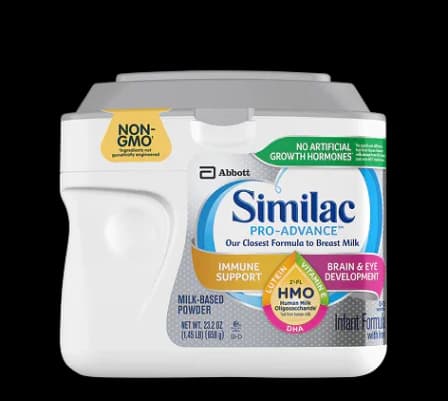
Similac’s formulation avoids palm olein to address mineral absorption and digestive concerns, which is one of its quieter formulation choices with practical effects. The palm olein‑free blend is intended to support calcium absorption, the product uses oils like high oleic safflower and coconut, and some parents say the ready‑to‑feed format felt gentler, suggesting fat source and format together can influence real‑world tolerance.
2'-FL HMO
Similac adds the human milk oligosaccharide 2’-FL HMO to echo a breast‑milk component linked to immune benefits, and that inclusion is the product’s headline differentiator. Experts acknowledge the immune‑support claim as meaningful but caution the dose is limited and HMOs are only one part of breast milk’s complex mix, while parents report occasional tolerance changes after switching, which aligns with warnings about microbiome shifts.
Allergens and Sugars
This product contains ingredients that matter for infants with sensitivities, so read labels before switching. It lists milk and soy components and contains lactose as the primary carbohydrate, making it unsuitable for milk‑ or soy‑allergic babies or for galactosemia, and some reviewers flagged added sugar differences versus competitor formulas as a reason they chose alternatives for particularly sensitive infants.
Digestive Tolerance
Tolerance varies across infants, so expect a trial period after any change in feeding. Reviews and expert commentary report both gassiness after switching, instances of constipation or diarrhea, and reports that the ready‑to‑feed format sometimes reduced symptoms for sensitive babies, which underscores that brand claims about gentleness are partly supported but that individual responses determine usability.
Macronutrient Profile
This formula delivers a standard energy and macronutrient balance per serving that’s easy to rely on for daily feeding decisions. At about 68 kcal per 100 mL, with roughly 1.4 g protein and 3.7 g fat per 100 mL, it matches mainstream infant nutrition targets and supports steady growth, while the 7.3 g carbohydrates (mostly lactose) supply quick energy and palatability; these numbers help explain why clinicians and reviewers describe it as a familiar, hospital‑aligned option.
Development Nutrients
The formula includes nutrients targeted at cognitive and visual development to support early growth milestones. With DHA and ARA for brain fatty acid needs, lutein for eye health, and natural vitamin E as an antioxidant, it reflects modern formula design aimed at development, and experts generally view these inclusions positively while noting they don’t guarantee individual developmental outcomes.
Conclusion
Let's tie the threads together: this formula brings a reliably hospital‑aligned nutrient base—about 68 kcal per 100 mL with a standard macronutrient profile—plus a headline 2’-FL HMO addition and modern brain/eye ingredients like DHA, ARA, lutein, and natural vitamin E, which experts praise for mirroring breast‑milk priorities; its palm olein–free fat blend and ready‑to‑feed options can ease calcium uptake and sometimes improve tolerance for sensitive babies. That said, caregivers should weigh the milk/soy/lactose allergen profile and the real possibility of short‑term digestive changes (gassiness, spit‑up, or stool shifts) after switching—some families saw smoother feeds, others needed a gentler formula. Best fit: parents who want breast‑milk‑inspired immune and developmental ingredients and value convenience should consider it, while allergy‑sensitive infants or those who react to formula changes may be better served exploring alternatives; overall, it’s a thoughtfully formulated, generally well‑regarded choice that balances research‑driven features with pragmatic trade‑offs.

Feature Scores
This reflects reviews and ratings from established critics, journalists, and users who have evaluated the item. Their opinions provide a comprehensive assessment.
Performance
Nutritional Adequacy
5/5
Digestibility
3/5
Taste Acceptance
4/5
Preparation Consistency
4/5
Shelf Life Stability
4/5
Value
Cost Per Serving
3/5
Availability
4/5
Value For Special Needs
2/5
Design
Packaging Convenience
4/5
Label Clarity
4/5
Scoop Design
4/5
Health
Ingredient Quality
4/5
Micronutrient Fortification
5/5
Prebiotic Probiotic Inclusion
4/5
Added Sugar Content
3/5
Allergen Management
2/5
Safety
Microbial Safety
4/5
Heavy Metal Contaminants
3/5
Regulatory Compliance
5/5
Sustainability
Sustainable Sourcing
3/5
Packaging Recyclability
3/5
Production Carbon Footprint
3/5
Experience Style
Formula Variety
4/5
Caregiver Ease Of Use
4/5
Information Quality
4/5

Specifications
This section outlines the product's key facts, covering essential features, details, dimensions, materials, and any unique characteristics that define its functionality and usability.
Performance
Value
Design
Safety
Sustainability
Experience Style

Frequently Asked Questions
13 Questions

Also Consider
1 Option

Find Yours
What is your primary concern when choosing a formula?
Answer to find your best matches.