
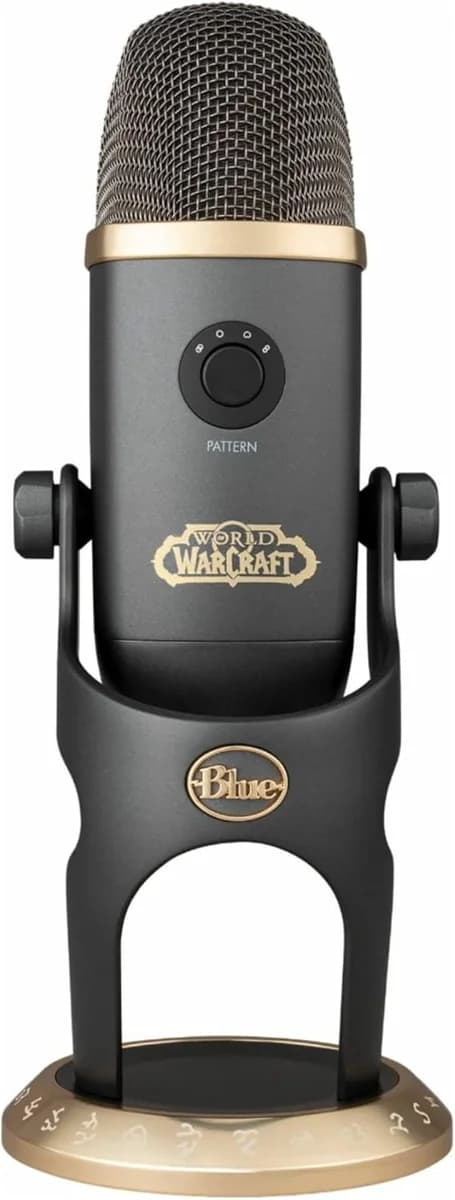
Blue Yeti X USB Microphone
Clear, customizable sound with smart controls, though Micro-USB reliability warrants caution.
The Blue Yeti X USB Microphone is a desktop sound upgrade for streamers, podcasters, gamers, and creators tired of headset-level audio but not ready for XLR complexity. Its 24-bit/48 kHz capture produces clear, full vocals, while the smart multifunction knob and 11-segment LED meter make live gain, mute, blend, and monitoring adjustments refreshingly easy. Blue’s promise of broadcast polish is largely supported by experts and users, though the sensitive condenser still hears fans, echoes, keyboards, and plosives without careful placement. Blue VO!CE software adds useful shaping, but presets can be aggressive, and the bulky stand plus easily bumped pattern button limit convenience. At around $73 renewed, it is compelling value, provided the Micro-USB port reliability checks out. Its overall appeal rests on sound, control, price, and tolerance for setup quirks.
Find Yours
What's your main use for a multipurpose microphone?
Answer to find your best matches.

The Field
Browse top contenders, or compare all options ranked by score and key attributes.
1 Option


The Scoreboard
Does this improve your life? Considers, health, habits, and environmental impact.
Benefits
Clear audio feels more polished on calls, streams, podcasts, and recordings without complicated studio gear.
One front knob makes muting, volume changes, and mic-computer blending easy mid-conversation.
Live level lights show when your voice gets too loud before recordings clip.
Multiple pickup modes make solo talks, interviews, group chats, and music recording more adaptable.
Trade-Offs
Room noise gets picked up easily, so keyboards, fans, and echoes can distract listeners.
Large, heavy body takes desk space and can feel awkward to position beside a laptop.
Loose Micro-USB connections can interrupt recording or calls when the cable shifts.
 Alternatives


Join the Circle
Where real meets deal
Know what's worth buying-and when.
Tips, special offers, and rewards for buying and sharing.

Publications
7 LEADING PUBLICATION REVIEWS

Tim Gideon from PCMag highlights the Blue Yeti X as a solid and versatile update to the classic Blue Yeti microphone, emphasizing its clean, DSP-free signal and four condenser capsules that enhance recording flexibility. He praises the mic’s clear, rich vocal capture across multiple patterns—cardioid, figure-8, omnidirectional, and stereo—making it suitable for diverse recording scenarios, from vocals to instruments and ambient sounds. The inclusion of LED metering and the BlueVoice software presets adds useful monitoring and processing options, though the software is optional and some users may prefer their own DAWs. While the mic’s lack of an included pop filter and the ease of accidentally switching patterns are minor drawbacks, the internal damping and solid build mitigate these issues. Gideon notes the Yeti X’s competitive sound quality compared to pricier models and its plug-and-play compatibility, concluding it is a worthy choice for users seeking a flexible, no-DSP USB microphone with professional features.
By Tim Gideon
Tom’s Hardware highlights the Blue Yeti X as a refined evolution of the already excellent Blue Yeti, offering meaningful improvements primarily through its redesigned multi-function dial and the addition of the Blue Vo!ce software suite. The reviewer appreciates the mic’s sturdy, professional build and versatile four-capsule design, which enhances recording quality with a broader dynamic range and multiple polar patterns suitable for gaming, streaming, podcasting, and music. The Blue Vo!ce app’s presets and customizable filters stand out as a valuable addition, especially for users seeking plug-and-play vocal enhancement without complex DAW setups. However, the review tempers enthusiasm by noting that existing Yeti owners may find the upgrades insufficient to justify the higher price, and some physical details—like slightly loose dials and smudge-prone surfaces—detract from the premium feel. Overall, the Yeti X is praised as a top-tier USB microphone that balances professional sound quality with user-friendly features, making it a strong choice for newcomers but less compelling for current Yeti users.
By Phil Iwaniuk
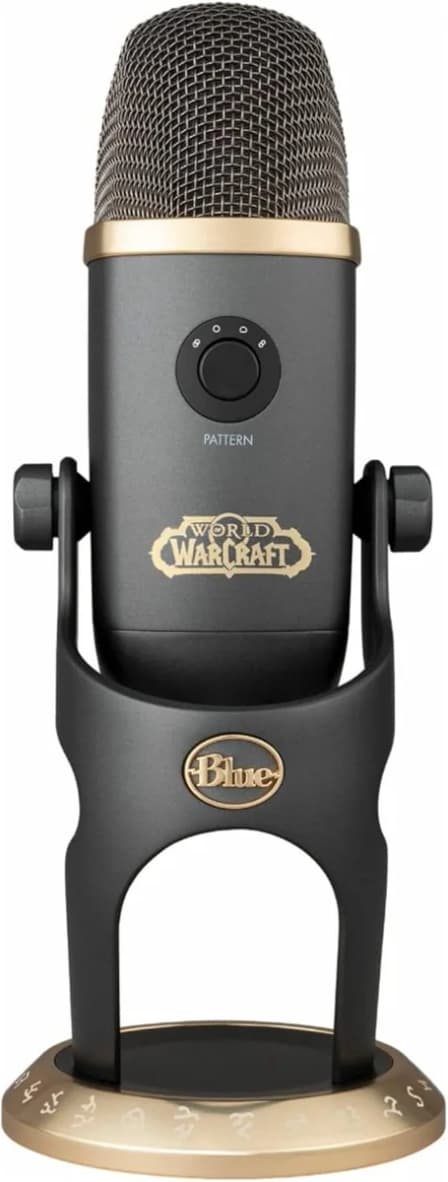
Tech Advisor highlights the Blue Yeti X as a premium, versatile USB microphone ideal for livestreaming, podcasting, and content creation. Praised for its great audio quality, four-capsule condenser array, and multiple recording modes, it offers flexibility for solo or multi-person setups. The microphone’s sleek design and premium build elevate streamer setups, while on-board controls and LED indicators provide convenient access to key features without relying solely on software. The bundled Blue VO!CE software enhances customization with presets and equalizer options, and the World of Warcraft Edition adds unique voice modulation and themed audio samples, though these features come at a higher price and are exclusive to that variant. Criticisms include its relatively high cost, bulky size, and the WoW-specific voice modulation being locked behind the more expensive edition. Overall, the Blue Yeti X is recommended as a top-tier choice for those serious about audio quality and customization, especially beginners willing to invest in a versatile, professional-grade microphone.
By Lewis Painter
Mike Andronico from Tom’s Guide highlights the Blue Yeti X as a refined evolution of an already excellent USB microphone, combining superb sound quality with extensive customization options. He praises the microphone’s sleek design, intuitive LED volume meter, and the powerful Blue VO!CE software suite, which offers a variety of vocal presets and advanced audio controls like noise reduction and equalization. While the sound quality closely matches the original Yeti, the added software features and customizable LED indicators provide meaningful enhancements for streamers, podcasters, and content creators. Andronico notes that the Yeti X still picks up some background noise typical of condenser mics but delivers clear, full voice reproduction even in noisy environments. He recommends the Yeti X especially for new buyers seeking a premium USB mic, while suggesting existing Yeti owners consider upgrading mainly for the software and aesthetic improvements. Overall, the review conveys a positive, enthusiastic tone with balanced insights into strengths and minor limitations.
By Mike Andronico
Christian Thomas from SoundGuys highlights the Blue Yeti X as a versatile and user-friendly USB microphone ideal for streamers, podcasters, and content creators seeking quality audio without the complexity or cost of studio gear. Praising its multi-capsule design and customizable pickup patterns, Thomas emphasizes the mic’s ease of setup and practical features like the gain dial with LED feedback and mute function. While acknowledging it won’t rival professional studio microphones, the review underscores the Yeti X’s solid performance in challenging home recording environments, delivering clear voice capture with manageable plosive issues. The reviewer also notes the value of Logitech’s GHub software for voice customization. However, Thomas cautions that the mic is not suited for professional music recording or instrument capture and suggests alternatives like the Shure MV7+ for users needing more advanced connectivity and features. Overall, the review conveys a balanced, moderately positive sentiment, appreciating the Yeti X’s strengths as a reliable, accessible desktop mic with some limitations.
By Christian Thomas
Markkus Rovito and John Alexander from Popular Science highlight the Blue Yeti X as a thoughtful evolution of the original Blue Yeti USB microphone, offering noticeable improvements in audio clarity, design, and user controls for an additional $60. They praise the Yeti X’s higher 24-bit/48kHz resolution, fourth condenser capsule, and customizable multicolor LED ring, which enhance both sound quality and on-camera appeal. However, they also emphasize that the original Yeti remains a highly capable, user-friendly, and reliable microphone, especially for new podcasters or streamers on a budget. The review balances enthusiasm for the Yeti X’s refinements with a measured acknowledgment that many users may not perceive dramatic differences in everyday use, particularly given common compressed audio formats. Unique insights include the practical benefits of the Yeti X’s improved stand design and software-based vocal effects, alongside a clear explanation of when the upgrade is worth it. Overall, the review positions both mics as strong contenders in a crowded USB microphone market.
By Markkus Rovito, John Alexander
Nathan Lawrence from Reviews.org Australia highlights the Blue Yeti X USB Microphone as a professional-grade, versatile audio tool ideal for podcasters, streamers, and voiceover artists seeking broadcast-quality sound without the complexity of mixing decks. He praises its plug-and-play ease, robust build, and the four-capsule condenser array that delivers rich, room-filling audio superior to typical gaming headsets. The review emphasizes the convenience of multiple polar patterns accessible via a button, though notes the Yeti X’s pattern selector is less intuitive than the original Yeti’s dial. Lawrence also values the accompanying software options, especially Logitech G Hub, which offers live mic testing and customizable presets through Blue Voice enhancements. While the price is steep at nearly $300, he considers it a worthwhile investment for serious users upgrading from other USB mics. Overall, the review conveys measured enthusiasm, balancing high praise for sound quality and usability with candid observations about minor interface trade-offs.
By Nathan Lawrence

YouTube
9 LEADING EXPERT & INFLUENCER REVIEWS
 Podcastage
Podcastage is cautiously positive about the Blue Yeti X, calling it a capable, flexible entry-level USB microphone rather than a universal recommendation. Testing covered polar patterns, room noise, desk bumps, keyboards, plosives, latency, instruments, vocals, and a comparison with the original Yeti. The four patterns, 24-bit/48 kHz recording, zero-latency monitoring, onboard controls, and stereo guitar performance impressed him. However, the multifunction knob feels clunky, the pattern button is easy to trigger accidentally, Blue VO!CE works only on Windows, and its presets are overly aggressive. He recommends careful setup and boom-arm use, especially for streaming.
EposVoxEposVox is impressed by the Blue Yeti X, calling it a solid, well-built USB microphone with good sound and unusually useful Blue VO!CE processing. He appreciates the multiple pickup patterns, headphone monitoring, adjustable presets, noise gate, and detailed software controls, while his white-noise and typing tests reinforce its practical streaming value. However, the raw sound is somewhat muddy, and the Micro-USB connection feels dated. His biggest reservation is price: Elgato’s Wave microphones may offer better overall software value through virtual mixing. Overall, it is a strong choice when used correctly, but not an automatic bargain.
Soldier Knows BestSoldier Knows Best is highly positive about the Blue Yeti X, calling it a premium, great-sounding USB microphone that is easy to use. He praises its sturdy stand, headphone monitoring, smart knob, LED metering, four pickup patterns, and plug-and-play setup, while finding Logitech G HUB and Blue VO!CE useful for deeper customization. His hands-on demonstrations show the patterns working as intended, though he warns the rear pattern button is easy to press accidentally. Overall, he considers it an excellent streaming, podcasting, and gaming microphone, especially for users wanting strong audio without complicated setup.
Consumer Tech Review (High-Speed)Consumer Tech Review is strongly impressed by the Blue Yeti X, praising its crisp, full sound, low noise floor, effective plosive handling, and better rejection of keyboard and mouse noise than the Elgato Wave 3. The four pickup patterns, front-facing gain and monitoring controls, high-resolution LED clipping meter, and extensive Blue VO!CE customization make it particularly appealing to streamers and content creators. Its premium build and stable stand also earn enthusiasm. Still, it is highly sensitive, best suited to quieter rooms, lacks included accessories beyond the Micro-USB cable, and requires an adapter for some boom arms.
Precision PodcastingPrecision Podcasting is broadly positive about the Blue Yeti X, calling it versatile, attractive, easy to use, and capable of excellent sound in a treated, quiet space. Extensive tests cover polar patterns, plosives, proximity, handling noise, setup, and comparisons with several microphones. The reviewer’s key caution is that its sensitive condenser design captures room echo and background noise, making it a challenging choice for inexperienced podcasters. They also experienced unexplained gating or noise suppression, an occasionally frustrating smart knob, and an easily bumped pattern selector. Overall, it’s strongly recommended for streaming and general use, but only conditionally for podcasting.
Juggleboy MinusJuggleboy Minus is positive on the Blue Yeti X, calling it a versatile, sturdy USB microphone with excellent sound in controlled environments. He particularly values its four pickup patterns, real-time LED level meter, modestly improved quality over the original Yeti, and Blue VO!CE software. Still, his enthusiasm is measured: finding a usable gain level for streaming was difficult, button clicks can transmit noise, and Micro-USB feels dated. He considers the extra patterns somewhat overrated and suggests the cheaper Yeti may offer better value, while streamers with changing volume levels should favor the Elgato Wave 3’s Clipguard.
9to5ToysJordan is enthusiastic about the Blue Yeti X, calling it an elegant, versatile upgrade with excellent sound and creator-friendly controls. He appreciates the four pickup patterns, front smart knob, LED metering, headphone monitoring, and Blue VO!CE software, especially its presets and deeper EQ customization. The microphone is plug-and-play, and Jordan recorded the entire review with it, offering an authentic sound demonstration. His main caveat is that Blue VO!CE was still in beta, Windows-only at the time, with macOS support promised later. Overall, he considers the $170 Yeti X a highly capable, convenient microphone for streamers and podcasters.
ReviewedByPhilPhil is strongly positive about the Blue Yeti X, calling it clear, reliable, and a worthwhile upgrade over the original Yeti. He appreciates the sturdy stand, four-capsule sound, headphone monitoring, live sound meter, and especially Blue VO!CE filters, which can reduce post-processing and improve clarity. His hands-on testing also reveals important caveats: gain falls off sharply at zero or when speaking from a distance, plosives and breathing are prominent without a pop filter, and the applied voice filter cannot be heard through monitoring headphones. Overall, he enthusiastically recommends it when the extra cost is acceptable.
m.a.p. reviewsm.a.p. reviews is highly positive about the Blue Yeti X, calling it a favorite go-to microphone for videos, podcasts, and conference calls. He appreciates its heavy, stable base, straightforward computer setup, real-time LED level meter, and easy gain adjustment during recording. The four pickup patterns add useful flexibility, though his hands-on testing found Omni mode underwhelming and bidirectional interviews require speakers to sit quite close. He also flags the older USB-A connection as a minor inconvenience for USB-C computers. Overall, his enthusiasm outweighs the caveats, especially for talking-head content and beginner-friendly audio upgrades.

Social
2 INFLUENCER REVIEWS
 Angharad Yeo
Angharad Yeo highlights the Blue Yeti X as a well-built, robust microphone with clear, warm sound and useful physical controls, ideal for gamers and streamers. She notes its sensitivity can pick up background noise, especially keyboard rumble, and critiques the outdated micro USB connection and lack of XLR support. Overall, Angharad finds the Yeti X offers nice software features and flexibility but questions if the premium price is justified over the standard Yeti. She recommends the X for those who can afford it and want extra control, while suggesting most users might be better served by the more affordable original model.
 katliente | stream advice ✨
katliente | stream advice ✨ highlights the Blue Yeti X’s impressive sensitivity and sound quality but finds it overly sensitive for their personal use, requiring multiple noise suppression tools to manage background sounds like PC fans. They share specific settings and software tweaks to optimize performance, offering practical insight for streamers. Overall, katliente’s experience suggests the Blue Yeti X is a powerful microphone with excellent audio capture but may demand technical adjustments to avoid picking up unwanted noise. They imply it’s best suited for users willing to fine-tune settings rather than those seeking a simple plug-and-play solution.

Store Reviews
CUSTOMER REVIEWS FROM 1 STORE
Amazon users praise the Blue Yeti X USB Microphone for its sturdy build, attractive design, and impressive sound quality, especially when paired with Logitech’s G Hub software. Many highlight the mic’s ease of use and appreciate the helpful visual feedback from the light ring that indicates background noise levels, making it ideal for streaming and gaming. Reviewers enjoy the customizable presets, voice effects, and the unique World of Warcraft-themed aesthetics, which add a fun and personalized touch for fans. However, some users find the microphone quite large and heavy, which can complicate placement, particularly for laptop setups or when using boom arms. While the sound quality generally impresses, a few customers report occasional audio dropouts and persistent metallic sounds. Several reviewers also express frustration with the USB port, citing issues like loose connections and cable failures that affect reliability. Opinions on value vary, with some considering it a worthwhile investment for its features, while others feel the price is steep given the reported hardware concerns. Overall, Amazon customers recognize the Blue Yeti X as a high-quality, feature-rich microphone that excels in performance but may require careful setup and attention to USB durability.
4.5 Stars / Some verified reviews

Forum Reviews
CUSTOMER REVIEWS FROM 1 FORUM
Reddit users generally view the Blue Yeti X USB Microphone as a solid, reliable device with notable improvements over the original Yeti, such as better ADC quality, additional mic capsules, and customizable LED features. Many praise its sound quality and design, highlighting its crisp audio and build quality. However, some users report issues with software integration, inconsistent performance, and hardware reliability, particularly with the USB port and mounting options. Opinions are mixed among those considering upgrades; some find the Yeti X a worthwhile step up, while others feel the original offers superior sound or recommend alternative solutions for professional use. Overall, the sentiment leans slightly positive but acknowledges notable drawbacks.
Many comments

In-Depth Review

Highlights
- •Clear High-Resolution AudioReviewers found voices full and clear.
- •Live Audio ControlsSmart knob and meter aid streaming.
- •Customizable Voice ProcessingOptional software adds adjustable vocal effects.
- •Flexible Pickup PatternsFour modes support varied recording setups.

Considerations
- •USB Port ReliabilityLoose connections and dropouts are reported.
- •Room Noise PickupCan capture fans, echoes, and keyboards.
- •Accidental Pattern ChangesRear selector can be bumped during use.
- •Bulky Desktop FootprintLarge stand complicates compact desk placement.
Blue’s Yeti X builds on the brand’s USB-microphone reputation with a more controlled, creator-focused option for streaming, podcasting, gaming, and voice work. Its 24-bit/48 kHz recording and four-capsule design aim to deliver a step up from the original Yeti, while the smart multifunction knob and 11-segment LED meter make live adjustments unusually approachable. The four pickup modes add flexibility for solo speakers, interviews, and instruments, though the sensitive condenser design makes room treatment and 122 dB SPL handling worth examining. Users should also weigh the dated Micro-USB connection, reported port issues, and the sturdy but bulky stand against its plug-and-play convenience. Explore how its four polar patterns and practical monitoring tools fit your setup—because a polished stream starts with sound, not just a glowing desktop centerpiece.
Controls And Monitoring
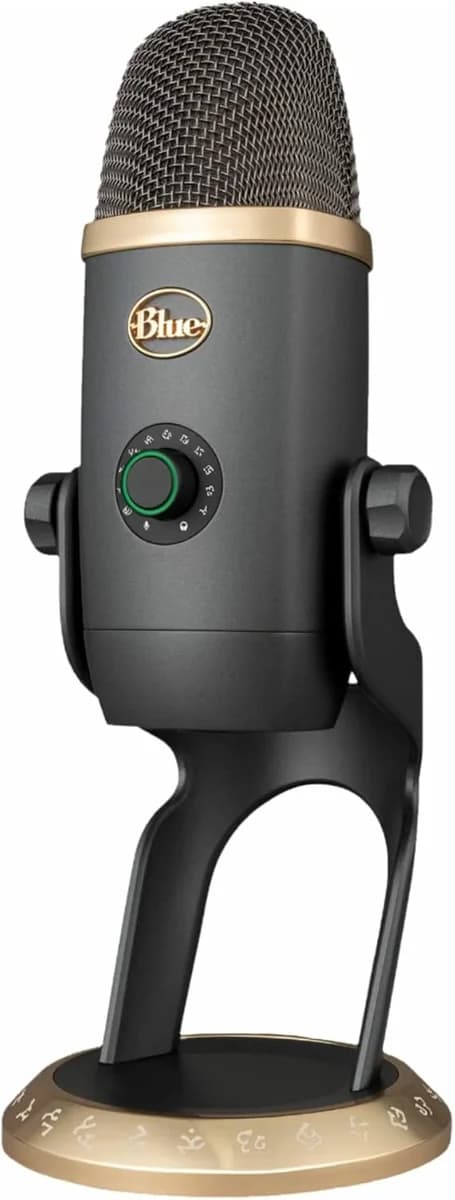
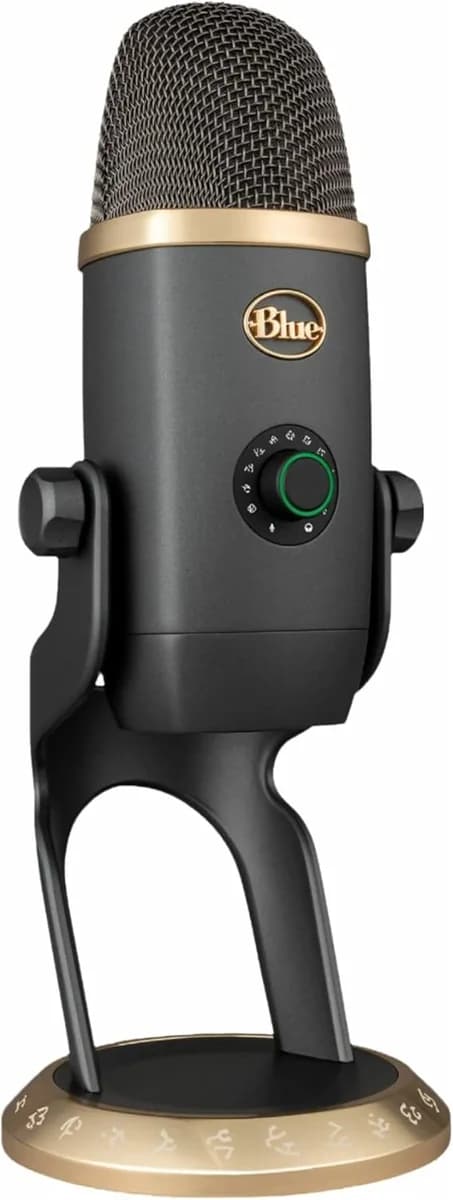
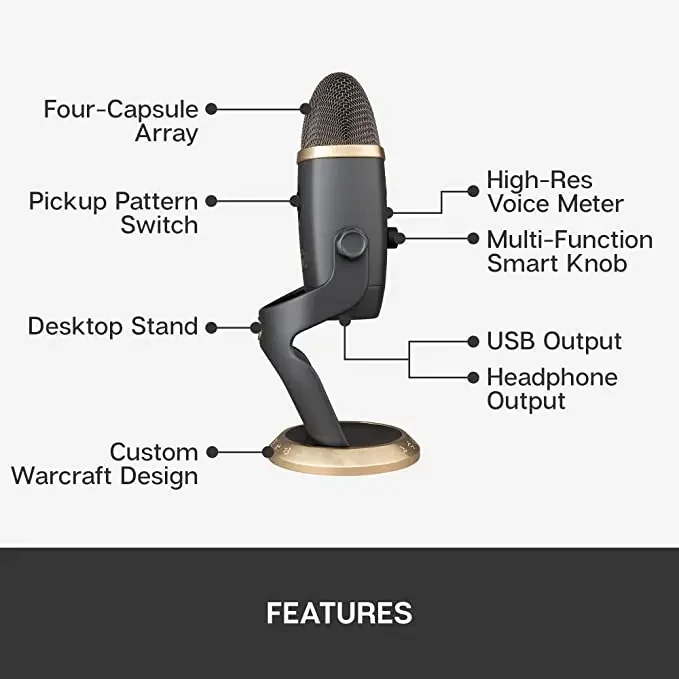
The front controls are one of the Yeti X’s most practical upgrades. Its multi-function smart knob adjusts gain, headphone level, blend, and mute, while the 11-segment LED meter helps prevent clipping during live speech. The 3.5 mm zero-latency headphone output also lets you monitor without distracting delay. Reviewers liked these features for streaming and calls, although several found the knob somewhat clunky and the rear pattern button easy to bump. Blue VO!CE presets add useful EQ, compression, gating, and de-essing, but they can sound aggressive until tuned.
USB Port Reliability
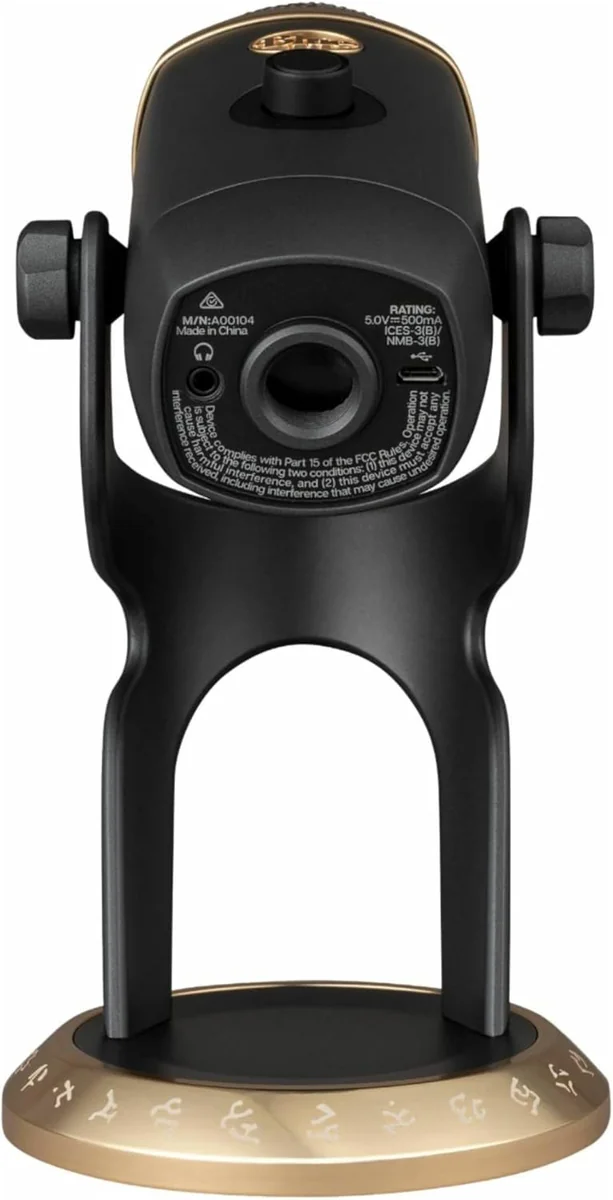
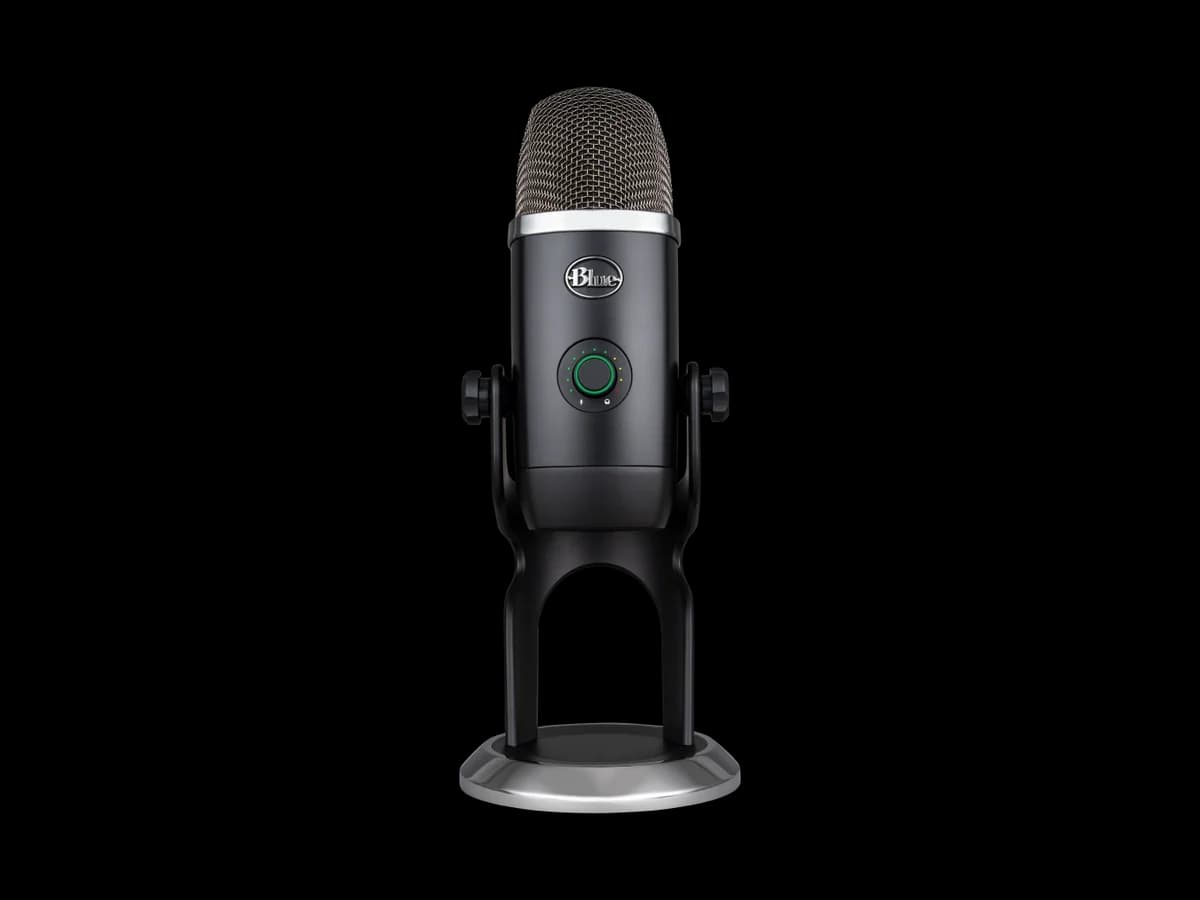
USB simplicity is a strength, but the connector is the Yeti X’s most persistent concern. Plug-and-play PC and Mac support avoids an audio interface, and Logitech G HUB or Blue Sherpa handles optional customization. However, the Micro-B USB port is dated compared with USB-C, and users report loose connections, cable failures, dropouts, or Windows recognition problems. Those complaints do not affect every renewed unit, but they matter more here because refurbished hardware may have prior wear. Check the cable and port immediately, and avoid strain from boom-arm routing.
Dynamic Range And SPL
The Yeti X offers useful recording headroom, but sensitivity still demands sensible technique. Its 122 dB SPL handling helps accommodate louder voices and instruments, while the 24-bit converter provides room to leave peaks lower and adjust later. In practice, reviewers praised its crisp capture and rejection of some keyboard or mouse noise, yet also reported strong pickup of fans, echoes, breathing, and plosives. Keep the mic close in cardioid mode, speak slightly off-axis, and add a pop filter; Blue VO!CE gating and suppression can help, but are not substitutes for a quiet room.
Audio Resolution Basics
The Yeti X delivers detailed USB recordings that suit most creator workflows. Its four-capsule condenser array outputs up to 24-bit/48 kHz audio, giving vocals more headroom and finer level detail than the original Yeti’s 16-bit format. The stated 20 Hz–20 kHz response covers the audible range, while tests generally found voices clear, full, and low in noise. Results are not automatically studio-grade, though: some reviewers heard a slightly muddy raw tone, and room reflections remain obvious without careful placement or Blue VO!CE processing.
Sturdy Desktop Design
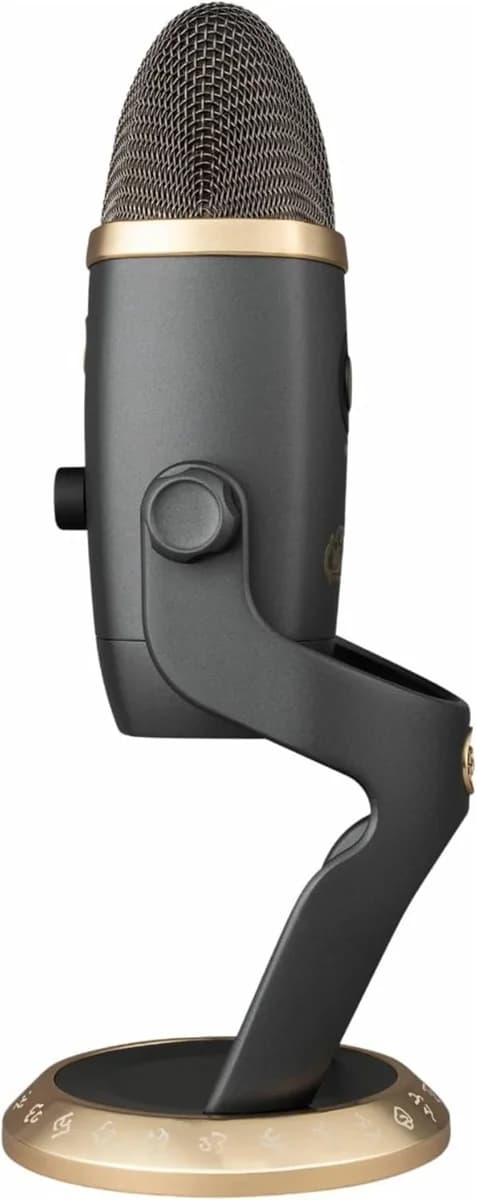
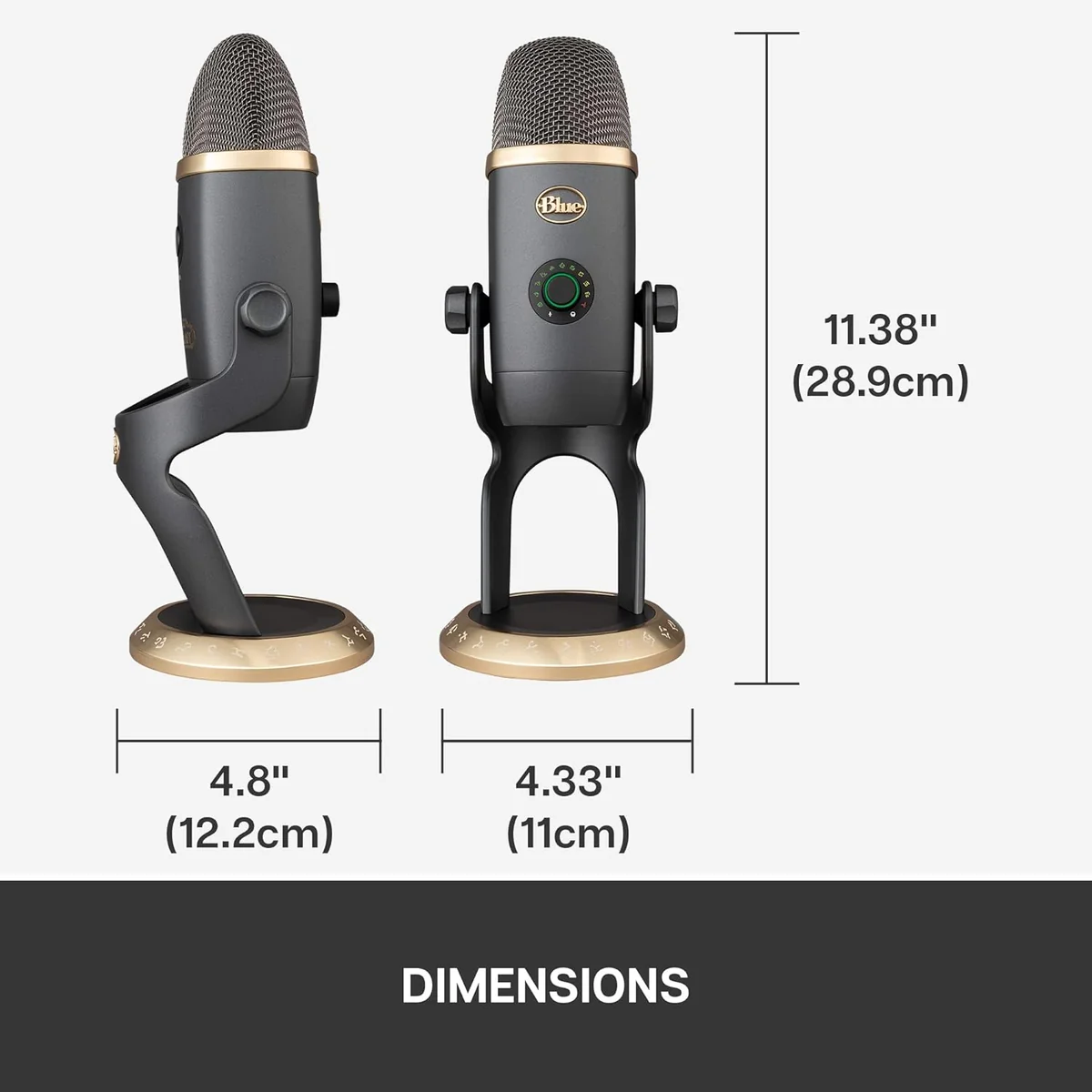
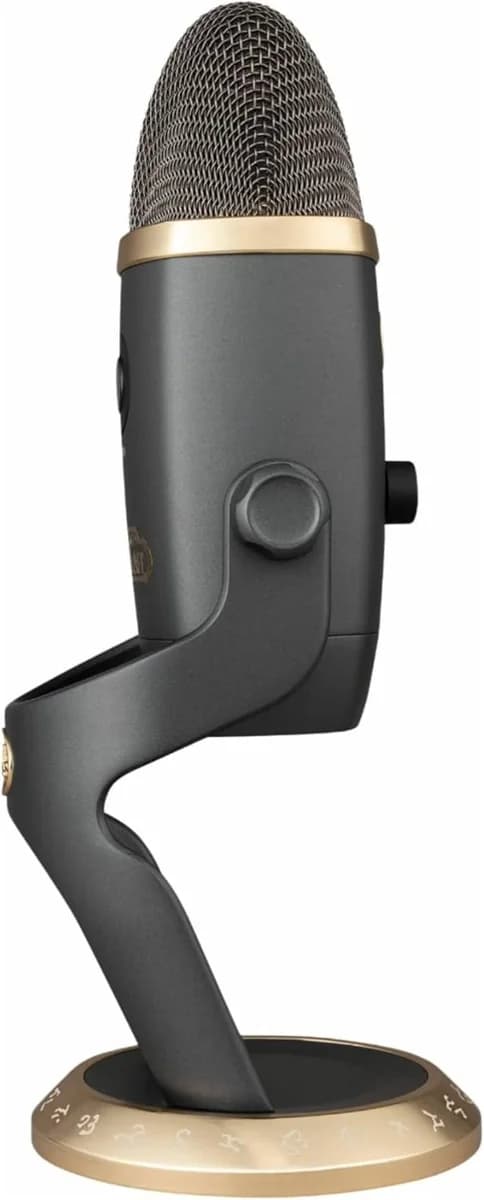
The Yeti X feels reassuringly substantial on a desk. Its heavy removable stand stays stable during normal use, and the internal shockmount helps reduce handling and desk-bump noise. The metal-bodied desktop build also gives it a polished, durable feel that reviewers consistently appreciated. The trade-off is physical bulk: the extended setup occupies significant desk space and can be awkward beside a laptop. Boom-arm mounting is possible, but adapters may be needed, and the Micro-USB cable connection should be protected from side strain.
Four Pickup Patterns
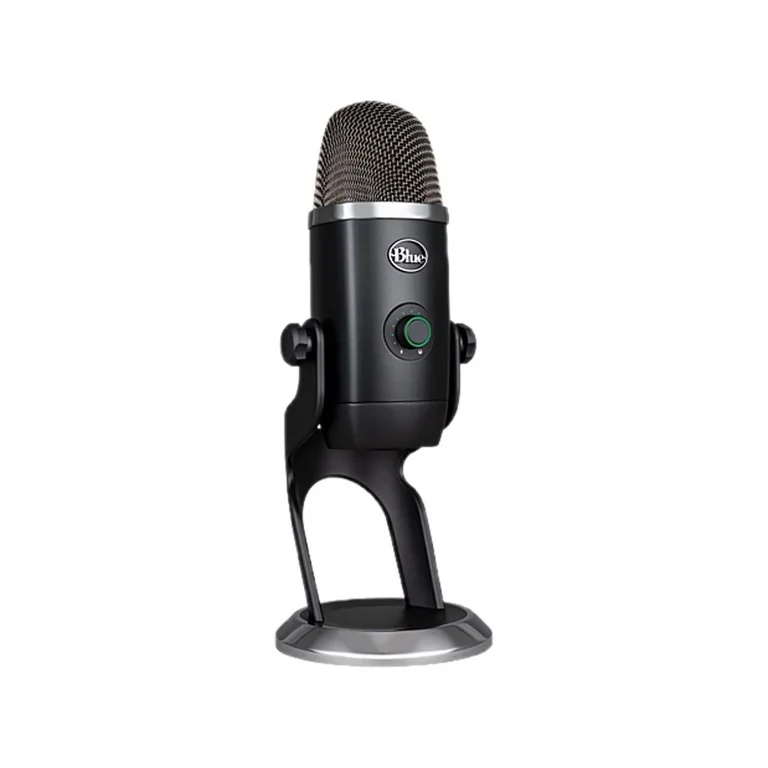
The switchable patterns make the microphone unusually adaptable for a desktop USB model. Cardioid mode is the sensible default for solo streaming because it prioritizes sound from the front, while omnidirectional can cover a room and figure-eight supports face-to-face interviews. Stereo mode is useful for instruments or spatial ambience, but it also exposes more room noise. Reviews confirmed the modes work, yet found Omni less impressive and bidirectional interviews demanding close speaker placement. The pattern control is flexible, though its easily bumped button can cause unwanted changes mid-session.
Conclusion
The final read is clear: the Blue Yeti X is a feature-rich desktop mic whose 24-bit/48 kHz audio gives voices useful detail across the audible range, though its sensitive condenser still exposes fans, echoes, and plosives. Streamers will appreciate the smart knob and LED meter for quick gain, mute, blend, and headphone adjustments, while four pickup patterns cover solo speech, interviews, and instruments—provided the easily bumped selector stays put. Its sturdy stand and internal damping feel reassuring, but the bulky footprint limits compact desks. The bigger concern is the dated Micro-USB connection, with users reporting loose ports, dropouts, and recognition problems, particularly worth checking on a renewed unit. This is a strong fit for creators who want plug-and-play control and are willing to tune placement and software; it is less suitable for noisy rooms, minimal desks, or anyone demanding USB-C/XLR reliability. Its polished sound and flexibility justify a favorable recommendation, tempered by those hardware and setup compromises.

Feature Scores
This reflects reviews and ratings from established critics, journalists, and users who have evaluated the item. Their opinions provide a comprehensive assessment.
Performance
Audio Quality
4/5
Noise Rejection
4/5
Frequency Response Consistency
4/5
Sensitivity and Output
4/5
Dynamic Range
4/5
Self-Noise
4/5
Multi-pattern Versatility
5/5
Value
Price-to-Value
4/5
Warranty and Support
2/5
Included Accessories
3/5
Design
Aesthetic Appeal
4/5
Ergonomics
4/5
Build Quality
4/5
Health
Material Safety
3/5
Hygiene and Maintenance
3/5
Safety
Regulatory Compliance
3/5
Electrical and EMC Safety
3/5
Sustainability
Sustainable Materials Use
4/5
Repairability
2/5
Packaging Waste
3/5
Experience Style
Ease of Use
4/5
Connectivity Options
4/5
Onboard Controls and Processing
5/5
Software and Driver Support
4/5

Specifications
This section outlines the product's key facts, covering essential features, details, dimensions, materials, and any unique characteristics that define its functionality and usability.
Performance
Value
Design
Safety
Sustainability
Experience Style

Frequently Asked Questions
9 Questions
Find Yours
What's your main use for a multipurpose microphone?
Answer to find your best matches.