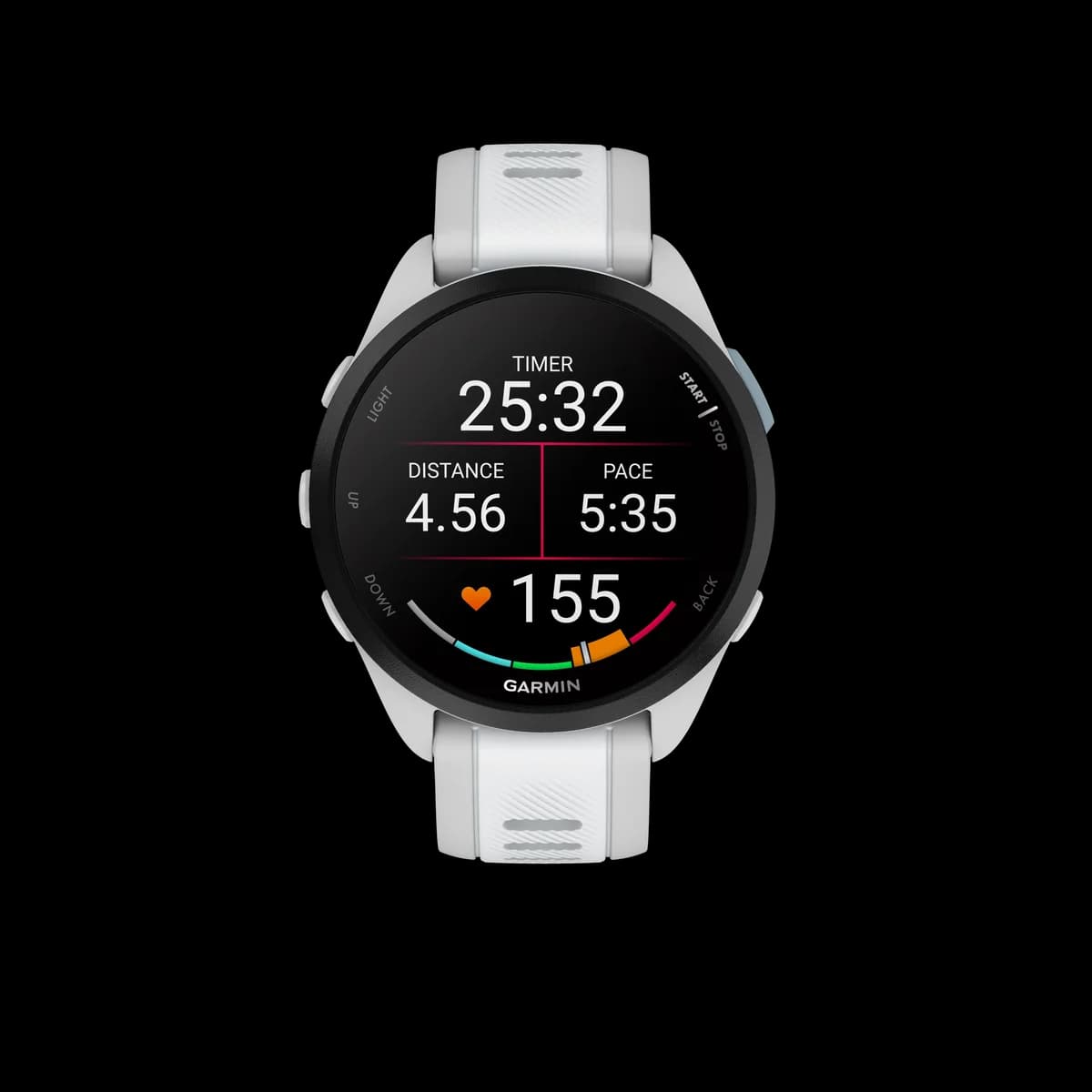
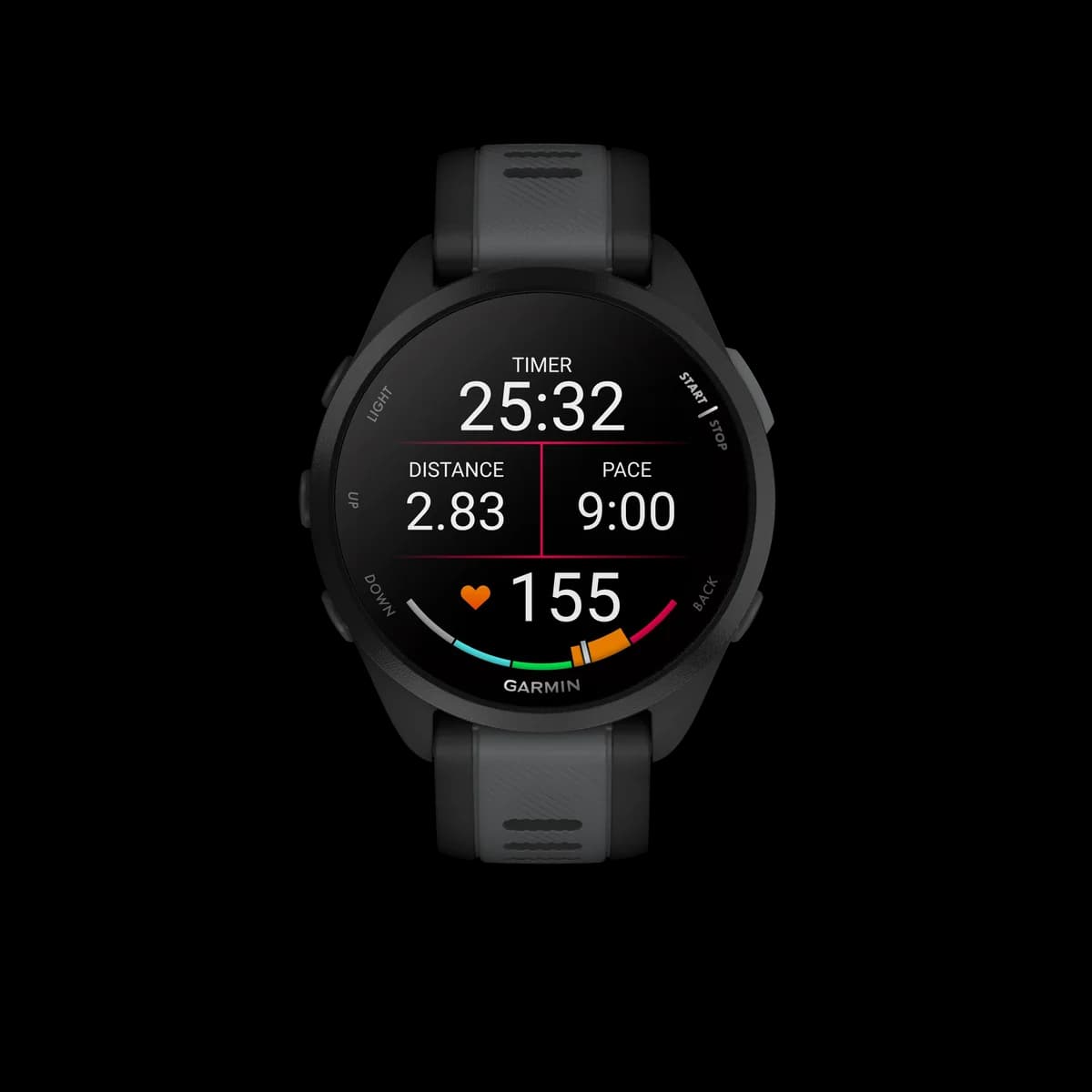
Garmin Forerunner 165
Bright AMOLED display, accurate GPS, long battery—great value for runners with minor trade-offs.
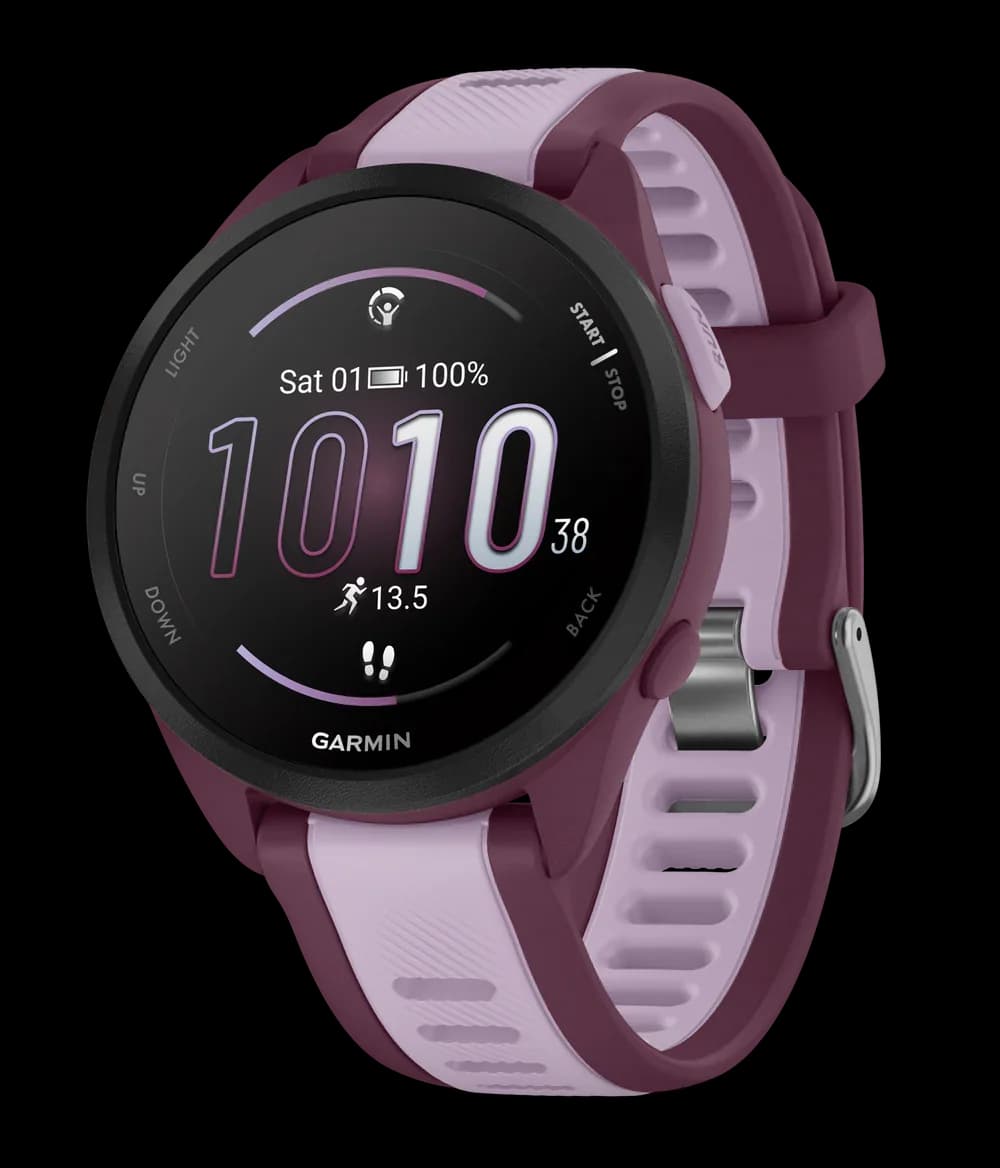
The Garmin Forerunner 165 is the compact running watch that gives beginners and everyday runners a bright, focused alternative to pricier multisport devices. Reviewers and owners praise its AMOLED touchscreen and built-in GPS for clear, readable data and reliable route tracking, while testing notes largely support Garmin’s battery life claims when power-hungry features are managed. Its wrist heart-rate and sleep insights are useful for daily guidance but experts recommend a chest strap for high‑precision intervals, and some users report occasional charging contact or sensor quirks. At its price the watch delivers strong value if you want approachable coaching and comfort over pro-level metrics, and your decision should hinge on how much advanced navigation or triathlon depth you need.
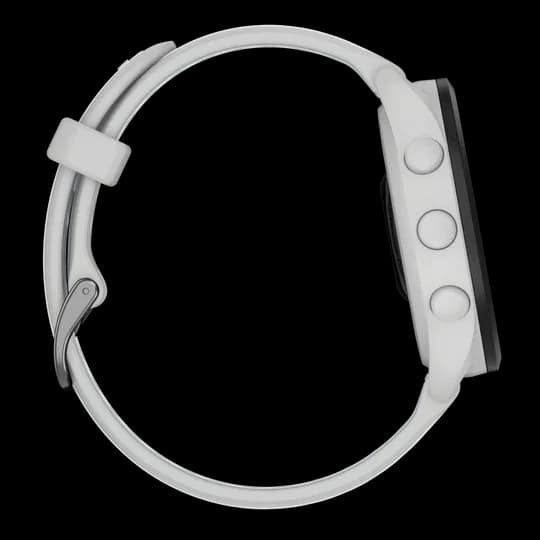
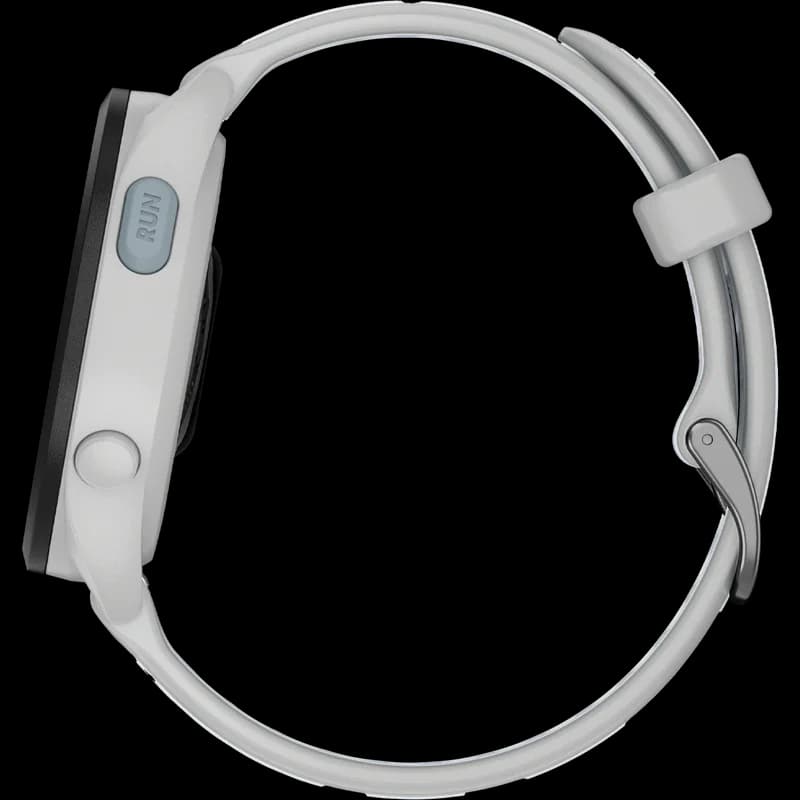
Find Yours
What is the primary reason you want a smartwatch?
Answer to find your best matches.

The Field
Browse top contenders, or compare all options ranked by score and key attributes.
5 Options
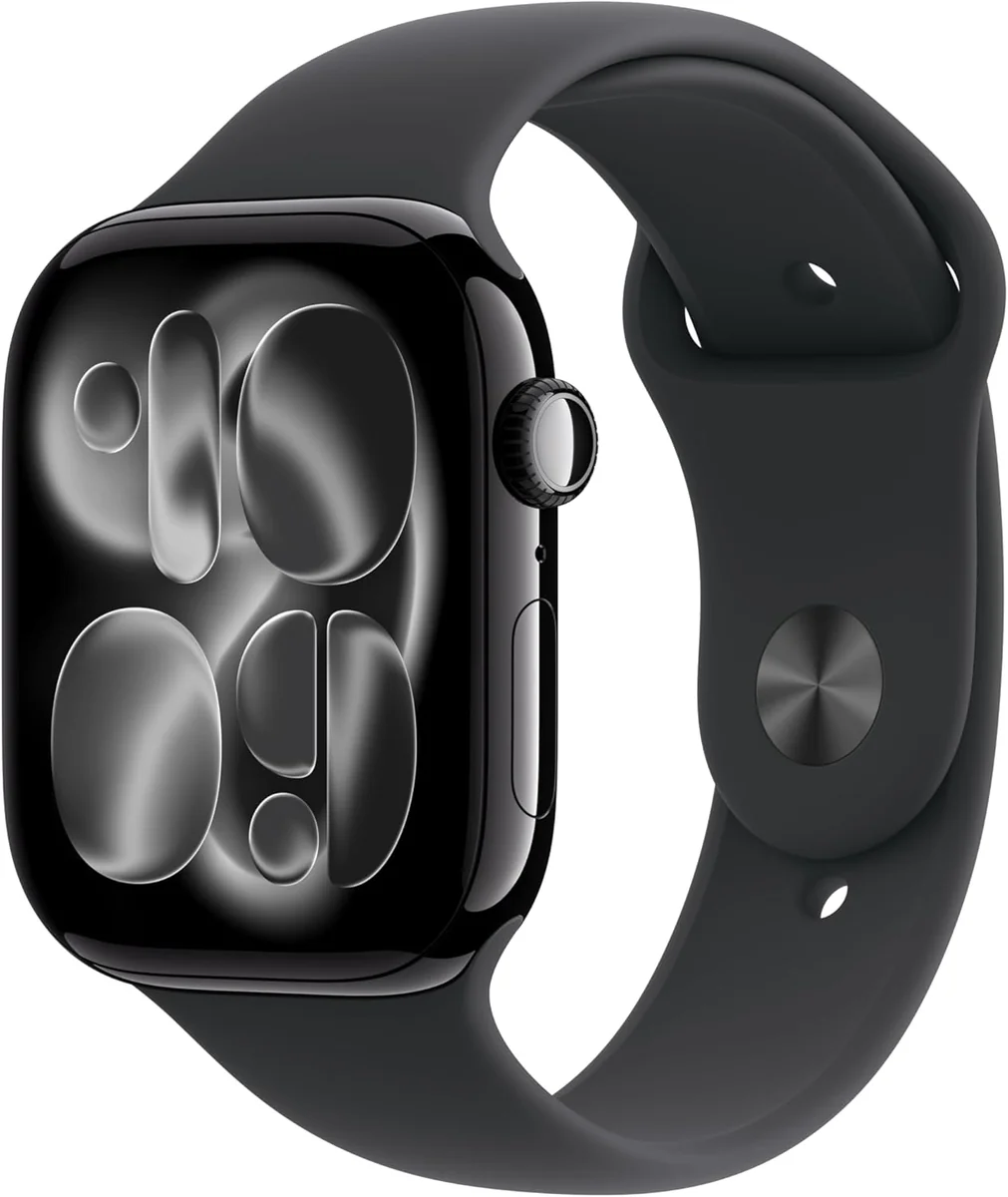

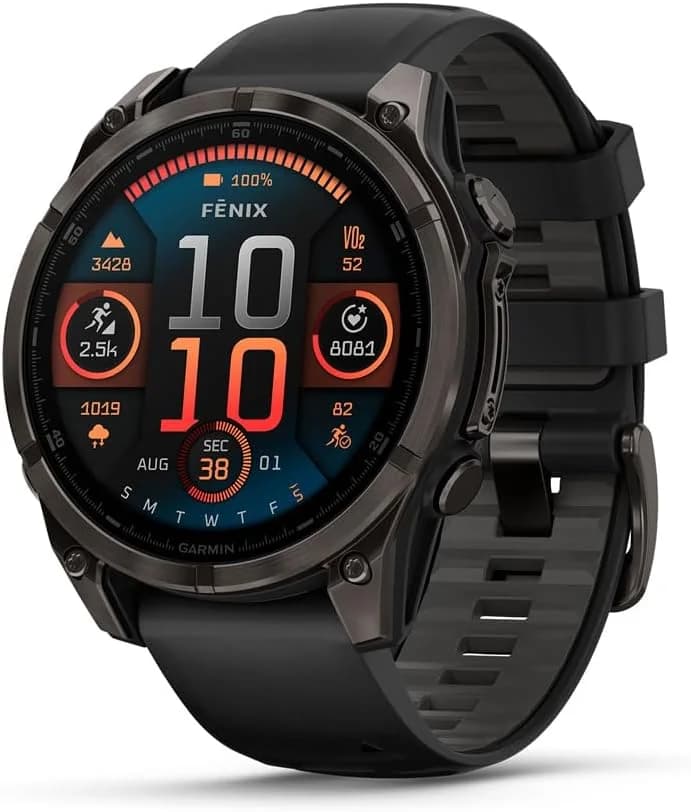


The Scoreboard
Does this improve your life? Considers, health, habits, and environmental impact.
Benefits
Barely noticeable 43mm design makes sleeping and all-day wear comfortable and unobtrusive.
Vivid, easy-to-read touchscreen keeps pace and metrics visible even in bright sunlight.
Multi-day runtime means fewer weekly charges and less worry about midweek dead battery.
Daily suggested workouts and recovery tips keep training purposeful and reduce guesswork.
Accurate pace and route tracking builds confidence on runs and cleaner Strava uploads.
Notifications, Garmin Pay and incident alerts simplify errands, safety, and social coordination.
Trade-Offs
Always-on display or long GPS runs shrink runtime, forcing midweek or mid-run charging.
Included band can pinch or feel tight on larger wrists, causing pressure or irritation.
Optical heart-rate lags or spikes during abrupt efforts, skewing recovery and interval feedback.
 Alternatives


Join the Circle
Where real meets deal
Know what's worth buying-and when.
Tips, special offers, and rewards for buying and sharing.

Publications
10 LEADING PUBLICATION REVIEWS

DC Rainmaker comes away positively impressed. Ray Maker praises the Forerunner 165 as a smart, well-priced running watch that brings an AMOLED display and core Forerunner run features to a budget tier, delivering GPS and optical heart-rate performance that often matches pricier Garmins. He’s enthusiastic about real-world accuracy, battery life matching Garmin’s claims, and thoughtful AMOLED implementation (including sleep-friendly modes), but stays measured—calling out missing high-end training tools (Training Readiness/Load, multisport/triathlon, multiband GNSS), odd product-line inconsistencies across Garmin models, and occasional HR latency in very cold or abrupt efforts. The tone is upbeat yet analytical: the reviewer likes the watch a lot for most runners, sees it as “great in isolation,” and flags the company’s confusing model segmentation as the bigger problem than the device itself.
By Ray Maker
Michael L. Hicks of Android Central is broadly positive about the Forerunner 165. He praises its AMOLED screen, reliable GPS and heart-rate accuracy, comfortable lightweight build, and strong value for $250, calling it “next‑gen” compared with older Forerunners. At the same time he flags deliberate Garmin omissions—no Training Load/Status, reduced battery compared with higher-tier models, and a plasticky, utilitarian design—that make it a compromise for data‑obsessed runners used to the 265/965. His testing against COROS, Fitbit, and a Polar chest strap reinforces confidence in core metrics, while noting occasional lag on rapid heart-rate changes and slightly less precise location versus dual‑frequency GPS. Overall the tone is approving but measured: Hicks recommends the 165 for runners who want accurate basics and value, but warns serious, data-driven athletes to consider pricier Forerunners for advanced training analytics.
By Michael L. Hicks
Victoria Song of The Verge is broadly positive about the Forerunner 165. She frames it as the Garmin training watch that finally hits the sweet spot: noticeably cheaper than flagship models yet functionally similar to the smaller Forerunner 265S, offering reliable GPS and heart-rate accuracy, long battery life, ruggedness, and the company’s full suite of training tools. Her enthusiasm is measured—she repeatedly praises value and everyday performance while acknowledging trade-offs like the lack of dual-frequency GPS, no EKG, and fewer niche sports profiles—limitations she says matter mainly to users who train in GPS-challenged environments or need advanced medical features. Practical testing against an Apple Watch Ultra 2 and a Polar chest strap bolsters her confidence, and she recommends the 165 (and 165 Music) as the best entry-level Garmin for serious runners who don’t want to overspend.
By Victoria Song
TechRadar’s Matt Evans is generally positive about the Forerunner 165. He likes that Garmin has squeezed premium-feeling features — a bright AMOLED screen, Morning Report, wrist-based running power and solid training tools — into a more affordable, lightweight package with impressive battery life, making it an excellent entry-level running watch. He also flags sensible compromises: a plasticky case and chemically strengthened glass instead of tougher materials, halved storage, no Training Readiness score, fewer advanced metrics (Hill/Endurance) and limited satellite support compared with higher-end models. Real-world testing showed accurate GPS, reliable health tracking and good gym performance, though serious runners may prefer the 265 or competitors like the Coros Pace 3 for deeper metrics or longer battery life. Overall, his tone is approving and measured — recommending the 165 to new or intermediate runners while warning hardcore athletes to consider pricier alternatives.
By Matt Evans
Matthew Richardson of OutdoorGearLab is broadly positive about the Forerunner 165. He praises its affordable price, slim comfortable fit, excellent AMOLED screen and strong GPS/heart-rate accuracy, calling it one of the best mid‑tier running watches in the lineup. The review is measured rather than gushing: Richardson warns that battery life (about 19 hours GPS, ~11 days smartwatch) lags compared with MIP or larger‑battery rivals, the smaller screen and limited mapping are tradeoffs, and some users may prefer always‑on visibility. He highlights useful recent firmware updates and everyday health features, and recommends the 165 for athletes wanting a lightweight, featureful Garmin without multi‑day GPS demands, while suggesting Coros or larger Forerunner models for those prioritizing battery or bigger displays. Overall the tone is favorable, practical, and balanced.
By Matthew Richardson
Adrienne So at WIRED is generally positive about the Forerunner 165. She appreciates its bright AMOLED touchscreen, improved sensors (pulse oximeter, altimeter, multiband GPS), and Garmin’s straightforward training plans, saying it helped her progress from base runs to tempo work with measurable improvement. She praises the data-rich experience, reliable tracking, and solid battery life in everyday use, though she got slightly less than the advertised runtime. Her main frustrations are music playback on the Music model—which required lengthy troubleshooting and felt clunky compared to competitors—and minor annoyances like strap hygiene and a few UI quirks. Overall So sees the 165 as a worthwhile step up from the Forerunner 55 for runners who value metrics and sensors, while warning it won’t replace seamless music or diagnose medical issues.
By Adrienne So
Samuel Gibbs at The Guardian is generally positive about the Forerunner 165. He treats it as a compact, well-built running watch that brings much of Garmin’s higher-end functionality—crisp OLED display, accurate GPS and heart-rate tracking, rich running metrics, and excellent battery life—into a simpler, lighter, more affordable package. Gibbs praises the readable screen, reliable tracking that barely lags behind multiband models in real-world tests, and useful health features, while pointing out clear omissions: no offline maps, no multisport/triathlon transitions, no multiband GPS, limited Garmin Pay and no ECG. His main gripe is price, which sits above many entry-level rivals despite saving money versus Garmin’s own 265. Overall the tone is measured and favorable: he recommends the 165 as the sensible Garmin running-watch choice unless you need triathlon features or offline mapping.
By Samuel Gibbs
Kieran Alger at Runner’s World is broadly positive about the Forerunner 165. After two months of marathon training with the Music model, he finds it a smart, value-focused Garmin: the AMOLED screen is vivid and responsive, the lightweight design is comfortable for 24/7 wear, and core running metrics and training tools closely match pricier Forerunner models. He praises GPS and optical heart-rate performance as “more than held its own” against higher-end Garmins and notes it covers most race needs. Criticisms are measured — missing dual‑band GPS, triathlon mode and some training-readiness metrics, plus a shorter GPS battery life — but these feel like deliberate trade-offs for a lower price. Overall the tone is approving and practical: a largely reliable, well-priced running watch that sacrifices a few advanced features to deliver much of Garmin’s premium experience for less.
By Kieran Alger
T3’s Matt Kollat is broadly positive about the Forerunner 165. He calls it a superb, lightweight running watch that smartly fills the gap between entry-level and multisport models, praising its bright AMOLED screen, Elevate Gen 5 sensors, useful running features and long-ish battery life for the price. He’s enthusiastic but measured: GPS is single-band (so not ideal in dense urban or forested areas), some advanced training metrics and multisport profiles are intentionally omitted, and a full Connect app pairing wasn’t possible during his pre-launch testing. Still, Kollat finds tracking, sleep data and running dynamics reliable for everyday runners and says the 165 represents strong value compared with rivals like Coros and Polar. Overall the tone is upbeat and approving—this is a recommended, more-accessible Garmin for runners who don’t need pro-level bells and whistles.
By Matt Kollat
Andrew Williams at Forbes comes away generally positive about the Forerunner 165. He likes that it packs high-end running features, an improved OLED screen, reliable outdoor heart-rate and route navigation, and solid day-to-day usability—all at a much friendlier price than flagship Garmins. That enthusiasm is tempered by real-world caveats from three months of use: wrist HR can wildly misread during some gym weight moves, the lack of dual-band GPS causes occasional pace dropouts under heavy tree cover, there’s no workout execution score, and always-on display drastically shortens battery life versus Garmin’s claim. Williams frames these as manageable trade-offs for most runners—especially those who don’t need triathlon tracking or pro-level metrics—so his tone feels measured and recommending rather than breathless.
By Andrew Williams

YouTube
13 LEADING EXPERT & INFLUENCER REVIEWS
 The Quantified Scientist
Rob is positive about the Forerunner 165 and calls it a great bang‑for‑buck Garmin. He praises the bright AMOLED, long battery life, strong GPS and running heart‑rate accuracy, backed by detailed data; but he’s frank about limits—hit‑or‑miss wrist HR for outdoor cycling and weightlifting, sleep‑stage variability versus EEG, and deliberate firmware feature locks—and recommends chest straps for serious HR needs, noting it’s a compelling choice for most runners who value Garmin’s ecosystem without paying for premium tiers.
The Run TestersNick from The Run Testers is positive overall. He praises the Forerunner 165’s bright, responsive AMOLED, compact lightweight design, solid GPS and mostly reliable heart‑rate for everyday runs, and good multi‑day battery life for an AMOLED watch. He flags real drawbacks too: no dual‑band GPS, pared‑down training analytics (no Training Readiness), and inconsistent HR accuracy at times—so serious athletes should pair an external chest strap or step up to a higher model. In short, Nick thinks it’s a well-rounded, value‑focused Garmin for most runners who want a premium screen without flagship prices.
DesFitDesFit comes away positive but measured about the Forerunner 165. He praises its bright AMOLED screen, lightweight comfort, Garmin training tools (Body Battery, Morning Report, suggested workouts) and solid GPS/HR performance for everyday runs, while noting battery varies with settings and higher-end Garmin features (multiband GNSS, triathlon auto‑switching, advanced training load metrics) are missing. He highlights useful smartwatch extras—Garmin Pay and Android quick replies—and recommends the 165 for runners who want strong value and readable display, though triathletes or data‑hungry athletes might prefer rivals like the COROS Pace 3 or higher-tier Garmins.
Becca FarsaceBecca Farsace is genuinely impressed and pleasantly surprised. She says the Forerunner 165 won her over with reliable GPS, long battery life, physical buttons, and the Body Battery/recovery-hour training metrics that actually changed her behavior, while calling out clumsy Garmin apps, confusing Garmin IQ organization, limited activity presets on her older unit, and a less stylish fit for dress or typing. Overall she treats it as a practical, sporty smartwatch that respects phone-free time—not for everyone, but a refreshing, useful alternative that made a long-time smartwatch skeptic keep wearing one.
Simply ManderSimply Mander is enthusiastic and impressed. She switched from Fitbit and kept the Forerunner 165 (music) after a month, praising its bright AMOLED screen, accurate onboard GPS, robust training analysis (V̇O2max, body battery, sweat loss), incident detection, and tattoo‑friendly HR sensing; battery life meets her expectations for multi‑day use though it varies with GPS/music and heavy features; the Garmin UI and data depth feel overwhelming compared with Fitbit’s simplicity. Overall she recommends the 165 as a worthwhile, sport‑focused upgrade for people who want more coaching and metrics without flagship size or price.
Matt LeGrandMatt LeGrand is positive about the Forerunner 165. He praises the bright 1.2" AMOLED, accurate GPS, solid wrist HR and sleep/morning-report features, and calls it an excellent, affordable running-and-swimming watch he’ll recommend to many athletes he coaches. He criticizes odd feature omissions—no triathlon mode, limited cycling power support, and some deliberate feature gating versus higher-tier Garmins—and notes the AMOLED limits battery life in always-on/GPS-heavy use. Overall he frames it as great value with minor, sometimes puzzling trade-offs, especially for users who need multisport or advanced training metrics.
Chase the SummitChase the Summit is upbeat about the Forerunner 165 and calls it a strong, well-rounded entry-level running watch. He praises the bright 1.2" AMOLED flat display, lightweight 43 mm build, solid GPS and Gen4 optical heart-rate accuracy, useful training and wellness features (Body Battery, HRV, suggested workouts) and surprisingly good battery life, while noting missing high-end software like training load/triathlon mode and no multiband GNSS. He values navigation and external sensor support, questions Garmin’s SKU fragmentation and pricing, but ultimately recommends the 165 as excellent value for most runners.
foXnoMadfoXnoMad is broadly positive about the Forerunner 165. He calls it the best value in Garmin’s lineup for most users, praising the bright AMOLED screen, comfortable 43mm size, solid GPS and heart‑rate basics, and entry‑level training features—while noting Garmin deliberately withholds a few 265 software screens, multiband GPS, and niche activity profiles (triathlon, snow sports). He advises first‑time Garmin buyers to pick the 165 for cost and everyday running needs, but recommends upgrading to the 265 if you already rely on advanced training metrics or multisport modes.
AbbyBReviewingAbby is generally positive about the Forerunner 165. She praises its bright AMOLED screen, lightweight comfort, long-ish battery (about 8–8.5 days for her), and solid GPS/fitness features, calling it a good value, especially the music edition option. She’s pragmatic about limits: occasional freezing, an older HR sensor, inconsistent SpO2 and sleep-stage readings, and picky color/size choices. Her hands-on 30‑day experience feels balanced—she thumbs it up (7.5/10) but points buyers toward the 255/265 if they want tougher build, better displays for outdoor readability, or more advanced metrics.
The WearableistThe Wearableist is positive overall. He says the Forerunner 165 punches above its $250 price with a bright AMOLED, accurate GPS/HR for runs, solid battery life (about a week in heavy use), and useful Garmin training features, while praising the UI and comfort. He flags a few limitations: fewer sport modes than some older models, no training readiness/status, occasional HR/dropouts in the gym, and annoyances like forced button use to save workouts and uneven Garmin Pay support. Bottom line: a strong, value-focused entry into Garmin’s ecosystem with a few nitpicks.
Austin ReviewsAustin Reviews is upbeat about the Forerunner 165 overall. He loves its AMOLED screen, tidy health metrics (Body Battery, recovery, morning report), and runner-friendly GPS/data—calling it a focused, less-distracting companion that helps him live better. He’s frank about weaknesses: middling UI and speed, limited smartwatch features (no onboard music without the music model), and notably shorter battery with always‑on display compared to the MIP‑screened Forerunner 255. Ultimately he recommends the 165 as a great first Garmin for most people but admits he’ll return to the 255 for longer always‑on battery life and outdoor readability.
Fit Dad FabioFit Dad Fabio is clearly positive about the Forerunner 165. He praises its bright AMOLED screen, reliable multi‑GNSS GPS, long battery life (weeks between charges), durable touchscreen plus useful physical buttons, and deep customizability—calling it ideal for beginner-to-intermediate runners and everyday athletes. He admits he skipped the Music edition and higher‑end models because this fit his needs and budget, and concedes race-day results depend on following the watch’s guidance. Overall Fabio enthusiastically recommends the 165 as a comfortable, data-rich, value-packed running watch with practical durability and training utility.
Smartwatch TutorialsSmartwatch Tutorials is upbeat about the Forerunner 165. He praises the bright AMOLED screen, lightweight 43 mm build, reliable GPS/HR tracking, useful training and sleep insights (Body Battery, sleep coach), and solid multi-day battery life, while noting always-on mode and heavy use cut runtime and the Music edition adds onboard storage. He emphasizes practical safety features (incident detection, Assistance), durable build, and accurate everyday tracking from months of use, calling it a great budget-friendly running watch—balanced praise with clear caveats on battery tradeoffs and touchscreen preference for physical buttons.

Social
3 INFLUENCER REVIEWS
 EM 🪩💫
EM 🪩💫EM 🪩💫 is overall happy with the Forerunner 165 and would buy it again. She praises the fast, accurate GPS, strong track mode, and long battery life (about a 10‑day charge cadence), and likes that it gives useful recovery time without the extra training‑load complexity. Her main gripe is sleep tracking, which consistently reports an hour to 90 minutes awake that she doubts, and she asks if others see the same. At ~£180 she calls it a simple, focused running watch that gives “all the features you need and nothing you don’t.”
kininiabigaelKininiabigael is clearly enthusiastic and would “100% recommend” the Forerunner 165. She loves phone-free runs with Strava uploads, the on-watch coaching that helped her hit a personal pace, and unexpected perks like menstrual-cycle tracking, music playback, and route-mapping so she can create her own runs. Tone is warm and convincing rather than technical, with no major complaints mentioned; the only reservation is a brief aside that she’s not a music person. Overall she presents the 165 as lightweight, motivating, and genuinely useful for solo runners who want coaching and flexible routing.
NoahNoah is clearly happy with the Forerunner 165. He says it’s his go-to running watch after switching from an Apple Watch, praising heart-rate tracking, sleep scores, and daily run suggestions as more than enough for runners and gym-goers; he frames it as Garmin’s entry-level pick that covers essential needs. The tone is satisfied and decisive rather than exuberant, focused on practical value for beginners or focused runners who don’t need multipurpose smartwatch bells and whistles.

Forum Reviews
CUSTOMER REVIEWS FROM 1 FORUM
Redditors generally like the Forerunner 165 and recommend it as a sensible, well-priced running-first watch. Users praise the AMOLED screen, lightweight build, reliable GPS in open areas, good basic training and sleep tracking, long battery life compared with smartwatches, and solid value for beginners or casual athletes. Criticisms center on missing high-end features (multiband GPS, advanced navigation, triathlon/multisport depth), occasional software glitches or hardware quality concerns, and debate over whether its price undercuts or cannibalizes slightly older models. Upgraders split: some kept it as a simpler daily driver, others opted for higher-tier models for extra accuracy or maps.
Many comments

In-Depth Review

Highlights
- •Reliable outdoor GPSAccurate pace and route tracking.
- •Long everyday batteryAdvertised to last about 11 days.
- •Bright AMOLED displayVivid, easy-to-read in sunlight.
- •Actionable training guidanceDesigned to provide daily suggested workouts.

Considerations
- •Battery drains fasterAlways-on and heavy GPS cut runtime.
- •Wrist HR inconsistenciesOccasional lag, spikes during abrupt efforts.
- •Single-band GPS limitsWeaker performance in dense cover.
- •Advanced metrics missingNo training readiness or triathlon mode.
Early hands-on and review notes are promising but real-world feedback is still somewhat limited, so treat conclusions as well‑qualified impressions. Garmin leans on its runner-first pedigree to position this compact 43 mm watch as an affordable step up from basic wearables, offering a bright AMOLED touchscreen, dependable built‑in GPS with GLONASS/Galileo, and Garmin’s signature daily coaching tools for pacing and recovery. It’s aimed squarely at beginner and recreational runners who want accurate route and pace tracking without premium multiband hardware, along with commuters who value lightweight comfort and phone‑free workouts. Compared with older entry Forerunners and rivals like the Coros Pace 3, the tradeoffs—single‑band GNSS, pared‑down advanced metrics, and exposed charging contacts—are deliberate choices that favor battery and simplicity. Below we’ll walk through the practical implications for battery life in real use, optical HR and SpO2 sensing, built quality and strap fit, and charging reliability, so you can prioritize what matters for your runs and races; consider this your friendly map to what’s really worth checking.
Battery life
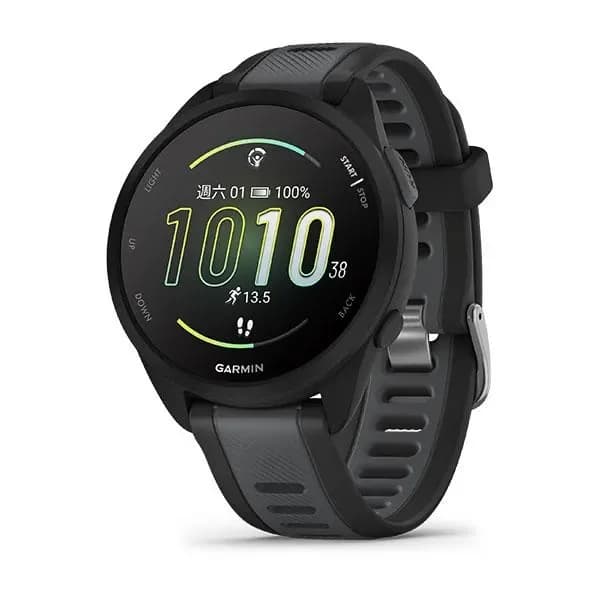
In normal smartwatch use the battery often meets Garmin’s stated endurance, delivering multi‑day runtime that reviewers describe as up to 11 days with conservative settings, although enabling always‑on display or heavy GNSS use noticeably shortens that span. Real‑world testing and user reports confirm the manufacturer estimate is realistic when you disable battery‑hungry features, and the trade‑off is useful: you get a bright AMOLED touchscreen but must manage settings for long trips or extended GPS sessions. Plan charging around long runs or always‑on preferences to avoid midweek top‑ups.
Sensor accuracy
Wrist heart‑rate and physiological tracking are solid for daily runs and recovery insights, leveraging Garmin’s wrist‑based HR sensor and Pulse Ox spot checks, but reviewers and head‑to‑head tests caution about occasional lag or spikes during abrupt efforts where a chest strap remains superior. The watch delivers useful HRV and sleep summaries that often match user expectations, yet some users report variability over weeks and occasional sleep‑stage discrepancies versus clinical measures, so treat the data as actionable guidance rather than clinical precision.
Display and input
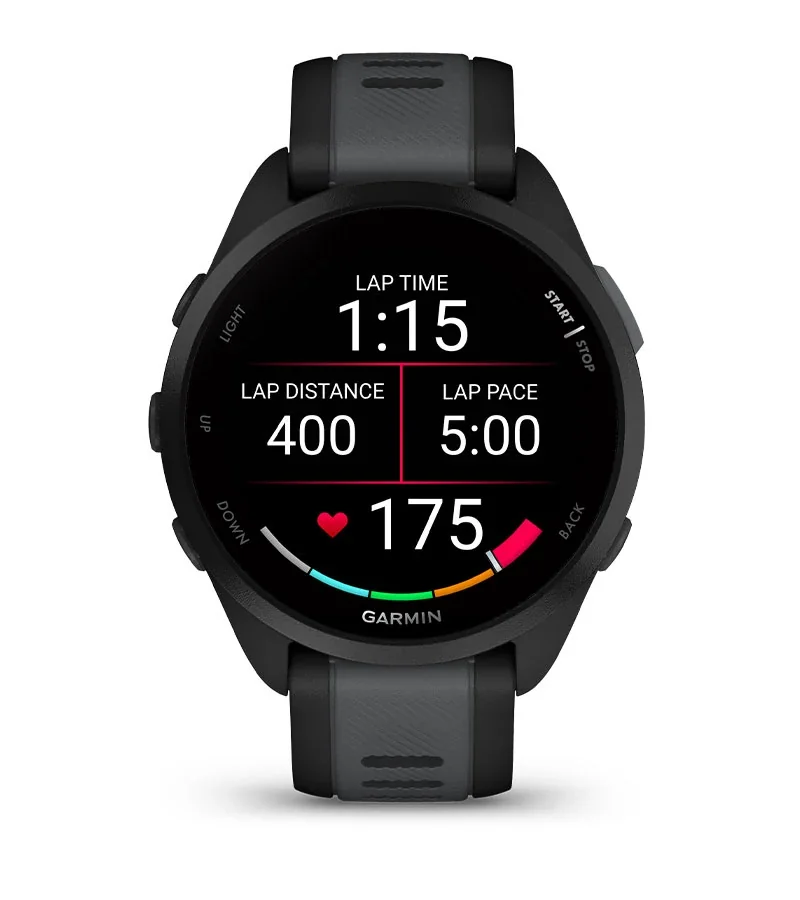
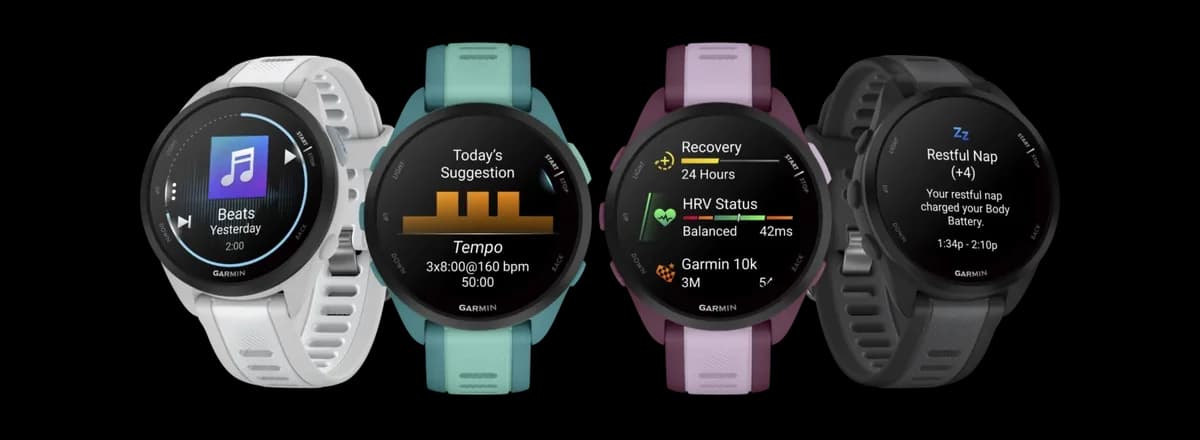
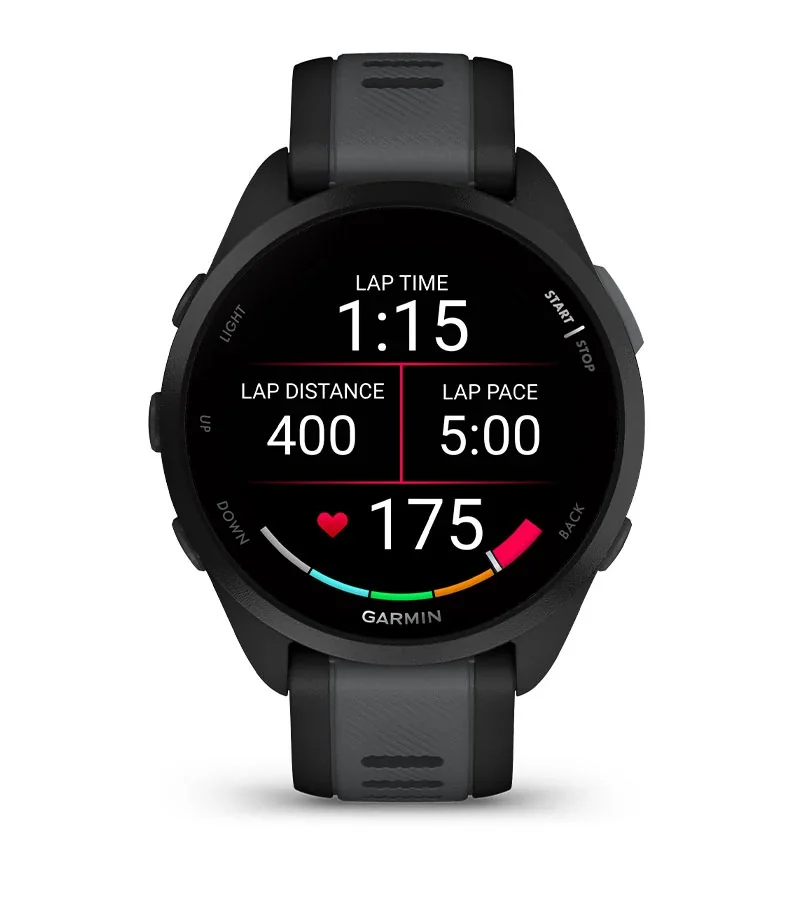
The 1.2‑inch screen is a standout, combining a bright AMOLED panel with tactile physical buttons so you can reliably control workouts without fumbling the touchscreen, and reviewers praise its outdoor readability and modern look. The touchscreen responsiveness and the mix of tap and buttons make everyday navigation pleasant, yet using the AMOLED inevitably impacts battery compared with MIP displays, which is a trade reviewers repeatedly mention. For casual and focused runners the display elevates usability and perceived value without adding bulk.
Charging and durability
Charging uses Garmin’s proprietary contact cable which keeps the watch slim, but reviewers flag exposed charging contacts that occasionally need cleaning to prevent intermittent charging, and waterproofing at 5 ATM handles swims but doesn’t excuse rough care. Users report the connector works fine day‑to‑day, yet the exposed contacts and occasional firmware quirks mean you should inspect and clean the back occasionally to avoid surprises. Overall the setup is functional, just be mindful of contact hygiene and waterproof limits for long‑term reliability.
Build and comfort
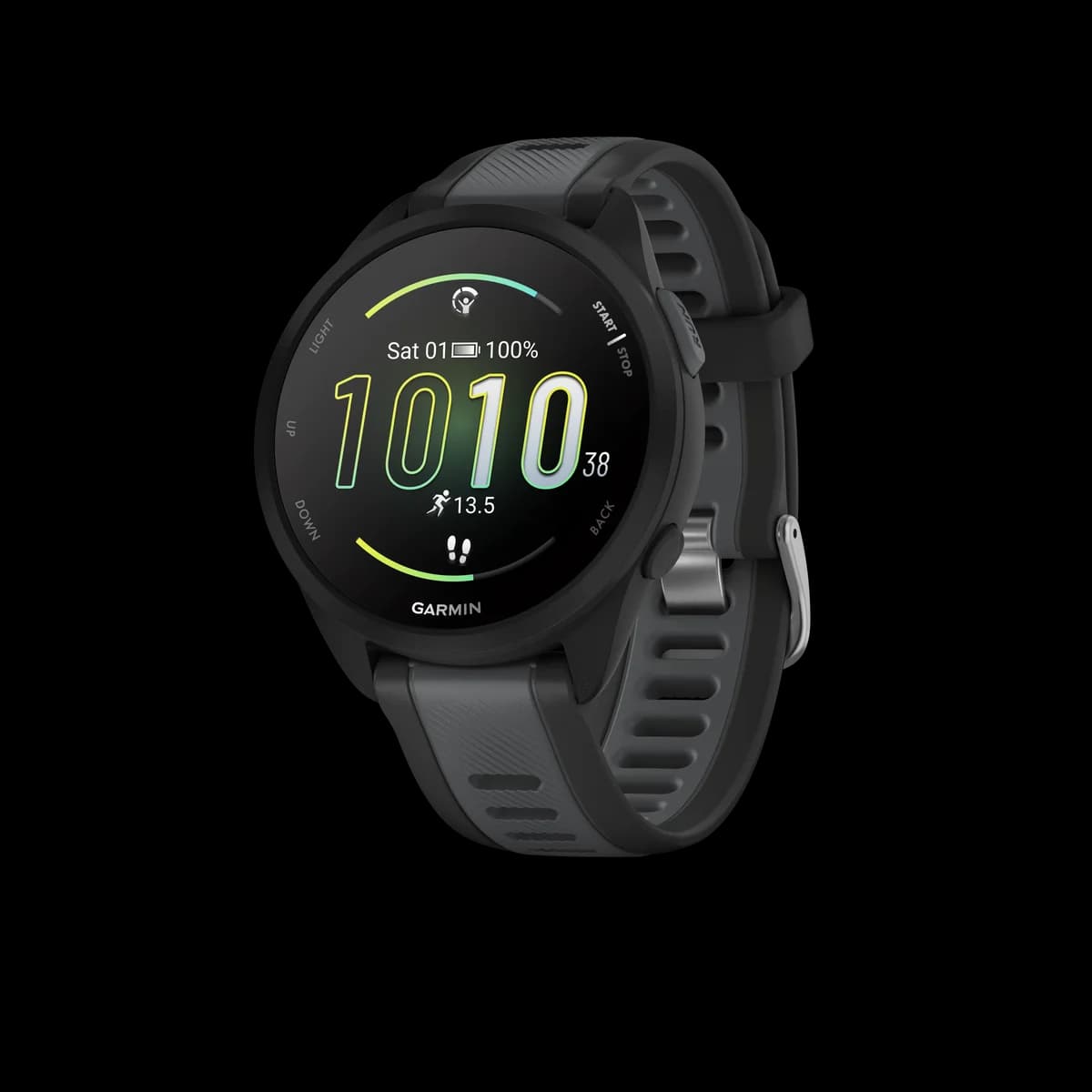
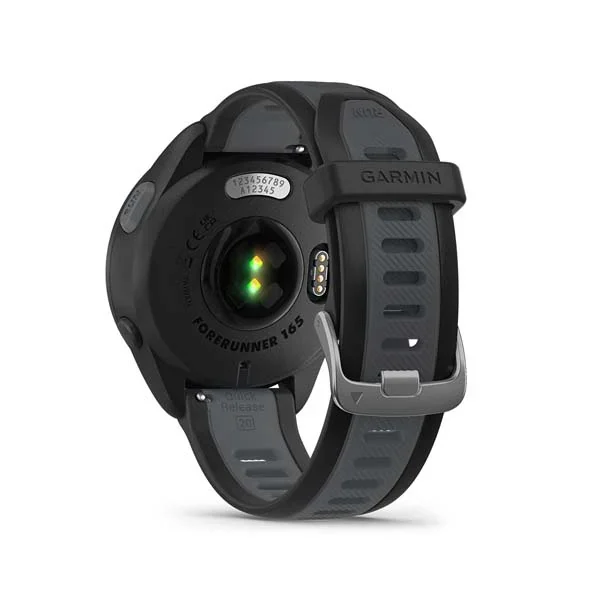
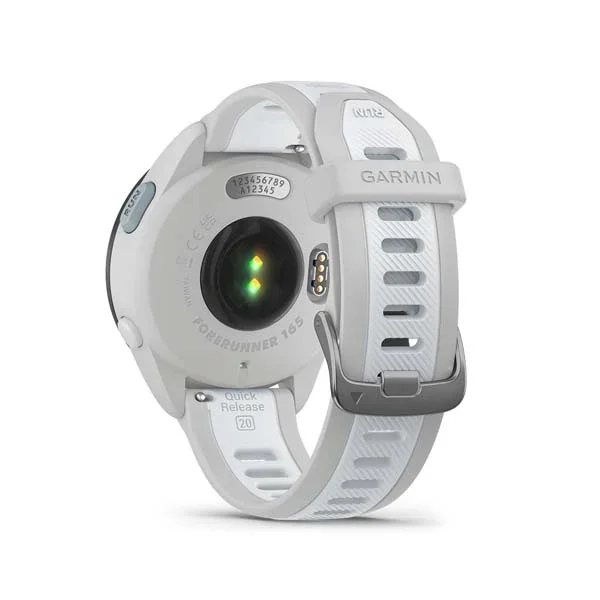
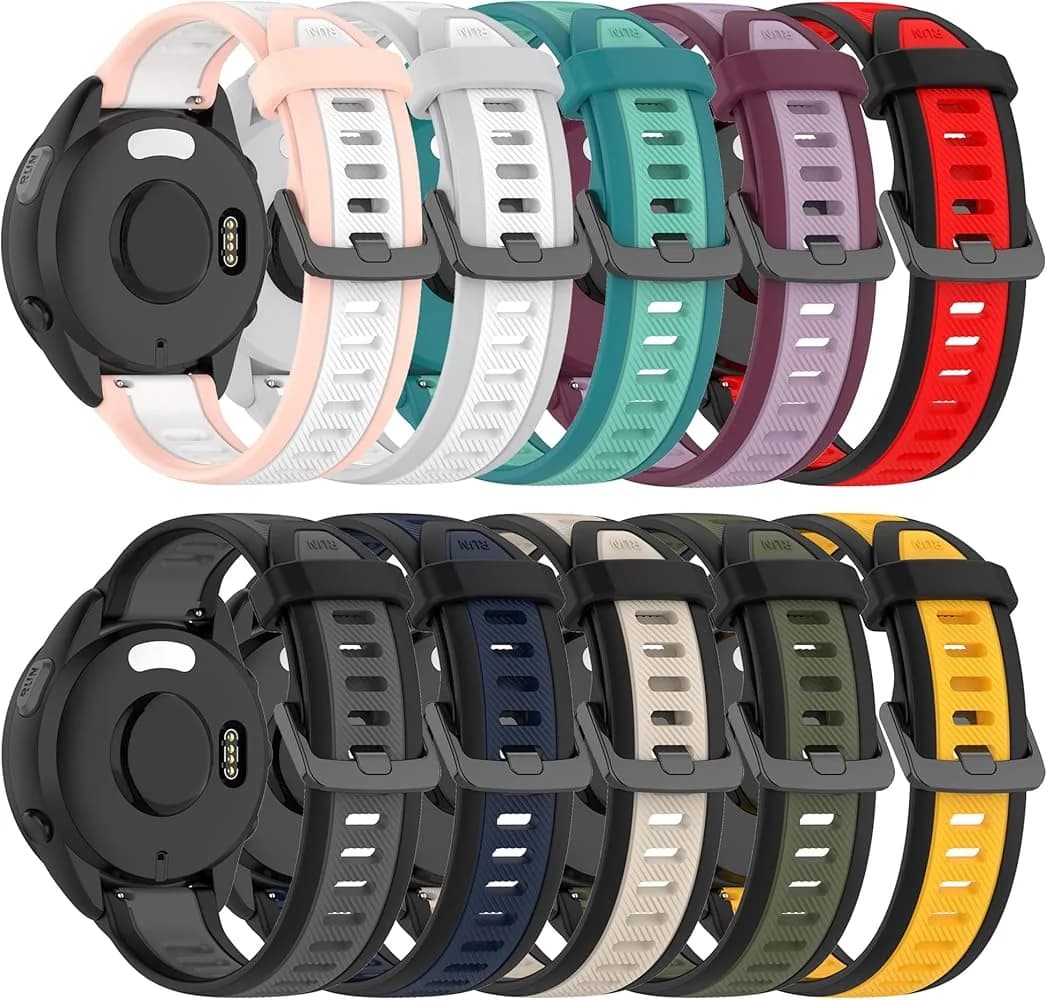
The lightweight 43 mm case and replaceable 20 mm strap make the watch comfortable for around‑the‑clock wear, combining a fiber‑reinforced polymer case for low weight with a size that many find unobtrusive during sleep and workouts. Reviewers note the construction is practical rather than premium, with a plasticky feel but solid durability for everyday use, and strap sizing can be tight for larger wrists which sometimes prompts aftermarket bands. If you prioritize long wear and minimal wrist fatigue, the 165’s fit and weight are clear strengths.
GPS accuracy
The watch generally nails outdoor routes with reliable satellite locks in open areas, showing the advantage of GPS with GLONASS and Galileo for faster fixes, while reviewers and tests note occasional hiccups under heavy tree cover or in dense urban canyons that reflect the lack of multiband GNSS. Brand claims about accurate positioning are largely supported in street and trail use, but experts advise caution for demanding mapping tasks where a dual‑frequency unit would outperform the 165. Overall the GPS is a strong fit for everyday running and Strava uploads, with clear limits for technical navigation.
Conclusion
Having sifted through the testing notes and user chatter, here's the short verdict you can act on: the Forerunner 165 nails core needs with reliable GPS and fast satellite locks for everyday runs, pairs a bright AMOLED touchscreen with tactile buttons for easy control, and delivers impressively long battery life if you manage always‑on and heavy GNSS use; its wrist heart‑rate and SpO2 sensors are fine for guidance but not a replacement for a chest strap in intense efforts, and the featherlight polymer case and 20 mm strap make it comfortable for all‑day wear though strap fit varies by wrist size. Be mindful of exposed charging contacts and single‑band GNSS limits in dense cover; smart, budget‑minded runners who value Garmin coaching will find it a confident, practical pick that justifies choosing value over pro‑level extras.

Feature Scores
This reflects reviews and ratings from established critics, journalists, and users who have evaluated the item. Their opinions provide a comprehensive assessment.
Performance
Battery Life
4/5
Processor Responsiveness
4/5
Display Legibility
5/5
Connectivity Reliability
4/5
GPS Accuracy
4/5
Durability
4/5
Value
Price-to-Feature Ratio
4/5
Software Update Longevity
4/5
Design
Comfort and Fit
4/5
Visual Design Appeal
4/5
Strap Compatibility
4/5
Health
Heart Rate Monitoring
4/5
Sleep Tracking
4/5
SpO2 Measurement
3/5
Advanced ECG and Clinical Features
TBD
Safety
Emergency and Fall Detection
4/5
Data Security and Privacy
4/5
Regulatory Compliance
4/5
Sustainability
Repairability
2/5
Recyclability and Materials Transparency
2/5
Energy Efficiency
4/5
Experience Style
Ease of Use
4/5
App Ecosystem
4/5
Customization Options
4/5
Fitness and Activity Features
4/5
Notification Handling
4/5

Specifications
This section outlines the product's key facts, covering essential features, details, dimensions, materials, and any unique characteristics that define its functionality and usability.
Performance
Value
Design
Safety
Sustainability
Experience Style

Frequently Asked Questions
6 Questions
Find Yours
What is the primary reason you want a smartwatch?
Answer to find your best matches.