


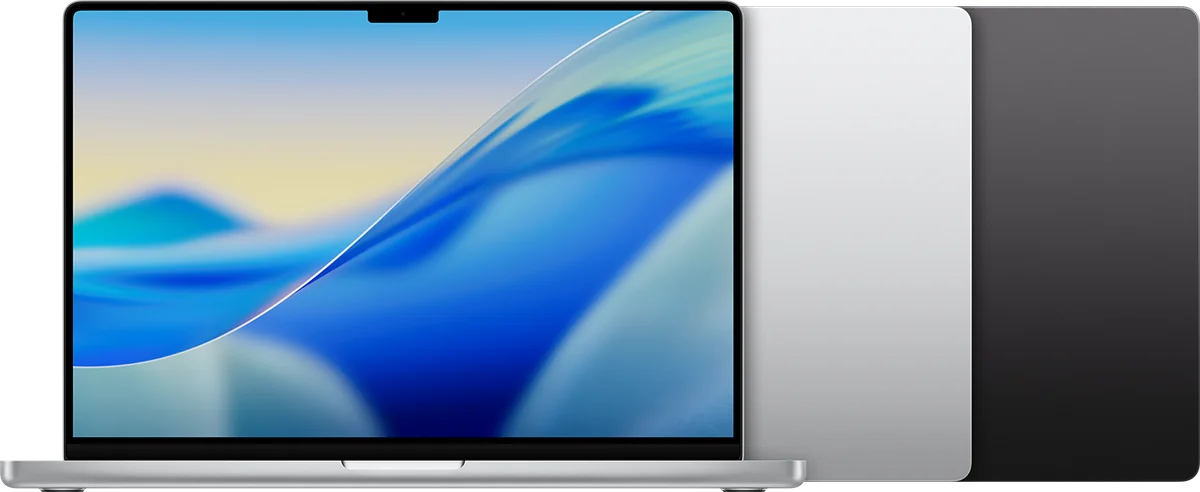
Apple MacBook Pro 16-inch (M5 Pro / M5 Max)
Desktop-class AI and creative power with long battery life, but heavy and pricey.
The Apple MacBook Pro 16‑inch (M5 Pro/M5 Max) is a pocketable studio—big, unapologetic, and built for creatives and AI pros who need workstation power on the go. Reviewers and users praise its 18‑core CPU, up to 40‑core GPU, 16‑core Neural Engine, PCIe‑5 SSD (~14.5 GB/s) and up to 128GB unified memory for blazing renders, LLM work, and near‑instant scrubbing; battery claims line up with real‑world endurance reports, though the chassis stays heavy and thermals can singe silence. Cost is steep but offset by time saved; final verdict hinges on your workload intensity and upgrade budget—key drivers of its appeal.


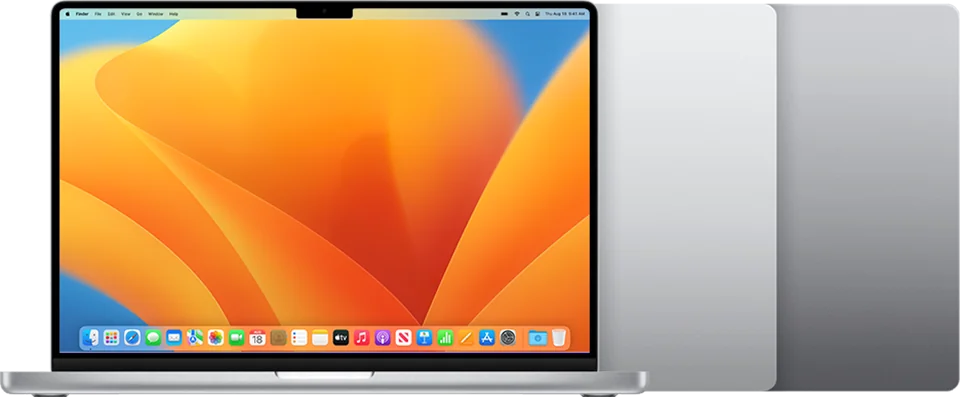

Find Yours
What will be your primary use for the laptop?
Answer to find your best matches.

The Field
Browse top contenders, or compare all options ranked by score and key attributes.
5 Options



The Scoreboard
Does this improve your life? Considers, health, habits, and environmental impact.
Benefits
Lasts through long meetings and flights, so you rarely hunt for an outlet.
Finishes exports and heavy tasks fast, freeing time for breaks and other work.
Nano-texture XDR reduces glare and keeps colors accurate for long editing sessions.
Mostly silent during normal browsing and calls, so meetings and coffee shops stay pleasant.
Fast SSD and unified memory cut app swapping, keeping workflows fluid and focused.
Trade-Offs
At 4.7 lbs it tires shoulders on commutes, so you skip bringing it sometimes.
Under exports or rendering the fans ramp up, making calls and quiet spaces distracting.
Big footprint and warmth make it uncomfortable on your lap during flights or couches.
 Alternatives


Join the Circle
Where real meets deal
Know what's worth buying-and when.
Tips, special offers, and rewards for buying and sharing.

Publications
7 LEADING PUBLICATION REVIEWS

PCMag praises the 2026 MacBook Pro 16-inch (M5 Pro / M5 Max) as a “camouflaged monster” — a conservative exterior hiding a major internal overhaul that delivers class-leading CPU/GPU performance, exceptional 27+ hour battery life, and forward-looking Thunderbolt 5 and Wi‑Fi 7 connectivity. Brian Westover lauds Apple’s new M5 super‑core architecture, Fusion die interconnect, and Neural‑Accelerated GPUs for making the M5 Max a viable Mac Studio alternative and a top performer in Cinebench, DaVinci Resolve, and 3DMark—while noting it still trails the very best Windows gaming/workstation GPUs in some tests. He praises the excellent mini‑LED Liquid Retina XDR display (96% DCI‑P3), refined audio and webcam, and solid build quality, but flags high prices, limited OLED progress, a few software-testing hiccups, and marginal gains for recent M4 owners. Overall: a powerful, professional-grade buy if you need top macOS performance; M4 owners can usually wait.
By Brian Westover
Notebookcheck praises the MacBook Pro 16 (M5 Pro) as an even stronger multimedia workhorse: the M5 Pro delivers clear CPU and GPU gains over the M4 Pro, blazing PCIe 5.0 SSD speeds, and Wi‑Fi 7 while keeping the excellent Mini‑LED display, quiet acoustics, long battery life, and top‑tier speakers. Andreas Osthoff’s tone is upbeat and confident—he calls the M5 Pro “a perfect fit” and highlights standout benchmarking wins (including creator workloads that challenge an RTX 5090-equipped rival). Criticisms are measured: slightly shorter runtimes vs. the M4 Pro (likely due to larger RAM configurations), persistent maintenance and warranty limitations, missing SD Express and Face ID, PWM flicker/response tradeoffs, and the bundled 140W PSU being occasionally insufficient under extreme combined loads. Overall the review reads enthusiastic but balanced, emphasizing practical performance and real-world creator advantages while acknowledging a few notable hardware and service trade-offs.
By Andreas Osthoff
Antonio G. Di Benedetto from The Verge praises the 2026 16-inch MacBook Pro (M5 Pro / M5 Max) as a substantial, technically impressive update that’s "fast as hell," while tempering enthusiasm with practical caveats. He highlights major benchmark gains—big CPU, GPU, and SSD improvements over M1-era machines—plus modern I/O (Thunderbolt 5, Wi‑Fi 7) and a better webcam, making it a clear upgrade for power users. That said, Di Benedetto notes most M1 Pro/Max owners won’t need the jump and that alternatives (M5 MacBook Air, 14‑inch M5 Pro) may suit many better; design changes are minimal and some keyboard symbol tweaks are merely cosmetic. His review balances excitement about raw performance with measured advice: the M5 Pro/Max is excellent for those who truly need the extra power, while others should consider cheaper or lighter M5 options or wait for rumored future revisions.
By Antonio G. Di Benedetto
Lori Grunin from CNET highlights the MacBook Pro 16-inch (M5 Pro / M5 Max) as a clear performance-focused upgrade, driven chiefly by a substantial GPU leap that makes it excellent for generative AI, 3D rendering, gaming and other creative workloads. The review is upbeat and confident: the display remains top-tier (nano-texture worth the premium in bright conditions), Wi‑Fi 7 and the N1 chip improve connectivity, and the M5 lineup produces predictable, repeatable gains—particularly on GPU- and AI-heavy tasks—making the M5 Pro configuration a sensible sweet spot for most professionals. Criticisms are measured: the chassis is unchanged and heavy, refresh-rate control is limited to ProMotion’s automatic mode, true Adobe RGB support is absent, and pricing/memory upgrade costs force trade-offs since RAM cannot be expanded later. Overall the tone is positive and pragmatic, recommending the 16-inch for creative pros who prioritize GPU power now rather than waiting for rumored OLED/touch updates.
By Lori Grunin
Tom’s Guide praises the MacBook Pro 16-inch M5 Pro as a polished, powerful upgrade that mostly doubles down on what worked before: stellar M5 Pro CPU/GPU performance, mind-blowing ~21‑hour battery life, and a gorgeous 16.2‑inch Liquid Retina XDR display. Tony Polanco’s tone is clearly enthusiastic—he repeatedly calls the laptop “fantastic,” “one of the best,” and highlights benchmark wins (faster than the M4 Pro and many Windows rivals) and excellent color accuracy and HDR brightness—while still noting measured caveats: the $200 price bump over the M4 Pro, largely incremental gains that don’t justify upgrading from last year’s model, and mixed gaming results versus discrete‑GPU laptops. Unique insights include specific benchmark results (HandBrake, Geekbench, Photoshop), lab display metrics (Delta‑E, gamut percentages, 1,026 nits HDR), and an honest battery test (21:10 runtime), yielding a strongly positive, yet balanced recommendation for professionals and upgraders.
By Tony Polanco
WIRED praises the MacBook Pro 16-inch (M5 Max) as an outrageously powerful, pro-focused machine that still leads the pack for media creation and on-device AI, even as its design feels increasingly familiar. The review is enthusiastic about the M5 Max’s record‑setting CPU and GPU performance, strong gaming capability, fast PCIe 5 storage, class‑leading speakers and Mini‑LED display, and real-world AI benchmarks (noting big gains over the M3 Max). At the same time the tone is measured: the design is called stagnant, prices and base storage shifted up, and some buyers may prefer the 14‑inch or wait for an expected 2026 redesign. Overall the reviewer recommends the 16‑inch M5 Max for professionals who need its unique combination of GPU, memory (up to 128 GB), and battery life, while advising casual users or recent Max‑generation owners that a wait or smaller model may be wiser.
By Luke Larsen
Devindra Hardawar from Engadget highlights the MacBook Pro 16-inch (M5 Pro / M5 Max) as a polished, professional-grade laptop that remains hard to beat for creatives who need top-tier performance. He’s clearly impressed by the refined 2021-era design, rock-solid unibody build, excellent keyboard and best-in-class glass trackpad, bright Mini LED Liquid Retina XDR display (nano-texture option), expanded ports, superb six-speaker audio, long battery life, and substantial real-world speed gains—notably faster CPU multi-core and dramatically quicker SSD throughput. The tone is appreciative but measured: Hardawar notes the M5 updates are evolutionary rather than revolutionary, calling out limited new features (aside from Neural Accelerators) and warning that rumored OLED/touchscreen MacBooks later this year could make this generation feel dated. In short: an excellent, highly capable MacBook Pro that experts will love now, but buyers seeking something truly new might consider waiting.
By Devindra Hardawar

YouTube
10 LEADING EXPERT & INFLUENCER REVIEWS
 Hardware Canucks
Ebar from Hardware Canucks praises the M5 Max MacBook Pro as a jaw‑dropping pro machine—remarkable multi‑core and on‑device AI performance with class‑leading battery life and much faster Gen‑5 NVMe storage—while noting unchanged chassis/design, high price (> $6k for top config), coil‑whine, and modest gaming gains.
Max TechMax Tech finds the M5 Pro delivers extraordinary real-world value — powerful CPUs, fast SSDs, impressive media engines, and excellent battery in the 16-inch — while the M5 Max is often overkill unless you consistently fully utilize its GPU/encoders. Enthusiastic, surprised, and convincingly pro–Pro.
zollotechAaron from Zollotech finds the M5 Max MacBook Pro impressively fast and capable—especially for AI and heavy multithreaded tasks—praising huge GPU/AI gains, faster SSDs, expanded external display support, and improved mic modes, while offering measured reservations about heat, fan noise, and whether M3/M4 owners should justify the pricey upgrade.
Andrew Marc DavidAndrew Marc David praises the M5 Max MacBook Pro's class‑leading performance—notably big GPU and SSD gains, improved multi‑threading, and excellent speakers—while offering measured reservations about the dated design, smudge-prone keyboard, lack of Face ID, and high price; hands‑on benchmarks and real comparisons lend credible, enthusiastic but balanced endorsement.
ZONEofTECHZONEofTECH praises the MacBook Pro 16-inch M5 Pro/M5 Max for solid generational gains—faster SSDs, higher memory bandwidth, improved battery life, and useful Thunderbolt 5/Wi‑Fi 7 upgrades—while criticizing Apple's confusing "super/performance" core marketing, higher base prices, and charger omissions; unique insights highlight Studio Display XDR mini‑LED, 120Hz ProMotion, and real-world monitor/connectivity limits.
Andru EdwardsAndru Edwards praises the M5 Max MacBook Pro as a seismic upgrade—calling it the best portable AI workstation, lauding the Liquid Retina XDR display (nano‑texture option), Thunderbolt 5 ports, huge SSD/Unified Memory, and dramatic local AI and GPU gains—while noting higher base price and that M3/M4 owners should only upgrade for AI/memory bandwidth needs.
iPhonedoFaruk praises the M5 Max MacBook Pro as "insane," raving about near‑best‑in‑class Geekbench/GPU/Cinebench and the fastest SSD he’s tested, highlighting nano‑texture, Thunderbolt 5, Wi‑Fi 7, and excellent sustained performance with minimal throttling—while noting occasional background indexing and that M3 Ultra still edges it in some multi‑threaded/GPU workloads.
Bobby TonelliBobby Tonelli praises the MacBook Pro 16-inch M5 Pro/M5 Max as a thrilling, near–desktop AI workstation—calling the M5 Max “creme de la creme” after hands‑on tests with Llama 3.3, FLUX.2 image generation, and DaVinci Resolve. He’s excited about true local AI, impressive battery endurance, and Fusion Architecture gains, while noting the Mac Studio M3 Ultra still leads some single‑task workloads and most users won’t need the Max.
Matt Talks TechMatt from Matt Talks Tech praises the M5 Pro/Max MacBook Pro enthusiastically, highlighting Fusion Architecture, 18‑core CPU (6 super + 12 performance), up to 614 GB/s memory bandwidth, stronger ray tracing, and big AI/LLM gains—while advising most users to stick with M4 unless they need heavy 3D/GPU or AI workloads.
AirbazooAirbazoo praises the M5 Pro MacBook Pro as a game-changing workflow machine—enthusiastic about instant scrubbing of DLOG M footage, much faster Final Cut Pro exports, seamless Migration Assistant setup, and impressive unplugged battery life—while noting it's overkill for pure photo editing and that fans/low battery woke during heavy exports.

Social
3 INFLUENCER REVIEWS
 TechRadar
TechRadar highlights the new MacBook Pro M5 Pro/M5 Max as a serious, professional-grade upgrade — powerful for video, 3D, development, and local AI workloads, with options up to 1 TB storage and 128 GB RAM. The reviewer sounds impressed and excited about capability but notes costs rise quickly with higher specs. Overall, TechRadar's consensus is positive and recommending for pros who need heavy performance: it's framed as a tool for professionals worth pre-ordering if you need the power, though budget-conscious buyers should beware the steep upgrade pricing.
 iJustine
iJustine highlights the new 16-inch M5 Max MacBook Pro as a clear speed and display upgrade — calling it a "beast," praising the massive nano-texture screen for reduced glare and eye comfort, and noting the heft and familiar design. She mixes excitement ("wow," "smells good") with practical notes about travel size trade-offs. Overall consensus: enthusiastic recommendation for power users and creators who value a large, low-glare display and top performance; she’s thrilled but acknowledges the weight and higher cost, and reassures viewers overwhelmed by Apple’s lineup that those trade-offs are expected.
madelynmadelyn gushes about the M5 Max MacBook Pro’s raw power, 24‑hour battery claim, gorgeous 16.2" Liquid Retina XDR display, and space‑black finish, mixing excitement with wallet‑ache humor. She’s impressed overall—calling it a major upgrade from her 2019 Intel model and curious whether to benchmark it further; she clearly recommends it for serious users who can justify the cost.

Forum Reviews
CUSTOMER REVIEWS FROM 1 FORUM
Redditors generally praise the 16-inch MacBook Pro with M5 Pro/Max for impressive performance, long battery life, and solid build—many report it handles demanding AI, video, and multitasking workloads smoothly. Users value the new core architecture, higher base storage, and strong GPU gains, though some note thermal limits on smaller chassis and conservative fan curves; sustained loads can cause throttling on 14" variants. Price and upgrade costs draw criticism, and a few raise concerns about software/ML ecosystem compatibility. Upgraders weigh longevity and real-world gains carefully, while new buyers laud its desktop-class capabilities.
Many comments

In-Depth Review

Highlights
- •High single‑ and multi‑core CPU performanceFast single‑thread snappiness and multi‑core muscle.
- •GPU and on‑device AI accelerationBig GPU and Neural Engine gains.
- •Large unified memory and bandwidthUp to 128GB unified RAM, 307–614 GB/s.
- •Very fast PCIe‑5 SSD and larger base storagePCIe 5.0 NVMe up to ~14.5 GB/s.
- •Long battery life in mixed useReviewers report day‑long mixed‑use runtimes.
- •High‑quality Mini‑LED Liquid Retina XDR display16.2″, 120Hz ProMotion, optional nano‑texture.

Considerations
- •High acquisition and upgrade costBase price plus expensive spec upgrades.
- •Heavy and less portable4.7 lb footprint burdens regular commuting.
- •Thermals and fan noise under loadFans ramp; sustained workloads can throttle.
- •Fixed memory and costly upgradesUnified RAM cannot be expanded later.
- •Conservative chassis and lap comfort limitsDesign unchanged; heavy and awkward on laps.
- •Modest gaming gains versus discrete GPUsGaming improvements modest; not top‑tier GPU.
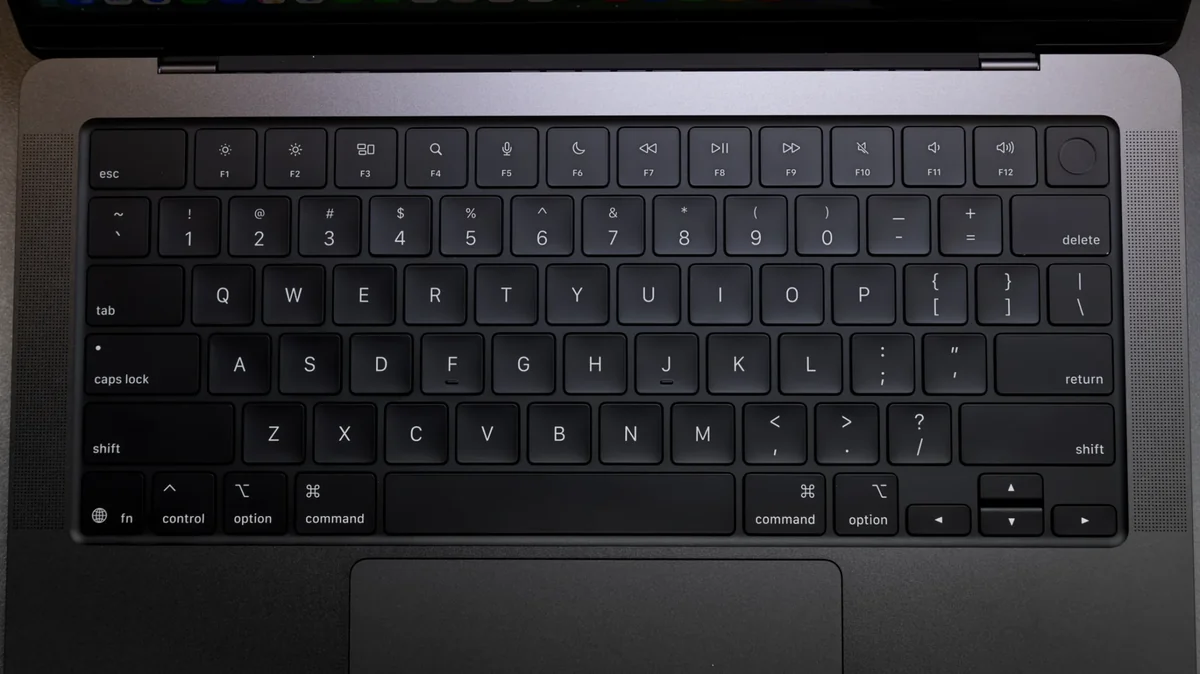
Apple’s latest 16‑inch pro laptop pushes the company’s workstation playbook further: a familiar, impeccably built chassis housing Apple’s new Fusion‑die chips aimed at creators, AI devs, and pro editors who prize efficiency and silence. Geared for heavy timelines, large models, and multi‑threaded renders, it promises up to 18 CPU cores (6 super + 12 performance) and 40‑core GPU options for desktop‑class throughput. Storage and memory are no afterthought—PCIe‑5 SSDs up to ~14.5 GB/s, configurable 1–8 TB, and unified memory up to 128 GB with 614 GB/s bandwidth keep large datasets and LLMs resident. Add two hardware ProRes/AV1 encode engines, 16‑core Neural Engine, and a striking 16.2" Liquid Retina XDR (120Hz) with nano‑texture option, and you’ve got a portable studio. If you’re a video pro, AI researcher, or power user weighing cost vs. capability, read on—this machine rewards the right workloads. Consider these sections your checklist before buying.
SSD performance and configurable storage
Apple doubled down on storage: base 1–2TB with PCIe‑5 SSDs hitting ~14.5 GB/s means near‑instant scrubbing, faster dataset loads, and brisk exports—real perks for video and LLM work. Experts confirm the fastest laptop NVMe speeds and users praise higher base capacities, though costs scale quickly with top configs; the optional 8TB is a luxury for hoarders. The takeaway: PCIe 5.0 SSD, 14.5 GB/s throughput, 1–8TB options, faster LLM dataset loads, and tangible workflow time savings late in heavy tasks.
Unified memory capacity and bandwidth
Unified memory up to 128GB with 307–614 GB/s bandwidth is a game changer for large datasets, multi‑app timelines, and in‑GPU model residency—no fiddly VRAM swaps. Reviewers and pros report smoother LLM runs and fewer I/O stalls, especially on the 614 GB/s Max SKU; however, that memory is fixed at purchase, so sizing matters. This is where unified memory and high bandwidth translate into fewer compromises, dataset residency, reduced swapping, future‑proofing for AI, and immediate productivity gains.
CPU performance (single‑ and multi‑core)
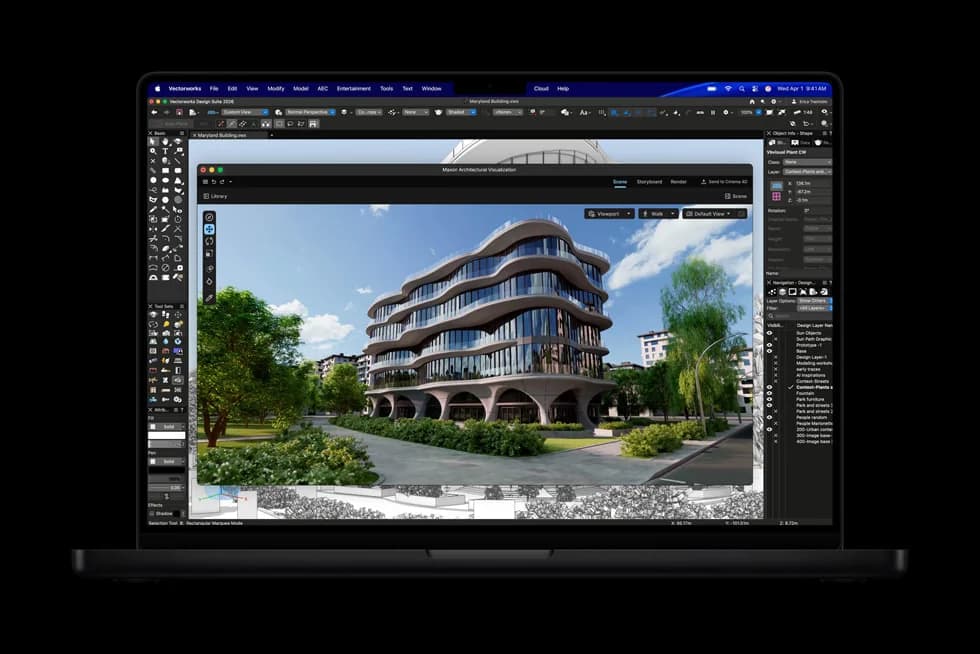
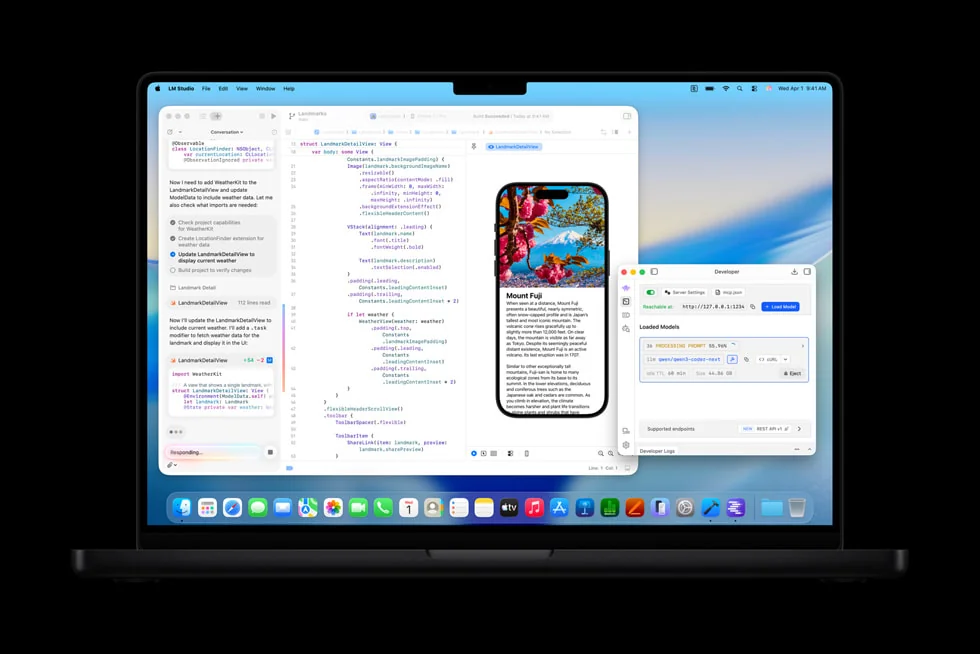
The M5’s 18‑core layout (six super + 12 performance cores) feels like a well‑rehearsed sprint team: blistering single‑thread speed for snappy UI and heavy multi‑core muscle for renders and simulations. Benchmarks show big uplifts versus M4, and reviewers note sustained throughput thanks to Fusion Architecture and a higher TDP envelope, though thermals can bite in smaller chassis. It’s a legit desktop contender for threaded work, with super cores and Fusion die interconnect doing the heavy lifting, delivering 30% CPU gains, consistent sustained performance, and real‑world workflow wins.
Battery life and power delivery
Claimed 24‑hour endurance translates to spectacular real‑world stamina in mixed use—reviewers measured long runtimes and pros noted fewer mid‑flight panics—while the 96W/140W charging conversation matters for top‑load performance. Battery shines in everyday and even heavy mobile workflows, though full‑tilt renders will still tug on runtime and thermals. Practical notes: up to 24 hours for mixed use, 96W USB‑C/140W charging for peak needs, excellent standby, prolonged unplugged editing, and sensible power delivery trade‑offs for pros.
Display quality and characteristics
The 16.2‑inch Liquid Retina XDR is a delight: 120Hz ProMotion, Mini‑LED HDR punch and optional nano‑texture for glare control make color‑critical work comfortable and portable. Labs and reviewers report excellent DCI‑P3 coverage and high HDR nit peaks, ideal for grading and bright‑room use, though ProMotion control is largely automatic. If you value color fidelity, Liquid Retina XDR, 120Hz ProMotion, nano‑texture option, 96% DCI‑P3 accuracy, and reliable HDR brightness are the real selling points.
GPU and neural acceleration performance
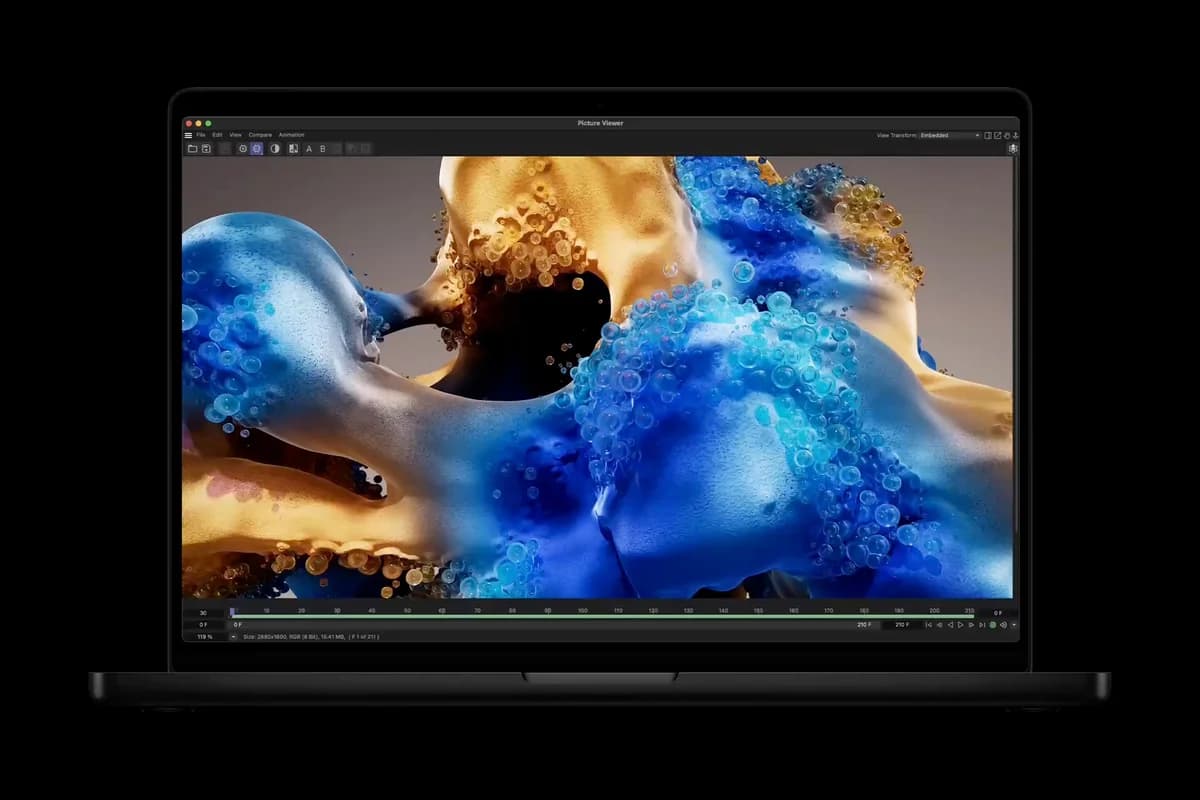
The GPU/NPU combo is the headline act: up to 40‑core GPUs and a 16‑core Neural Engine give huge boosts in ray tracing, ProRes exports, and on‑device ML, turning laptops into credible portable workstations. Experts praise Neural‑Accelerated GPU gains and hardware ProRes/AV1 engines; gamers note modest frame lifts while creators see dramatic render speedups. Expect Neural Engine-driven LLM tasks, hardware ray tracing, ProRes/AV1 encode, M5 Max 40‑core GPU, and perceptible AI acceleration near the end of heavy workflows.
Conclusion
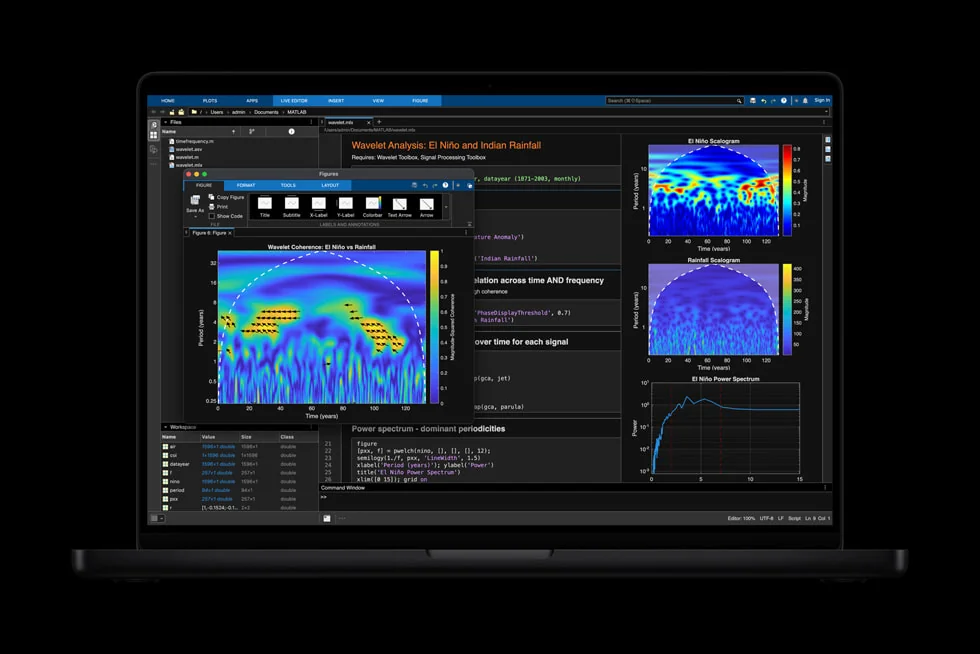
Think of this as a travel-ready desktop: the chip design hands you snappy single‑thread responsiveness and sustained multi‑core throughput for heavy timelines, while the GPU and Neural Engine deliver real on‑device AI acceleration and noticeably faster ray‑traced renders. The roomy 128GB unified memory and up to 614 GB/s bandwidth keep large models resident, but remember memory is fixed at purchase. Fast PCIe‑5 storage means blistering dataset loads and near‑instant scrubbing, though top‑end capacities carry a premium. Battery life is generous—excellent for unplugged edits—and charging options balance portability with peak performance. The 16.2″ Liquid Retina XDR with nano‑texture is a colorist’s delight and low‑glare workhorse. If you need sustained GPU/AI power and value time saved, this is a rare portable studio; if you’re price‑sensitive or crave lighter travel, look elsewhere.

Feature Scores
This reflects reviews and ratings from established critics, journalists, and users who have evaluated the item. Their opinions provide a comprehensive assessment.
Performance
CPU Performance
5/5
GPU Performance
5/5
Battery Life
5/5
Thermal Management
4/5
Storage Speed
5/5
Build Quality
5/5
Value
Price to Performance Ratio
4/5
Warranty and Support
4/5
Resale Value
5/5
Design
Portability
4/5
Display Quality
5/5
Keyboard and Input Ergonomics
5/5
Aesthetics
4/5
Health
Blue Light Emission and Eye Strain
4/5
Material Toxicity
4/5
Ergonomic Support
4/5
Safety
Battery Safety
5/5
Electrical and Regulatory Compliance
5/5
Data Security Features
5/5
Sustainability
Energy Efficiency
4/5
Recyclability and End of Life
4/5
Repairability and Upgradability
2/5
Sustainable Materials Use
4/5
Experience Style
User Interface Simplicity
5/5
Customization and Configurability
4/5
Preinstalled Software
4/5
Connectivity and Ports
5/5

Specifications
This section outlines the product's key facts, covering essential features, details, dimensions, materials, and any unique characteristics that define its functionality and usability.
Performance
Value
Design
Safety
Sustainability
Experience Style

Frequently Asked Questions
7 Questions



Find Yours
What will be your primary use for the laptop?
Answer to find your best matches.