

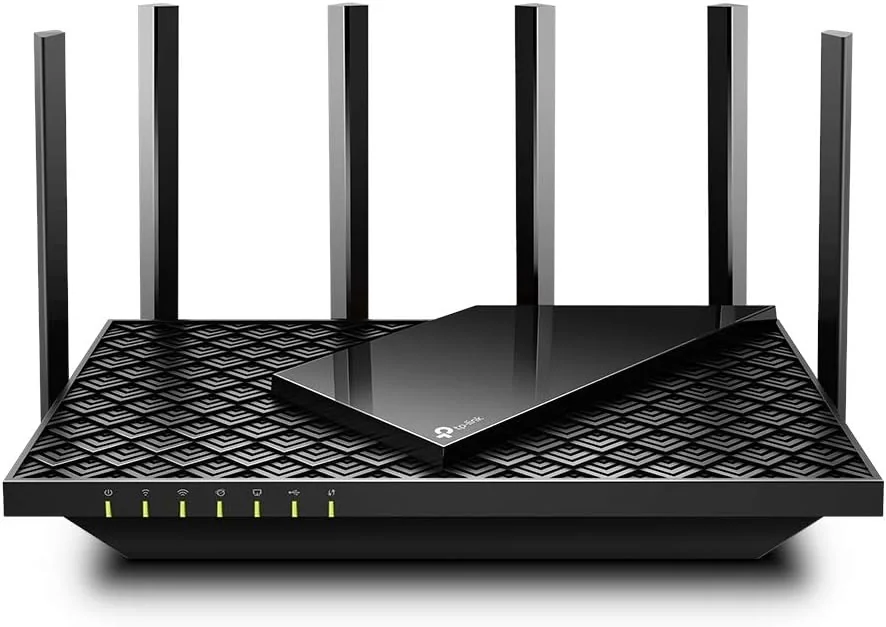
TP-Link Archer AX73
Fast 5GHz speeds, strong coverage, and multi-device support deliver reliable Wi-Fi 6 performance with minor connectivity quirks.
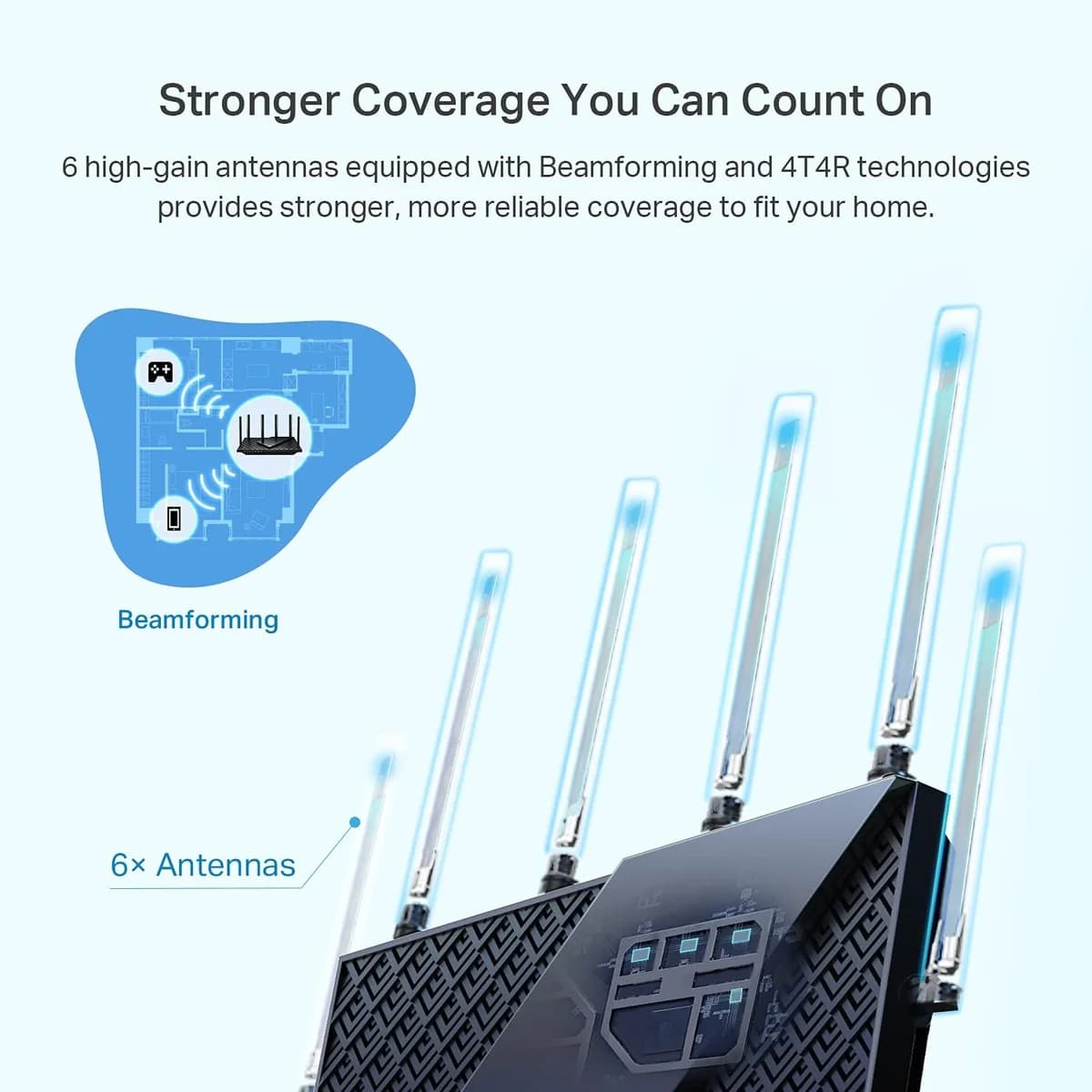
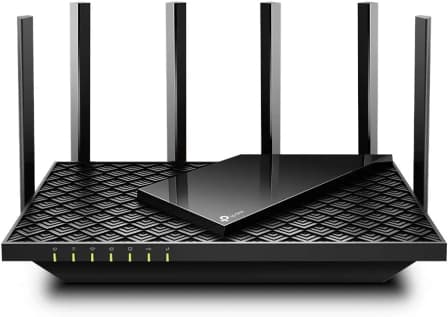
The TP-Link Archer AX73 is a savvy mid-range Wi-Fi 6 router designed to tame busy homes bursting with gadgets. It dazzles with blazing 5GHz speeds and six powerful antennas that deliver impressive coverage, slicing through walls like a hot knife through butter. Users love the intuitive Tether app setup, though experts flag its occasional 2.4 GHz hiccups and lack of multi-gig ports as minor speed bumps. The router’s cool-running design and solid USB 3.0 port add practical flair without breaking the bank, making it a smart pick for those craving reliable connectivity—and yes, some quirky drops won’t spoil the party here.



Find Yours
What level of internet speed is most important to you?
Answer to find your best matches.

The Field
Browse top contenders, or compare all options ranked by score and key attributes.
5 Options



The Scoreboard
Does this improve your life? Considers, health, habits, and environmental impact.
Benefits
Very strong 5GHz throughput for HD streaming and low-latency, beating many AX3000 competitors.
OFDMA and MU‑MIMO support helps dozens of devices stay responsive under typical household loads.
HomeShield provides parental controls and baseline protection, though some advanced features require subscription.
Intuitive Tether app and web UI make setup quick, reducing tech‑stress for families and caregivers.
USB 3.0 port enables local backups and Time Machine compatibility, supporting privacy‑friendly local storage.
Trade-Offs
Advanced features require cloud accounts and app login, exposing usage metadata to TP‑Link services.
Documented occasional disconnects can interrupt work or sleep, increasing stress and troubleshooting time at home.
Weaker 2.4 GHz range may force extenders or mesh nodes, increasing devices and material footprint.
Absence of multi‑gig ports reduces headroom for faster internet, possibly requiring additional equipment later.
Measured USB 3.0 write slowness makes backups take longer, wasting energy and user time.
 Alternatives


Join the Circle
Where real meets deal
Know what's worth buying-and when.
Tips, special offers, and rewards for buying and sharing.

Publications
9 LEADING PUBLICATION REVIEWS

John R. Delaney from PCMag highlights the TP-Link Archer AX73 as a solid Wi-Fi 6 router that excels in 5GHz throughput and offers robust parental controls through the HomeShield suite. The review conveys a measured enthusiasm, praising the router’s easy installation, strong 5GHz performance, and useful security features. However, Delaney points out notable drawbacks, including weaker 2.4GHz signal strength and throughput, limited extra features, and the absence of multi-gig ports and link aggregation—capabilities found in the more affordable TP-Link AX50, which remains the Editors’ Choice. The review provides detailed real-world testing data, including throughput benchmarks and signal heat maps, offering a balanced perspective that appreciates the AX73’s strengths while candidly addressing its limitations. Overall, the tone is moderately positive but cautious, recommending the AX73 primarily for users prioritizing 5GHz speed and parental controls, while suggesting alternatives for those needing more advanced networking features.
By John R. Delaney
Dong Ngo from Dong Knows Tech highlights the TP-Link Archer AX73 as a solid, affordable Wi-Fi 6 router well-suited for medium-sized homes. He appreciates its fast Wi-Fi speeds, excellent range, and support for 160MHz channel width, noting it delivers reliable performance close to its theoretical limits despite lacking a Multi-Gig port. The router’s refreshed design and standard web interface with extensive settings add to its appeal. However, Dong points out some drawbacks, including fluctuating 5GHz band speeds at higher channel widths, occasional disconnections resolved by manual restarts, and a somewhat unreliable mobile app that requires a login account for advanced features—raising privacy concerns. Network-attached storage write speeds are also slower than ideal for heavy use. Overall, the review conveys a balanced, moderately positive tone, emphasizing that while the Archer AX73 isn’t groundbreaking, it offers good value and dependable performance for its price range, especially if users avoid relying on the mobile app features.
By Dong Ngo
Eric Zeman from Android Authority highlights the TP-Link Archer AX73 as an affordable, high-performance Wi-Fi 6 router that delivers impressive speeds and reliable whole-home coverage. He praises its ability to support dozens of devices simultaneously, simple setup process, and future-proof features like WPA3 security and USB media sharing. The router’s six antennas and dual-band design enable strong signal strength throughout multiple floors and even outdoor areas, with speeds remaining robust enough for HD streaming. However, Zeman notes occasional dropped connections, particularly in the basement, which required manual reconnection of some devices. He also points out that TP-Link’s HomeShield security features come at an additional cost, and mesh networking requires purchasing separate extenders. Despite these drawbacks, the Archer AX73 stands out as a solid, budget-friendly option for users seeking fast, reliable Wi-Fi 6 performance without gaming-specific extras, making it a compelling choice in its price range.
By Eric Zeman
Mattias Inghe from PC för Alla highlights the TP-Link Archer AX73 as a high-performing Wi-Fi 6 router offering strong value for its price, particularly suited for small to medium-sized active homes. He praises its stable and solid wireless speeds, with over 800 Mbit/s close up and reliable coverage up to two rooms away, making it ideal for typical apartment use. The review notes the router’s distinctive design and practical features like six pre-mounted antennas, multiple gigabit Ethernet ports with link aggregation, and a USB 3.0 port for external storage with media server capabilities. Inghe appreciates the intuitive TP-Link Tether app for setup and remote management, alongside the built-in lifetime basic network security via HomeShield, replacing the older HomeCare suite. Criticisms include the lack of multi-gigabit WAN support, the necessity to manage security features solely through the mobile app, and limited 2.4 GHz bandwidth that may require mesh expansion in larger homes. Overall, the review conveys a measured but positive tone, emphasizing the router’s strong performance and feature set balanced with some practical caveats.
By Mattias Inghe
Samuel Contreras from Android Central highlights the TP-Link Archer AX73 as a fast, affordable Wi-Fi 6 router that delivers solid AX5400 speeds, good coverage, and useful features like Alexa integration and parental controls via HomeShield. He praises its compact design, easy setup through the Tether app, and versatile USB 3.0 port with Mac compatibility. However, the review is tempered by concerns over occasional dropped connections, especially under heavy device loads, which undermines its reliability for power users. Contreras notes that while the router performs well for most typical home environments and offers strong value for the price, those needing absolute uptime or advanced security features might want to consider more mature or higher-end alternatives. The review provides detailed real-world testing insights, including speed benchmarks and configuration tips, making it a balanced and practical assessment that positions the Archer AX73 as a near-winner with some notable compromises.
By Samuel Contreras
Blacktubi highlights the TP-Link Archer AX73 as a high-performance WiFi 6 router that delivers impressive speed and coverage, especially on the 5GHz band with 160MHz support. Praising its robust hardware—including a 1.5GHz triple-core Broadcom CPU, 512MB RAM, and six dedicated antennas optimized per frequency—the review emphasizes the router’s excellent cooling design and stable performance under stress. The Archer AX73 stands out for its strong 5GHz signal, outperforming many AX3000 models, and its ability to reliably handle numerous connected devices. The reviewer appreciates TP-Link’s streamlined firmware and user-friendly setup, along with the advanced HomeShield security and parental controls, though notes that some premium features require a costly subscription. While the router lacks router-to-router OneMesh compatibility, it pairs well with WiFi 6 extenders for mesh coverage. Overall, the Archer AX73 offers exceptional value at RM399, combining speed, coverage, and smart software features in a competitively priced package.
By Blacktubi
Digital Citizen’s Radu Tyrsina highlights the TP-Link Archer AX73 as a solid midrange Wi-Fi 6 router that excels particularly on the 5 GHz band, delivering excellent wireless performance and useful advanced features like OneMesh support and a user-friendly mobile app. The review conveys a measured but generally positive tone, praising the router’s strong hardware, multilingual interface, and ease of setup. However, it also points out notable drawbacks, such as limited coverage and inconsistent speeds on the 2.4 GHz band, as well as slow USB 3.0 port performance and the need for a subscription to unlock the best security and parental controls. Unique insights include the critique of TP-Link’s split management between the Tether app and web interface, which complicates user experience. Overall, the Archer AX73 is recommended for users with up to 1 Gbps internet in small to medium homes who value reliable 5 GHz performance and mesh networking, despite some trade-offs in coverage and feature accessibility.
By Radu Tyrsina
Nickolay Polovinkin from Gagadget highlights the TP-Link Archer AX73 as a well-balanced, mid-range Wi-Fi 6 router that offers strong performance and modern features at a reasonable price. He appreciates its robust hardware, including six antennas, USB 3.0 support with Apple Time Machine compatibility, and advanced technologies like OneMesh, MU-MIMO, and Beamforming, which collectively deliver fast speeds and reliable coverage suitable for smart homes with up to 200 connected devices. The review conveys a measured enthusiasm, noting the router’s near-flagship performance in real-world tests, especially on the 5 GHz band, while acknowledging some drawbacks such as its bulky design and limited advanced statistics or parental controls. Polovinkin emphasizes the convenience of the Tether app and web interface, as well as the HomeShield security features, though some premium functions require a subscription. Overall, the Archer AX73 is recommended as a practical, feature-rich choice for users seeking a capable router without the premium price tag.
By Nickolay Polovinkin
Patrick Campanale from 9to5Toys highlights the TP-Link Archer AX73 as a compelling upgrade for users moving from Wi-Fi 5 to Wi-Fi 6, praising its ability to deliver near-Gigabit wireless speeds across a large home. He emphasizes the router’s strong real-world performance, noting significant speed improvements even on legacy devices and excellent coverage throughout his property. The review appreciates the balance of consumer-friendly simplicity and prosumer-level features, such as VPN and port forwarding options, alongside an intuitive setup via both app and web interface. Unique insights include the practical use of the USB 3.0 port for networked storage and detailed exploration of advanced Wi-Fi 6 features like OFDMA and TWT. While the $199.99 price is not budget-level, the reviewer feels the performance and feature set justify the cost. Minor criticisms focus on the complexity of advanced settings and some interference caused by the optional HomeShield security service, which can be disabled. Overall, the tone is positive and confident, recommending the Archer AX73 as a versatile, high-performance router.
By Patrick Campanale

YouTube
8 LEADING EXPERT & INFLUENCER REVIEWS
 TechReflex
TechReflex praises the TP-Link Archer AX73 as an excellent mid-range Wi-Fi 6 router offering strong performance, fast USB 3.0 speeds, and robust 4x4 MU-MIMO support. While noting minor drawbacks like the lack of a dedicated range extender mode and some Homeshield feature limitations, the reviewer highlights its great value and reliable coverage.
landpetlandpet praises the TP-Link Archer AX73 as a solid, reliable WiFi 6 router with strong real-world performance, highlighting its fast AX5400 speeds, extensive range, and user-friendly Tether app. The review emphasizes stable connections, useful parental controls, and OneMesh compatibility, while noting the interface is simpler than some competitors but sufficient for most users.
Nevan Brown's Tech BitsNevan Brown praises the TP-Link Archer AX73 for its impressive WiFi 6 AX5400 speeds, robust 1.5 GHz triple-core CPU, and extensive coverage with six antennas and Beamforming. He highlights its exceptional real-world transfer rates and user-friendly interface, while noting minor setup quirks and typical 5 GHz range limitations.
Knowledge Sharing TechKnowledge Sharing Tech praises the TP-Link Archer AX73 for its superior USB 3.0 file-sharing speeds and higher aggregate WiFi 6 throughput compared to the AX55, while noting the AX55 slightly edges out in range and PC-to-PC transfer speed. The review offers balanced, real-world testing insights to help buyers choose between these strong mid-range routers.
TONOR - How to setup routerTONOR from "How to setup router" provides a clear, step-by-step guide to setting up the TP-Link Archer AX73, emphasizing practical tips for both wired and wireless connections. The video is straightforward and helpful, with a calm, supportive tone, though it focuses mainly on setup rather than performance or advanced features.
Sam's Tech ReviewsSam from Sam’s Tech Reviews praises the TP-Link Archer AX73 for its solid WiFi 6 features like OFDMA, 1024-QAM, and 160 MHz bandwidth, plus its effective thermal design and OneMesh support. He highlights decent multi-client performance and improved 2.4 GHz range but notes some latency spikes under heavy load and concerns about the subscription-based HomeShield security model. Overall, he finds it a reliable, well-rounded mid-tier router with good value but not quite on par with premium competitors.
KLGadgetTVKLGadgetTV praises the TP-Link Archer AX73 for its fast Wi-Fi 6 speeds, wide coverage with six antennas, and stable connections across a 1,200 sq ft condo. Highlighting features like OFDMA, MU-MIMO, HomeShield security, and easy setup via the Tether app, the reviewer finds it an affordable, family-friendly router with strong performance and useful parental controls.
MchangaMchanga praises the TP-Link Archer AX73 for its powerful Wi-Fi 6 performance, extensive coverage with six high-performance antennas, and ability to handle over 200 devices without lag—ideal for streaming 8K content and smart homes. He highlights easy setup via the Tether app and values its stable connections, while noting it’s a solid upgrade for those seeking future-proof speeds.

Social
1 INFLUENCER REVIEW
 JB Network
JB Network highlights how the TP-Link Archer AX73 thoughtfully addresses common USB interference issues by positioning and shielding its USB port, effectively minimizing signal disruption on both 2.4 GHz and 5 GHz bands. They share firsthand testing with a hard drive over Wi-Fi, reporting no connectivity problems, emphasizing manufacturer efforts to mitigate inherent USB standard flaws. Overall, JB Network views the Archer AX73 as a well-designed router that handles USB-related interference better than many competitors. While acknowledging the root cause lies in the USB standard itself, they recommend this model for users concerned about such issues, reflecting a cautiously positive and informed endorsement.

Store Reviews
CUSTOMER REVIEWS FROM 1 STORE
Amazon users praise the TP-Link Archer AX73 for its impressive speed and reliable performance, often comparing it favorably to higher-priced models. Many highlight the router’s strong signal strength and excellent range, noting it covers multi-story homes effectively and even reaches outdoor areas when paired with a mesh extender. Reviewers appreciate the intuitive setup process, with several mentioning the user-friendly Tether app and quick configuration that gets devices online within minutes. Users find the router’s smart band steering feature convenient, as it automatically manages connections between 2.4 GHz and 5 GHz bands, though some point out the need to disable this option to support certain legacy devices requiring separate networks. The device stays cool under heavy loads, avoiding the overheating issues common in some competitors, and handles numerous connected devices—20 or more—without dropping connections or slowing down. Several reviewers value advanced features like static IP reservation, port forwarding, parental controls, and scheduled reboots, which enhance network management without complicating the user experience. However, a few users note that the router’s content filtering and monitoring capabilities fall short compared to alternatives like Netgear’s Circle, limiting real-time control over web access. Overall, Amazon customers find the Archer AX73 offers a balanced combination of speed, coverage, and features at a competitive price point, making it a dependable choice for average households seeking a robust WiFi 6 router.
4.4 Stars / Many verified reviews

Forum Reviews
CUSTOMER REVIEWS FROM 1 FORUM
Reddit users generally view the TP-Link Archer AX73 as a solid Wi-Fi 6 router offering good performance and reliable coverage, with many praising its stable speeds and firmware updates. However, some users report occasional connectivity drops and compatibility issues, particularly with certain 2.4 GHz devices like Foscam cameras. The design and features, including EasyMesh support, are well-received, though some express concerns about processor differences and the value of newer models. Overall, the consensus leans positive for those upgrading from older routers, but potential buyers are advised to consider specific device compatibility and firmware stability before purchasing.
Many comments

In-Depth Review

Highlights
- •5GHz throughputHigh real‑world 5 GHz speeds
- •Coverage & antennasSix external antennas with beamforming
- •Multi‑device capacityHandles dozens to 200 devices
- •Setup & appQuick Tether app and web GUI
- •Thermal designLarge vents and internal heatsink
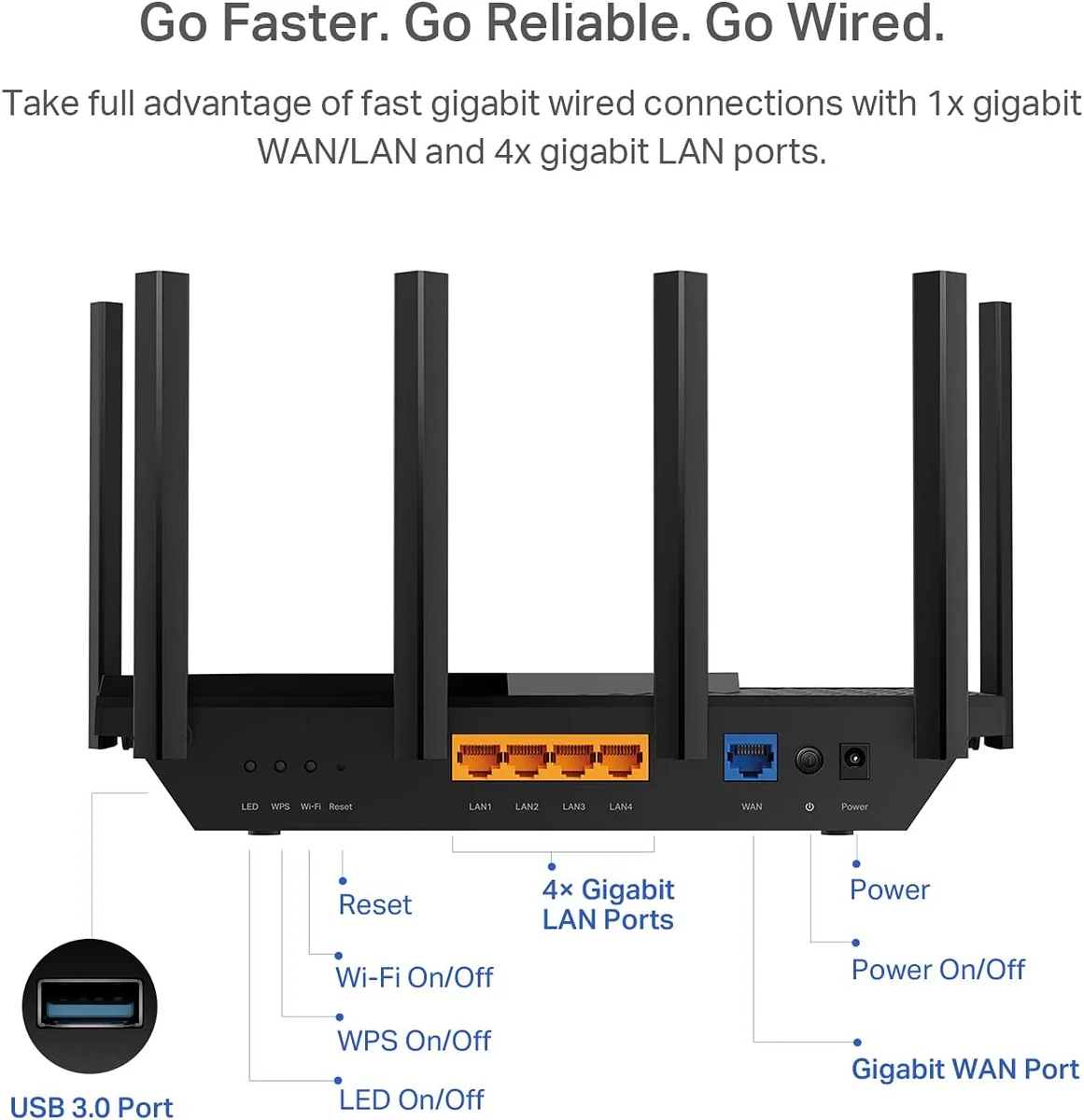
- •Wired/USB performanceGigabit LAN, LAG, USB 3.0 sharing

Considerations
- •Intermittent connection dropsSome users report unexpected disconnects
- •2.4 GHz inconsistency2.4 GHz performance varies by device
- •No multi‑gig portsAll Ethernet ports limited to 1 Gbps
- •HomeShield subscriptionAdvanced security features require subscription
- •Firmware variabilityOccasional problematic firmware updates reported
- •Compatibility issuesSome older 2.4 GHz devices struggle
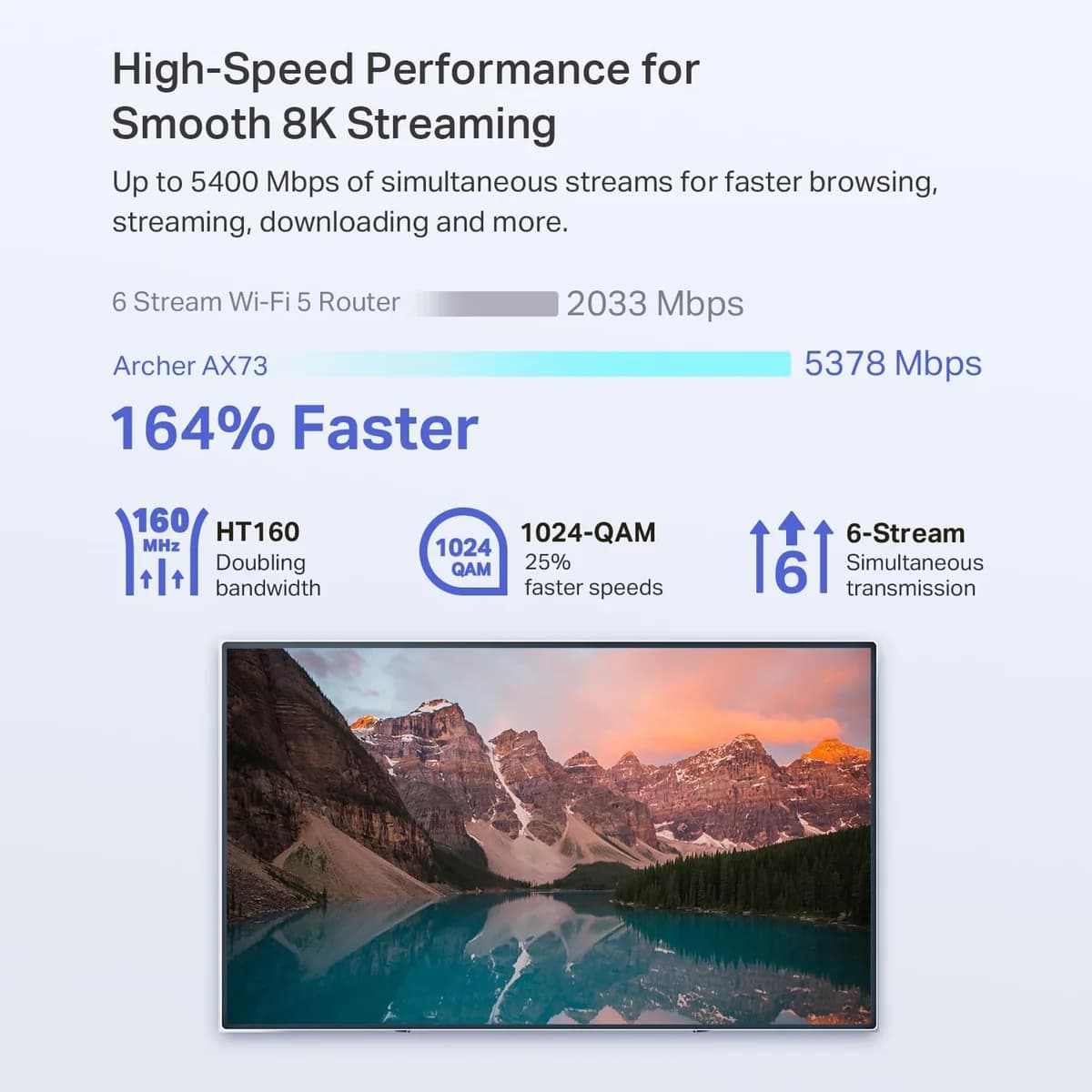
TP-Link’s Archer AX73 stakes its claim as a solid mid-range Wi-Fi 6 router, designed for households juggling multiple devices and hungry for fast, reliable connectivity. With up to 4804 Mbps on the 5 GHz band, this model pushes throughput boundaries typically reserved for pricier gear. Its six external antennas and beamforming tech promise broad coverage that cuts through walls with surprising ease, ideal for medium-to-large homes craving seamless streaming and gaming experiences. Equipped to handle over 200 simultaneous connections, it caters well to smart home enthusiasts and busy families alike. Notably, its passive cooling design keeps heat in check during marathon use, while gigabit Ethernet ports paired with a speedy USB 3.0 port add wired versatility. Setup is a breeze via TP-Link’s intuitive Tether app or traditional web interface—perfect whether you’re a tech novice or power user. Stick around as we unpack these strengths—and occasional quirks—to help you decide if it fits your digital kingdom perfectly.
Wired Connectivity & USB Performance
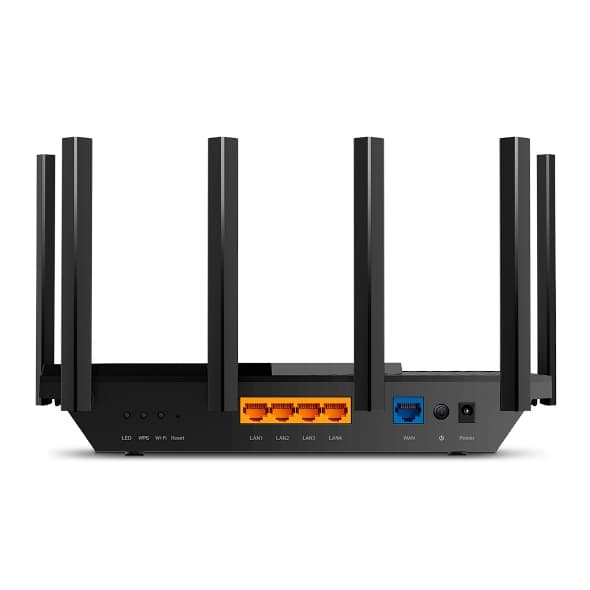
Four gigabit LAN ports plus one WAN port provide solid wired backbone speed while supporting link aggregation on two LAN ports enhances bandwidth capabilities further—a bonus for NAS enthusiasts and gamers craving stable cabled connections. The side-mounted USB 3.0 port isn’t just eye candy; reviewers confirm speedy file sharing and media server functionality including Apple Time Machine backups—with transfer rates hitting near-gigabit thresholds ensuring swift local storage access right from your network hub.
Thermal Performance / Cooling
No toaster here—the Archer AX73 boasts an expansive vented design paired with a sizable internal heatsink that keeps things cool even during marathon streaming or gaming binges. Users note minimal heat buildup compared to competitors prone to throttling under pressure, which means sustained peak performance without surprise slowdowns or shutdowns due to overheating risks—making it as reliable as your morning coffee when long hours of connectivity are non-negotiable.
Multi‑Device / Multi‑Client Handling
With support for OFDMA and MU-MIMO technologies, this router confidently juggles over 200 simultaneous connections, ideal for busy households packed with gadgets. Though stress tests reveal occasional latency spikes under heavy load, typical home use remains lag-free thanks to efficient packet management via its advanced chipsets. This multitasking marvel earns kudos for keeping streams flowing smoothly across numerous clients—a testament to how it balances demand without dropping a beat when chaos reigns.
Coverage & Range
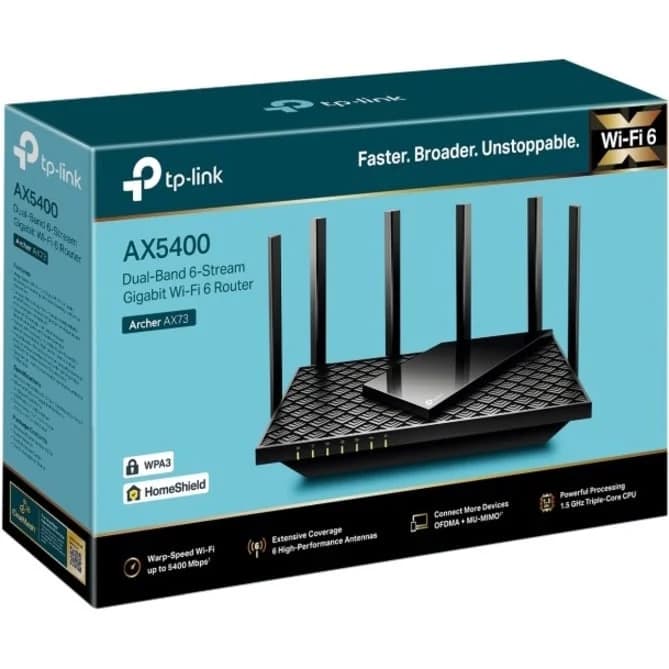
Say goodbye to dead zones as the Archer AX73 employs six high-performance antennas coupled with beamforming technology, delivering robust signals throughout medium-to-large homes. Reviewers consistently report excellent coverage—even penetrating thick walls—ensuring your smart home devices stay connected no matter where you roam. While the 2.4 GHz range is decent but less impressive, overall this router shines by filling spaces with stable Wi-Fi, turning tricky layouts into seamless connectivity hubs.
5GHz Wi‑Fi Throughput
Dial up your expectations because this router rocks the 5 GHz band with up to 4804 Mbps using HE160 and a 4x4 MU-MIMO setup. It’s not just specs on paper; users and experts alike praise its ability to deliver blazing fast speeds, perfect for streaming multiple 8K videos or intense gaming sessions. The triple-core Broadcom CPU ensures smooth data flow without hiccups, proving that raw power meets real-world performance in this high-frequency playground.
Conclusion
The Archer AX73 makes a compelling case with its blazing 5GHz throughput and extensive coverage, effortlessly reaching corners where weaker routers falter. Its prowess in multi-device handling suits busy homes brimming with gadgets, though occasional latency under heavy load hints at limits for ultra-demanding setups. The thoughtful thermal design keeps things cool, sidestepping performance dips during extended use. Wired users benefit from solid gigabit Ethernet ports and speedy USB 3.0 sharing, rounding out a versatile package. Setup is streamlined through the well-crafted Tether app and web interface, striking balance between ease and depth of control. While it doesn’t break new ground with multi-gig ports or mesh integration, this router stands as an accessible powerhouse for most households craving reliable speed without fuss—a blend of practical features that earn respect rather than awe but deliver consistent connectivity day after day.

Feature Scores
This reflects reviews and ratings from established critics, journalists, and users who have evaluated the item. Their opinions provide a comprehensive assessment.
Performance
Wireless Throughput
4/5
Coverage Range
4/5
Multi-Device Handling
4/5
Low Latency Performance
4/5
Reliability
4/5
Firmware Update Cadence
4/5
Wired Port Speed
4/5
QoS Effectiveness
4/5
Advanced Wi-Fi Technology Support
5/5
Value
Price to Performance Ratio
4/5
Warranty and Support Value
4/5
Energy Running Cost
4/5
Design
Aesthetic Design
4/5
Form Factor Flexibility
4/5
Thermal Management
4/5
Health
RF Exposure
TBD
Materials Safety
TBD
Safety
Network Security Features
4/5
Secure Update Mechanisms
4/5
Default Credential Practices
4/5
Sustainability
Energy Efficiency
4/5
Repairability
4/5
Recyclability
4/5
Longevity of Software Support
4/5
Experience Style
Setup Simplicity
5/5
Management Interface Quality
4/5
Customization Depth
4/5

Specifications
This section outlines the product's key facts, covering essential features, details, dimensions, materials, and any unique characteristics that define its functionality and usability.
Performance
Value
Design
Safety
Sustainability
Experience Style

Frequently Asked Questions
7 Questions





Find Yours
What level of internet speed is most important to you?
Answer to find your best matches.