

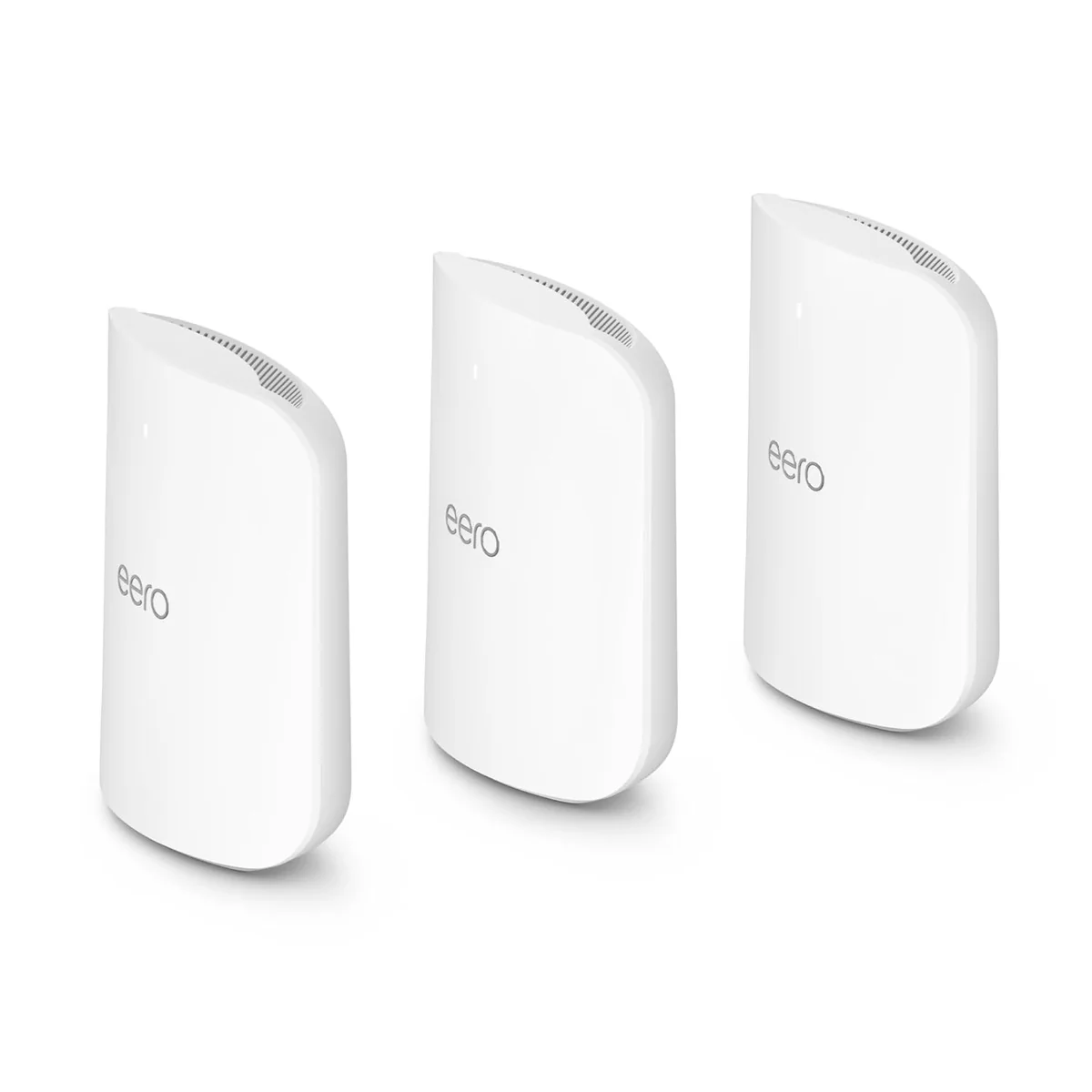
eero Max 7
Blazing Wi-Fi 7 speeds and smart home integration deliver strong coverage, with some subscription trade-offs.
The eero Max 7 is Amazon’s sleek Wi-Fi 7 powerhouse, engineered for tech-savvy homes craving blazing wireless speeds up to 4.3 Gbps and rock-solid coverage across sprawling spaces. It dazzles with multi-gig Ethernet ports, smart home hub integration, and effortless app-driven setup that even novices adore. Experts praise its future-proof features but flag the steep price and subscription-required perks as potential hurdles. Users love the reliable signal spanning indoors and outdoors, though some crave deeper controls beyond the cloud-only app. With a mix of premium hardware and thoughtful design—plus a few trade-offs—the Max 7 stakes its claim where performance meets polish in next-gen networking.




Find Yours
What is the approximate size of your home or area needing WiFi coverage?
Answer to find your best matches.

The Field
Browse top contenders, or compare all options ranked by score and key attributes.
5 Options




The Scoreboard
Does this improve your life? Considers, health, habits, and environmental impact.
Benefits
Delivers consistent multi-gig wireless throughput, reducing lag and stress during work and media.
Integrates Thread, Matter and Zigbee, stabilizing IoT devices for safer, less frustrating home management.
App-driven setup and automated optimization reduce tech anxiety and ongoing maintenance time.
TrueMesh backhaul and tri-band design keep calls and streams uninterrupted across rooms.
Trade-Offs
Cloud-first app and no web GUI reduce visibility and hands-on control, frustrating power users.
Security and parental controls require paid subscription, limiting autonomous protection options for households.
As first-gen Wi‑Fi 7, it may spur premature upgrades and increased electronic waste footprint.
Bigger chassis, multi-gig radios, and beefy silicon likely increase power draw and material use.
 Alternatives


Join the Circle
Where real meets deal
Know what's worth buying-and when.
Tips, special offers, and rewards for buying and sharing.

Publications
7 LEADING PUBLICATION REVIEWS

Brandon Hill from Tom’s Hardware highlights the Amazon Eero Max 7 as a blazing-fast, first-generation Wi-Fi 7 mesh router that delivers excellent performance, especially for early adopters with compatible devices. He praises its attractive tower design, straightforward app-based setup, and strong throughput across multiple nodes, noting particularly impressive speeds with Wi-Fi 7-capable devices like the OnePlus 11. However, Hill points out significant drawbacks, including the lack of a web interface and limited advanced configuration options, which may frustrate power users. Additionally, many useful features—such as network scanning and internet backup—are locked behind a costly $99/year subscription, detracting from the overall value. The high price, starting at $599 for a single node and escalating sharply for multi-node systems, positions the Eero Max 7 as a premium choice aimed at enthusiasts willing to pay for cutting-edge technology. Hill suggests waiting for broader Wi-Fi 7 device adoption before investing but affirms that performance won’t disappoint those who buy now.
By Brandon Hill
Brian Nadel from Tom’s Guide highlights the eero Max 7 as a standout for simplicity and ease of use in the Wi-Fi 7 mesh category. Praising its automatic optimization and minimalist app, he emphasizes the system’s “set and forget” philosophy, ideal for users who prefer hassle-free networking without deep customization. The Max 7 delivers solid, reliable speeds up close, with impressive throughput in real-world tests, though its performance notably declines at longer distances compared to competitors like the Netgear Orbi RBE973 and TP-Link Deco BE85. Nadel also notes the Max 7’s modest pricing relative to premium rivals and its well-designed hardware, despite its larger size and limited downstream Ethernet ports. While the lack of advanced customization and the additional cost of the eero Plus subscription may deter power users, the review underscores the Max 7’s appeal as a straightforward, dependable mesh system that prioritizes ease over raw speed, making it a strong choice for mid-sized homes and less technical users.
By Brian Nadel
Simon Hill from WIRED highlights the Eero Max 7 as Amazon’s most powerful mesh Wi-Fi system yet, boasting impressive speeds and a robust feature set tailored for early adopters of Wi-Fi 7 technology. He praises its easy setup, solid range, and smart-home integration with Matter, Thread, and Zigbee support, making it a strong choice for connected homes. However, Hill tempers enthusiasm with practical caveats: the Max 7’s large size, high price, and reliance on an additional subscription for full functionality may deter many buyers. Performance is excellent on Wi-Fi 6E devices, but Wi-Fi 7 support remains inconsistent, with stability issues and device compatibility challenges still evident. He also notes that most users won’t see significant benefits over Wi-Fi 6E systems yet, suggesting patience before upgrading. Ultimately, the Max 7 appeals to tech enthusiasts willing to invest heavily for cutting-edge features, while others might find better value in competing or previous-generation models.
By Simon Hill
David Nield from T3 highlights the Eero Max 7 as a powerful, next-generation Wi-Fi 7 mesh system that delivers excellent speed and exceptional stability throughout a typical two-storey home. He praises its robust hardware, including multiple high-speed Ethernet ports and effective cooling design, alongside a sleek, modern app that simplifies setup and network management. While setup is generally straightforward, minor issues like the lack of a quick-start guide and occasional app crashes on Android slightly temper the experience. The review emphasizes the system’s strong support for smart home protocols and future-proofing, though Nield notes that users with already solid Wi-Fi 6 or 6E setups may see limited gains. The absence of built-in parental controls and security features without a subscription is a drawback, and the high price point means it’s best suited for those needing top-tier performance and extensive device connectivity. Overall, the Eero Max 7 is positioned as a premium, reliable choice for demanding home networks.
By David Nield
Darrell Etherington from TechCrunch highlights the eero Max 7 as Amazon’s most advanced and powerful mesh Wi-Fi router to date, delivering cutting-edge Wi-Fi 7 support and impressive speeds up to 4.3 Gbps wirelessly and 9.4 Gbps wired. He praises its expanded port options, improved range, and sleek vertical design optimized for performance and cooling without noise. Etherington’s hands-on testing in a challenging multi-story home environment reveals significant speed and coverage improvements over previous eero models, with seamless integration into existing mesh setups. He also emphasizes eero’s user-friendly app and robust smart home compatibility, including Matter and Thread support. While acknowledging the premium price, he frames it as justified by the future-proof technology and exceptional performance. Overall, Etherington conveys genuine enthusiasm for the Max 7’s blend of power, ease of use, and thoughtful design, making it a compelling choice for users seeking top-tier home networking.
By Darrell Etherington
Ian Evenden from PC Gamer highlights the Amazon eero Max 7 as a sleek, future-proof Wi-Fi 7 router that excels in simplicity and mesh networking for large properties. Praising its minimalist design, robust multi-gig Ethernet ports, and seamless IoT integration, Evenden emphasizes the Max 7’s ease of setup and hands-off management approach. While the router delivers solid real-world Wi-Fi 7 speeds and reliable coverage, its performance is competitive but not superior to rivals like the Netgear Nighthawk RS700S. The review notes the absence of a USB port and limited advanced controls, which may disappoint power users. Cost is a significant consideration, with the $600 price tag and potential need for multiple units making it a premium choice best suited for users with high-speed internet and large homes. Overall, Evenden regards the eero Max 7 as one of the best current Wi-Fi routers for those prioritizing speed, simplicity, and mesh capability, but cautions it may be overkill for typical users.
By Ian Evenden
Joe Supan from CNET highlights the eero Max 7 as the best Wi-Fi 7 router, praising its exceptional speed and modern features. The review emphasizes the Max 7’s impressive tri-band performance, with a standout 1,513Mbps average on the 5GHz band and strong throughput on the 6GHz band, placing it among the fastest routers tested. Its inconspicuous design and compatibility with Alexa, Thread, Matter, and Zigbee protocols add to its appeal, especially for users with multiple smart home devices or multigig internet plans. However, the review tempers enthusiasm by noting the Max 7’s relatively limited range on the 5GHz band and middling jitter and packet loss scores, suggesting that larger homes may require additional units to form a mesh network. The high price point positions it as a premium choice for networking enthusiasts who want to fully leverage Wi-Fi 7 technology, rather than a necessity for most users. Overall, the review conveys a balanced but clearly positive sentiment toward the eero Max 7’s cutting-edge speed and smart home integration.
By Joe Supan

YouTube
7 LEADING EXPERT & INFLUENCER REVIEWS
 ShortCircuit
Linus from ShortCircuit praises the eero Max 7 as an exciting first Wi-Fi 7 router, highlighting its blazing speeds, multi-gigabit ports, and smart home integration with Zigbee, Thread, and Matter. He appreciates the interference-free 6 GHz band for mesh backhaul but criticizes the costly eero Plus subscription and some setup quirks. Overall, he’s enthusiastic about Wi-Fi 7’s future potential despite current device limitations.
GregglesTVGregglesTV praises the eero Max 7 for its exceptional speed, reliability, and incredibly easy setup, highlighting its powerful Wi-Fi 7 performance and robust multi-gigabit Ethernet ports. He notes improved smart home device stability and seamless app management but mentions the lack of USB ports and optional $10/month subscription for advanced features as potential drawbacks.
Cam // Power MovesCam from Power Moves praises the eero Max 7 as a powerful, stable mesh Wi-Fi system with impressive speeds and excellent coverage, especially for large homes and multi-gigabit plans. However, he finds it overkill for typical gigabit internet users, noting the eero 6+ offers nearly identical real-world performance at a much lower cost. He highlights the Max 7’s superior range, 4x4 radios, and extra Ethernet ports but points out most devices aren’t yet Wi-Fi 7 compatible, making the Max 7’s advantages less noticeable for many. Design and price also influenced his preference for the 6+.
landpetlandpet praises the eero Max 7 as the top performer in Amazon’s Wi-Fi 7 lineup, highlighting its superior speeds, range, and wireless backhaul capabilities. While the Max 7 excels for multi-gigabit internet and heavy wireless backhaul, the reviewer notes its higher price and suggests the Pro 7 offers a better price-performance balance for most users.
Majestic Smart HomeChris Majestic praises the eero Max 7 for its exceptional Wi-Fi 7 speeds, reliable TrueMesh backhaul, and seamless smart home integration with Thread, Matter, and Zigbee support. He highlights its easy setup and robust Ethernet options but notes limited app customization and slightly slower peak speeds than some competitors. Ideal for users valuing simplicity and reliability.
Xpress Tv MountingXpress Tv Mounting enthusiastically recommends the eero Max 7, praising its easy setup via QR code, expanded four-port back panel, and impressive speed improvements over Wi-Fi 6—reaching up to 940 Mbps wired. The reviewer highlights the helpful app features and strong customer support, affirming the router’s value for high-demand setups.
Phones And DronesPhones And Drones praises the eero Max 7 as a powerful, future-proof Wi-Fi 7 tri-band mesh router with impressive speeds up to 4.3 Gbps wireless and 10 Gbps wired. They highlight its easy setup, robust smart home hub features (Thread, Matter, Zigbee), and solid coverage, while noting its larger size and limited current device compatibility.

Social
1 INFLUENCER REVIEW
 Gino Villarini
Gino Villarini highlights the impressive wireless backhaul performance of the eero Max 7 mesh system using a 10G fiber connection and a MacBook Pro M3. He demonstrates solid download speeds reaching over 3 Gbps with low latency, though upload speeds show some inconsistency and occasional slowdowns during testing. Overall, Gino presents the eero Max 7 as a strong contender for high-speed Wi-Fi 7 mesh networking, especially for users with ultra-fast internet. While the upload fluctuations suggest room for improvement, he recommends the system for those seeking cutting-edge wireless backhaul performance and invites viewers to follow for more detailed Wi-Fi 7 tests.

Store Reviews
CUSTOMER REVIEWS FROM 1 STORE
Amazon reviewers consistently praise the eero Max 7 for its exceptional speed, reliable coverage, and straightforward setup. Many highlight how the system effortlessly boosts internet performance, with users reporting significant improvements in download speeds—often reaching gigabit levels—and stable connections even in environments crowded with competing networks and devices. Reviewers appreciate the seamless transition from older eero models, noting that the app preserves existing network settings and simplifies adding nodes, which saves considerable time and effort. Users emphasize the router’s strong Wi-Fi signal that blankets entire homes, including outdoor areas, with some finding that just two units cover spaces up to 2,600 square feet effectively. The device’s Ethernet ports also receive positive mentions for eliminating streaming stutters when directly connected. Several reviewers with technical backgrounds commend the system’s stability and automatic updates, allowing them to enjoy high performance without constant tinkering. While most customers find the eero Max 7’s design sleek and the app intuitive, a few report mixed experiences with connectivity, such as occasional device drop-offs or weaker signals in certain spots. Opinions on value vary: many consider the price justified by the performance gains and ease of use, whereas others feel the cost is steep relative to alternatives. Overall, Amazon users recommend the eero Max 7 as a powerful, user-friendly mesh router that delivers fast, consistent internet suitable for busy households with multiple devices.
4.2 Stars / Many verified reviews

Forum Reviews
CUSTOMER REVIEWS FROM 1 FORUM
Reddit users generally view the eero Max 7 positively, praising its strong performance, ease of use, and reliable coverage, especially in challenging environments like dense apartments. Many appreciate its ability to deliver near gigabit speeds across various WiFi standards and commend its simple, set-and-forget design. However, some users report issues with firmware updates causing instability and limited control over network settings, which frustrates more technical users. While upgraders note significant improvements over previous eero models, some express concerns about value and signal range compared to enterprise-grade alternatives. Overall, the Max 7 is seen as a capable, user-friendly mesh system with occasional software drawbacks.
Many comments

In-Depth Review

Highlights
- •Wireless throughputMulti‑Gbps wireless performance
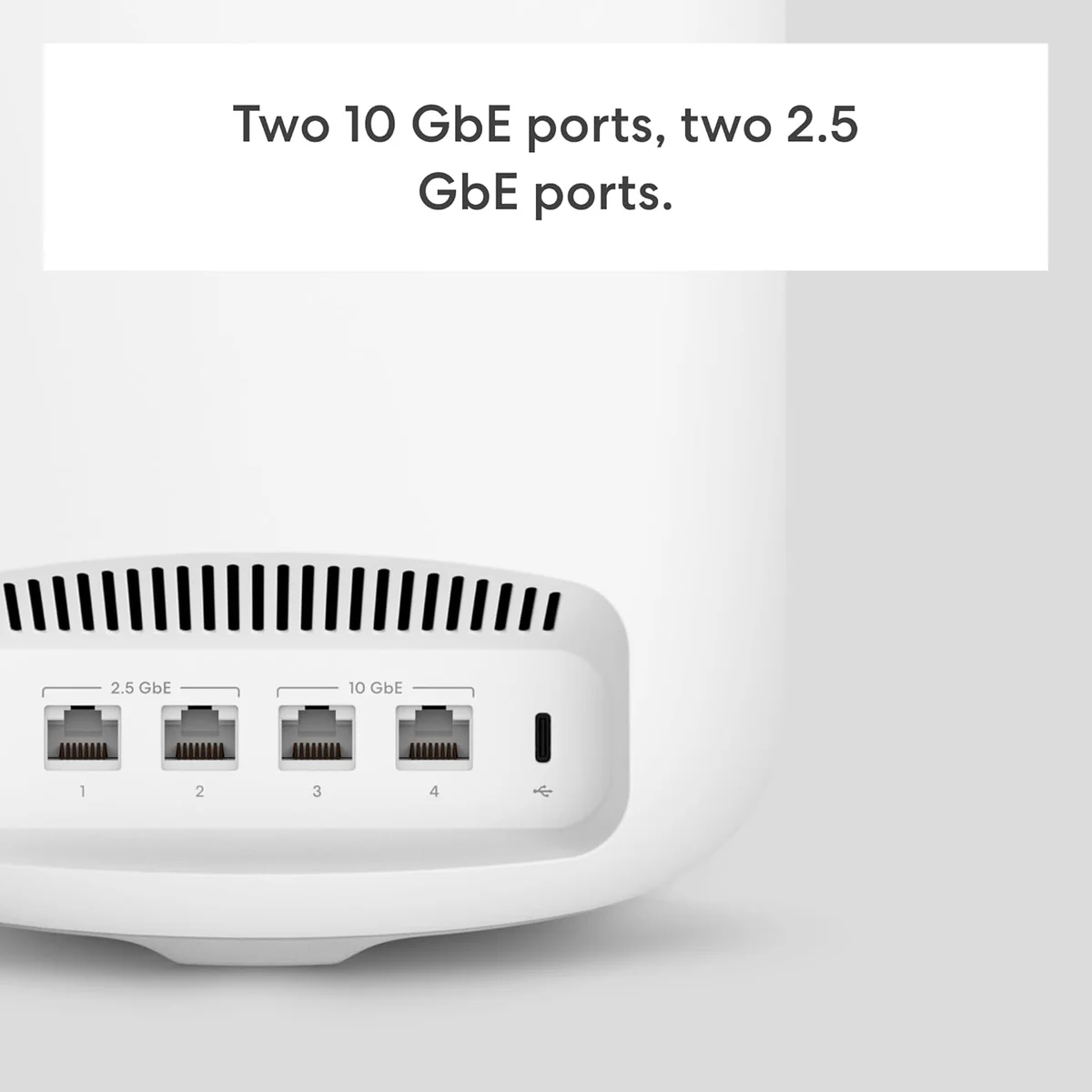
- •Multi‑gig EthernetTwo 10GbE and two 2.5GbE ports
- •Setup & app migrationQuick, app‑guided install and migration
- •Smart home hubThread, Matter and Zigbee controller
- •Backhaul flexibilityWired or tri‑band wireless backhaul
- •Coverage & TrueMeshMarketed as up to 2,500 sq ft

Considerations
- •Subscription gatingAdvanced features hidden behind paid plan
- •Premium pricingHigh upfront cost for single unit
- •Connectivity variabilityIntermittent Wi‑Fi 7 issues on some devices
- •Firmware regressionsAuto‑updates have caused stability regressions
- •Limited advanced controlsNo web UI; fewer expert options
- •Physical footprint & I/OLarger tower and no USB port
Eero continues its legacy of user-friendly networking with the Max 7, a tri-band Wi-Fi 7 mesh router designed to tackle modern connectivity demands. Marketed for homes brimming with smart devices and multi-gigabit internet plans, it promises wireless speeds up to 4.3 Gbps alongside blazing-fast wired connections via dual 10 GbE and 2.5 GbE ports. Its TrueMesh technology scales coverage efficiently, ensuring solid signal strength throughout spacious or multi-story homes. The system offers flexible backhaul options—choose between wired Ethernet or high-capacity wireless links—to optimize your network’s stability and speed. Setup is simplified through an intuitive app that eases transitions from older systems while providing ongoing management convenience. While larger in size than previous models, its thoughtfully engineered design keeps thermals in check without fan noise. If you’re seeking cutting-edge performance wrapped in accessible simplicity, these key features are worth your attention as they define what sets this router apart in a crowded market space.
Coverage & Range (Mesh Scaling)
Claimed coverage up to 2,500 square feet per unit fits most homes comfortably; mesh scaling via additional nodes extends range seamlessly across floors and outdoor areas like porches or yards as confirmed by user experiences reporting fewer dead zones than older systems did previously indoors and out. While large open spaces benefit most from multiple units working together through eero’s patented TrueMesh technology ensuring stable connectivity throughout your domain.
Backhaul Flexibility (Wired vs Wireless)
The Max 7 excels at offering versatile backhaul options: you can use either high-capacity wired Ethernet links or sophisticated tri-band wireless backhaul powered by Wi-Fi Multi-Link Operation (MLO) technology that dynamically optimizes traffic paths between nodes reducing interference risks seen in congested environments—a feature noted positively among expert reviews appreciating how these choices let setups adapt perfectly to home layouts while maintaining strong speeds across all connected devices.
Wireless Throughput (6GHz/5GHz)
When it comes to speed thrills, the tri-band Wi-Fi 7 support on 2.4, 5, and especially 6 GHz bands is a game changer. The Max 7 boasts up to 4.3 Gbps wireless speeds, delivering blistering throughput for gaming and streaming alike. Real-world tests confirm that close-range devices can hit multi-gigabit rates, though signal strength drops with distance—common in higher-frequency bands like 6 GHz. This balance of cutting-edge tech with practical performance keeps users buzzing about its impressive wireless prowess.
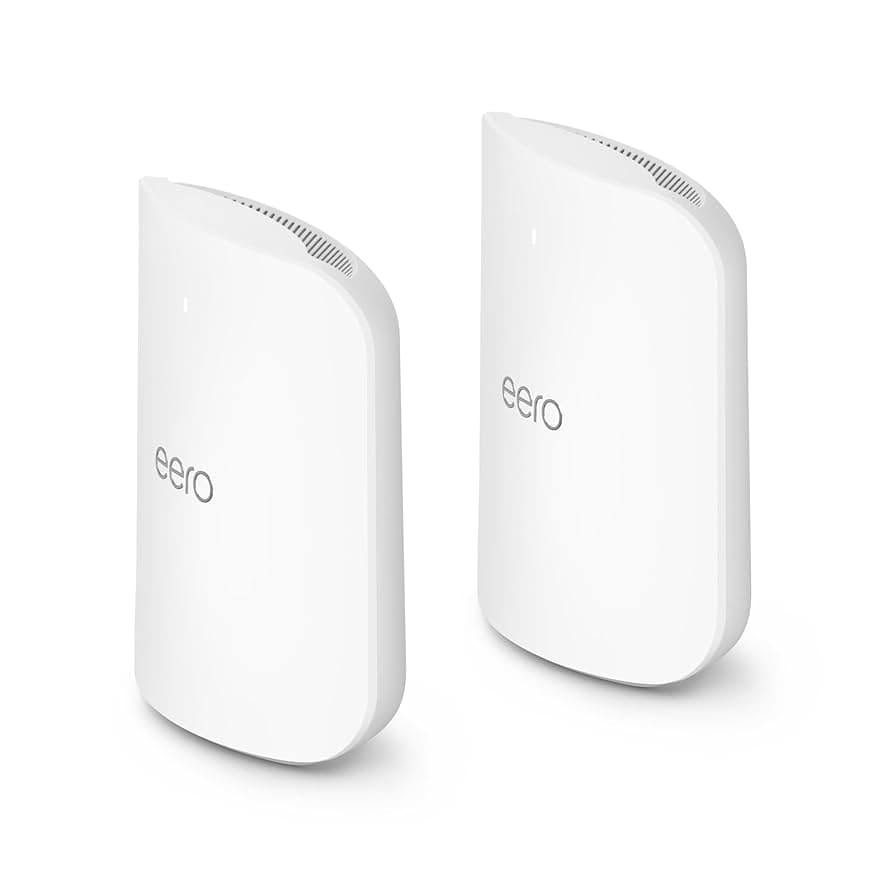
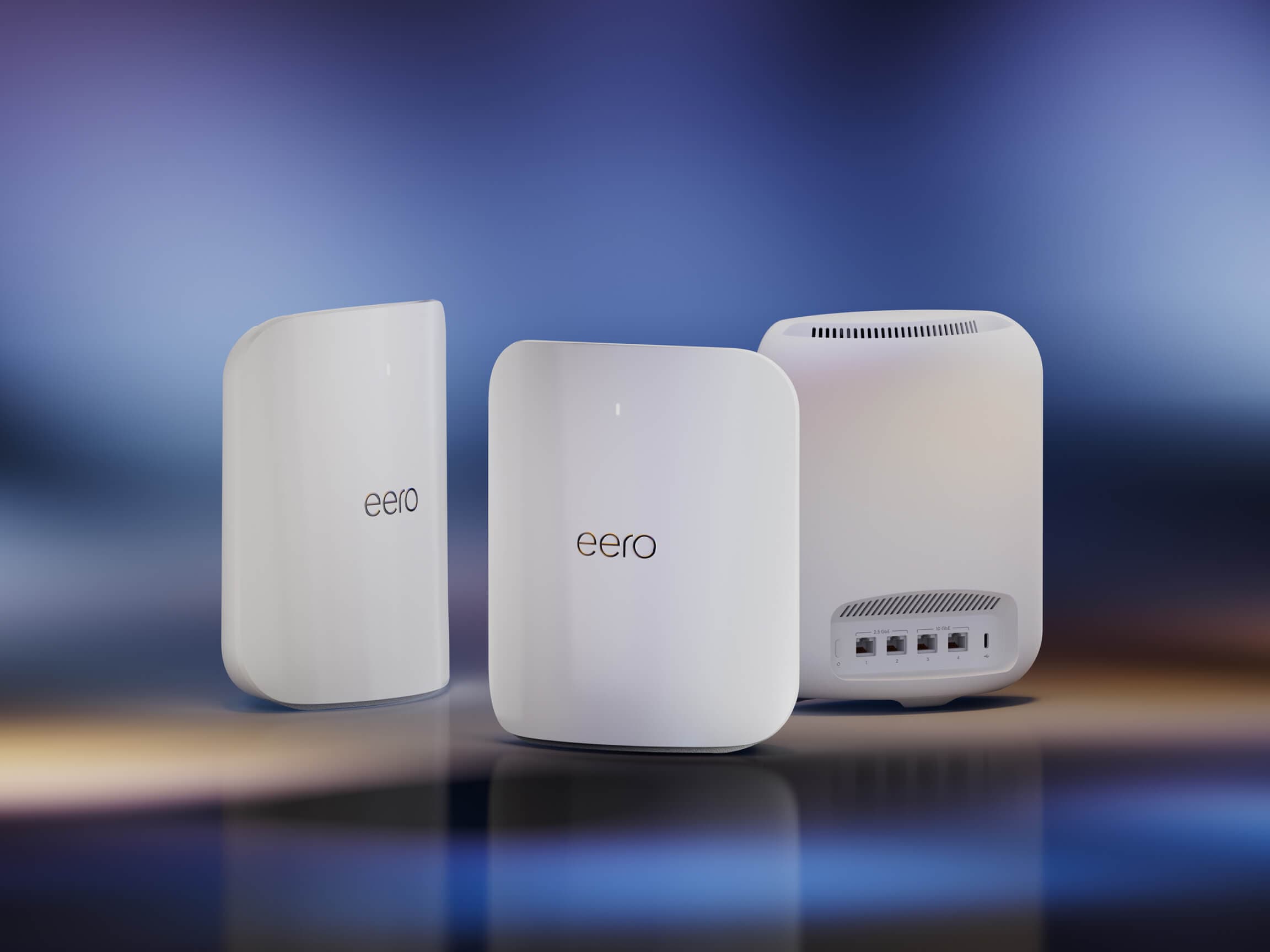
Wired Multi‑Gig Performance (10GbE/2.5GbE)
With two blazing-fast 10 GbE ports plus dual 2.5 GbE ports, wired enthusiasts are covered for years to come—ideal for ultra-high-speed internet plans or connecting storage servers at lightning pace. Users praise the flexibility this offers for both uplink connections and device hookups without bottlenecks common in gigabit-only routers. These multi-gig Ethernet options put the Max 7 ahead of many rivals by future-proofing your home network’s backbone.
Conclusion
Navigating the nexus of speed and coverage, this mesh system flexes multi-gigabit wired ports alongside impressive wireless throughput on 6GHz and 5GHz bands, delivering nimble data dance floors for demanding homes. Its TrueMesh scaling impresses with consistent range, while versatile backhaul options—wired or wireless—offer tailored network optimization. The setup journey is streamlined by a polished app experience that even novices find approachable. Though its size commands shelf space, clever engineering keeps heat whisper-quiet under pressure. Users laud its stability but occasionally note firmware hiccups amid updates—a reminder that cutting-edge tech carries growing pains. Ideal for those chasing robust multi-device performance and smart home integration, it might outpace needs (and budgets) of casual users who prize simplicity over sheer horsepower. This router doesn’t just keep pace—it carves out a niche where power meets polish in the evolving Wi-Fi 7 arena, inviting savvy buyers ready to invest in tomorrow’s connectivity today.

Feature Scores
This reflects reviews and ratings from established critics, journalists, and users who have evaluated the item. Their opinions provide a comprehensive assessment.
Performance
Coverage Range
4/5
Maximum Throughput
5/5
Real-World Throughput
4/5
Latency Performance
4/5
Connection Density
4/5
Roaming Seamlessness
4/5
Backhaul Flexibility
5/5
Reliability
4/5
Firmware Update Frequency
4/5
Value
Price to Performance
4/5
Total Cost of Ownership
4/5
Warranty Coverage
4/5
Design
Aesthetic Integration
4/5
Size and Placement Flexibility
4/5
Heat Generation
4/5
Health
Electromagnetic Emissions
TBD
Material Safety
TBD
Safety
Electrical Safety Compliance
TBD
Overheat Protection
TBD
Data Security Features
4/5
Sustainability
Energy Efficiency
4/5
Recyclability
4/5
Modular Repairability
TBD
Packaging Sustainability
TBD
Experience Style
Setup Simplicity
5/5
Mobile App Quality
4/5
Customization Options
3/5
Parental Controls
3/5

Specifications
This section outlines the product's key facts, covering essential features, details, dimensions, materials, and any unique characteristics that define its functionality and usability.
Performance
Value
Design
Safety
Experience Style

Frequently Asked Questions
17 Questions

Find Yours
What is the approximate size of your home or area needing WiFi coverage?
Answer to find your best matches.