
Rokid Max 2 AR Glasses
Vibrant 3-screen AR display with built-in myopia correction offers immersive visuals but faces software and compatibility challenges.
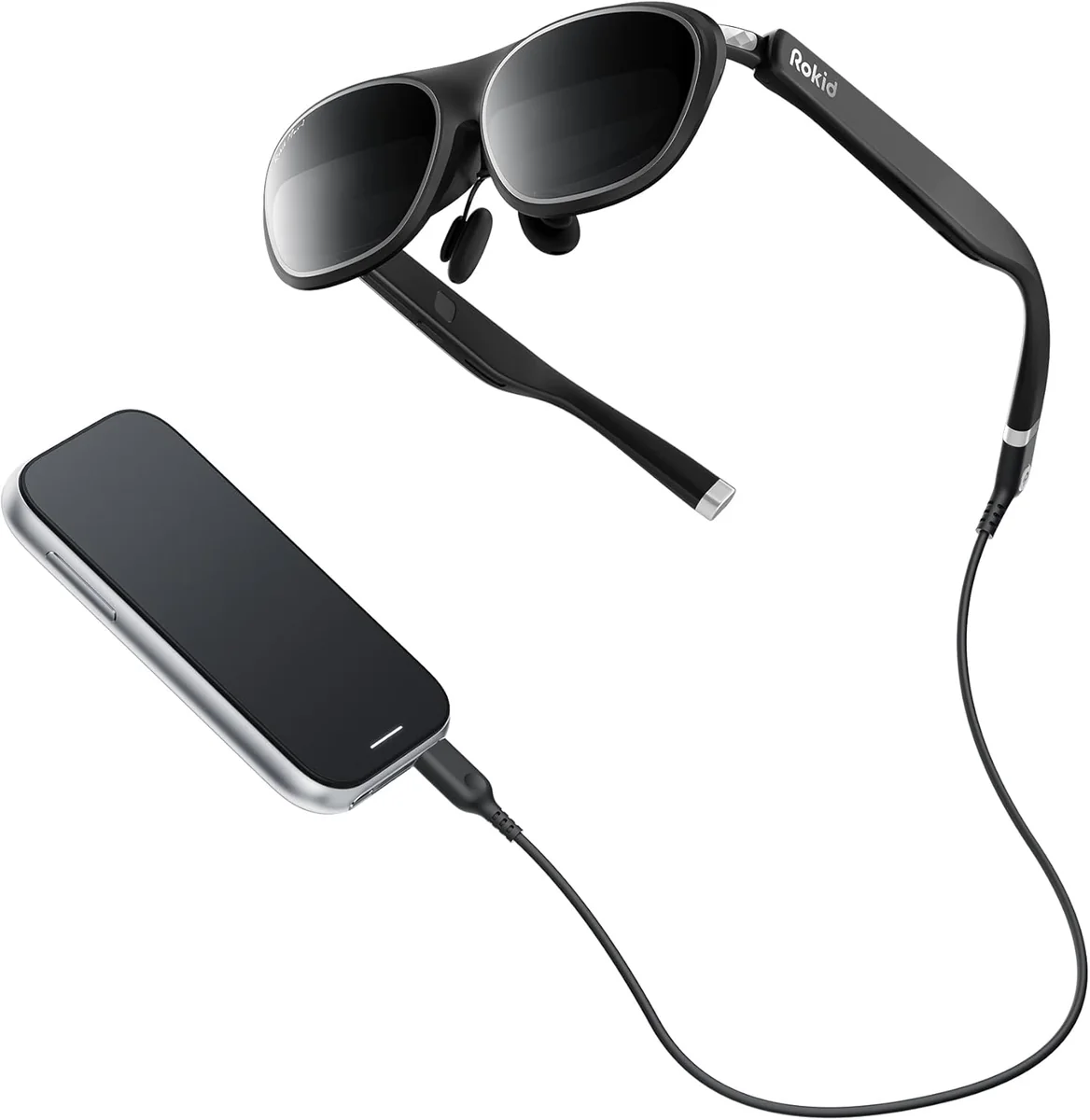
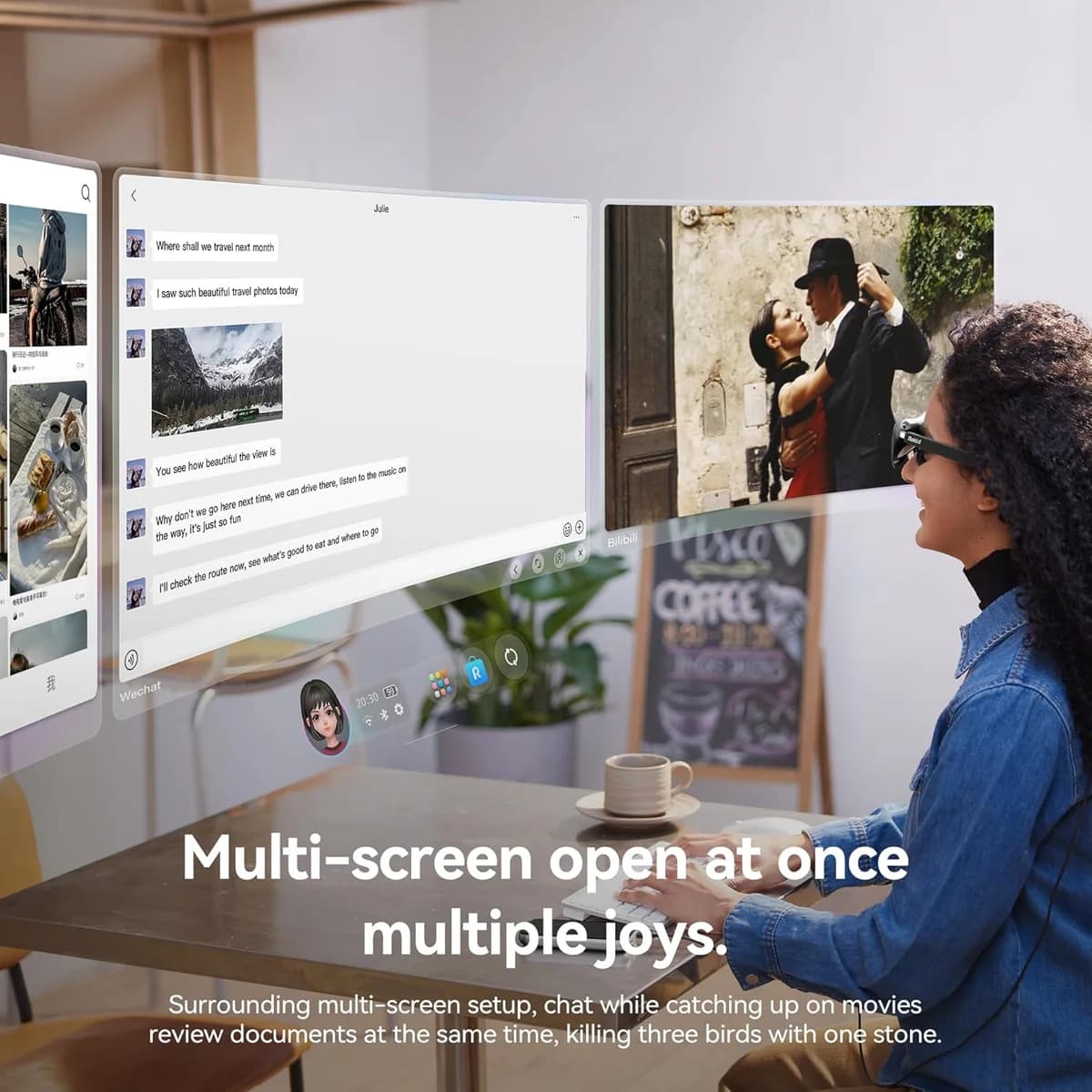
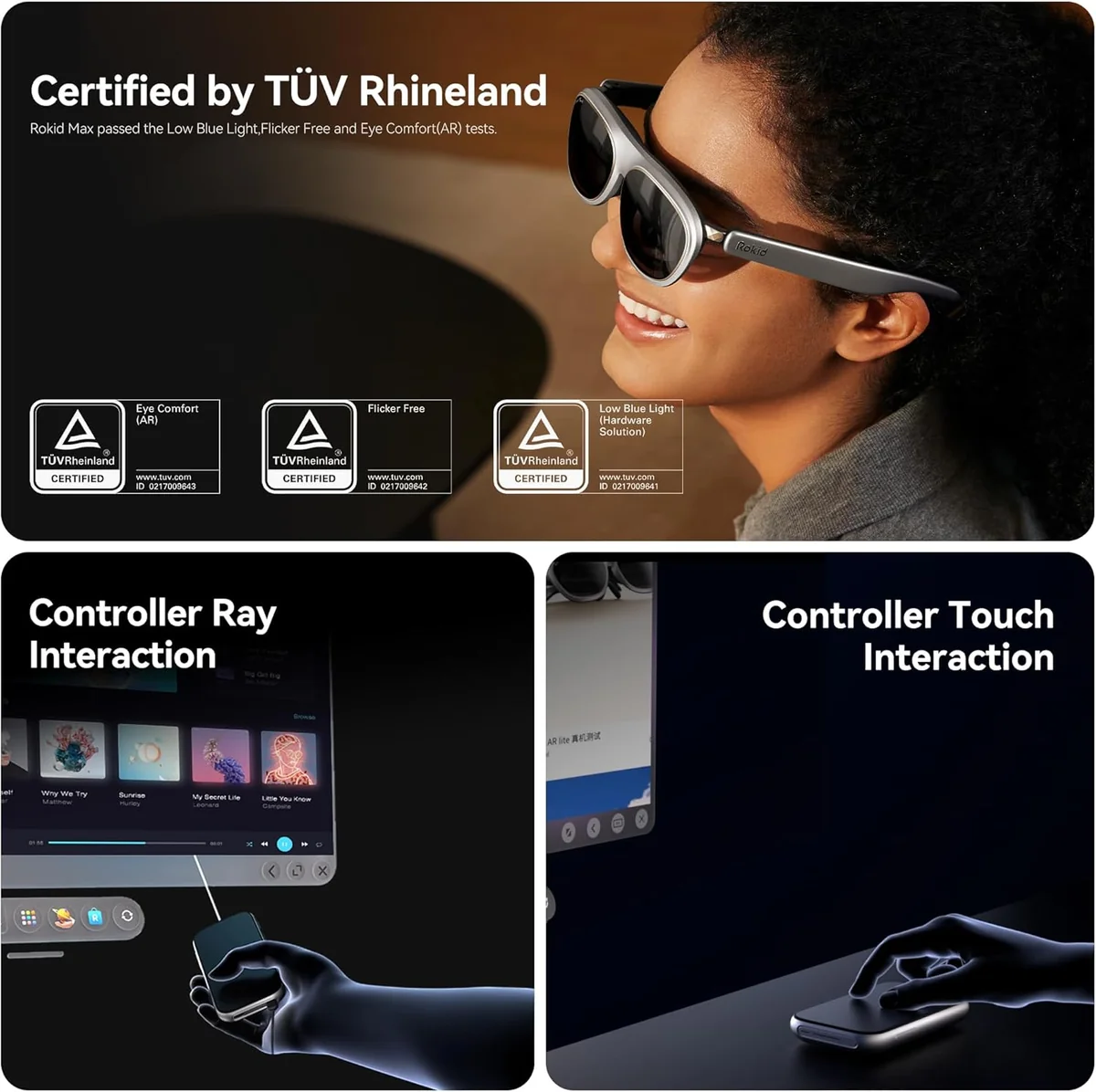
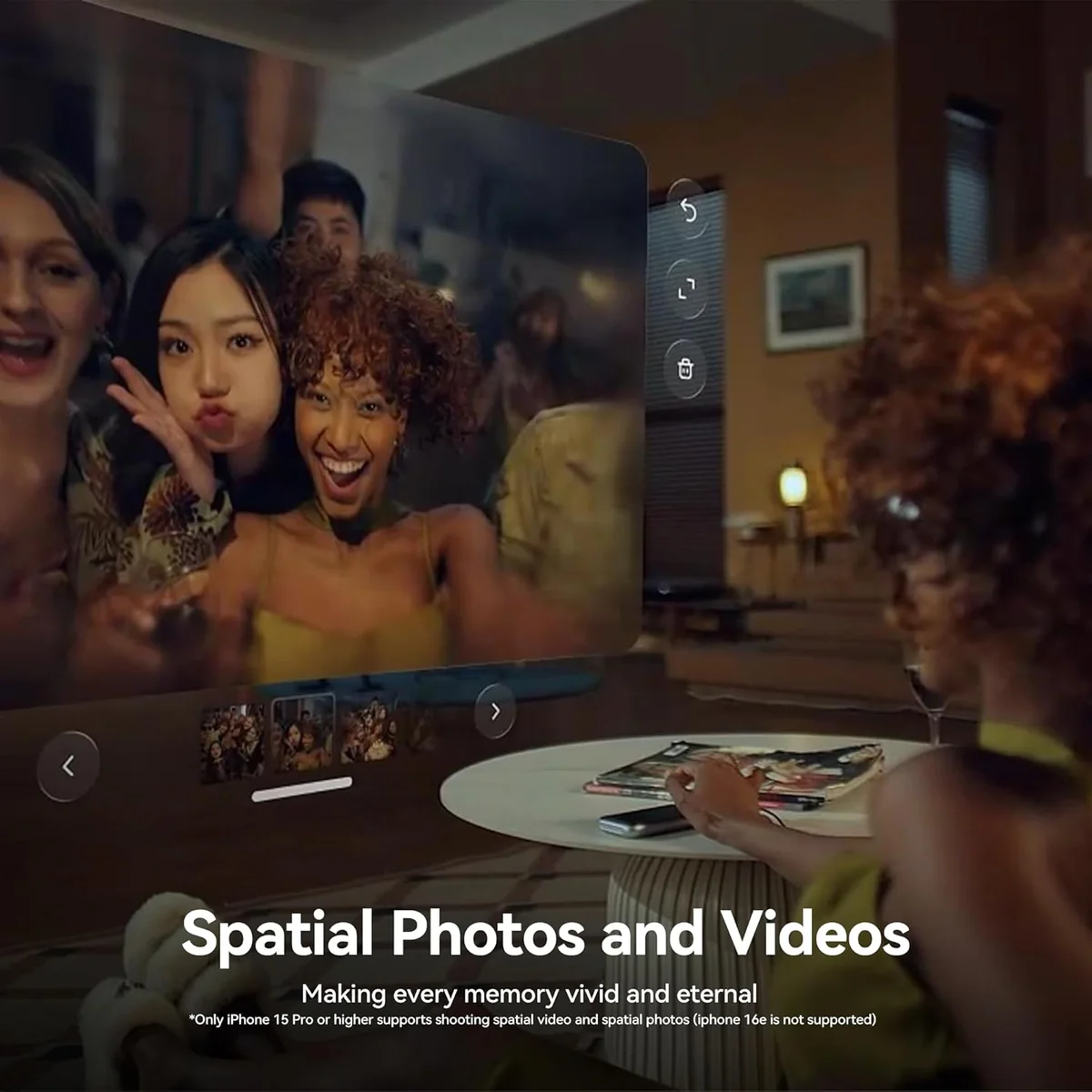
The Rokid Max 2 AR Glasses promise a vibrant 3-screen Micro-OLED display packed into an ultra-lightweight, stylish frame that’s perfect for gamers, remote workers, and cinephiles craving private big-screen magic on the go. Experts applaud its built-in myopia correction and buttery-smooth 120Hz refresh rate, though users flag quirks like UI drift, fit-sensitive optics, and a finicky software ecosystem. The Station2 companion adds muscle but brings fan noise to the party. Priced at a premium, it balances cutting-edge visuals against compatibility headaches—making it ideal for those who prioritize immersive clarity over seamless app universality in their spatial computing journey.
Find Yours
What will be your primary use for video display glasses?
Answer to find your best matches.

The Scoreboard
Does this improve your life? Considers, health, habits, and environmental impact.
Benefits
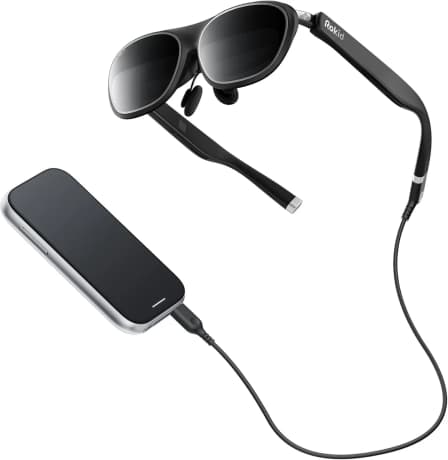
75g lightweight design reduces neck strain; tethered Station2 choice cuts onboard weight.
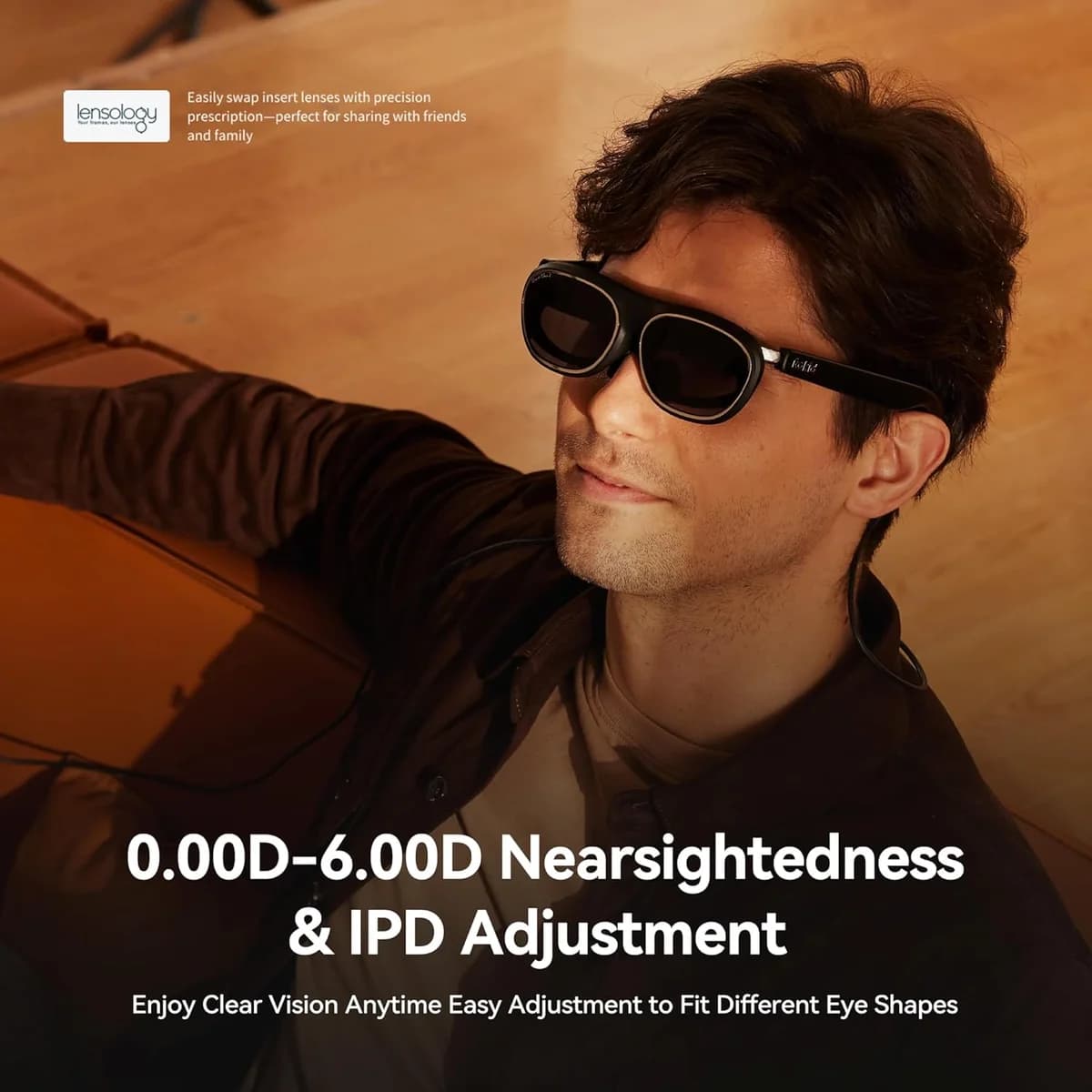
Integrated -6.00D diopter dials reduce need for prescription lenses, easing visual discomfort.
Micro‑OLED 120Hz micro‑displays create massive private screen, improving focus and immersive wellbeing.
Tethered Station2 approach reduces onboard compute and battery size versus standalone headsets, lowering material intensity.
Trade-Offs
Extended sessions may cause eye fatigue and dry eyes from close focal plane and optics.
Birdbath optics demand precise facial fit; misalignment yields blurry edges and headaches, unlike waveguides.
Station2 handheld includes fan noise and continuous power draw, causing distraction and higher energy use.
Limited Android compatibility and lack of standard app store access raise frustration and abandonment risk.
Electronics and Station2 battery contribute to e‑waste and resource extraction compared with simpler accessories.
600 nits brightness and optical reflections limit outdoor legibility and increase squinting.
 Alternatives


Join the Circle
Where real meets deal
Know what's worth buying-and when.
Tips, special offers, and rewards for buying and sharing.

Publications
4 LEADING PUBLICATION REVIEWS

Will Greenwald from PCMag highlights the Rokid Max 2 AR Glasses as a solid, reliable update to the original model, retaining its standout features like a wide 50-degree field of view and built-in diopter adjustment dials that allow users to achieve a sharp image without prescription inserts. The glasses deliver a crisp 1080p picture with vibrant colors and a comfortable 600-nit brightness suitable for most indoor and moderate lighting conditions. While the design is less conspicuous than the first generation, the Max 2 offers no significant improvements in specs or performance, essentially serving as a refreshed version rather than a true upgrade. The inclusion of a bulky carrying case and the lack of integrated lens dimming—requiring a separate blackout cover—are noted drawbacks compared to competitors like the Viture Pro, which boasts a brighter display and dimmable lenses. Overall, the Rokid Max 2 is praised for its dependable visual quality and focus customization but is somewhat overshadowed by rivals offering more advanced features for a slightly higher price.
By Will Greenwald
Hamish Hector from TechRadar highlights the Rokid Max 2 AR glasses as a solid choice for entertainment enthusiasts seeking a portable big-screen experience, especially benefiting users with mild myopia thanks to their unique built-in prescription adjustment dial. He praises the glasses’ comfortable, lightweight design and sharp 120Hz full-HD OLED visuals that create an immersive viewing experience, particularly when using the included lens cover to block ambient light. However, Hector offers a measured tone regarding performance, noting middling audio quality that often necessitates external headphones and some distracting reflections caused by the optical system. While the glasses perform adequately across various real-world scenarios—including gaming and travel—the reviewer cautions that the full retail price feels steep compared to competitors, though frequent discounts improve their value proposition. Overall, the Rokid Max 2 stands out for its myopia adjustment and comfort but falls short of delivering a flawless AR experience, making it a compelling but not definitive choice in the smart glasses market.
By Hamish Hector
Daniel W. Rasmus from Serious Insights highlights the Rokid Max 2 AR Glasses as a refined, lightweight portable display ideal for private media consumption and travel use. Praising its comfortable 75 g design, crisp 1080p-per-eye micro-OLED visuals at up to 120 Hz, and practical built-in myopia adjustment, he emphasizes the glasses’ strength as a personal cinematic screen rather than a productivity tool. The review notes the thoughtful ecosystem integration with Rokid Station and Station 2, which expands functionality beyond a simple external display. However, Rasmus points out several limitations: the audio quality is thin and prone to leakage, brightness tops out around 600 nits making outdoor use challenging, and manual dimming via polarized lenses or a clip-on cover is less convenient than electrochromic alternatives. He also flags minor optical reflections and packaging sustainability concerns. Overall, the review conveys a balanced, measured enthusiasm, recommending the Max 2 especially when purchased at discounted prices as a solid travel companion and modular spatial computing entry point.
By Daniel W. Rasmus
Scott Webster from AndroidGuys highlights the Rokid Max 2 AR Glasses as a compelling wearable display that excels as a private cinema with crisp, vibrant visuals and convenient diopter adjustment for nearsighted users. He praises its lightweight, stylish design and solid core technology, especially for movie watching and casual gaming. However, Webster emphasizes a critical limitation: the glasses’ Birdbath optics require a precise fit to avoid blurry edges, making the experience highly dependent on individual facial alignment. He notes that while the glasses alone function as a high-quality wearable monitor, unlocking advanced AR features demands additional costly accessories, increasing the overall investment. Practical quirks like the obstructed downward view and lack of integrated lens dimming also temper enthusiasm. Awarded the AndroidGuys Smart Pick, the Max 2 is recommended for users who can test the fit risk-free, but Webster cautions that for many, the device remains a gamble due to fit sensitivity and added expenses.
By Scott Webster

YouTube
5 LEADING EXPERT & INFLUENCER REVIEWS
 Sam.Alexander.Reviews
Sam Alexander praises the Rokid Max 2 AR Glasses for their ultra-lightweight, comfortable design and impressive dual 1200p Micro-OLED displays with 120Hz refresh rate and vivid color accuracy. He highlights the built-in myopia adjustment and seamless Steam Deck compatibility but notes issues with edge fuzziness, reflections, and lack of display stabilization during handheld gaming.
It Came From A BoxSergio AM praises the Rokid Max 2 AR Glasses and Station 2 bundle for its lightweight design, sharp dual 120Hz Micro-OLED displays, and immersive spatial audio. He highlights the innovative diopter adjustment and versatile YodaOS with multitasking and app support. While noting minor fan noise and wired connectivity, he emphasizes its strong gaming and media performance, especially with devices like the Nintendo Switch 2.
WhatGearWhatGear praises the Rokid Max 2 AR Glasses for their lightweight design, sharp 215" Micro-OLED display, and thoughtful myopia adjustment, making them ideal for portable cinema, gaming, and remote work. While impressed by comfort and visual quality, he notes some light leakage and recommends the blackout cover for best viewing.
Baldly RudyBaldly Rudy praises the Rokid Max 2 AR Glasses for their lightweight design, impressive Sony micro-OLED display, and built-in diopter adjustment, making them ideal for gaming, media, and productivity on the go. He notes excellent comfort and vivid visuals but points out limitations like needing the Station 2 for 120Hz, some screen visibility issues, and modest audio bass. Overall, he finds them a promising, practical step toward portable AR viewing.
Techie BettermentTechie Betterment highlights the Rokid Max 2 AR Glasses as an immersive, theater-like display with a wider 50° field of view and a large virtual screen ideal for movies and gaming. The built-in diopter adjustment (0 to -6.00D) is praised for convenience. However, the glasses trade off brightness and readability in bright environments, making them less suited for productivity or outdoor use compared to competitors focused on clarity. Overall, the review balances enthusiasm for Rokid’s immersive experience with practical cautions about eye fatigue and lighting conditions.

Social
1 INFLUENCER REVIEW
 Roger Seng
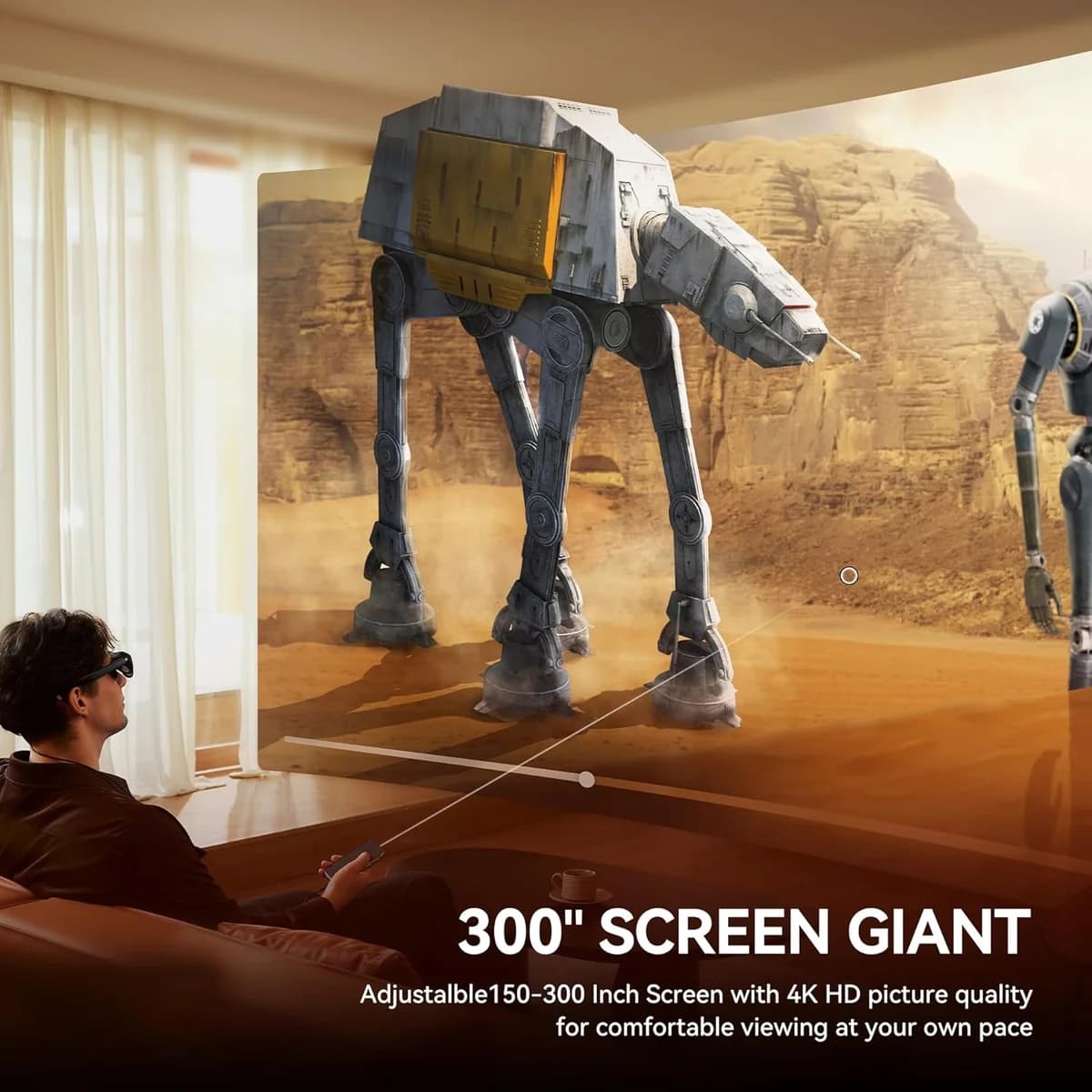
Roger Seng highlights the Rokid Max 2 AR Glasses as a revolutionary portable display, praising its ability to create a massive 300-inch virtual screen anywhere via USB-C connection. He emphasizes the glasses’ brightness, clarity, and see-through AR design, enabling seamless multitasking on his Mac mini, phone, or gaming devices—even on a plane. Overall, Roger is clearly enthusiastic and impressed, recommending the Rokid Max 2 for users seeking a flexible, immersive workspace on the go. While he focuses on the glasses’ standout portability and visual quality, his excitement suggests this is a game-changing tool for mobile productivity and entertainment.

Store Reviews
CUSTOMER REVIEWS FROM 1 STORE
Amazon users praise the Rokid Max 2 AR Glasses for delivering vibrant colors and a surprisingly clear, large virtual screen without obstructing the face, making them comfortable for public use. Many highlight the impressive OLED display that eliminates the screen door effect and appreciate the adjustable myopia feature, which helps some users achieve sharp focus without prescription inserts. Reviewers also value the glasses’ portability and versatility, especially when paired with the Station 2 media device, which expands functionality by acting as a charger, mouse, and app hub, enhancing the overall experience. However, several users express frustration with the software and user interface, describing it as technical and unintuitive, with some unable to register or fully utilize the app. The Station 2’s wireless casting feature currently suffers from connectivity issues, limiting multi-monitor use. Some reviewers find the viewing angle and screen positioning tricky, reporting occasional blurriness or discomfort, particularly for those needing positive lens adjustments for farsightedness—a feature the glasses lack. Additionally, while the picture quality impresses many, others feel the tiny screens prevent full immersion, especially for streaming certain apps. Overall, Amazon customers recognize the Rokid Max 2 as a cutting-edge AR device with strong visual performance and useful hardware features but advise that the software and ergonomic refinements still need improvement to reach their full potential.
3.9 Stars / Few verified reviews

Forum Reviews
CUSTOMER REVIEWS FROM 1 FORUM
Reddit users generally acknowledge the Rokid Max 2 AR Glasses for their solid display quality, comfort improvements, and decent field of view, with many appreciating the enhanced design and resolution comparable to the original model. However, critiques focus on persistent issues such as blurry edges, especially in the corners, limited IPD adjustment without additional hardware, and fit challenges due to nose pad design, which affects image clarity and comfort for some users. Existing Rokid Max owners often see little incentive to upgrade, citing minimal functional differences, while new shoppers are advised to carefully consider fit and optical limitations before purchasing. Overall, the glasses receive mixed reviews balancing promising features with notable ergonomic and visual drawbacks.
Many comments

In-Depth Review

Highlights
- •High‑quality Micro‑OLED displayVivid 120Hz, 1920×1200, 600 nits
- •Built-in myopia adjustmentDiopter dial supports up to −6.00D
- •Ultra‑light ergonomic design75 g frame with soft pads
- •Three‑screen multitasking (DLNA)Designed for three‑app multitasking on Android
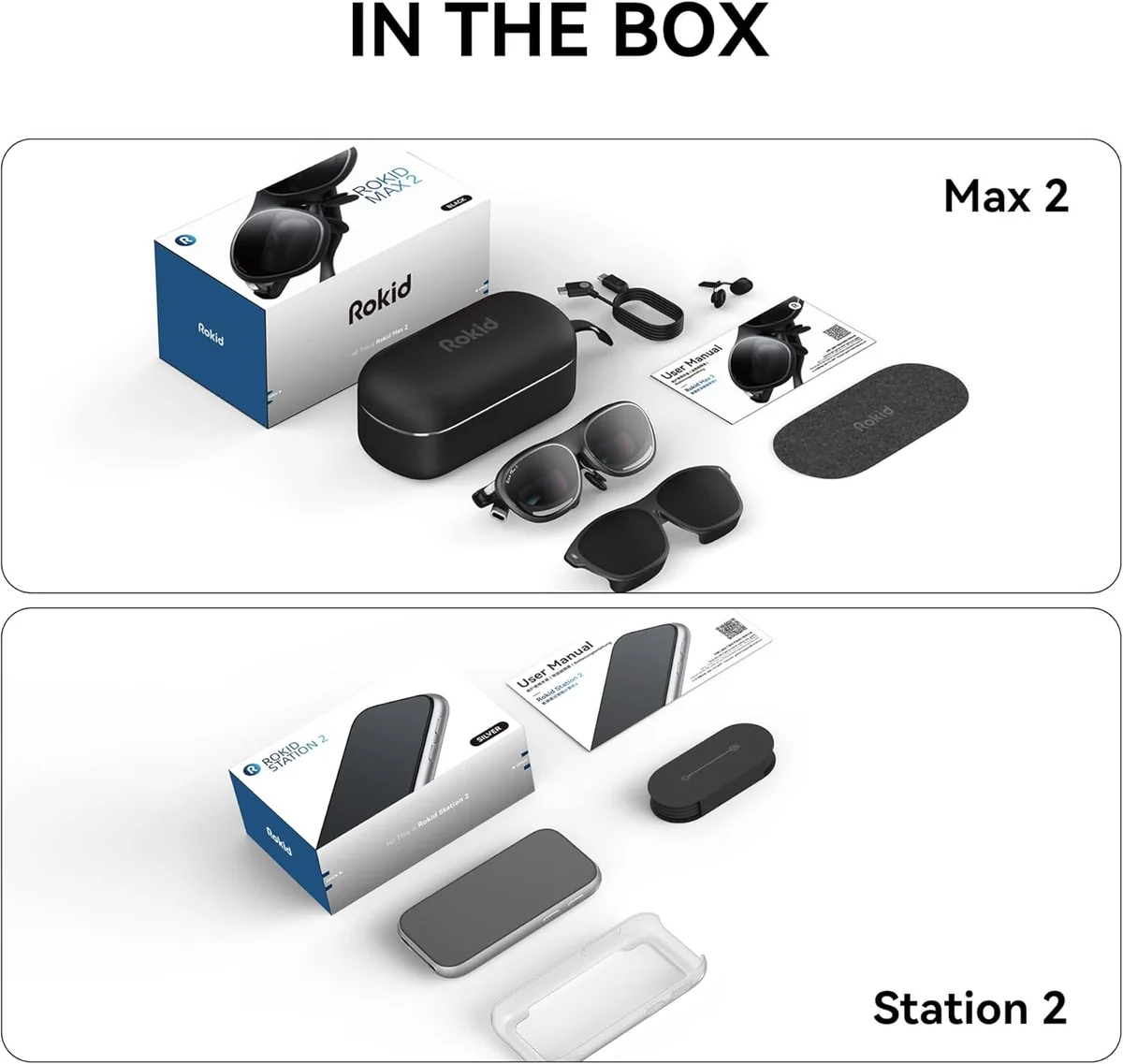
- •Station2 spatial computer integrationPromoted as including Station2 for added compute
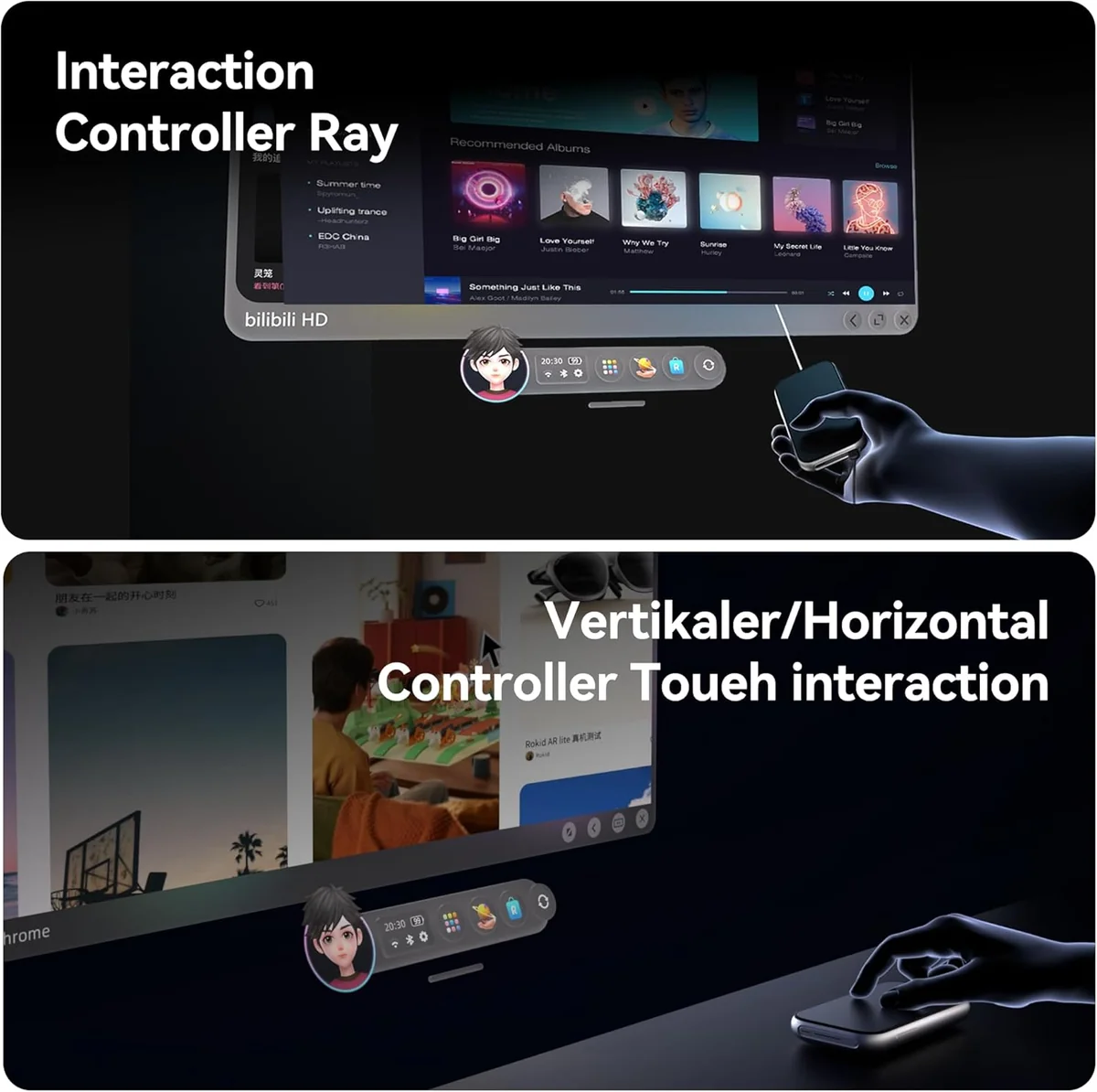
- •Console and gaming supportWorks with Switch, PS5, Xbox

Considerations
- •Fit‑dependent image clarityCorners blur if alignment imperfect
- •Compatibility and app limitationsNo Google Play; Android issues reported
- •Spatial instability (UI drift)UI drift reported when reclining/moving
- •Eye fatigue and drynessExtended use may cause eye strain
- •Station2 noise and battery tradeoffsNotable fan noise; moderate runtime
- •Limited outdoor visibility and reflections600 nits struggles in bright light
Real-world feedback on this intriguing AR headset is still emerging, but early impressions highlight some standout qualities worth your attention. From a brand known for pushing spatial computing boundaries, these glasses aim to blend portability with immersive visuals—offering an impressive 1920×1200 Micro-OLED display running at a buttery-smooth 120Hz refresh rate and boasting vibrant colors at 600 nits brightness. Their ultra-lightweight design (just 75 grams) pairs with thoughtful ergonomic touches like soft nose pads and flexible temples, though fit can be a delicate dance affecting clarity. Vision correction up to −6.00 diopters is built right in—a rare treat for nearsighted users craving sharpness without extra lenses. The device’s tracking modes balance fixed virtual screens and head-following views but occasionally wrestle with UI drift quirks. Tethered to the Station2 computer, it unlocks multitasking magic across apps while managing battery life amid some fan noise buzz. If you’re after portable cinema or remote work flair wrapped in cutting-edge tech, read on—the nuances here matter more than ever.
Vision optics and IPD adjustment (diopter myopia correction, auto/manual IPD)
Built-in diopter dials accommodate up to −6.00D myopia without extra lenses—a rare convenience lauded as brilliantly inclusive for nearsighted users on-the-go. The automatic interpupillary distance range of 55–72mm pairs well with Station2 hardware for tailored viewing comfort; manual adjustments cover basic needs solo. Yet forum chatter reveals workaround attempts beyond these limits hinting at boundaries in optical flexibility—making perfect eye-to-screen alignment essential for sharpness near screen corners.
Display performance (resolution, refresh rate, brightness, color, contrast)
The Rokid Max 2 dazzles with its Micro-OLED displays boasting a crisp resolution of 1920×1200 and buttery-smooth 120Hz refresh rates, delivering vivid colors and deep blacks thanks to an impressive 100,000:1 contrast ratio. With a peak brightness of around 600 nits, it shines indoors but struggles under bright sunlight—a noted limitation by experts. Users rave about the immersive visuals but some report edge fuzziness that slightly mars the experience. Overall, it's a visual treat that’s best enjoyed in controlled lighting for truly vibrant clarity.
Tracking and spatial stability (3DoF vs 0DoF, UI drift)
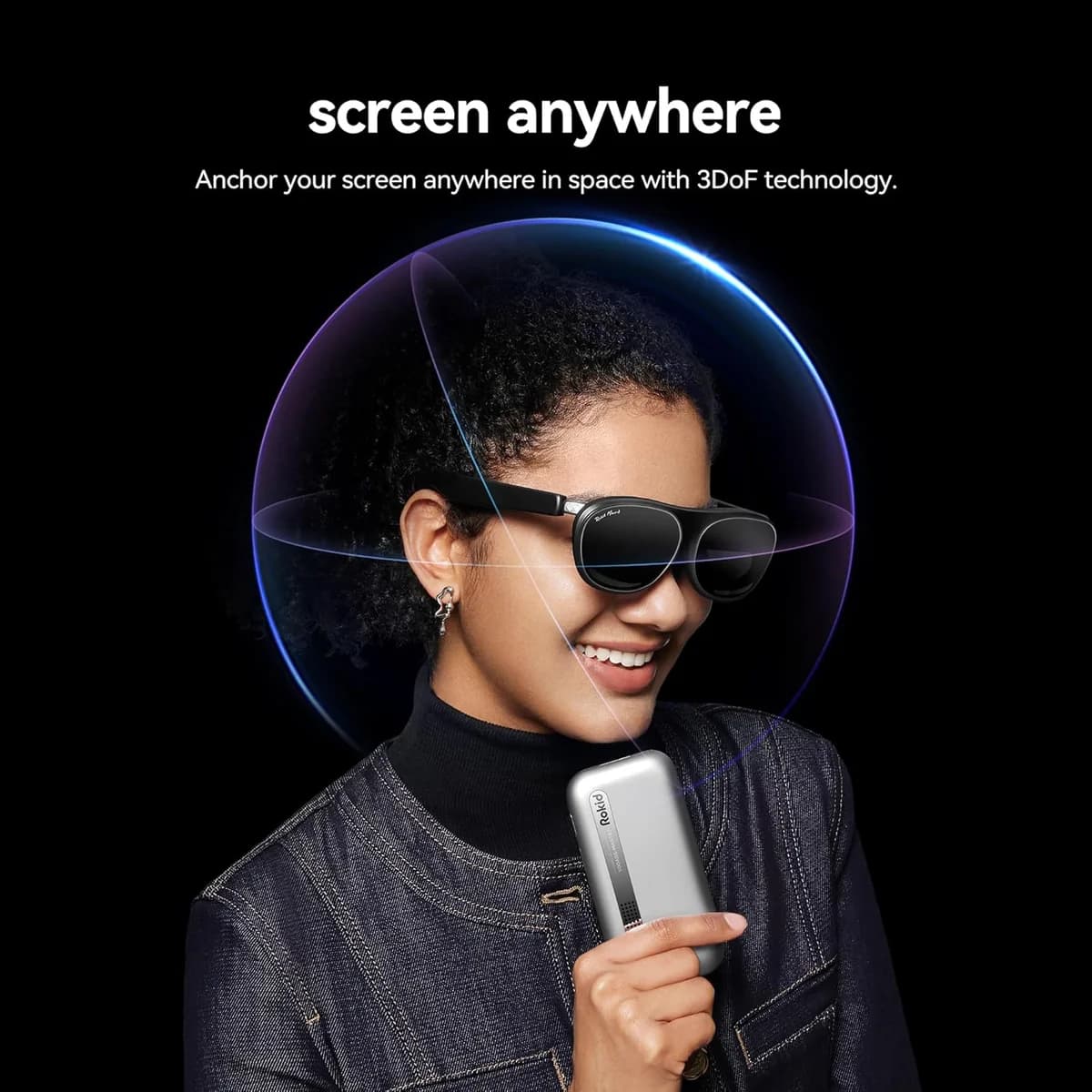
The Rokid Max 2 supports both fixed-space (3DoF) modes like Giant Screen multitasking and head-following (0DoF) modes such as Sports reading mode—versatility that enhances immersion depending on activity type. Still critics note occasional UI drift when lying down or moving unpredictably which detracts from seamless spatial interaction reliability over extended use sessions—an Achilles heel reported by users seeking rock-solid augmented reality positioning within this price tier's constraints.
Comfort and fit (weight, nose pads, temples, ergonomics)
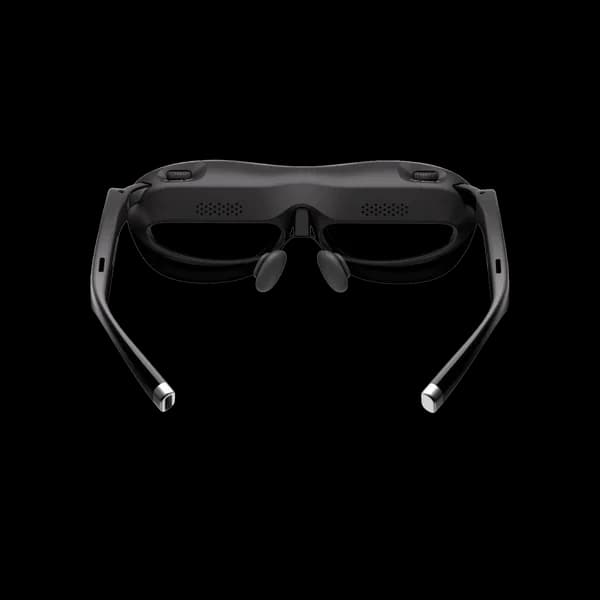
Weighing just 75 grams with soft flexible temples and airy cushioned nose pads—plus spares—the glasses prioritize comfort during short sessions. However, fit is highly personal; users highlight how imperfect alignment can cause blurry edges or pressure points due to nose pad design quirks. While many forget they’re wearing them at first blush thanks to ergonomic finesse, some find the snugness finicky enough to impact image clarity or overall wearability. It’s lightweight luxury balanced on precise facial harmony.
Conclusion
Real-world impressions of these AR glasses are still unfolding, yet some truths shine through. The Micro-OLED display dazzles with crisp 1920×1200 resolution and a buttery-smooth 120Hz refresh rate, delivering vibrant colors best enjoyed indoors thanks to its modest brightness ceiling. Comfort is no afterthought: the ultra-lightweight frame paired with soft nose pads and flexible temples invites short-session wear but demands precise fit for sharp visuals—blurred corners lurk otherwise. Vision correction via built-in diopter dials offers a rare convenience, though IPD adjustments lean on hardware pairing for finesse. Tracking toggles between fixed-space immersion and head-following modes but can stumble into occasional UI drift, reminding users this isn’t polished perfection. Connectivity excels in multitasking with DLNA’s three-screen magic but falls short when Miracast or Chromecast enter the scene. Finally, Station2’s battery life holds steady under fan noise that punctuates longer sessions—a tradeoff in portable power management worth noting for discerning users seeking an immersive yet practical spatial display experience.

Feature Scores
This reflects reviews and ratings from established critics, journalists, and users who have evaluated the item. Their opinions provide a comprehensive assessment.
Performance
Display Resolution
4/5
Field of View
4/5
Brightness
4/5
Latency
4/5
Frame Rate
4/5
Battery Life
3/5
Wireless Connectivity
4/5
Reliability
3/5
Value
Price-to-Value Ratio
3/5
Warranty & Support
2/5
Included Accessories
4/5
Design
Comfort Fit
4/5
Weight
5/5
Adjustability
4/5
Controls Ergonomics
4/5
Health
Materials Safety
3/5
Blue Light Emission
3/5
Visual Fatigue Potential
2/5
Safety
Eye Safety Compliance
TBD
Overheating Protection
4/5
Water & Dust Resistance
TBD
Sustainability
Recyclability
3/5
Energy Efficiency
3/5
Repairability
2/5
Experience Style
Ease of Use
3/5
App Ecosystem
3/5
Customization Options
4/5
Feature Richness
4/5

Specifications
This section outlines the product's key facts, covering essential features, details, dimensions, materials, and any unique characteristics that define its functionality and usability.
Performance
Value
Design
Safety
Sustainability
Experience Style

Frequently Asked Questions
8 Questions

Also Consider
2 Options

Find Yours
What will be your primary use for video display glasses?
Answer to find your best matches.