

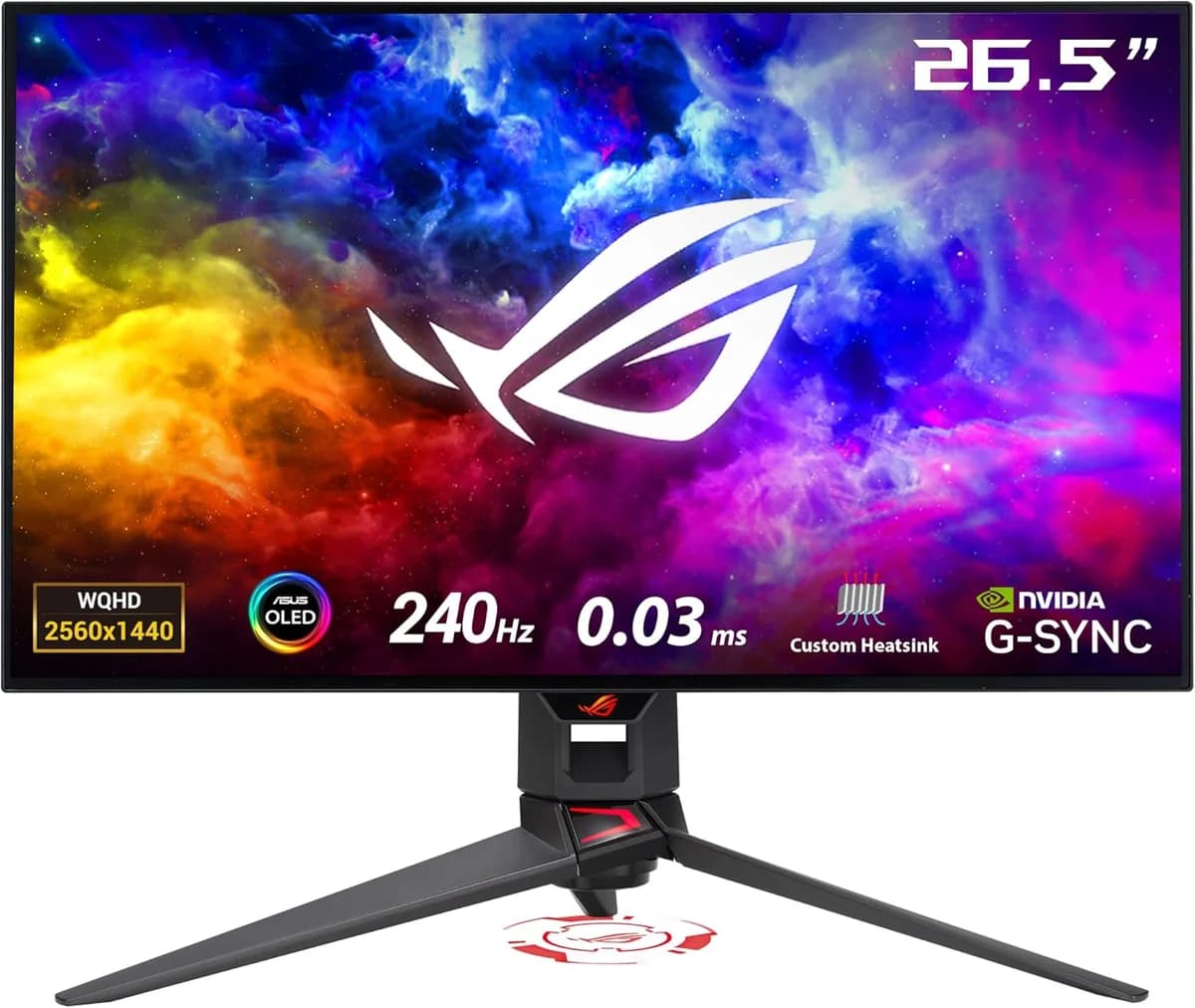
ASUS ROG Swift OLED PG27AQDM
Stunning 1440p OLED with ultra-fast 240Hz and deep blacks, praised for color but watch for pixel issues.
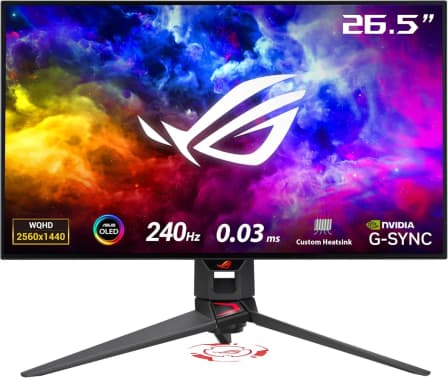
The ASUS ROG Swift OLED PG27AQDM is a 26.5-inch powerhouse that marries blazing 240Hz refresh rates with a jaw-dropping 0.03ms response time, crafted for gamers who crave speed and precision. Its true 10-bit WOLED panel covers 99% DCI-P3, delivering cinema-grade colors and inky blacks that wow both competitors and creators alike. Experts praise its buttery smooth motion, though the quirky WRGB subpixel layout blurs text—a trade-off users accept for stunning visuals. The price reflects premium tech, bolstered by thoughtful burn-in mitigation but shadowed by pixel defect risks. This monitor dazzles where it counts—speed, color, and contrast—earning serious consideration from discerning enthusiasts.

Find Yours
What's your primary use for a computer monitor?
Answer to find your best matches.

The Field
Browse top contenders, or compare all options ranked by score and key attributes.
5 Options


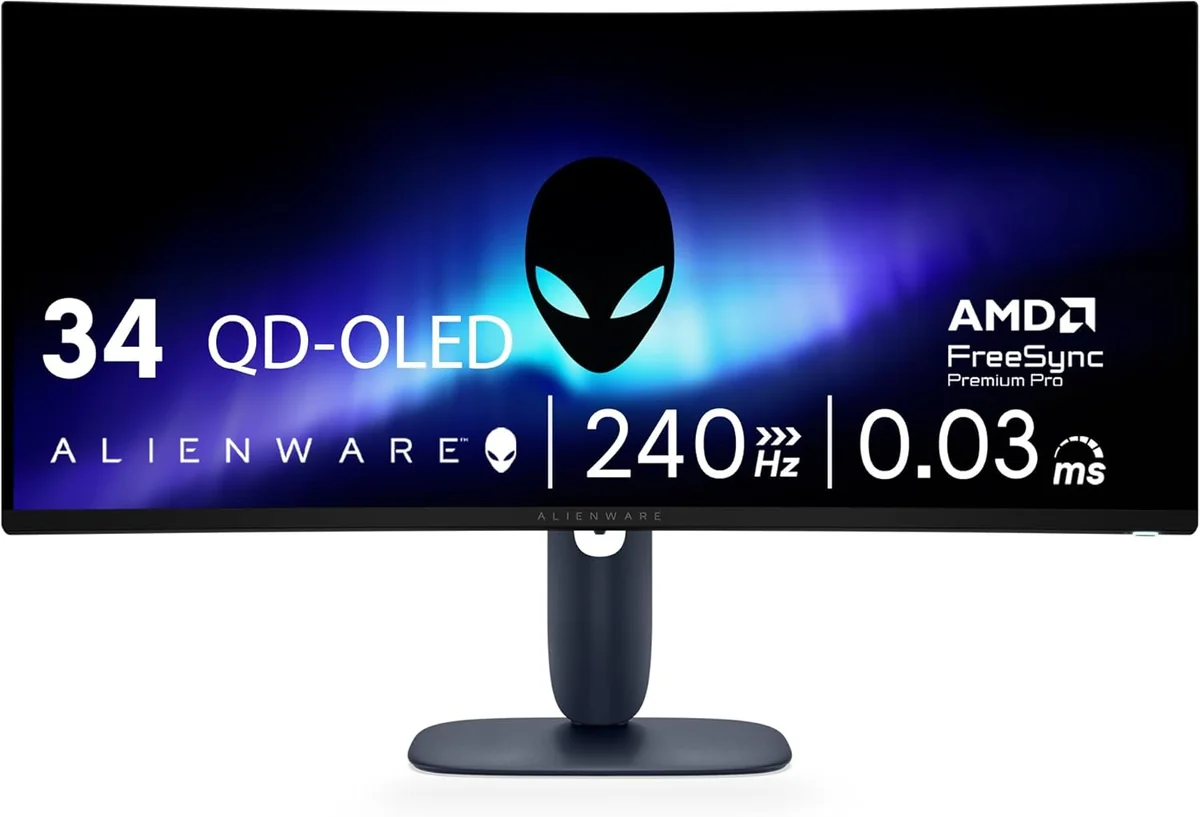
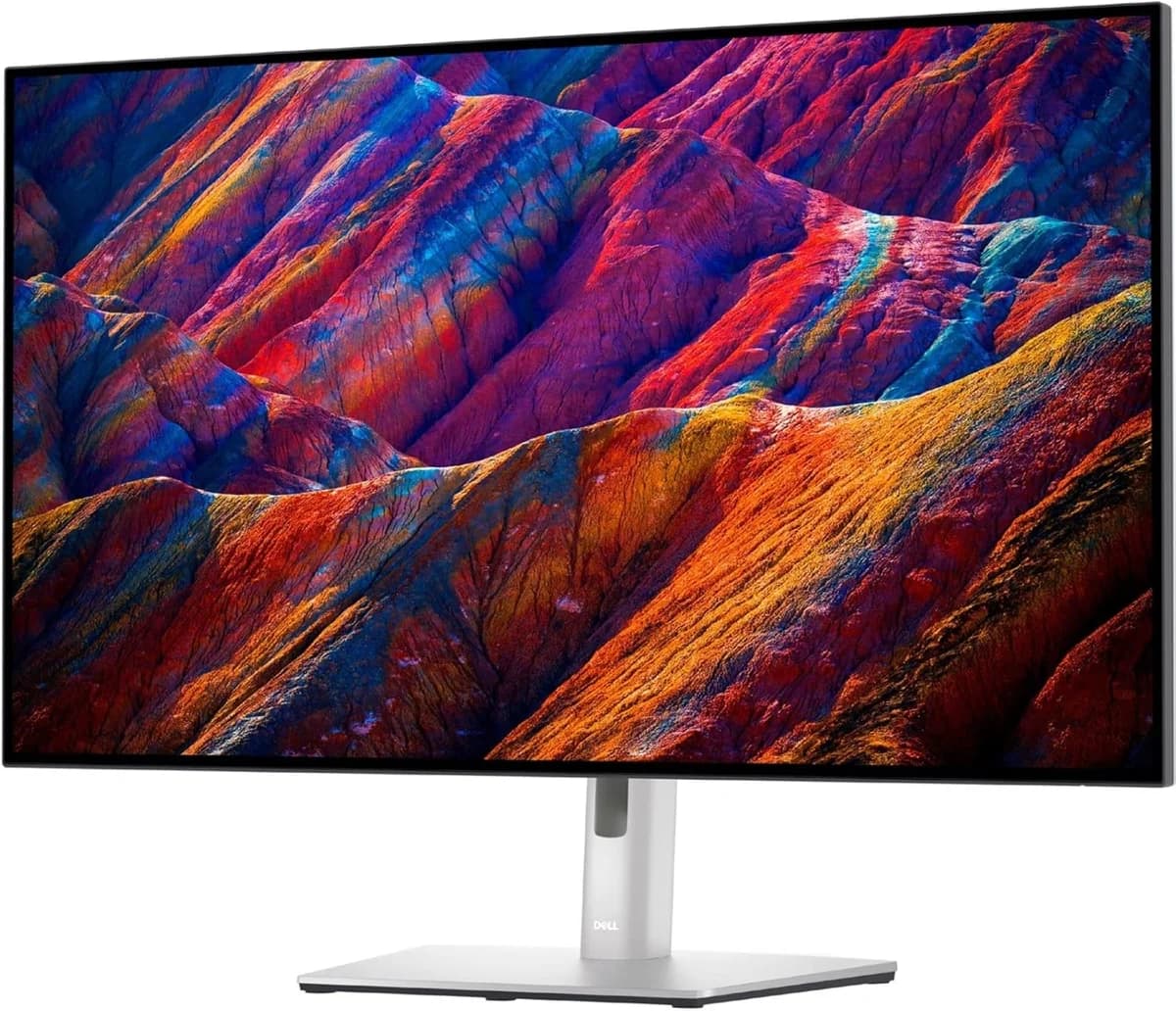
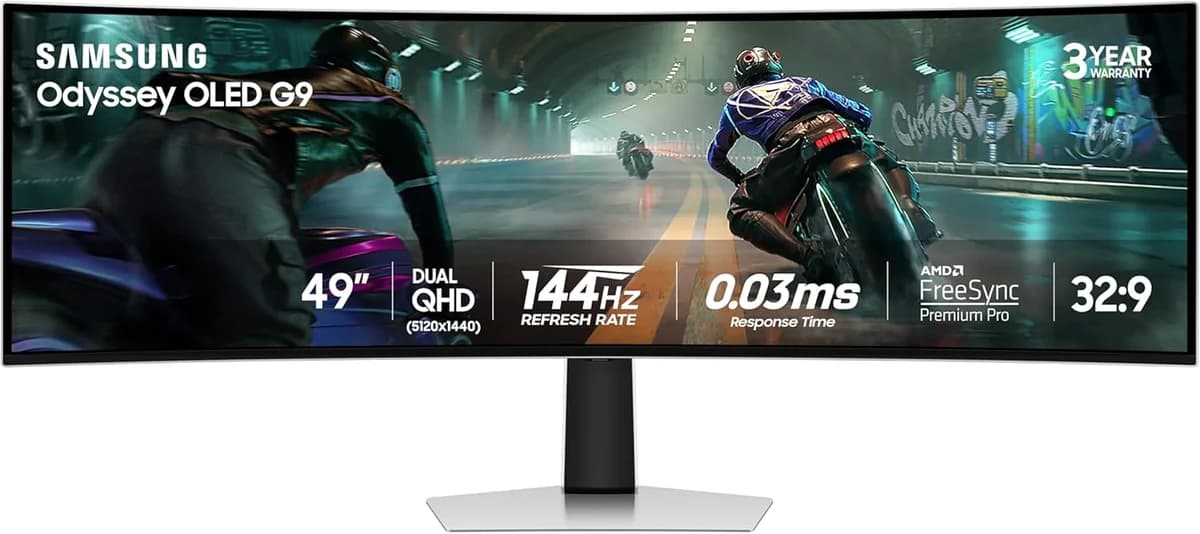

The Scoreboard
Does this improve your life? Considers, health, habits, and environmental impact.
Benefits
True 10‑bit WOLED and Delta E <2 deliver accurate colors for reduced editing stress.
Self‑emissive OLED pixels produce true blacks, lowering glare and night‑time eye strain.
ROG OLED anti‑flicker ranges and micro‑texture reduce perceptible flicker, easing visual fatigue.
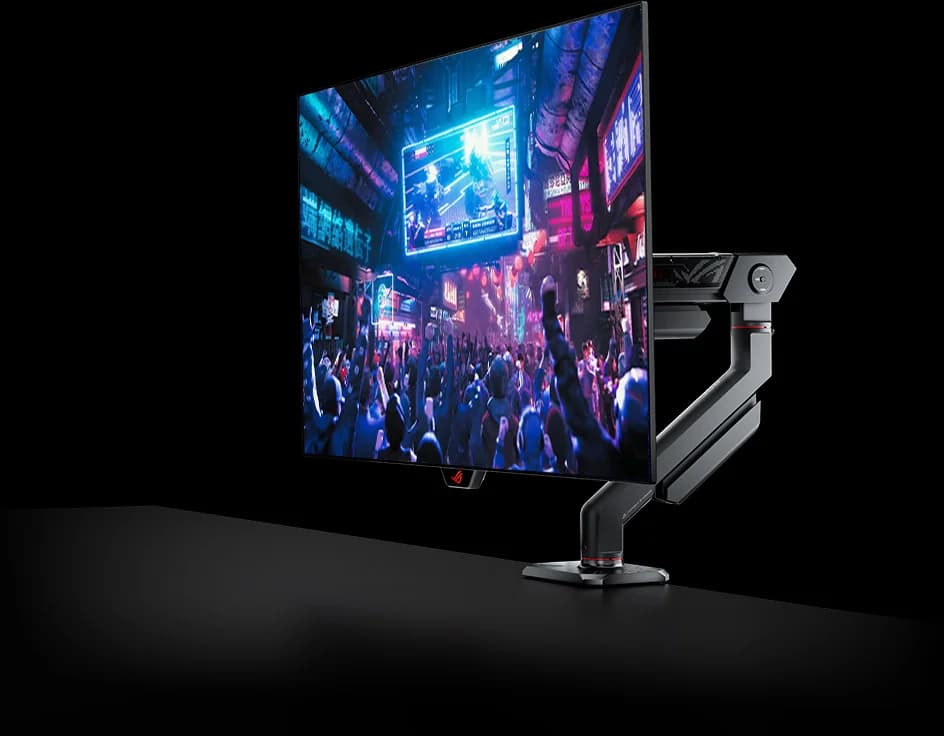
Included steel monitor arm enables correct screen height and angle, supporting better posture.
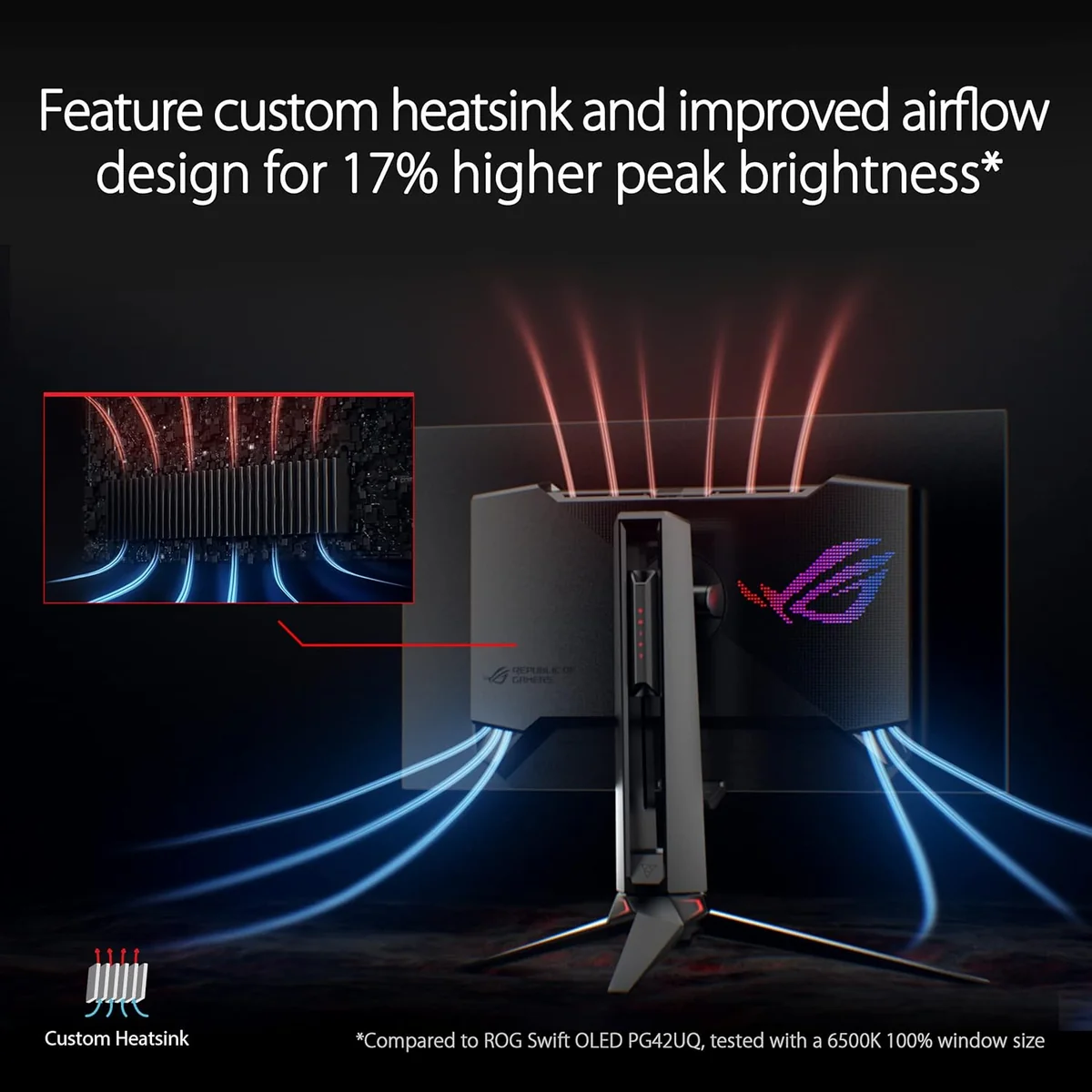
Custom heatsink plus intelligent voltage optimization reduces pixel wear, lowering replacement and waste risk.
240Hz and 0.03ms response reduce blur and motion sickness for sensitive viewers.
Trade-Offs
WOLED’s organic pixels still risk long‑term image retention despite heatsink and voltage optimization.
Reported dead or stuck pixels often require returns, creating frustration and additional electronic waste.
WRGB/RWBG subpixel layout can blur fine text, increasing reading strain for productivity tasks.
Micro‑texture anti‑glare reduces reflections but introduces grain that some find distracting or tiring.
 Alternatives


Join the Circle
Where real meets deal
Know what's worth buying-and when.
Tips, special offers, and rewards for buying and sharing.

Publications
13 LEADING PUBLICATION REVIEWS

RTINGS highlights the ASUS ROG Swift OLED PG27AQDM as an exceptional 27-inch 1440p gaming monitor with near-instantaneous response times, a 240Hz refresh rate, and excellent VRR support, making it ideal for PC gaming. The OLED panel delivers perfect black uniformity and outstanding contrast, especially in dark rooms, with minimal blooming around bright objects. However, the review notes some drawbacks, including distracting VRR flicker in dark scenes, limited HDMI 2.0 bandwidth that restricts full use with current-gen consoles, and text clarity issues due to the RWBG subpixel layout. The monitor’s brightness is adequate for dim environments but insufficient for well-lit rooms. Firmware updates improve performance and reduce flicker, though some trade-offs like stutter may occur. The monitor also offers strong ergonomics, wide viewing angles, and useful burn-in mitigation features, but OLED’s inherent risk of burn-in remains a concern. Overall, RTINGS presents a balanced view, praising the PG27AQDM’s gaming prowess and image quality while candidly addressing its limitations.
By Jake Thauvette, Nicholas Di Giovanni, Yannick Khong
Simon Baker from TFTCentral highlights the ASUS ROG Swift OLED PG27AQDM as a compelling 27-inch OLED gaming monitor that builds on LG’s popular OLED panel with unique features like a custom heatsink and intelligent voltage optimization aimed at reducing heat and image retention. The review conveys a measured but positive tone, praising the monitor’s excellent 240Hz refresh rate, near-instant response times, infinite contrast, and superior HDR peak brightness compared to competitors. The matte anti-glare coating is noted for reducing reflections, though it introduces a grainy texture that some users may find distracting. Text clarity suffers somewhat due to the panel’s unusual RWBG sub-pixel layout, making it less ideal for productivity but still very suitable for gaming and multimedia. Criticisms include the lack of HDMI 2.1 ports limiting console support, absence of USB-C, and no hardware calibration. Overall, the PG27AQDM is recommended as a high-performance OLED gaming monitor with thoughtful design trade-offs, especially for users prioritizing motion clarity and HDR experience.
By Simon Baker
Tom’s Hardware’s Christian Eberle highlights the ASUS ROG Swift OLED PG27AQDM as an exceptional gaming monitor that excels in nearly every aspect. Praising its stunning OLED panel with infinite contrast, wide and accurate color gamut, and factory calibration, he emphasizes the monitor’s remarkable image fidelity and vibrant HDR performance. The 240 Hz refresh rate combined with an ultra-low 0.03 ms response time delivers one of the fastest and most responsive gaming experiences, rivaling even higher refresh rate LCDs. Eberle notes the monitor’s thoughtful design, full ergonomics, and useful gaming features like Adaptive-Sync and GamePlus enhancements. While acknowledging its premium price, he finds few faults beyond the lack of internal speakers and minor ergonomic nitpicks. The review conveys genuine enthusiasm for the PG27AQDM’s blend of speed, image quality, and build, calling it one of the best flat-panel gaming monitors available and a top contender for competitive play and immersive gaming.
By Christian Eberle
Matthew S. Smith from PCWorld highlights the ASUS ROG Swift OLED PG27AQDM as a striking and high-performance gaming monitor that excels with its 240Hz refresh rate, ultra-thin OLED panel, and exceptional contrast ratio delivering perfect blacks and vivid depth in dark scenes. While the monitor impresses with smooth motion clarity and a distinctive design, Smith points out notable drawbacks including limited brightness, mediocre color gamut and accuracy, and subpar sharpness due to OLED subpixel layout. Connectivity options are also underwhelming, lacking USB-C and offering only basic HDMI and DisplayPort ports. HDR performance is decent but falls short compared to Mini-LED competitors, and the monitor’s color calibration issues may deter creative professionals. Despite these limitations, Smith concludes that the PG27AQDM is a compelling choice for gamers seeking immersive visuals and fast response times, though it may not satisfy users needing precise color fidelity or extensive connectivity.
By Matthew S. Smith
James Holland from TechRadar highlights the ASUS ROG Swift OLED PG27AQDM as a visually stunning and fast gaming monitor that excels with its 240Hz refresh rate, 0.3ms response time, and vibrant OLED panel. He praises its sleek design, gamer-focused features like adaptive sync support and customizable aspect ratios, and excellent color accuracy. However, Holland tempers enthusiasm with notable criticisms: the high price tag is difficult to justify given the competition, the HDR10 implementation is underwhelming and fails to deliver a truly immersive HDR experience, and the lack of USB-C connectivity limits versatility. While the 1440p resolution may not satisfy those seeking 4K sharpness, it suits competitive gamers who prefer smaller screens. Overall, the review conveys a cautiously positive tone—this monitor is a premium choice for gamers prioritizing speed and OLED quality, but its cost and HDR shortcomings may deter more budget-conscious or HDR-focused buyers.
By James Holland
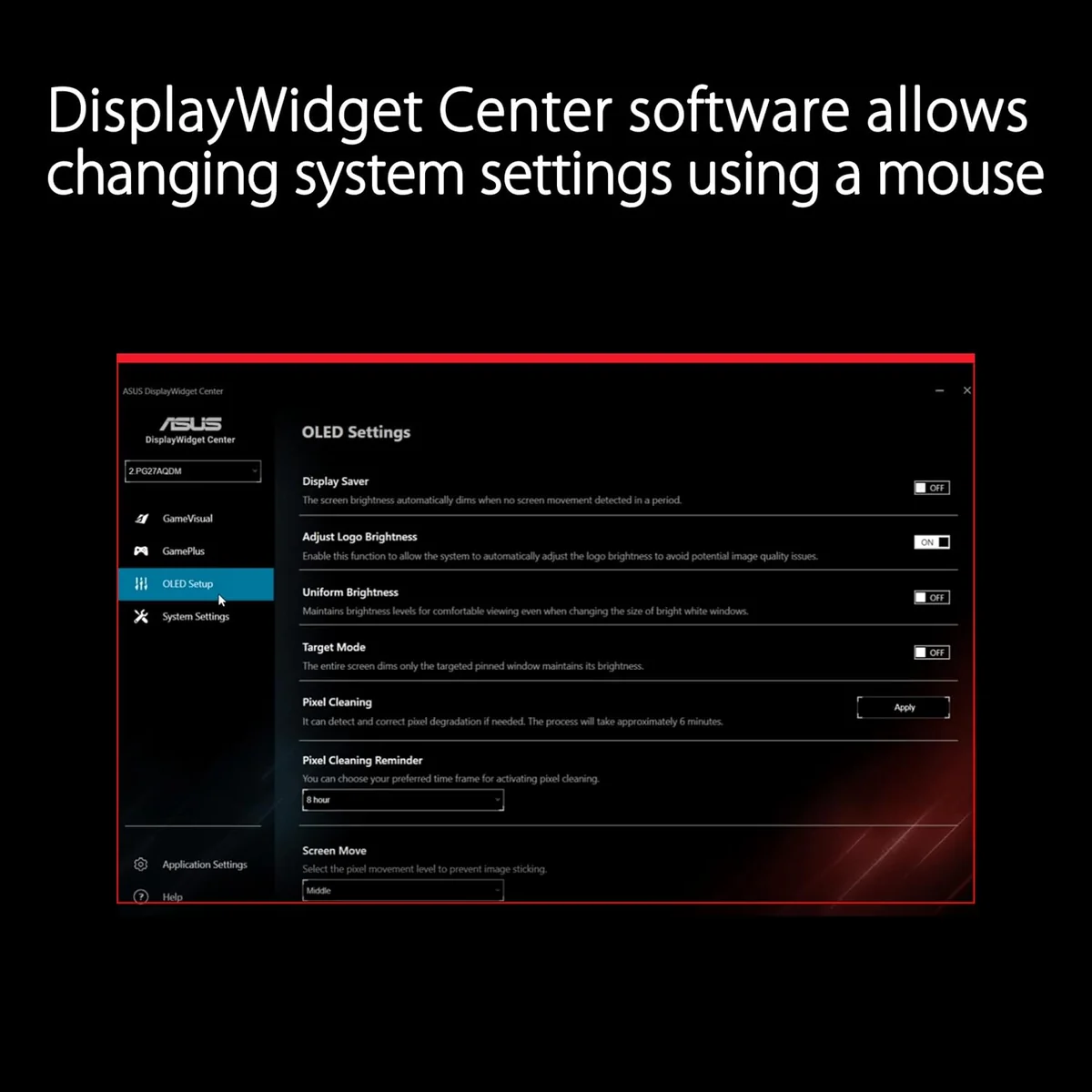
Jacob Roach from Digital Trends highlights the ASUS ROG Swift OLED PG27AQDM as a standout 27-inch OLED gaming monitor that significantly improves on earlier models, particularly with its enhanced brightness and robust feature set. The review praises its striking ROG design, excellent HDR performance, and exceptional motion clarity thanks to ultra-fast response times and a 240Hz refresh rate, making it ideal for both cinematic and competitive gaming. Unique features like the DisplayWidget Center app and thoughtful design touches add to its appeal. However, Roach points out notable drawbacks, including poor color accuracy out of the box that requires calibration, and inherent OLED limitations such as potential burn-in and text fringing due to the WRGB subpixel layout. While the monitor excels in gaming scenarios, it’s less suited for desktop productivity compared to LCDs. Overall, the ROG Swift OLED is positioned as a top-tier gaming display with some caveats, and though the Alienware 34 QD-OLED remains a strong competitor, this Asus model is the best choice for those preferring a 16:9 aspect ratio.
By Jacob Roach
Mark Knapp from Reviewed highlights the Asus ROG Swift OLED PG27AQDM as an impressive 27-inch, 1440p OLED gaming monitor with a stunning 240Hz refresh rate and exceptional color and contrast performance. Sharing the same panel as the LG UltraGear OLED 27GR95QE-B, it delivers rich visuals and smooth gameplay with virtually no ghosting, making it a strong contender for gamers seeking vibrant HDR experiences. However, the review points out several drawbacks: the monitor’s peak brightness is somewhat limited, especially in uniform brightness mode, and subtle color fringing can be distracting in certain scenarios. Additionally, the lack of USB-C ports and built-in speakers feels outdated for a $1,000 device. While Asus’s custom heatsink and joystick control add some value, the monitor ultimately falls just short of LG’s offering, which boasts better color accuracy and a more convenient remote. Still, the PG27AQDM is praised as a solid, visually striking choice for gamers, though not quite the best in its class.
By Mark Knapp
Zachary Boddy from Windows Central highlights the ASUS ROG Swift OLED PG27AQDM as a visually stunning and highly responsive 27-inch gaming monitor that excels in picture quality, boasting vibrant colors, deep blacks, and an ultra-fast 0.03ms response time. Praising its premium build and thoughtful design, Boddy emphasizes the OLED panel’s exceptional contrast and color vibrancy, making it ideal for gaming, media, and creative work. However, he notes some drawbacks, including a high price point, occasional software bugs, and a bulky stand that consumes desk space. The monitor’s HDMI 2.0 ports limit refresh rates for console users, and the OLED panel requires ongoing maintenance to mitigate burn-in risks. While the ASUS offers a superior gaming experience with NVIDIA G-SYNC and a 240Hz refresh rate, Boddy suggests that alternatives like the Alienware AW2723DF or LG’s OLED monitors may appeal to those seeking different features or better value. Overall, he enthusiastically recommends the ROG Swift OLED for buyers prioritizing top-tier OLED quality and responsiveness despite its premium cost.
By Zachary Boddy
Alun Taylor from Expert Reviews highlights the ASUS ROG Swift OLED PG27AQDM as a top-tier gaming monitor that excels in delivering blistering motion performance with its 240Hz refresh rate and ultra-fast 0.03ms response time. Praising its superb color accuracy, wide gamut coverage, and stunning OLED contrast, Taylor emphasizes the monitor’s appeal to hardcore gamers seeking raw speed and visual fidelity. The review notes the sleek, lightweight design and innovative features like a comprehensive menu system and a unique tripod mount for accessories. However, Taylor also points out notable drawbacks, including limited connectivity options—especially the absence of a USB-C port—and no official HDR certification or built-in speakers. While less versatile than competitors like the Philips Evnia 34M2C8600, the PG27AQDM’s exceptional motion handling and stylish build make it a compelling choice for dedicated gamers willing to prioritize performance over extra features. Overall, the tone is measured but appreciative, with minor criticisms framed as relatively small compromises.
By Alun Taylor
Adam Simmons from PCMonitors.info highlights the ASUS ROG Swift OLED PG27AQDM as a premium 26.5” QHD gaming monitor that excels with its exceptional OLED contrast, vibrant and consistent color output, and ultra-fluid 240Hz refresh rate. The review conveys a measured enthusiasm, praising the monitor’s rapid pixel responsiveness, very low input lag, and effective VRR support, which together deliver a highly immersive and competitive gaming experience. Unique insights include detailed analysis of the WOLED panel’s subpixel layout causing some fringing and less saturated bright shades, as well as the nuanced handling of image retention risks through built-in pixel cleaning and screen movement features—though the latter was found obtrusive and disabled. While the matte screen surface offers strong glare diffusion, it introduces some graininess and slight hazing. The HDR performance is solid but limited by brightness and color volume compared to QD-OLED alternatives. Overall, the PG27AQDM is a feature-rich, ergonomically flexible monitor with a distinctive “ROG” style, best suited for gamers valuing contrast and speed over perfect HDR or productivity use.
By Adam Simmons
Jak Connor from TweakTown highlights the ASUS ROG Swift OLED PG27AQDM as an exceptional flagship gaming monitor that delivers an unforgettable experience, especially for competitive first-person shooter gamers. Praising its premium build quality, ultra-thin 5mm OLED panel, and vibrant 1440p resolution paired with a blazing 240Hz refresh rate and an astonishing 0.03ms response time, Connor emphasizes the monitor’s buttery smooth gameplay and stunning image quality with deep blacks and rich colors out of the box. While the design and ergonomics impress, minor initial annoyances with the sensitive OSD buttons are quickly overcome. The review notes the PG27AQDM’s versatility beyond gaming, performing well in productivity and media tasks without requiring calibration. The main caveat is its $999 price tag, which, though steep, is justified by the premium features and performance. Connor concludes that this monitor is a top-tier choice for enthusiasts seeking a competitive edge in fast-paced FPS titles, calling it “the unforgettable king for competitive gaming.”
By Jak Connor
David Nield from T3 highlights the ASUS ROG Swift OLED PG27AQDM as a standout gaming monitor, particularly praising its 240Hz refresh rate, ultra-fast 0.03ms response time, and superb OLED contrast that delivers deep blacks and vibrant colors. The review conveys clear enthusiasm for its gaming performance, noting how the monitor enhances fast-paced gameplay with smooth input response and crisp detail. The design is well-regarded for its build quality and ergonomic flexibility, though its somewhat angular aesthetic and hefty size may not suit everyone. While the lack of built-in speakers and HDMI 2.1 support are noted drawbacks, these are framed as minor given the overall package. The review also offers useful context by comparing it to alternatives like the larger Samsung Odyssey OLED G9 and the more affordable LG UltraGear 27GP950-B, emphasizing that the ASUS excels for gamers with high-end PCs who prioritize OLED quality at a 27-inch size. Overall, the tone is positive and measured, recommending the monitor for serious gamers willing to invest in premium OLED technology.
By David Nield
Karthik Iyer from XDA Developers highlights the Asus ROG Swift OLED PG27AQDM as a visually stunning and feature-rich gaming monitor that excels in delivering vibrant colors, exceptional contrast, and ultra-fast response times. Praising its elegant design, adjustable stand, and thoughtful extras like a camera mount thread, he emphasizes the monitor’s superior brightness and HDR performance compared to competitors. The review conveys genuine enthusiasm for its smooth motion clarity and competitive gaming capabilities, especially with Adaptive Sync support. However, Iyer also notes some drawbacks, including the bulky stand footprint, limited port selection lacking HDMI 2.1 and DisplayPort 2.1, and absence of built-in speakers. While the monitor commands a premium price above $800 and requires careful OLED maintenance, it stands out as a top-tier choice for gamers seeking a high-refresh-rate OLED experience. The balanced tone combines excitement with measured critique, making it clear this is a premium product with a few trade-offs.
By Karthik Iyer

YouTube
6 LEADING EXPERT & INFLUENCER REVIEWS
 Monitors Unboxed
Monitors Unboxed praises the ASUS ROG Swift OLED PG27AQDM for its exceptional 27” 1440p WOLED panel, blazing 240Hz refresh rate, and superior brightness—up to 35% higher than the LG equivalent—making it the brightest WOLED gaming monitor tested. While lauding its deep blacks, HDR performance, and motion clarity, the review notes drawbacks like mediocre factory calibration, limited HDMI 2.0 ports restricting console refresh rates, and inherent OLED issues such as subpixel layout causing text blurriness and burn-in risk, recommending it primarily for gaming and content consumption rather than productivity.
The Tech ChapTom Tech Chap praises the ASUS ROG Swift OLED PG27AQDM for its stunning 27-inch 1440p OLED panel, 240Hz refresh rate, and exceptional brightness boosted by micro-lens array technology. He highlights deep blacks, vibrant colors, and smooth motion, while noting minor drawbacks like HDMI 2.0 limitations, slight desktop text blurriness due to the WRGB panel, and lack of built-in speakers. Overall, he enthusiastically recommends it as a top-tier gaming monitor with excellent design and OLED care features.
optimumOptimum praises the ASUS ROG Swift OLED PG27AQDM for its stunning image quality, near-instant 0.03ms pixel response, and superior brightness over the LG OLED counterpart. While acknowledging minor drawbacks like subpixel layout affecting text clarity and the lack of backlight strobing, they favor OLED’s deeper contrast and minimal ghosting for immersive gaming despite IPS’s higher 360Hz refresh rate advantage.
SpawnPoiintSpawnPoiint praises the ASUS ROG Swift OLED PG27AQDM for its exceptional 27” WOLED panel, 240Hz refresh rate, and impressive 1000-nit peak brightness, highlighting superior anti-glare coating and custom heatsink for enhanced brightness over the LG equivalent. While ideal for gaming with ultra-fast response and VRR, he notes blurry text and HDMI 2.0 limits for console users, recommending it mainly for gamers seeking vivid visuals rather than productivity.
GLITCHEDGLITCHED praises the ASUS ROG Swift OLED PG27AQDM for its stunning 26.5-inch 1440p WOLED panel, ultra-fast 240Hz refresh rate, and superb color accuracy with 10-bit depth and HDR10 support. The reviewer highlights excellent uniform brightness control and low input lag, but notes drawbacks like limited HDR peak brightness, lack of USB-C, and text fringing. While impressed overall, they caution about the high price and an upcoming 4K model that may offer better brightness.
Thomas TechThomas Tech praises the ASUS ROG Swift OLED PG27AQDM for its stunning 27-inch QHD WOLED panel, ultra-fast 240Hz refresh rate, and near-instant 0.03ms response time, delivering exceptional gaming visuals with deep blacks and vibrant colors. He highlights effective burn-in mitigation, solid build quality, and versatile features for gamers and creators, while noting minor brightness dimming and HDMI 2.0 limits. Overall, he enthusiastically recommends it as a premium, long-term investment for serious users.

Store Reviews
CUSTOMER REVIEWS FROM 1 STORE
Amazon reviewers celebrate the ASUS ROG Swift OLED PG27AQDM for its exceptional color richness and stunning picture quality, often comparing it favorably to high-end OLED TVs and QD OLED panels. Users highlight the true 10-bit WOLED panel’s unlimited contrast and vibrant DCI-P3 color gamut, which elevates gaming experiences, especially in titles like Battlefield 6. Many praise the monitor’s brightness, premium build materials—including a glass screen and steel monitor arm—and the included color calibration certificate, underscoring Asus’s attention to quality. Gamers appreciate the smooth motion clarity, minimal ghosting, and the flexibility of multiple display modes, with some noting the RGB backlight adds a stylish touch. The monitor’s 1440p resolution and high refresh rates impress users transitioning from lower-spec screens, delivering sharp visuals and fluid gameplay. However, some reviewers mention minor annoyances such as the quick auto-shutdown when no signal is detected and the lack of ambient light sensors for automatic brightness adjustment, requiring manual profile switching for day and night settings. A few users point out the limited vertical viewing angles typical of IPS panels, describing a foggy or washed-out appearance when viewed from above, which they mitigate by adjusting monitor height and seating position. While the HDR performance receives mixed feedback—some find it washed out compared to SDR—the SDR mode consistently earns praise for its vivid and accurate colors. Several customers also report issues with dead or stuck pixels, a common concern with IPS technology, though many still find the overall display quality excellent. Overall, Amazon reviewers endorse the ASUS ROG Swift OLED PG27AQDM as a premium, feature-rich gaming monitor that delivers outstanding color fidelity and responsiveness, making it a compelling choice for enthusiasts willing to invest in top-tier visual performance.
4.5 Stars / Many verified reviews

Forum Reviews
CUSTOMER REVIEWS FROM 1 FORUM
Reddit users generally appreciate the ASUS ROG Swift OLED PG27AQDM for its exceptional picture quality, vibrant colors, deep blacks, and impressive HDR performance, highlighting the benefits of OLED technology in gaming and media consumption. The monitor’s design is praised for its sleekness, adjustability, and build quality, though some find the matte coating less appealing compared to glossy alternatives. Performance-wise, users note smooth motion and fast response times but report occasional issues such as G-Sync flickering and firmware update challenges. Concerns about burn-in persist, though many users find built-in pixel cleaning effective and report no significant problems after extended use. While some recommend waiting for newer models or upgrades, many new shoppers express satisfaction with the monitor’s overall experience despite minor drawbacks.
Many comments

In-Depth Review

Highlights
- •Ultra-fast motion performance240Hz refresh and 0.03ms response
- •Wide color gamut and depthTrue 10-bit and 99% DCI‑P3
- •Exceptional contrast and blacksWOLED delivers near‑absolute black levels
- •HDR peak brightness for highlightsUp to 1000 nits on small areas
- •Company highlights burn‑in mitigationCustom heatsink and voltage optimization
- •Included arm and pre‑calibrationSteel monitor arm and color report

Considerations
- •Panel reliability and pixel defectsReports of dead or stuck pixels
- •Text clarity and subpixel fringingWRGB layout causes text blurring
- •Console bandwidth limitationHDMI 2.0 caps 1440p at 120Hz
- •HDR consistency and brightness limitsHDR can appear washed out
- •OLED burn‑in riskInherent burn‑in concern despite mitigation
- •VRR flicker and firmware quirksOccasional flicker, blackouts, firmware issues
ASUS’s Republic of Gamers line stakes a bold claim with this 26.5-inch OLED marvel, blending ultrafast 240Hz refresh rates and an astonishing 0.03ms response time for gamers who demand every millisecond counts. It’s not just speed—this monitor boasts a true 10-bit panel covering 99% DCI-P3, delivering color precision that pleases creators as much as competitive players. The WOLED tech brings near-absolute blacks with a staggering 1,500,000:1 contrast ratio, elevating immersion to cinematic heights rarely seen in gaming displays. While HDR hits up to 1000 nits on small highlights, brightness can struggle under harsh lighting—a trade-off worth noting alongside ASUS’s smart thermal management and burn-in defenses designed to keep longevity fears at bay. Pixel defects remain the most whispered worry among enthusiasts eyeing this premium screen. Whether you’re chasing flawless motion or perfect hues, buckle up—it’s time to explore what makes this display stand out and where it demands your scrutiny next.
Motion performance and latency
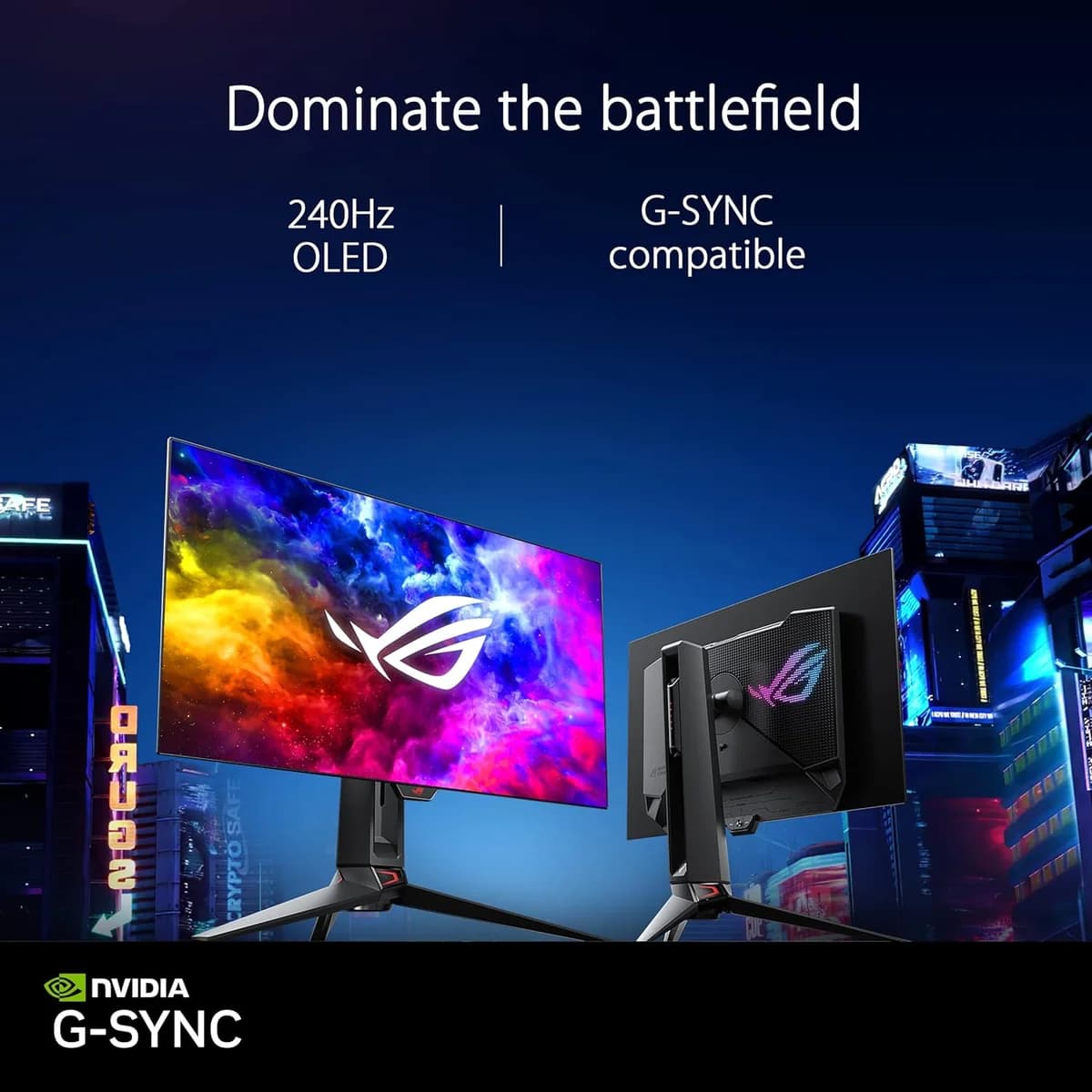
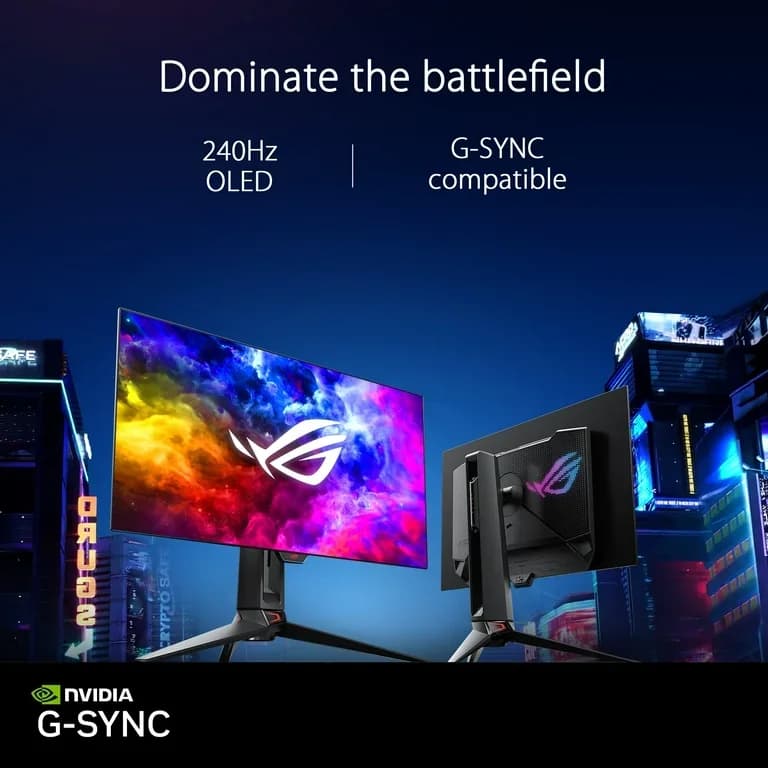
Ready, set, game! This monitor sprints ahead with a blazing 240Hz refresh rate and an ultra-quick 0.03ms gray-to-gray response time, delivering buttery-smooth gameplay that’s crucial for competitive edge. The inclusion of G-SYNC compatibility ensures tear-free visuals, enhancing fluidity during intense action sequences. While the brand's claims align well with user enthusiasm for its silky responsiveness, occasional reports of VRR flicker suggest it isn’t flawless. Still, this setup is undeniably crafted for those who crave lightning-fast reaction times paired with impeccable motion clarity.
Contrast and black level
Dive into darkness like never before thanks to OLED's innate ability to produce absolute blacks; here it’s elevated by an astounding static contrast ratio near 1,500,000:1, which means shadows come alive without any annoying backlight bleed or glow typical on LCDs. This results in cinema-grade deep blacks and spectacular shadow detail that truly immerse players into every scene's moodiness—confirmed by glowing reviews praising its capability as one of the best at rendering pure black levels without compromise.
Color accuracy and gamut
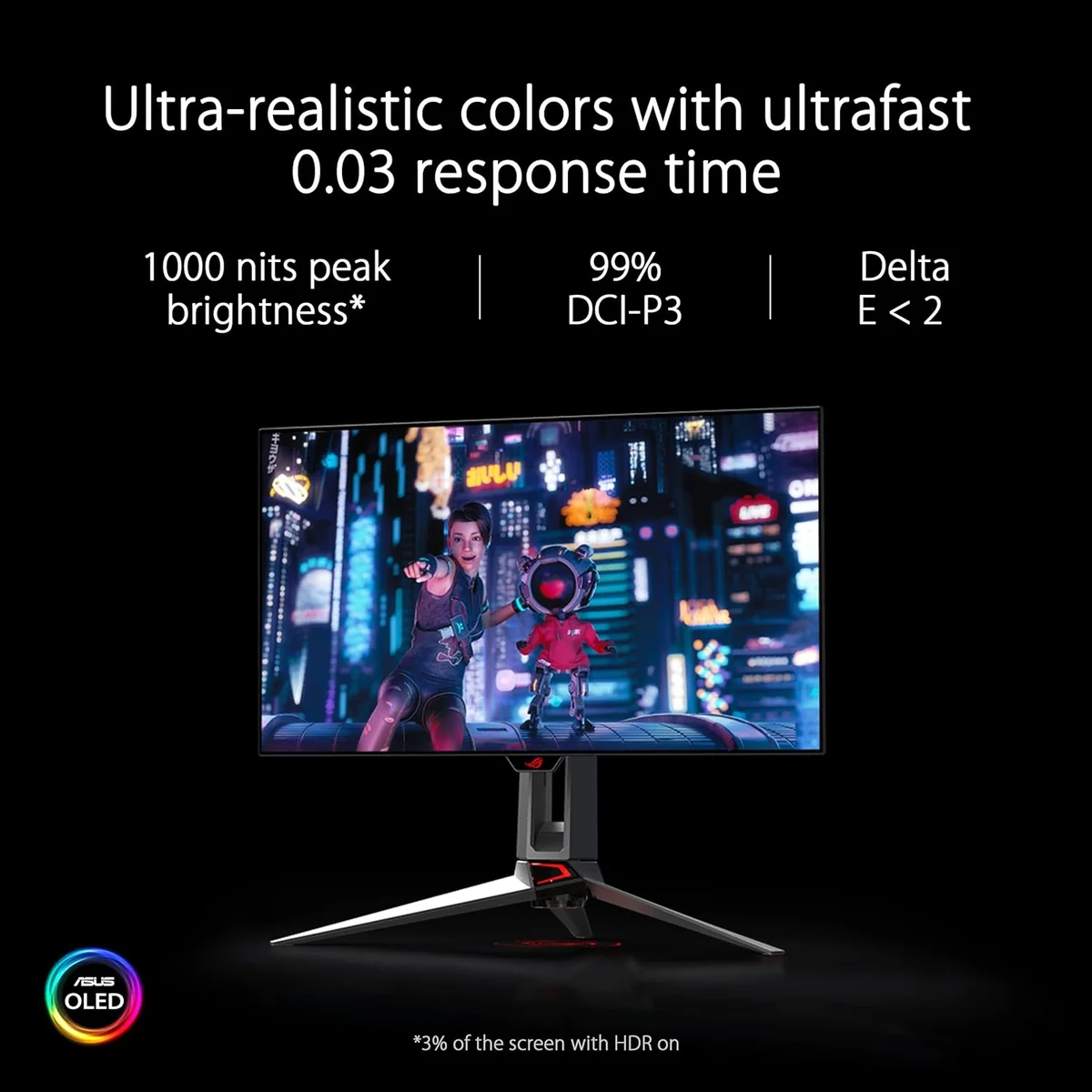
When colors matter most, this monitor paints in bold strokes—boasting a true 10-bit panel depth covering 99% DCI-P3 color space, promising vibrant hues and smooth gradients perfect for both gamers and creators alike. Factory calibration keeps colors honest with a tight Delta E below 2 ensuring what you see is true to life or intent. However, the unique WRGB subpixel layout causes some users to notice slight text fringing—a small price paid for such rich saturation but worth noting if crisp text is king in your workflow.

HDR peak brightness and HDR performance
HDR dreams meet reality—or almost—with a punchy peak brightness hitting around 1000 nits on small screen areas (3%), enough to make highlights pop dramatically over SDR content yet sometimes falling short under bright ambient lighting conditions where dimmer scenes can feel washed out. Users praise its vividness but express mixed feelings about HDR consistency due partly to limited uniform brightness control across larger image areas—making it great eye candy though not quite mastering full HDR glory just yet.

Conclusion
Speed demons and color fanatics alike will find much to admire here. The blazing 240Hz refresh rate paired with a near-instantaneous 0.03ms response time crafts gameplay that’s as fluid as it is fierce, while the true 10-bit panel covering 99% DCI-P3 paints scenes with vivid accuracy that satisfies creative eyes without compromise. OLED’s signature strength shines through in its jaw-dropping contrast ratio and absolute black levels, plunging you deep into immersive worlds where details whisper from shadows. Yet, HDR brilliance is nuanced—peak brightness dazzles on highlights but can falter under intense light, reminding users this isn’t a one-size-fits-all spectacle. ASUS’s thoughtful thermal management and burn-in mitigation ease longevity concerns but don’t erase them entirely, especially given reported pixel quirks lurking beneath the surface. For those chasing perfection in motion and hue who accept these trade-offs, this display delivers a rare blend of precision speed and cinematic flair—a bold choice for enthusiasts who value performance over polish alone.

Feature Scores
This reflects reviews and ratings from established critics, journalists, and users who have evaluated the item. Their opinions provide a comprehensive assessment.
Performance
Resolution
4/5
Refresh Rate
5/5
Color Accuracy
5/5
Brightness
4/5
Contrast Ratio
5/5
Response Time
5/5
Connectivity Options
4/5
Value
Price-to-Feature Ratio
4/5
Warranty Coverage
5/5
Cost of Ownership
3/5
Design
Ergonomic Adjustability
5/5
Aesthetic Styling
4/5
Footprint and Bezel Size
4/5
Health
Blue Light Reduction
3/5
Flicker Free Performance
5/5
Safety
Electrical Safety Certification
4/5
Mounting and VESA Compatibility
4/5
Sustainability
Energy Efficiency
4/5
Recyclability and Materials
4/5
Experience Style
On-Screen Display Usability
4/5
Preset and Custom Profiles
5/5

Specifications
This section outlines the product's key facts, covering essential features, details, dimensions, materials, and any unique characteristics that define its functionality and usability.
Performance
Value
Design
Safety
Sustainability
Experience Style

Frequently Asked Questions
6 Questions
Find Yours
What's your primary use for a computer monitor?
Answer to find your best matches.