
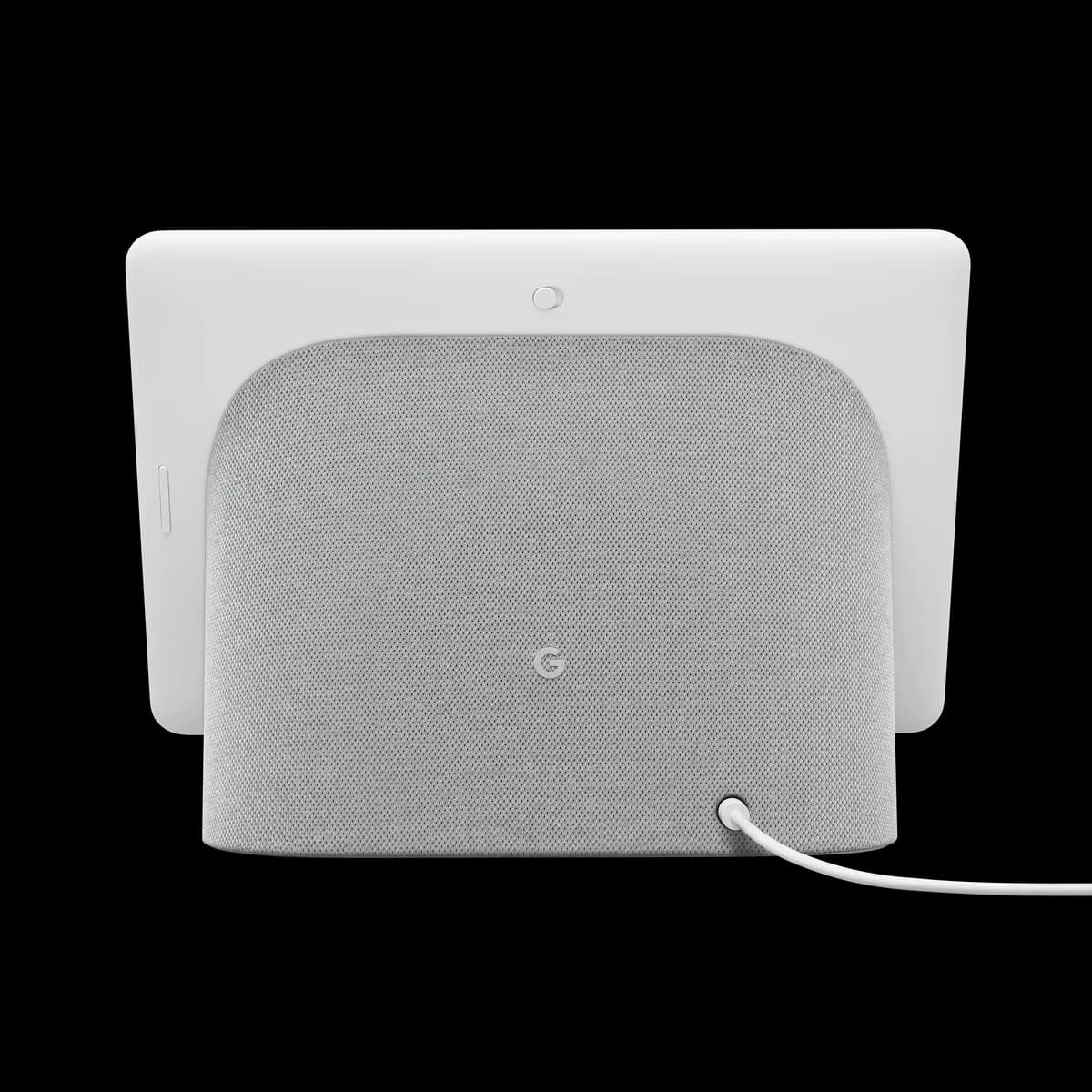

Google Nest Hub (2nd Gen)
Privacy-focused smart display with radar sleep tracking, solid audio, and smart home hub features, though some lag persists.
The Google Nest Hub (2nd Gen) is a privacy-first smart display that doubles as a bedside sleep coach with its clever radar-based Sleep Sensing, perfect for users who want wellness insights without wearables or cameras. It charms with touchless Motion Sense gestures and packs a punchier speaker boasting 50% more bass, though some find the interface sluggish and gesture recognition spotty. Seamless integration into Google’s ecosystem and future-ready Matter/Thread support make it an appealing hub for casual smart home enthusiasts. Its sleek design, adaptive display, and thoughtful privacy features deliver solid value—just don’t expect audiophile-grade sound or lightning-fast responsiveness.


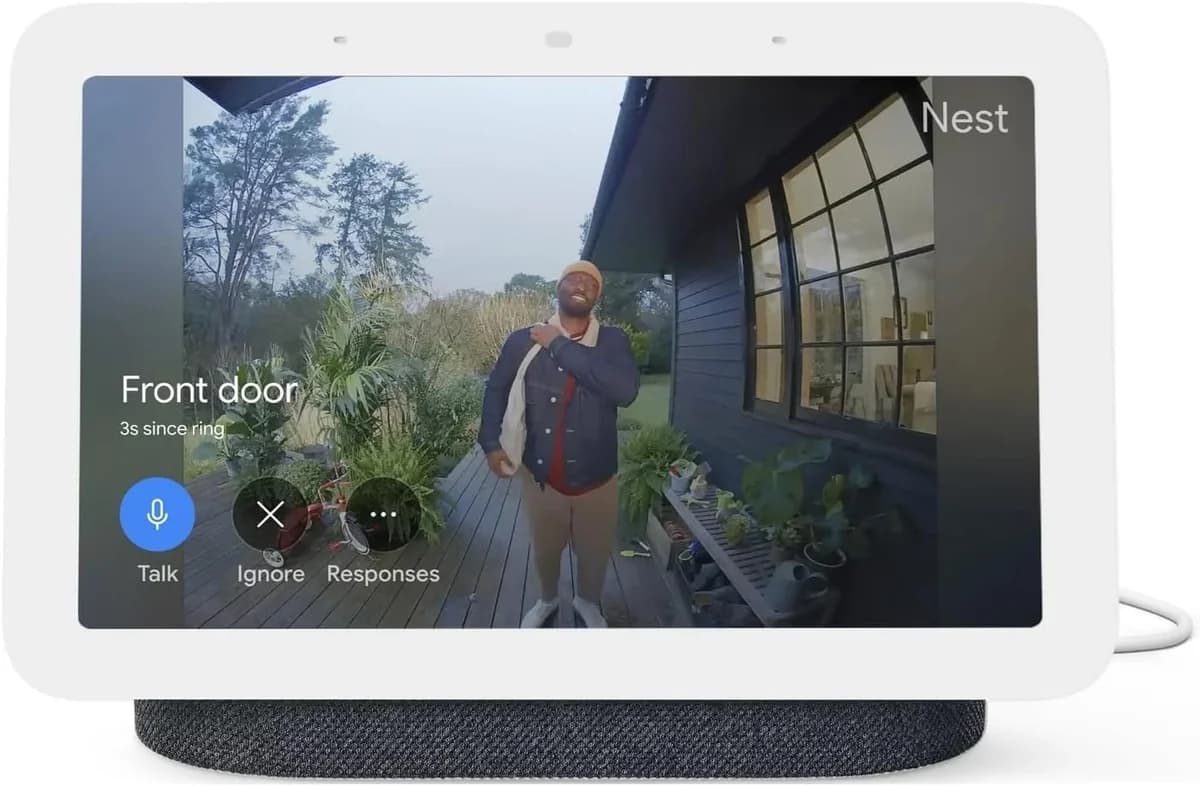


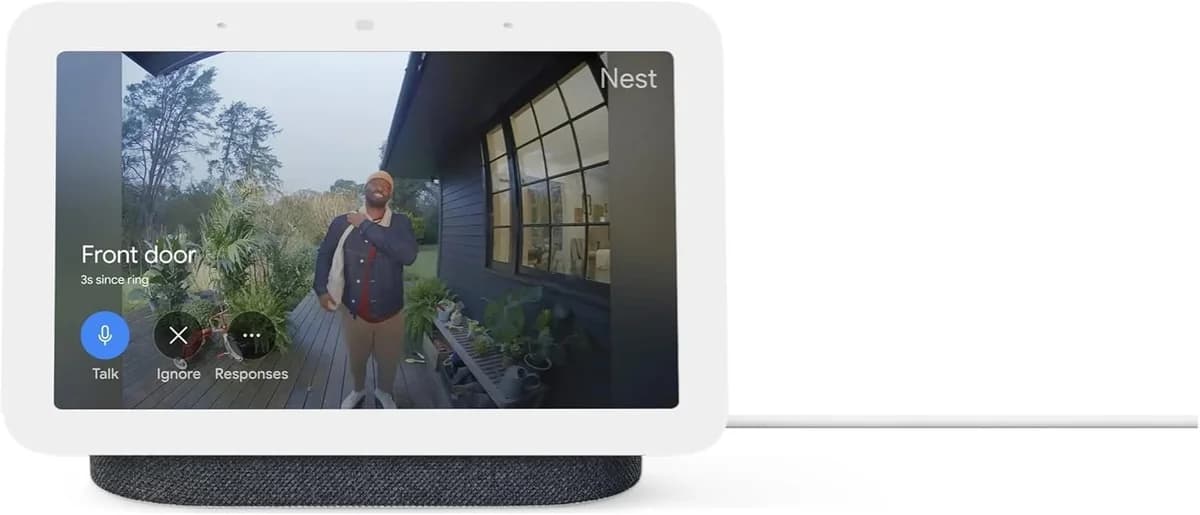
Find Yours
What do you mainly want a smart hub or display for?
Answer to find your best matches.

The Field
Browse top contenders, or compare all options ranked by score and key attributes.
2 Options

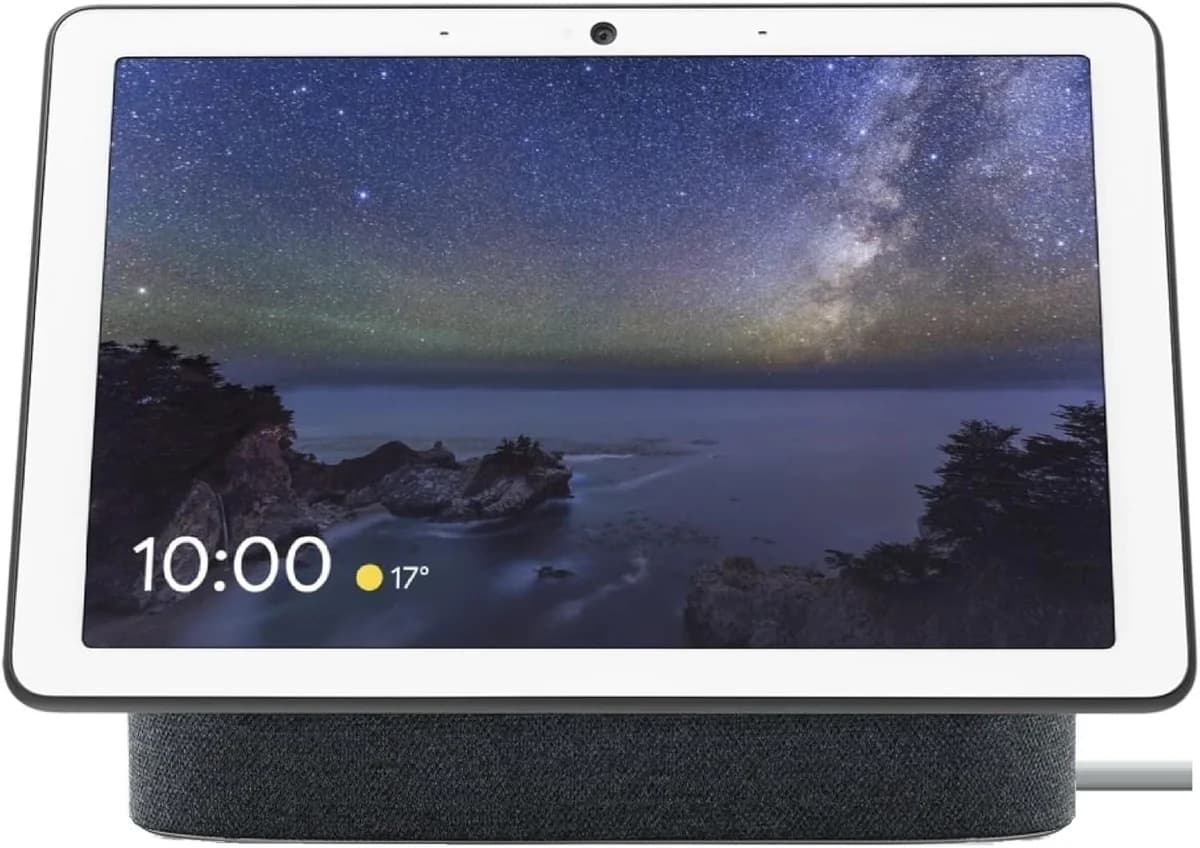

The Scoreboard
Does this improve your life? Considers, health, habits, and environmental impact.
Benefits
Soli radar enables bedside breathing, snoring, movement tracking without cameras or wearables.
Radar sensor replaces camera, reducing visual surveillance concerns in bedrooms and shared spaces.
Thread border router and on‑device ML keep routines running even with spotty cloud connectivity.
Ambient EQ light sensor adjusts brightness and color to reduce eye strain and bedtime disruption.
Soli Quick Gestures enable play/pause and snooze without touching, aiding mobility or hygiene.
Enclosure uses 54% recycled plastic, lowering virgin plastic demand in product construction lifecycle.
Trade-Offs
Radar and environmental sensors can misattribute sounds or naps, producing noisy, misleading sleep signals.
Modest CPU and lightweight OS sometimes cause stuttering and delays, interrupting daily flows.
Omitting a camera protects privacy but removes video chat and visual interaction options.
Core electronics create e‑waste and resource intensity, typical for connected devices at disposal.
 Alternatives


Join the Circle
Where real meets deal
Know what's worth buying-and when.
Tips, special offers, and rewards for buying and sharing.

Publications
9 LEADING PUBLICATION REVIEWS

Angela Moscaritolo from PCMag praises the Google Nest Hub (2nd Gen) as a compelling and affordable smart display, especially for Google Assistant users. She highlights its unique sleep tracking feature enabled by a built-in Soli motion sensor, which accurately monitors sleep and breathing without a camera or wearable device. The device’s Quick Gestures and improved audio performance add convenience, though the bass remains modest compared to competitors. Moscaritolo appreciates the compact, stylish design and intuitive interface, noting seamless smart home integration and fast, reliable voice responses. However, she points out the absence of a camera for video calls, which some users might miss, and acknowledges that sleep tracking may occasionally misattribute sounds from co-sleepers. While recommending the Nest Hub as an excellent bedside companion and Editors’ Choice for Google Assistant smart displays, she suggests Alexa fans consider Amazon’s Echo Show models for better audio or video call features. Overall, the review conveys a balanced, moderately enthusiastic endorsement with detailed insights.
By Angela Moscaritolo
Molly Price from CNET highlights the Google Nest Hub (2nd Gen) as a thoughtfully improved and more affordable smart display that builds on the strengths of its predecessor. She praises the introduction of Sleep Sensing, a unique feature using radar and environmental sensors to track sleep without wearables, noting its accuracy and privacy-conscious design. Quick Gestures add convenient hands-free control, though the feature can be overly sensitive and somewhat limited in functionality. The device offers richer bass and better microphone performance, maintaining solid sound quality for everyday use. While the lack of a camera may disappoint those wanting video chat, Price appreciates Google’s choice to keep the device camera-free for privacy. She also notes the inclusion of future-proof smart home protocols like Thread. Despite some caveats—Sleep Sensing’s limited free period, the persistent bezel, and no video calling—the review conveys a balanced, mildly enthusiastic tone, ultimately recommending the Nest Hub as the best smart display for most homes due to its sensible updates, value, and privacy features.
By Molly Price
Chris Wedel and Daniel Bader from Android Central highlight the Google Nest Hub (2nd Gen) as a modest but meaningful upgrade over its predecessor, emphasizing its standout role as the best digital photo frame on the market. They praise the improved speaker, which offers fuller sound suitable for podcasts and alarms, and the innovative Sleep Sensing feature that tracks sleep without wearables, though its data usefulness is somewhat limited and the feature is only free during a preview period. The review notes the device’s seamless integration with Google Photos and smart home controls as core strengths, while also pointing out persistent drawbacks such as a sluggish touch-based OS, limited hardware changes, and inconsistent gesture controls. The authors appreciate the Nest Hub’s affordability and subtle design, making it ideal as a bedside companion, but caution that it’s not a high-fidelity speaker or tablet replacement. Overall, the review conveys a balanced, mildly enthusiastic tone, recommending the device primarily for photo display, voice control, and casual media use.
By Chris Wedel; Daniel Bader
Cherlynn Low from Engadget highlights the Google Nest Hub (2nd Gen) as a solid and affordable smart display that improves on its predecessor with better audio, a faster Assistant, and useful gesture controls. The standout new feature, Sleep Sensing, uses a radar sensor to track sleep quality without a camera, addressing privacy concerns. While the sleep tracking is surprisingly accurate in detecting when the user falls asleep, it struggles to identify wake times and offers limited actionable insights beyond basic sleep duration and schedule adherence. Setup can be tricky due to placement requirements, and some environmental sensors like light detection underperform. Low appreciates the device’s privacy-first approach and the convenience of a non-wearable tracker but finds the sleep data less sophisticated than wearable alternatives like Fitbit. Although Sleep Sensing is currently free, potential future fees raise questions about its value. Overall, the Nest Hub is praised as a great smart display with a promising but still somewhat underwhelming sleep tracking feature.
By Cherlynn Low
Medea Giordano from WIRED highlights the Google Nest Hub (2nd Gen) as a solid smart display that excels in typical functions like media playback, smart home control, and voice commands, all while maintaining a compact, camera-free design ideal for the bedroom. The standout feature, Sleep Sensing, offers unique, non-intrusive sleep tracking using radar technology, providing insightful data on sleep habits and respiratory health without requiring wearable devices. However, Giordano notes that the sleep tracking software still feels like it’s in beta, with occasional inaccuracies such as misinterpreting pre-sleep phone use or naps, and the need to use a separate Google Fit app for detailed data is inconvenient. Performance-wise, the device can be sluggish, and while the speaker and microphones are improved, it’s not suited for high-volume audio. Overall, the review conveys a cautiously positive tone, appreciating the Nest Hub’s thoughtful design and innovative sleep features but acknowledging limitations that temper enthusiasm.
By Medea Giordano
John Velasco from Digital Trends highlights the Google Nest Hub (2nd Gen) as a smart display that truly stands out for its innovative Sleep Sensing feature, which offers accurate, wearable-free sleep tracking using radar technology. He praises the device’s ability to provide detailed sleep insights—such as time to fall asleep, respiratory rate, and sleep efficiency—without requiring user interaction, making it a compelling bedside companion. However, Velasco notes that beyond sleep tracking, the device offers little advancement over its predecessor, lacking a camera and other new features, which limits its appeal compared to alternatives like the Lenovo Smart Display 7 or the more versatile Nest Hub Max. While the $100 price point is attractive, he suggests the Nest Hub (2nd Gen) is best suited for users who prioritize sleep monitoring and dislike wearables; otherwise, the older model or competitors may offer better value. The review balances enthusiasm for the unique sleep feature with measured critique of the device’s incremental updates.
By John Velasco
Dan Seifert from The Verge highlights that the Google Nest Hub (2nd Gen) is a mixed bag, excelling primarily as a digital photo frame and a bedroom sleep tracker but falling short in overall performance. While the device’s new sleep tracking feature, enabled by Soli radar sensors, is praised for its ease of use and accuracy compared to wrist-worn trackers, the Nest Hub struggles with sluggish responsiveness and stuttering animations that detract from its smart home hub ambitions. The improved speaker and additional microphone enhance audio quality and voice recognition, yet the device remains slow to react to commands, limiting the touchscreen experience. Seifert appreciates the compact design and integration with Google Photos but criticizes the lack of meaningful performance upgrades and dormant features like the Thread radio and temperature sensor for smart routines. Overall, the Nest Hub is a convenient, affordable option for Google ecosystem users, especially for bedroom use, but its slow speed and limited smart home functionality may disappoint those seeking a more responsive smart display.
By Dan Seifert
What Hi-Fi? highlights the Google Nest Hub (2nd Gen) as a compelling, budget-friendly smart home device that balances a useful touchscreen, solid streaming service support—including Netflix, Disney Plus, and YouTube—and innovative Sleep Sensing technology powered by Google’s Soli sensor. The review appreciates the device’s privacy-conscious design, notably its lack of a camera, and praises its compact, well-built form factor with recycled materials. While the sound quality is deemed acceptable for casual listening, it falls short of replacing dedicated speakers, with some compression and lack of bass impact at higher volumes. Call handling is noted as a weak point, requiring the Google Duo app and lacking seamless integration compared to competitors. Overall, What Hi-Fi? sees the Nest Hub as a versatile lifestyle aid offering unique features like gesture control and sleep monitoring at an attractive price, making it a strong contender for users prioritizing smart home integration and multimedia streaming over audiophile-grade sound or video calling.
Samuel Gibbs from The Guardian highlights the Google Nest Hub (2nd Gen) as a compact, thoughtfully designed smart display that notably introduces radar-based sleep tracking without requiring wearable devices. He praises its crisp 7-inch screen, improved speaker with richer bass, and privacy-conscious design that omits a camera. The sleep tracking feature impresses with accurate, non-contact monitoring comparable to dedicated devices, though it lacks heart rate and sleep cycle data and may become a paid service in the future. Gibbs appreciates the device’s broad smart assistant capabilities, including gesture controls, multiroom audio, and seamless integration with Google services, while noting occasional sluggishness and the screen’s limited size for video content. The use of recycled materials and upcoming Thread support add environmental and future-proofing appeal. Overall, the review conveys a moderately positive, balanced tone, recognizing the Nest Hub’s unique sleep tracking innovation and solid smart home functionality, tempered by some performance and feature trade-offs.
By Samuel Gibbs

YouTube
14 LEADING EXPERT & INFLUENCER REVIEWS
 6 Months Later
Josh Teder from 6 Months Later praises the Google Nest Hub (2nd Gen) for its innovative Soli radar-based sleep tracking, hands-free gestures, and improved sound, highlighting its privacy and ease of use. He appreciates the smart home controls and photo frame features but notes limitations like single-user sleep tracking and upcoming paid sleep insights.
9to5GoogleDamien from 9to5Google highlights the Google Nest Hub (2nd Gen) as a subtle but meaningful upgrade over the original, praising its improved bass, easier mute switch, and especially the Soli radar-based Motion Sense for touchless controls and sleep tracking without wearables. While the display and core experience remain largely unchanged, he notes the device’s value for those seeking sleep insights, but suggests sticking with the original if these features aren’t needed.
OSReviewsOS Reviews praises the Google Nest Hub (2nd Gen) for its seamless integration with the Google ecosystem, solid sound quality with enhanced bass, and useful features like Adaptive Display and Sleep Sensing without wearables. While noting minor software quirks and limited multitasking power, the review highlights its practical value, especially at discounted prices.
Tom’s GuideKate Kosich from Tom’s Guide highlights the Google Nest Hub (2nd Gen) as a versatile smart display with unique sleep tracking via Soli radar and improved smart home controls. She praises its integration with Google services and Thread support but notes the air gestures can be finicky and the speaker quality modest, making it ideal for nightstand use rather than audio.
Chrome UnboxedChrome Unboxed praises the Google Nest Hub (2nd Gen) for its affordable price, improved audio with 50% more bass, and innovative Soli radar-powered Motion Sense enabling touchless controls and sleep tracking without a camera. While not a deep sleep analyzer, it offers useful insights and smart home compatibility, though sleep tracking may become a paid feature.
Tech SpurtChris from Texpert praises the Google Nest Hub (2nd Gen) for its thoughtful bedroom-focused design, smooth Google Assistant integration, and innovative Soli radar-based Sleep Sensing that tracks sleep without a camera. He highlights the easy setup, solid voice recognition, and useful Evening Mode but notes the modest 7-inch display resolution, occasional gesture misses, and limited speaker bass. Overall, he finds it a gentle, privacy-conscious smart hub ideal for bedside use.
Kayla Le RouxKayla Le Roux praises the Google Nest Hub (2nd Gen) for its sleek design, easy setup, and thoughtful features like the privacy mic switch and Ambient EQ light sensor. She appreciates the device’s modern look and user-friendly interface, while noting minor design improvements could be made. Overall, she expresses genuine enthusiasm and looks forward to exploring its full capabilities.
Steve DOESSteve DOES praises the Google Nest Hub (2nd Gen) for its intuitive touchscreen, seamless Google Assistant integration, and robust smart home controls, highlighting features like Ambient EQ and multi-room audio. He notes limitations in native app support and audio quality but values casting options and privacy-focused design, offering a balanced, enthusiastic overview.
Lens AddictLens Addict praises the Google Nest Hub (2nd Gen) for its privacy-focused radar-based Sleep Sensing, improved voice processing, and solid microphone range, appreciating the camera-free design for bedroom use. While impressed by the sleep tracking and quick voice responses, they note the small speaker size, potential future subscription fees, and limited viewing angles as drawbacks.
DemboyzDemboyz praises the Google Nest Hub (2nd Gen) as an easy-to-use, central smart home controller with a clear 7-inch display and smooth integration across devices. They highlight its intuitive setup, useful Motion Sense gestures, and practical media casting, while noting some finicky gesture responsiveness and limited native YouTube browsing.
Home Tech VidsHome Tech Vids praises the Google Nest Hub (2nd Gen) as a solid digital photo frame and smart home controller with improved speaker and added sleep sensing via Soli radar. However, they note sluggish performance, slow interface, and limited gesture functionality, suggesting it’s mainly worthwhile for new users or those keen on sleep tracking.
Art GonzalesArt Gonzales praises the Google Nest Hub (2nd Gen) for its sleek design, intuitive Material UI, and solid media playback with clear audio. After 7 months of use, he values its responsiveness and Google Assistant integration but notes key features like Soli radar-based gesture control and Sleep Sensing remain disabled outside supported countries, limiting its full potential.
ReaganVFilmsReaganVFilms praises the Google Nest Hub (2nd Gen) for its intuitive physical controls, Ambient EQ, versatile smart home integration, and useful features like Sleep Sensing and gesture controls. While enthusiastic about its ease of use and multi-room audio, they note occasional lag, limited app functionality, and restrictions in YouTube playback, offering a balanced, detailed overview.
UKTechWareHouseUK Tech Warehouse praises the Google Nest Hub (2nd Gen) for its easy plug-and-play setup, vibrant 7-inch display, and seamless integration with Google Assistant and smart home devices. The reviewer highlights the innovative Soli radar-based Sleep Sensing for non-intrusive sleep tracking and appreciates gesture controls, though some features like Duo calling require extra setup.

Store Reviews
CUSTOMER REVIEWS FROM 2 STORES
Amazon reviewers praise the Google Nest Hub (2nd Gen) for its compact size, solid sound quality, and seamless integration with Google services. Many users enjoy streaming music, managing smart home devices, and using voice commands like “Hey Google” to check weather, set timers, and control lights. Several highlight the device’s ability to serve as a handy smart home control center, often preferring its dedicated interface over the Google Home app on phones or tablets. Reviewers also appreciate the ease of casting media to smart TVs and the clear display for security camera feeds. However, users frequently report frustration with the device’s initial language setting defaulting to Mandarin Chinese, which complicates setup despite the Google Home app’s ability to switch it to English. Connectivity issues surface for some, especially with Wi-Fi and camera connections, leading to inconsistent performance. A few reviewers criticize Google’s software limitations, noting the absence of Play Store access and restricted app options, which they feel hinder the Hub’s potential as a true smart home hub. Despite these drawbacks, many on Amazon find the Nest Hub valuable and anticipate improvements in future iterations.
4.2 Stars / Many verified reviews
Users on Target praise the Google Nest Hub (2nd Gen) for its versatility and convenience, especially highlighting its role as a smart photo frame that brings cherished memories to life. Many enjoy using it in the kitchen to display recipes, set timers, and stream music or videos, appreciating how it enhances daily routines. Reviewers frequently mention the device’s clear, loud speakers and bright screen, which adapts well to ambient lighting. Families find it helpful for entertainment and communication, with some noting its usefulness for children who rely on voice commands for learning and fun. Several users emphasize the seamless integration with other Google smart home products, such as thermostats, lights, and doorbell cameras, allowing easy control and real-time notifications directly on the display. The sleep tracking feature intrigues some, offering insights without the need for wearable devices, though others find it less practical. The radar-based gesture controls receive mixed reactions, with some calling them gimmicky and prone to accidental triggers. On the downside, Target reviewers report occasional sluggishness and connectivity issues, with the device sometimes lagging or struggling to maintain a stable internet connection. Some express frustration over limited functionality, such as the absence of a camera for video calls and the removal of certain cooking features. A few users compare it unfavorably to competing smart displays, citing voice recognition challenges and inconsistent music playback. Despite these drawbacks, many recommend purchasing the Nest Hub during sales, considering it a valuable addition to a smart home setup that balances aesthetics and functionality.
4 Stars / Some verified reviews

Forum Reviews
CUSTOMER REVIEWS FROM 1 FORUM
Reddit users express mixed feelings about the Google Nest Hub (2nd Gen), appreciating its value as a smart display and photo frame with reliable voice assistant capabilities. Many praise its integration with smart home devices and ease of use for basic functions like viewing cameras and managing lists. However, performance issues such as sluggish touchscreen responsiveness and declining voice recognition are common complaints, leading some to question its longevity and support. Design-wise, the device is seen as functional but uninspiring, with some users frustrated by the lack of hardware updates. Overall, while new buyers find it adequate for simple tasks, existing users often consider waiting for future models or alternatives due to ongoing software and hardware limitations.
Many comments

In-Depth Review

Highlights
- •Radar-based sleep sensingPromoted as non-contact sleep tracking.
- •Touchless Motion Sense gesturesMarketed as gesture-based media and alarm controls.
- •Improved audio bassAdvertised to deliver 50% more bass.
- •Matter and Thread smart‑home hubDesigned to act as a Thread/Matter hub.
- •Adaptive Ambient EQ displayCompany highlights its auto brightness and color matching.
- •Far-field microphones and Voice MatchCompany highlights its far-field mics and Voice Match.

Considerations
- •Sluggish interface and responsivenessTouchscreen and UI feel slow.
- •Sleep Sensing accuracy and insight limitsOccasional misreads and limited actionable data.
- •Potential paid tier for sleep featuresKey sleep insights may move behind a paywall.
- •Inconsistent gesture recognitionMotion Sense gestures can be finicky or miss.
- •Modest speaker fidelity at high volumesSingle full‑range driver lacks deep lows.
- •No camera for video callsCamera omission prevents native video‑calling functionality.
Real-world impressions of this compact smart display are still emerging, but early insights suggest it carves out a unique niche in Google’s ecosystem. Tailored for those who value privacy and simplicity, it champions radar-based sleep tracking without wearables or cameras, turning your nightstand into a discreet wellness coach. Its touchless gesture controls offer futuristic convenience—wave to snooze alarms or pause tunes without lifting a finger—though responsiveness can occasionally keep you guessing. Audio gets a noticeable bump with 50% more bass, warming up bedside playlists and podcasts alike. Under the hood, robust support for Matter and Thread protocols ensures this hub won’t be left behind as smart homes evolve, while its screen adapts seamlessly thanks to an ambient light sensor that eases late-night glances. With far-field microphones tuned for voice match accuracy yet some reported sluggishness in UI speed, this device is best suited for privacy-conscious users who prefer subtlety over flash—and those curious about how radar tech quietly redefines home comfort should pay close attention here.
Sleep Sensing
Meet your new bedside sleep coach: radar-based Sleep Sensing. This clever feature tracks breathing, snoring, and movement without the creepiness of cameras or wearables. While Google promises privacy-first monitoring with on-device ML, some users note occasional inaccuracies and limited actionable insights beyond basics like sleep duration. Experts applaud its innovation but temper enthusiasm due to potential subscription fees looming on the horizon. Still, it’s a standout for those craving non-intrusive wellness tracking that respects bedroom boundaries—privacy-conscious yet insightful.
Connectivity and Smart Home Hub
Nest Hub doubles as a savvy smart home hub boasting Thread border router functionality alongside Matter support—the duo future-proofing your connected devices with seamless interoperability across brands. On-device machine learning boosts local reliability so automations hum smoothly even if Wi-Fi stutters out temporarily—a reassuring lifeline for automation addicts valuing uninterrupted command flow amid chaos. Users revel in straightforward device pairing though some crave broader compatibility; overall it's an efficient nerve center anchoring modern smart living elegantly wired into Google's ecosystem.
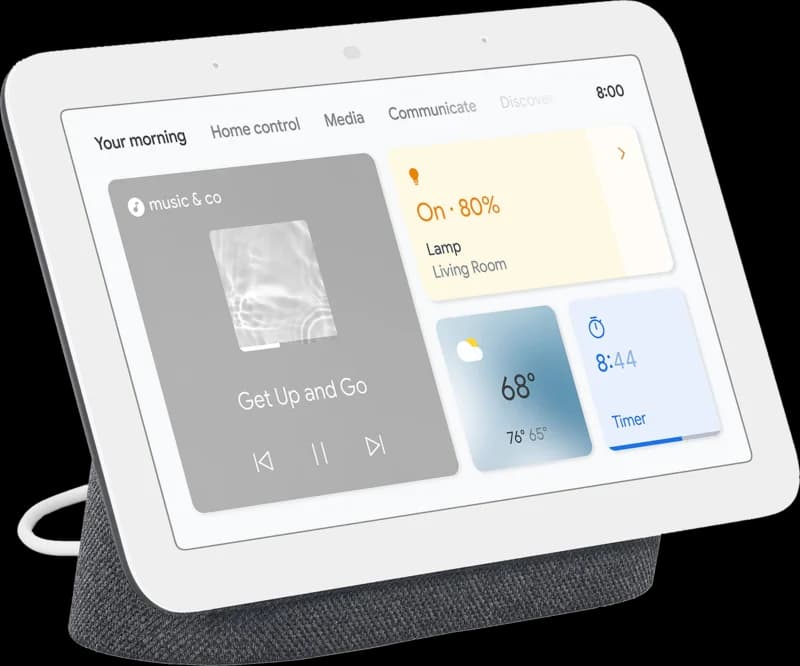
Motion Sense (Touchless Gestures)
Wave hello to touchless control via Soli radar-powered Motion Sense! Quick Gestures let you play/pause media or snooze alarms with simple hand waves—a futuristic convenience that feels nifty in practice. Yet not all is flawless; responsiveness can be finicky and gesture recognition occasionally misses cues according to user feedback. Despite these quirks, this tech adds an elegant layer of interaction without ever touching a screen, enhancing smart home charm while championing hygienic hands-off control as a neat novelty worth exploring.
Audio Performance
Don’t underestimate this little speaker's bass boost: 50% more punch than its predecessor gives music and podcasts richer warmth perfect for bedside jams or kitchen tunes. While experts praise clearer voice recognition supporting crisp Assistant commands, audiophiles might find the single full-range driver modest at higher volumes lacking deep lows or spatial presence. Casual listeners will appreciate improved sound quality elevating daily interactions without breaking earbuds budget — solid audio uplift where it counts most around the house.
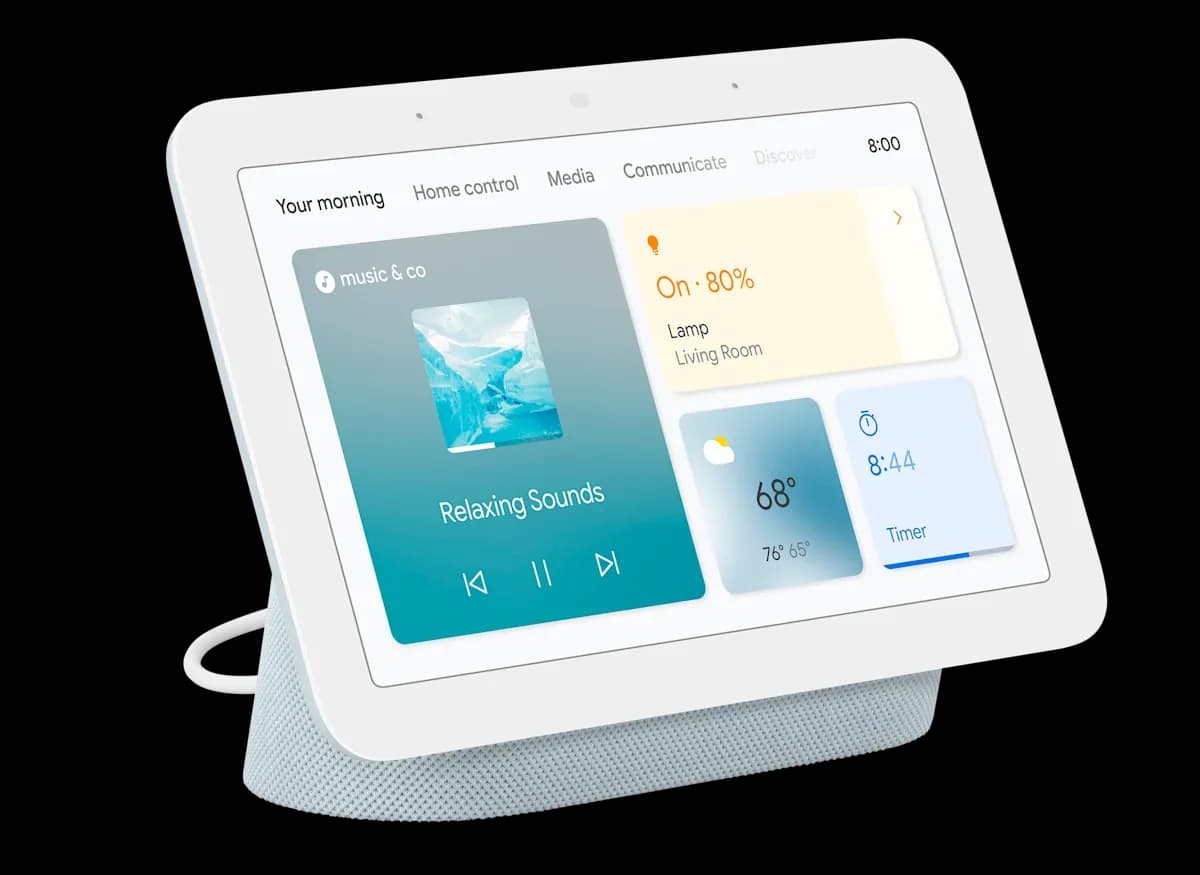
Conclusion
While real-world feedback is still unfolding, the radar-powered Sleep Sensing stakes a strong claim for privacy-conscious wellness without wearables or cameras. Its Motion Sense gestures add futuristic flair, though occasional misses remind us this tech isn’t flawless yet. The speaker’s 50% bass boost warms up bedside jams but won’t satisfy audiophiles craving depth and power. Smart home enthusiasts will appreciate the device’s role as a Thread- and Matter-compatible hub, ensuring reliable local control even when Wi-Fi stumbles. The adaptive display with Ambient EQ eases late-night glances, balancing brightness like a well-tuned nightlight. Meanwhile, far-field mics deliver solid voice recognition—though some users note it can falter under pressure. This compact companion shines brightest for those who prize subtlety over flash and seek simple hands-free convenience wrapped in thoughtful design—a quietly clever choice that blends innovation with everyday ease while inviting patience on speed and gesture quirks along the way.

Feature Scores
This reflects reviews and ratings from established critics, journalists, and users who have evaluated the item. Their opinions provide a comprehensive assessment.
Performance
Voice Recognition Accuracy
4/5
Touchscreen Responsiveness
3/5
Display Quality
3/5
Audio Reproduction
4/5
Processing Speed
3/5
Network Connectivity Reliability
4/5
Software Update Support
4/5
Value
Price Competitiveness
5/5
Feature to Price Ratio
4/5
Subscription Dependency
2/5
Design
Industrial Design Appeal
4/5
Form Factor Flexibility
4/5
User Interface Intuitiveness
3/5
Health
Material Safety
4/5
Blue Light Mitigation
4/5
Hearing Safe Audio Levels
4/5
Safety
Privacy Controls
5/5
Data Security Practices
4/5
Physical Stability
4/5
Sustainability
Energy Efficiency
4/5
Repairability
2/5
Packaging Sustainability
3/5
Experience Style
Voice-First Experience
5/5
Touch-First Experience
3/5
Customization
4/5
Setup Simplicity
5/5

Specifications
This section outlines the product's key facts, covering essential features, details, dimensions, materials, and any unique characteristics that define its functionality and usability.
Performance
Value
Design
Safety
Sustainability
Experience Style

Frequently Asked Questions
9 Questions


Find Yours
What do you mainly want a smart hub or display for?
Answer to find your best matches.