






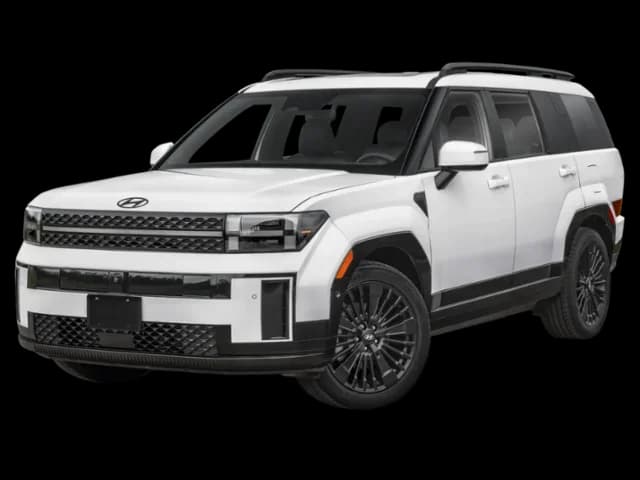
Hyundai Santa Fe (2026)
A comfortable, tech-rich family SUV with clever space, efficient hybrid power, and compromises.
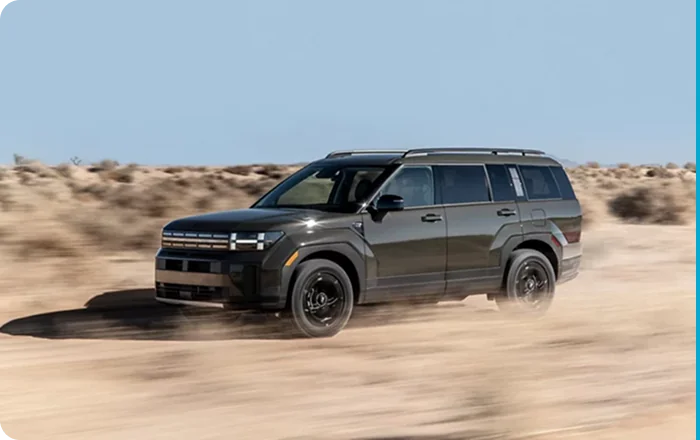
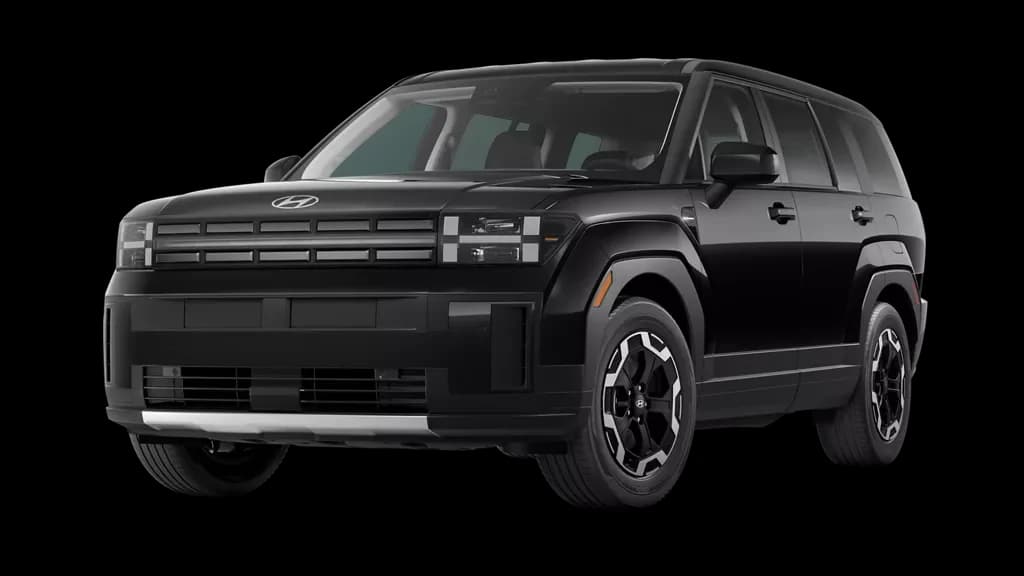
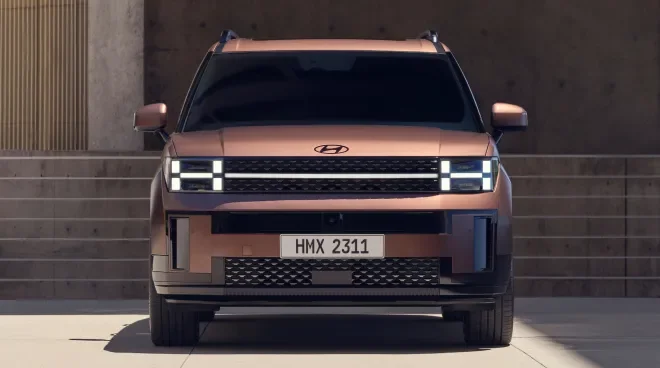
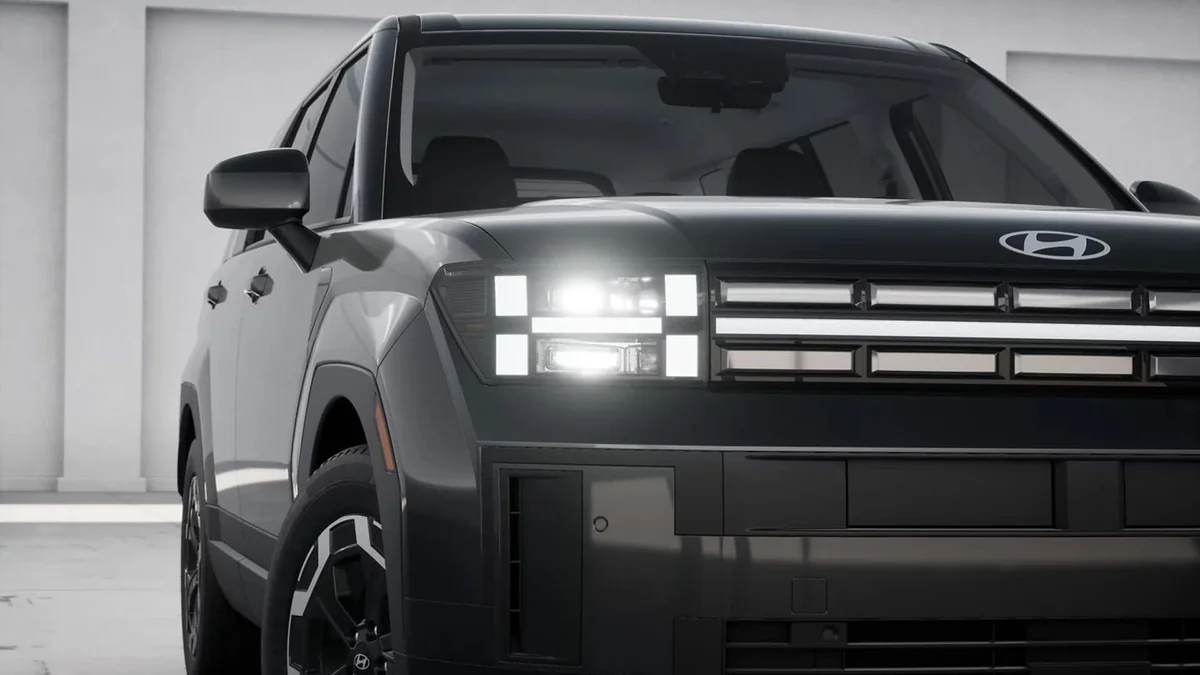
The 2026 Hyundai Santa Fe is a boxy, tech-rich family SUV designed for people who need flexible space without paying Palisade money. Its wide cargo opening, clever storage, comfortable first two rows, and available 231-hp hybrid make commuting and road trips pleasantly easy, with real-world economy generally supporting Hyundai’s efficiency pitch. The revised gas model’s eight-speed automatic is also smoother than before, though acceleration is relaxed, engine noise can turn coarse, and the third row is better for children than adults. Experts and owners largely praise its value and upscale feel, while noting variable gas mileage, limited seven-seat cargo, and polarizing styling. Overall, it is a smart buy for occasional extra seating, with comfort, efficiency, space, and trim pricing shaping its final appeal.
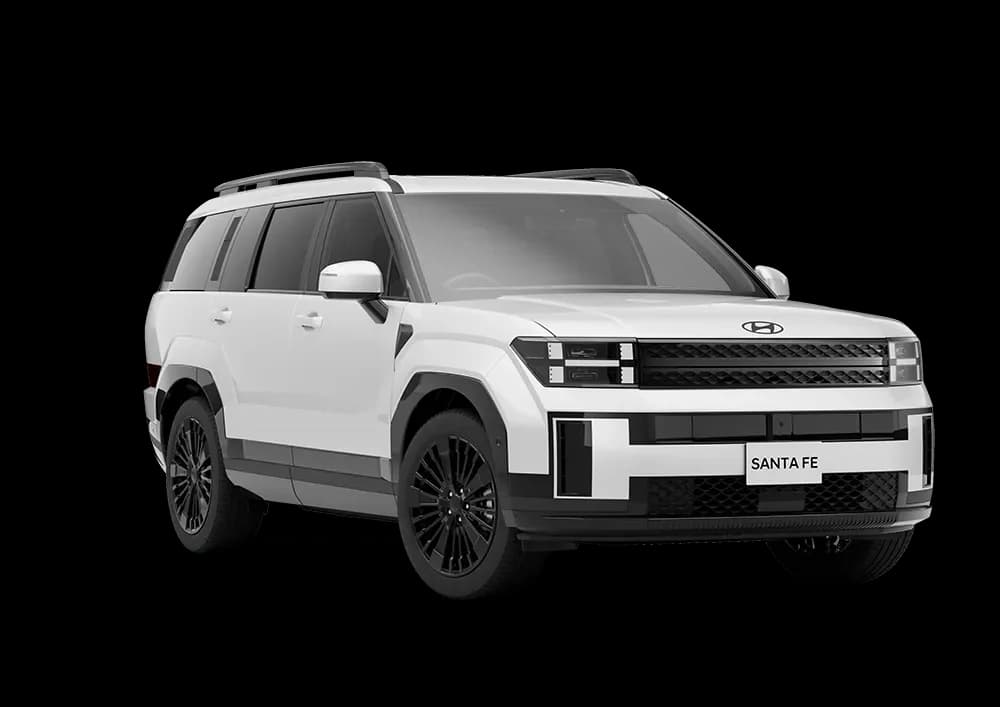
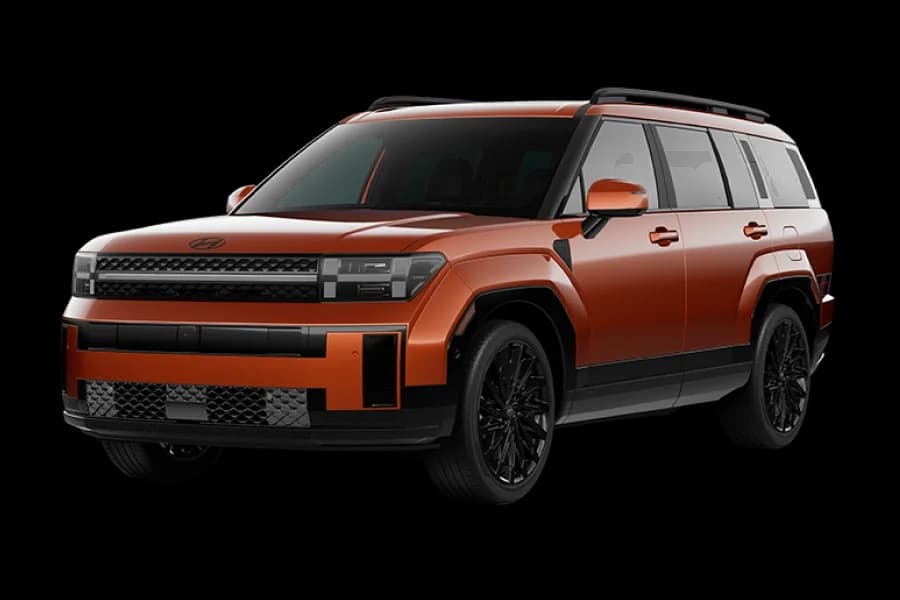
Find Yours
What is your primary use for a Gas-Powered SUV?
Answer to find your best matches.

The Field
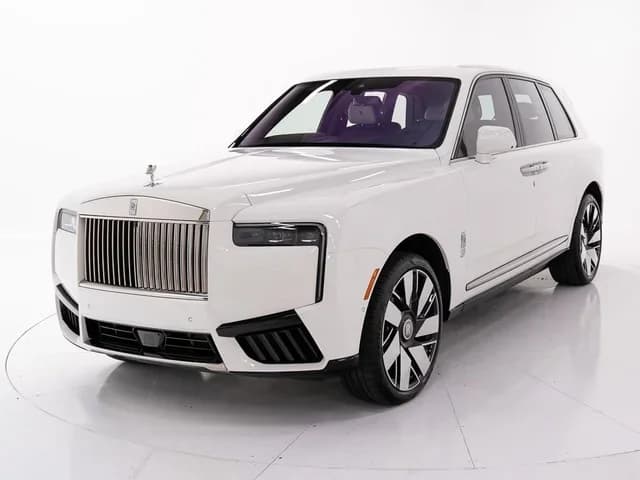
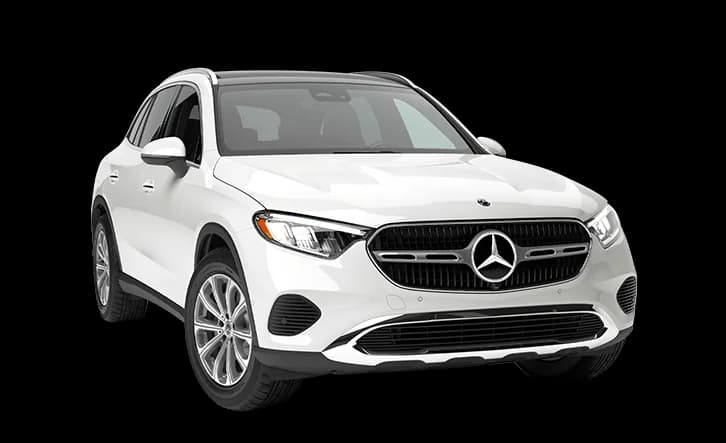
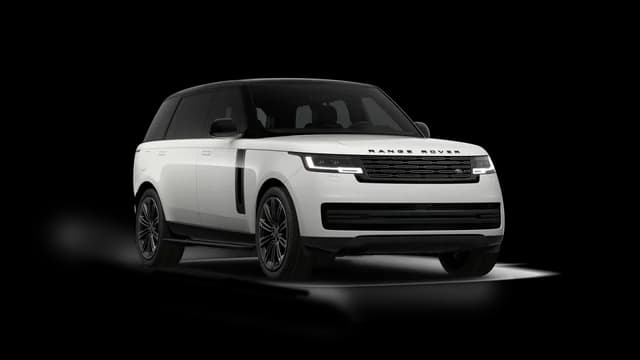
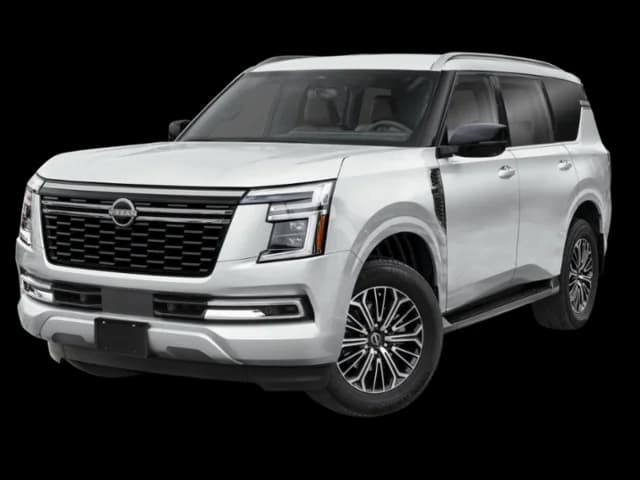
Browse top contenders, or compare all options ranked by score and key attributes.
5 Options

The Scoreboard
Does this improve your life? Considers, health, habits, and environmental impact.
Benefits
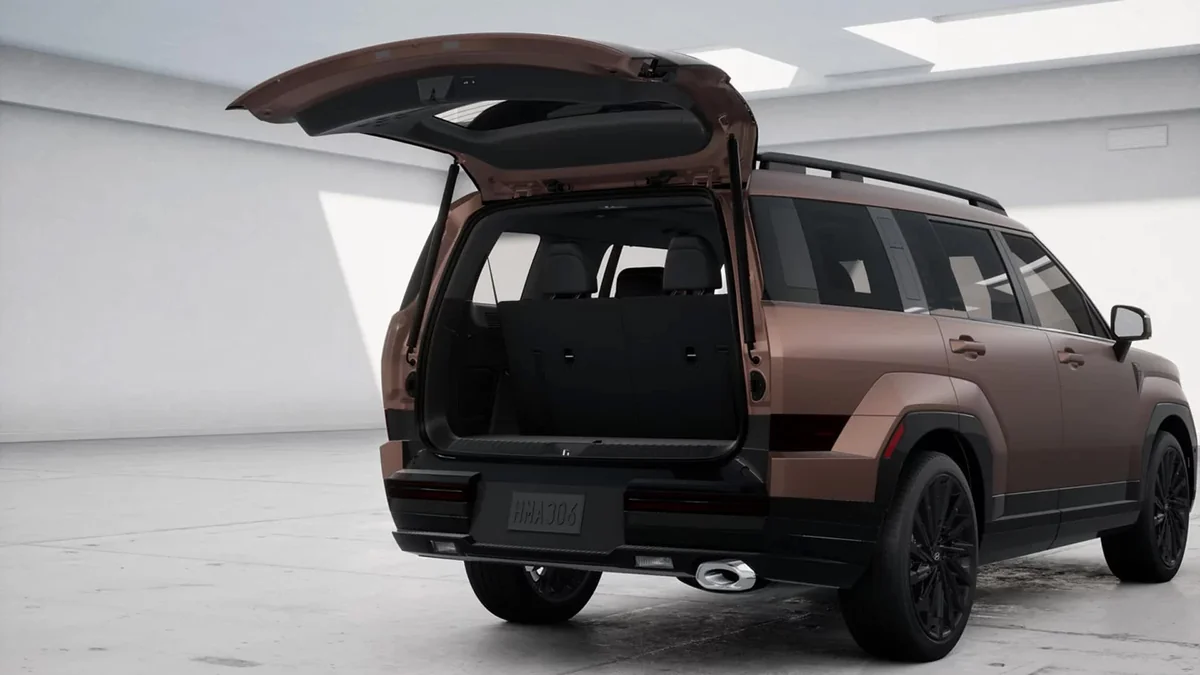
Wide openings, clever storage, and folding seats make school runs and road trips easier.
Supportive first two rows and a composed ride keep everyday driving pleasantly easy.
The revised gas automatic shifts more naturally, while the hybrid stays quiet around town.
Large screens, charging, safety features, and thoughtful touches reduce routine juggling behind the wheel.
Trade-Offs
Adults feel cramped in back, and using all seats leaves little room for luggage.
Hard acceleration makes the four-cylinder coarse and noisy, interrupting otherwise calm conversations.
Gas versions need more frequent fill-ups, especially with AWD or the XRT trim.
 Alternatives


Join the Circle
Where real meets deal
Know what's worth buying-and when.
Tips, special offers, and rewards for buying and sharing.

Publications
5 LEADING PUBLICATION REVIEWS

Edmunds reviewer Keith Buglewicz is clearly positive about the 2026 Santa Fe. He praises its distinctive styling, manageable size, excellent standard safety and infotainment technology, comfortable first two rows, clever storage, strong warranty, and upscale-feeling cabin. The SUV also drives with composure, and its adaptive cruise and lane-keeping systems performed smoothly in testing. Still, this is a measured endorsement rather than a rave. Fuel economy is a significant weakness, especially in the XRT’s 21-mpg configuration, while the cramped third row, limited visibility, mediocre cargo space behind it, and intrusive engine noise under hard acceleration temper the appeal. The 7.5/10 score reflects a well-rounded, good-value three-row SUV that stands out through practicality and quirky design, even if it falls short of class-leading efficiency or refinement.
By Kyle Hyatt
MotorTrend’s Bob Hernandez is strongly positive about the 2026 Hyundai Santa Fe, especially its family-friendly design and value. The squared-off exterior stands out, but the cabin makes the deeper impression with thoughtful touches such as front- and rear-opening console storage, a dedicated third-row climate zone, seatback USB ports, and abundant technology. The standard third row, roomy interior, available all-wheel drive, and comprehensive safety equipment make it feel unusually practical for the price. Hernandez also considers the new torque-converter automatic a meaningful improvement over the previous dual-clutch transmission, though the Santa Fe remains merely adequate rather than quick. Wind noise at higher speeds, numb steering, and less-refined gas-model performance temper the praise, while the smoother hybrid is less energetic. Overall, it comes across as a well-equipped, distinctive, and sensible midsize SUV with manageable compromises.
By Bob Hernandez
Will Nightingale of What Car? is highly positive about the 2026 Hyundai Santa Fe, calling it a superb family SUV despite some costly options. Its bold redesign, exceptionally roomy and practical cabin, genuinely usable third row, enormous boot, comfortable ride, quiet motorway manners, and easy-to-drive character make it especially appealing for long-distance family duty. The HEV is the clear recommendation for private buyers, delivering an impressive 39.6mpg in testing while feeling slightly sharper and more comfortable than the heavier PHEV. The plug-in version makes sense mainly for company-car drivers, although its 33-mile electric range trails rivals such as the Skoda Kodiaq iV. Nightingale also cautions that top trims approach premium-SUV pricing, entry versions lack some safety equipment, and the Santa Fe cannot match the Mazda CX-80 for handling or the quickest rivals for acceleration. Overall, it is a polished, spacious, five-star-rated all-rounder, with entry-level Premium HEV offering the best value.
By Will Nightingale
TopGear.com is strongly positive about the 2026 Hyundai Santa Fe, calling it a remarkably complete family SUV. Its bold, boxy styling supports genuine substance: a spacious, flexible cabin can accommodate seven adults, offers clever practical touches, and provides impressive luggage space, while the comfortable ride, polished interior, useful technology, and reasonable pricing undermine assumptions that Hyundai is merely a budget choice. The reviewer also appreciates its composed road manners and strong towing capacity, though it is more relaxed cruiser than exciting driver. Reservations include a coarse four-cylinder engine under load, modest real-world fuel economy, limited PHEV electric range, expensive upper trims, and an appearance that exaggerates its off-road credentials. Overall, the Santa Fe earns its striking design by pairing it with unusually effective everyday utility, making it an especially compelling choice for families who value space and equipment over sporty performance.
By TopGear.com
U.S. News & World Report is strongly positive about the 2026 Hyundai Santa Fe, especially its value and improved transmission. After driving an XRT for a week, including an 800-mile Thanksgiving trip, Zach Doell praised its swift acceleration, comfortable ride, quiet upscale cabin, generous technology, and impressive fuel economy. The new torque-converter automatic is a standout improvement over the outgoing dual-clutch gearbox, shifting smoothly and promptly throughout testing. The Santa Fe also offers strong safety ratings, useful storage, and a notably low starting price for a well-equipped three-row SUV. Its compromises are clear: the third row is cramped for adults, cargo space trails larger rivals, steering feels vague, and the XRT’s rugged styling overstates its off-road ability. Still, Doell considers those limitations reasonable given the price, recommending the Santa Fe as an excellent choice for families seeking space and features without paying up for a larger SUV.
By Zach Doell

YouTube
9 LEADING EXPERT & INFLUENCER REVIEWS
 Chasing Cars
Curt Prey remains strongly positive about the Hyundai Santa Fe, though he is clear that this flagship hybrid is not the range sweet spot. After six months and 10,000km, he praises its distinctive design, exceptional three-row practicality, reliability, roomy cargo area, and impressive real-world 6.5L/100km fuel use. It handled family duties, interstate trips, ski conditions, bikes, a motorcycle, and even race-car wheels. However, the Calligraphy’s price, 10,000km servicing intervals, limited payload with seven adults, and intrusive driver-monitoring warnings temper his enthusiasm. He ultimately prefers the cheaper turbo-petrol variants and even his older Tucson.
carwowMat Watson is highly enthusiastic about the Hyundai Santa Fe, calling it a brilliant, near-premium family SUV worth buying outright. He praises its distinctive Land Rover-like styling, comfortable and spacious cabin, smooth hybrid system, strong 8.15-second acceleration, useful technology, maneuverability, and impressive real-world economy. The third row can accommodate adults briefly, though it suits children better, and cargo space is limited with all seats occupied. Drawbacks include modest towing capacity, an incomplete luggage cover, no front passenger-seat ISOFIX, intrusive driver-assistance alerts, cheap lower-cabin materials, and awkward rear climate controls.
Car ConfectionsCar Confections is strongly positive about the 2026 Hyundai Santa Fe. The conventional eight-speed automatic is considered a major improvement over the previous dual-clutch transmission, bringing noticeably smoother behavior without sacrificing fuel economy. They also praise the powerful turbo engine, excellent ride comfort, upscale cabin, generous storage, roomy second row, and genuinely usable third row. The review’s main criticism is the polarizing rear styling, while cabin quietness is good rather than class-leading. Overall, they view the gas Santa Fe as a compelling, comfortable family SUV with strong value, though reliability remains slightly below average.
Micah MuzioMicah Muzio is enthusiastic about the 2026 Hyundai Santa Fe, especially after Hyundai replaces the finicky dual-clutch transmission with a smoother eight-speed automatic. He praises its comfortable ride, easy handling, roomy and exceptionally practical interior, family-friendly storage, flexible seating, strong standard technology, and impressive value. The XRT adds ground clearance, all-terrain tires, and towing capacity, but Micah cautions that limited underbody protection, a compact spare, and vulnerable plastic trim make it suitable only for gentle off-roading. He also flags awkward car-seat access and a hard second-row armrest, yet strongly recommends the SEL—and particularly the efficient hybrid—as the smartest buys.
Raiti's RidesJoe Raiti is strongly positive about the 2026 Santa Fe Hybrid, calling it smooth, comfortable, tech-rich, and impressively efficient. He praises the upscale Calligraphy cabin, excellent seats, strong visibility, useful blind-spot cameras, real controls, flexible cargo space, and roughly 35 mpg city/34 highway performance. The hybrid powertrain also masks turbo lag and offers pleasant acceleration, though it is not quick. His main reservations are the polarizing styling, excessive flat-black exterior trim, limited second-row climate controls, modest 2,000-pound towing capacity, and an extremely cramped third row. Overall, he views it as a compelling, value-packed family SUV when occasional third-row use is enough.
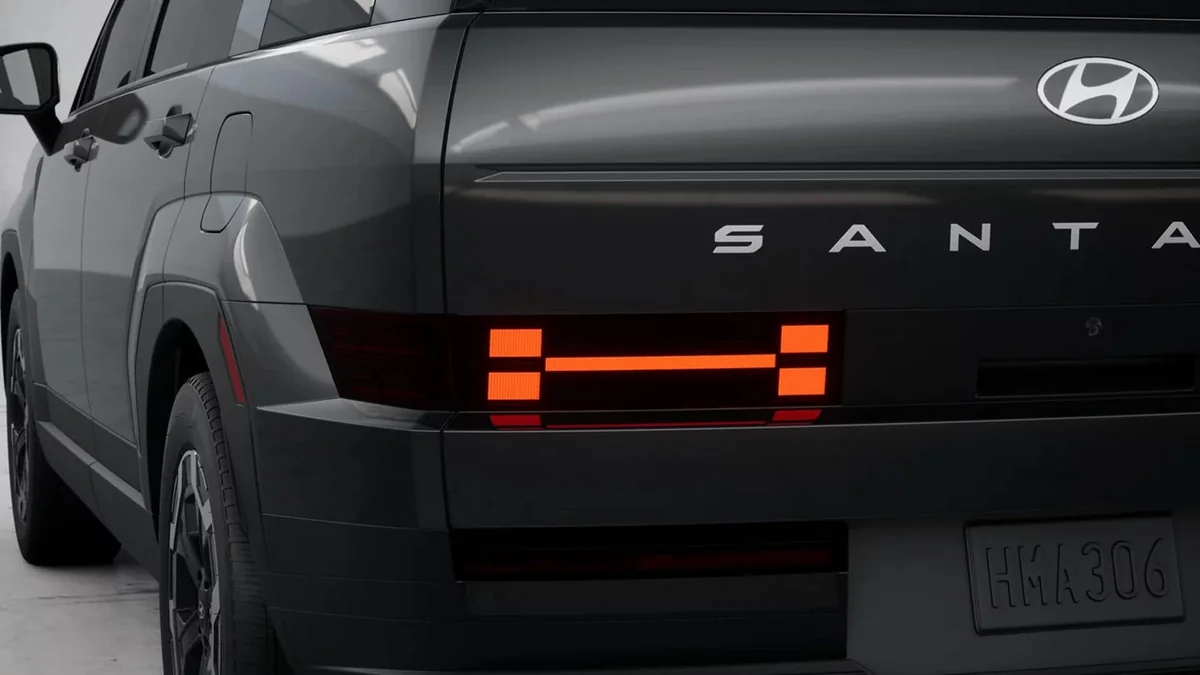
Kirk KreifelsKirk Kreifels is exceptionally enthusiastic about the 2026 Santa Fe Hybrid, calling it an S-tier, no-brainer buy. He loves its smooth, quiet powertrain, impressive real-world efficiency potential, comfortable and upscale cabin, huge windows, family-friendly seating, and strong discounts. He prefers it to the Palisade for its styling, efficiency, and easier size, though larger families should choose the Palisade. Reservations are limited: the third row suits children, cargo space disappears with all seats occupied, the 115-volt outlet is weak, braking feels soft initially, and the rear-light design remains awkward. Overall, his recommendation is emphatic.
SoFlo Josh Auto ReviewSoFlo Josh is highly impressed by the 2026 Hyundai Santa Fe SEL. After a week as a rental, he praises its refined 277-hp turbo engine, smooth eight-speed automatic, comfortable suspension, quiet highway ride, responsive infotainment, and exceptionally useful cargo space. The boxy design grows on him, while the wide rear opening and flexible seating stand out for family use. He still prefers AWD because the FWD model spins its wheels under hard acceleration, and he finds the third row tight for adults. Lane-keeping assist is also merely average, but his overall recommendation is strongly positive.
Automotive Anonymous Automotive Anonymous is strongly positive about the 2026 Hyundai Santa Fe Hybrid SE. He praises its smooth ride, quiet dual-pane cabin, effective lane-keeping assist, practical cargo space, confident all-wheel drive, and impressive value—especially with dealer discounts. His GPS-tested 0–60 time of 8.26 seconds feels adequate rather than exciting. The tradeoffs are meaningful: no heated seats or power driver’s seat, no rear vents, limited third-row comfort, modest towing capacity, and no spare tire. Still, he considers the efficient, well-packaged hybrid a compelling family SUV and has no real reason not to recommend it.
Tom Talking Shift Tom Talking Shift is overwhelmingly negative on the 2026 Hyundai Santa Fe, calling it one of the worst vehicles he has driven this year. He likes its bold styling, boxy space-efficient shape, folding third row, pass-through center console, dual gloveboxes, and appealing price, but says those strengths are overwhelmed by a harsh ride, turbo lag, coarse and inefficient 2.5-liter engine, hesitant eight-speed automatic, cheap-feeling materials, frustrating infotainment, and intrusive safety systems. After experiencing repeated automatic-braking events and steering intervention, he considers the Santa Fe potentially dangerous and strongly advises buyers to avoid it.

Social
2 INFLUENCER REVIEWS
 Car and Driver
Car and Driver views the 2026 Hyundai Santa Fe favorably, though with clear tradeoffs. It costs nearly $5,000 less than the roomier, more luxurious Palisade while still offering useful family space, a large touchscreen, and desirable driver-assistance features. The new eight-speed automatic improves smoothness over the recalled dual-clutch transmission, but acceleration is weaker. Car and Driver also likes the distinctive, blocky styling, despite disliking the test car’s matte gray paint. Overall, it comes across as a well-equipped, good-value three-row SUV for occasional family use rather than a premium alternative.
Christina BranmanChristina Branman is enthusiastic about the 2026 Hyundai Santa Fe’s thoughtful family-friendly design. She points to the wide trunk opening, fold-flat second-row floor that fits a stroller wagon, accessible tissues for second-row children, plentiful storage, charging, comfort features, and strong second-row space. The XRT’s all-wheel drive, extra clearance, all-terrain tires, and 277-horsepower turbo engine add capability. Her main reservations are practical: using the third row reduces cargo room, adults may find it cramped, and exiting is awkward. Overall, she presents it as a well-equipped, versatile family SUV with meaningful compromises.

Forum Reviews
CUSTOMER REVIEWS FROM 1 FORUM
Redditors generally feel very positive about the 2026 Hyundai Santa Fe, especially its value and comfort. Owners praise the hybrid’s smooth, quiet ride, useful technology, spacious and upscale interior, strong fuel economy, warranty, and competitive deals. Its boxy styling is polarizing, with some disliking the excessive Hyundai branding and awkward details, while others appreciate the distinctive look and practical cargo space. Performance opinions vary: it is adequate for merging, towing light loads, and daily driving, but not genuinely sporty, and some find the 1.6-liter hybrid hesitant at low speeds. Concerns include cost-cutting, discontinued maintenance, and lingering drivetrain-reliability questions, though most buyers consider the trade-offs worthwhile.
Many comments

In-Depth Review

Highlights
- •Flexible Cargo SpaceBoxy opening handles bulky family gear.
- •Comfortable Ride QualityComposed suspension supports relaxed daily driving.
- •Smoother Powertrain ResponseEight-speed automatic shifts calmly and naturally.
- •Efficient Hybrid OptionHybrid versions deliver strong real-world economy.

Considerations
- •Gas Mileage VariesGas, AWD, and XRT versions use more fuel.
- •Cramped Third RowChildren fit better than adults in back.
- •Limited Seven-Seat CargoRaised third-row seats leave little luggage room.
- •Refinement Varies By TrimEngine and wind noise increase under load or speed.
Hyundai has built a reputation for feature-rich, well-backed vehicles, and the Santa Fe positions that formula in a distinctive three-row midsize SUV. Designed for family hauling, commuting, and road trips, it stands out with a boxy shape, flexible cargo access, and an available 231-hp hybrid powertrain, while the 2026 gas model improves on its predecessor with a smoother eight-speed automatic. The real questions are how comfortably it carries people and gear, how refined it feels on the road, and whether its efficiency holds up outside the brochure—especially against roomier rivals such as the Palisade and Grand Highlander. Families should pay close attention to the up to 36 mpg combined hybrid rating, third-row limitations, and the cabin’s clever storage versus its mixed material quality. Explore those trade-offs closely; the Santa Fe may be boxy, but its strengths—and compromises—are anything but square.
Powertrain And Transmission
The gas Santa Fe has enough muscle for everyday family duty, but it is not a performance SUV. The 277-hp 2.5-liter turbo four-cylinder delivers confident merging and light towing, while the 2026 switch to a torque-converter eight-speed automatic is widely viewed as smoother than the previous dual-clutch transmission. The 231-hp hybrid feels quieter and more polished, though its 1.6-liter engine can hesitate at low speeds and acceleration remains merely adequate. A minority review reports turbo lag, coarse responses, and intrusive safety interventions.
Fuel Economy Choices
Powertrain choice makes a noticeable difference to running costs. The FWD hybrid reaches up to 36 mpg combined, and individual testing has reported roughly 34 to 35 mpg in mixed use, with one long-term report achieving about 6.5 L/100 km. Gas models are rated up to 24 mpg combined, while AWD and XRT versions generally consume more. These figures support Hyundai’s efficiency claims, but real-world results depend on weather, driving style, and load, and gas-model economy is a recurring expert criticism.
Cabin Quality Storage
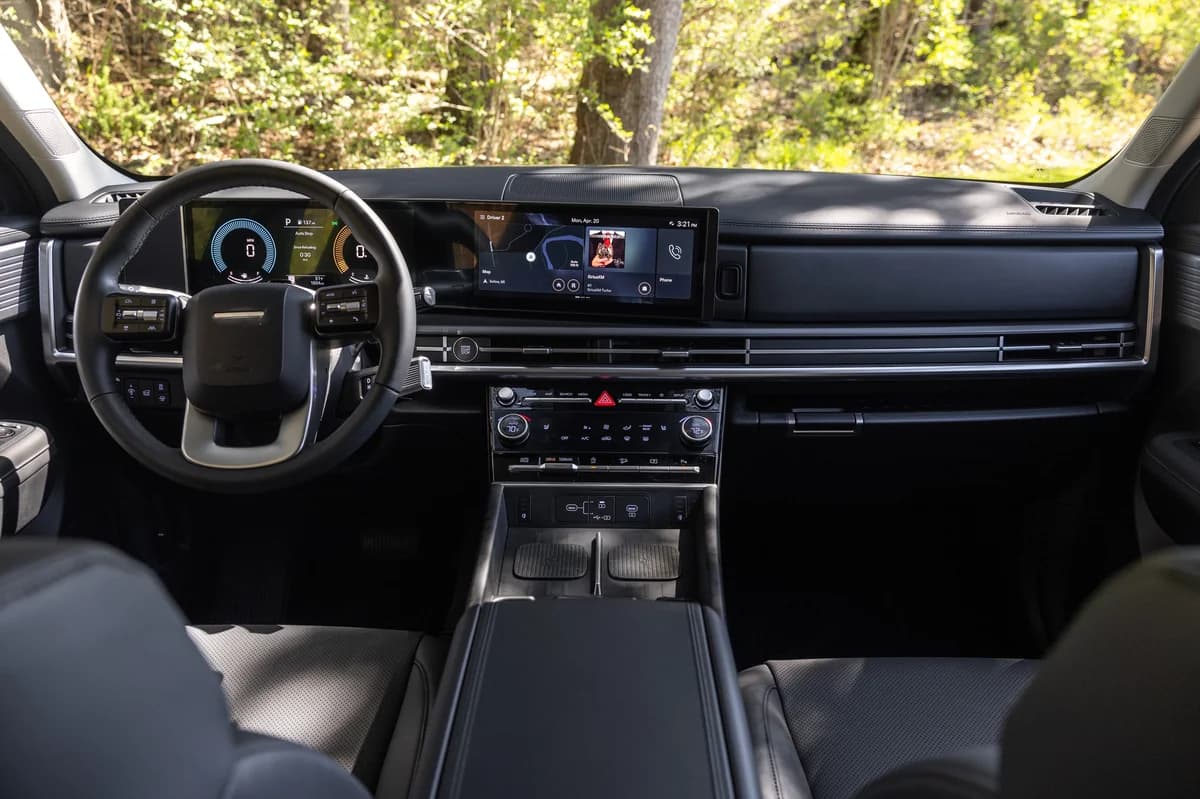
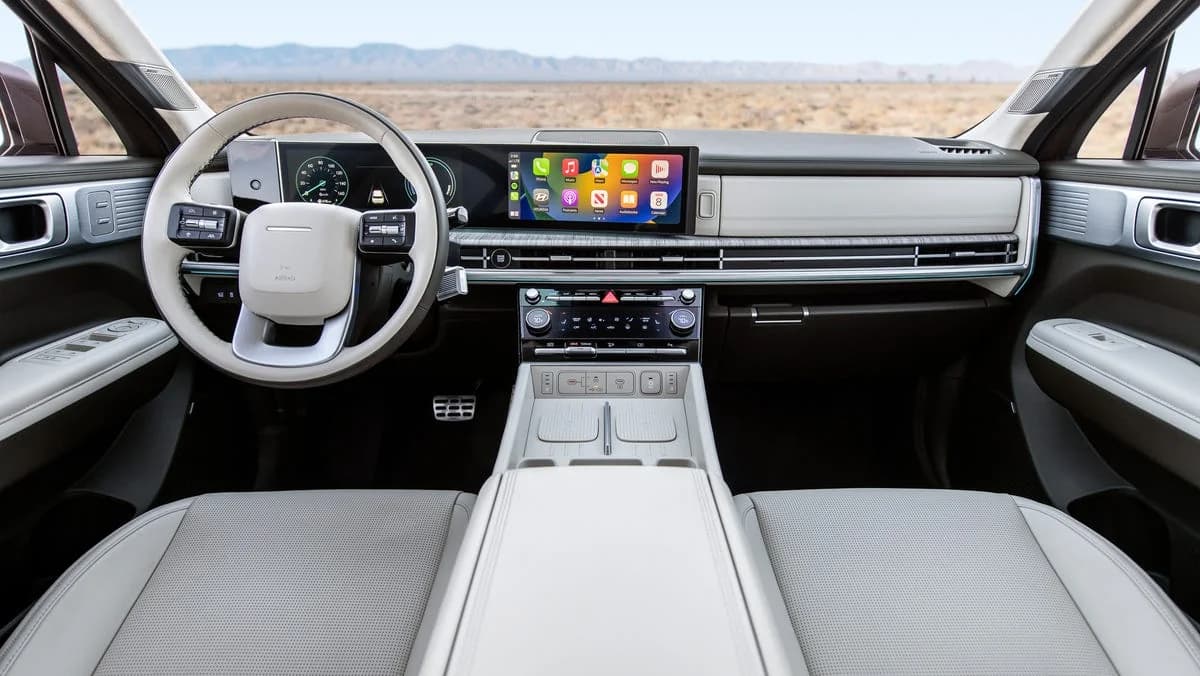
The cabin’s strongest impression is thoughtful usability rather than flawless luxury. The dual 12.3-inch displays provide strong standard technology, and reviewers like the front- and rear-opening console storage, seatback USB ports, charging areas, and accessible second-row conveniences. Materials and seating comfort are generally upscale for the price, particularly in Limited and Calligraphy trims. However, lower-cabin plastics can feel inexpensive, some rear climate controls are awkward, and the quiet cabin is good rather than class-leading.
Interior Space Utility
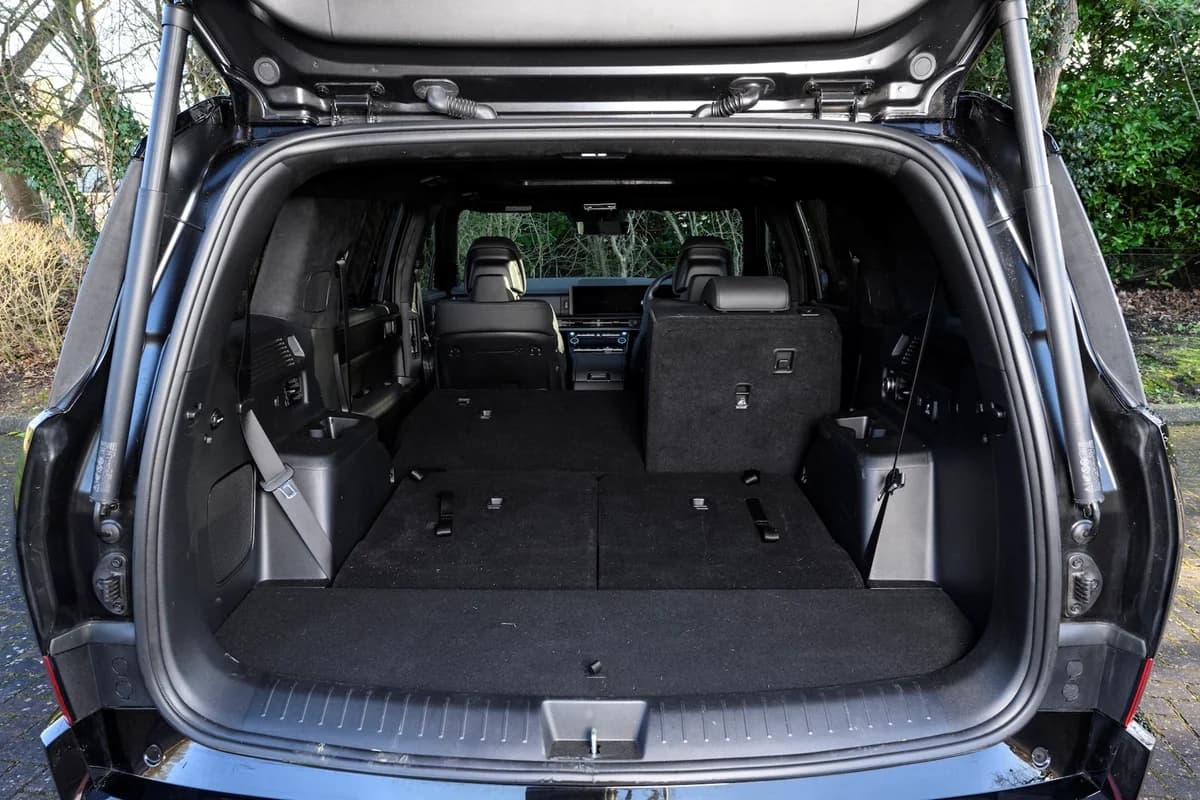
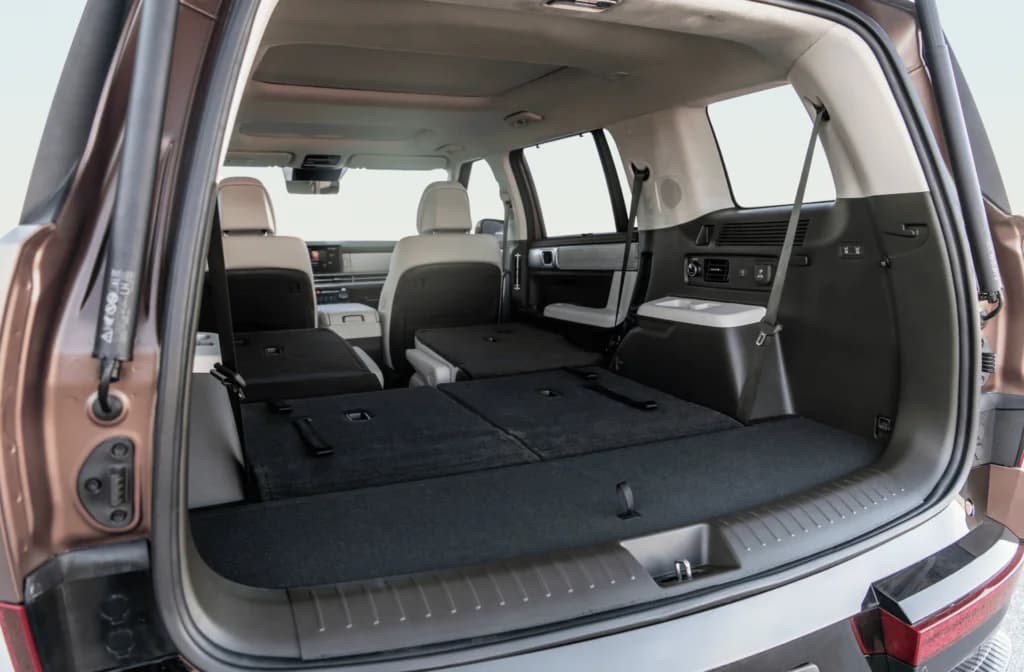
The Santa Fe makes family hauling easier than its dramatic styling suggests. Its boxy body and wide rear opening create useful access for strollers, groceries, and bulky gear, while foldable second- and third-row seats expand cargo capacity from about 1,146 to 2,253 liters. Reviewers praise the flexible floor, generous storage, dual gloveboxes, and pass-through center console. The hands-free smart liftgate is a practical upgrade, although cargo room becomes limited when all seven seats are occupied.
Third Row Practicality
The third row is useful, but its intended audience matters. The standard three-row layout gives the Santa Fe a valuable advantage for carpools and occasional extra passengers, and some reviewers find it genuinely usable for short trips. In practice, children fit better than adults, especially on longer journeys, with awkward access and restricted legroom noted repeatedly. There is also little luggage space behind the raised row, so families carrying seven people may need to use the roof, fold a seat, or pack lightly.
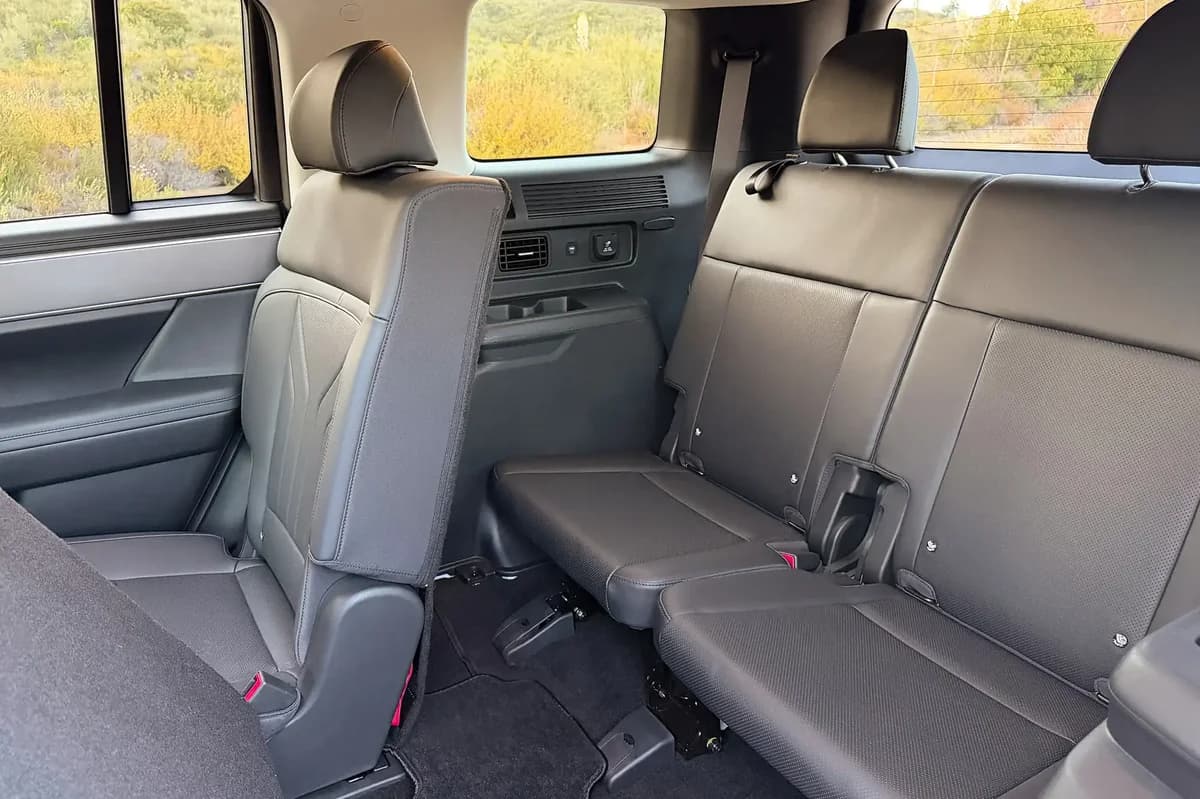
Ride Comfort Refinement
The Santa Fe is generally tuned for relaxed commuting rather than sporty driving. Its composed suspension and comfortable front two rows earn consistent praise, with quiet highway manners and a cabin that feels more upscale than the price suggests. Hybrid versions are especially smooth and quiet, while the gas model benefits from the new automatic’s calmer operation. Still, feedback is not unanimous: some testing reports wind noise, coarse engine sound under load, or even a harsh ride, so refinement varies by trim and road surface.
Conclusion
A clear picture emerges: the 2026 Hyundai Santa Fe is a thoughtfully packaged family SUV whose boxy cargo area makes bulky gear and everyday errands easier. Its comfortable ride, quiet hybrid, and smoother gas-model automatic suit relaxed commuting, though hard acceleration can bring coarse engine noise and the hybrid is merely adequate rather than sporty. Fuel economy is strongest with the FWD hybrid; gas, AWD, and XRT versions demand more frequent stops. The third row adds useful flexibility, but adults will find it tight and luggage space nearly disappears with all seats occupied. Inside, clever storage and strong technology support an upscale impression, even as lower materials and some controls remind you this is not a luxury vehicle. It fits families prioritizing comfort, efficiency, and occasional extra seating—not those needing frequent seven-adult travel or engaging handling. That balanced mix of value and compromises makes it an easy recommendation, but not a segment-defining one.

Feature Scores
This reflects reviews and ratings from established critics, journalists, and users who have evaluated the item. Their opinions provide a comprehensive assessment.
Performance
Engine Power
4/5
Acceleration
3/5
Towing Capacity
4/5
Fuel Efficiency
4/5
Reliability
3/5
Durability
3/5
Value
Purchase Price
4/5
Operating Cost
4/5
Resale Value
3/5
Design
Interior Space
4/5
Cargo Capacity
4/5
Ergonomics
4/5
Exterior Styling
4/5
Health
Cabin Air Quality
TBD
Interior Material Toxicity
TBD
Safety
Crashworthiness
4/5
Active Driver Assistance
4/5
Braking Performance
3/5
Visibility and Lighting
4/5
Sustainability
Tailpipe Emissions
3/5
Fuel Lifecycle Emissions
3/5
Use of Recycled Materials
TBD
End-of-Life Recyclability
TBD
Experience Style
Infotainment Features
4/5
Ride Comfort Tuning
4/5
Customization Options
4/5

Specifications
This section outlines the product's key facts, covering essential features, details, dimensions, materials, and any unique characteristics that define its functionality and usability.
Performance
Value
Design
Safety
Sustainability
Experience Style

Frequently Asked Questions
8 Questions


Find Yours
What is your primary use for a Gas-Powered SUV?
Answer to find your best matches.