

Apple MacBook Air 13-inch (M5, 2025)
Efficient performance and doubled storage impress, though thermal limits and ports hold it back.
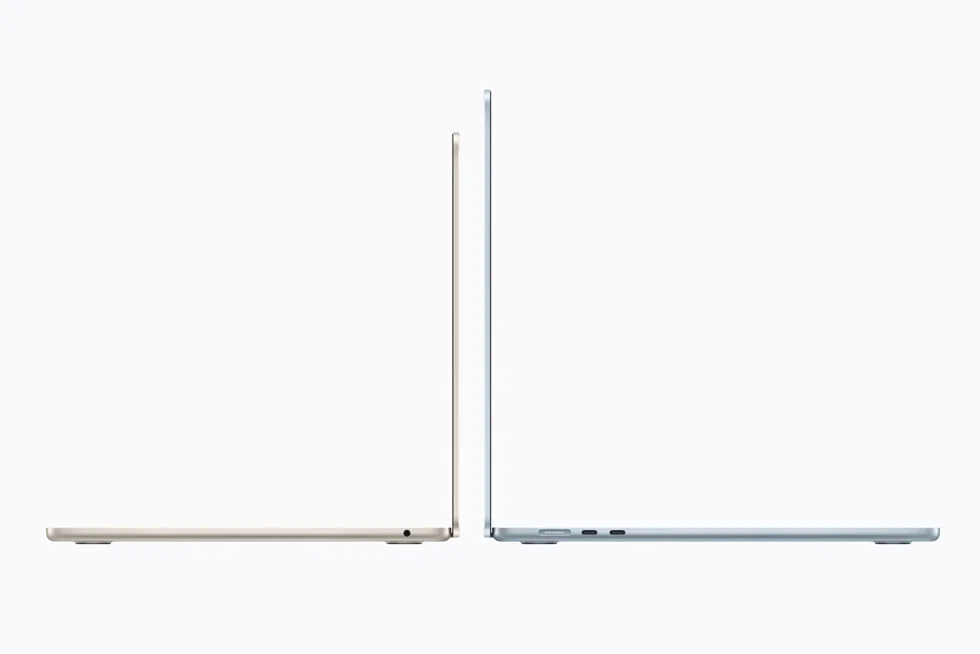
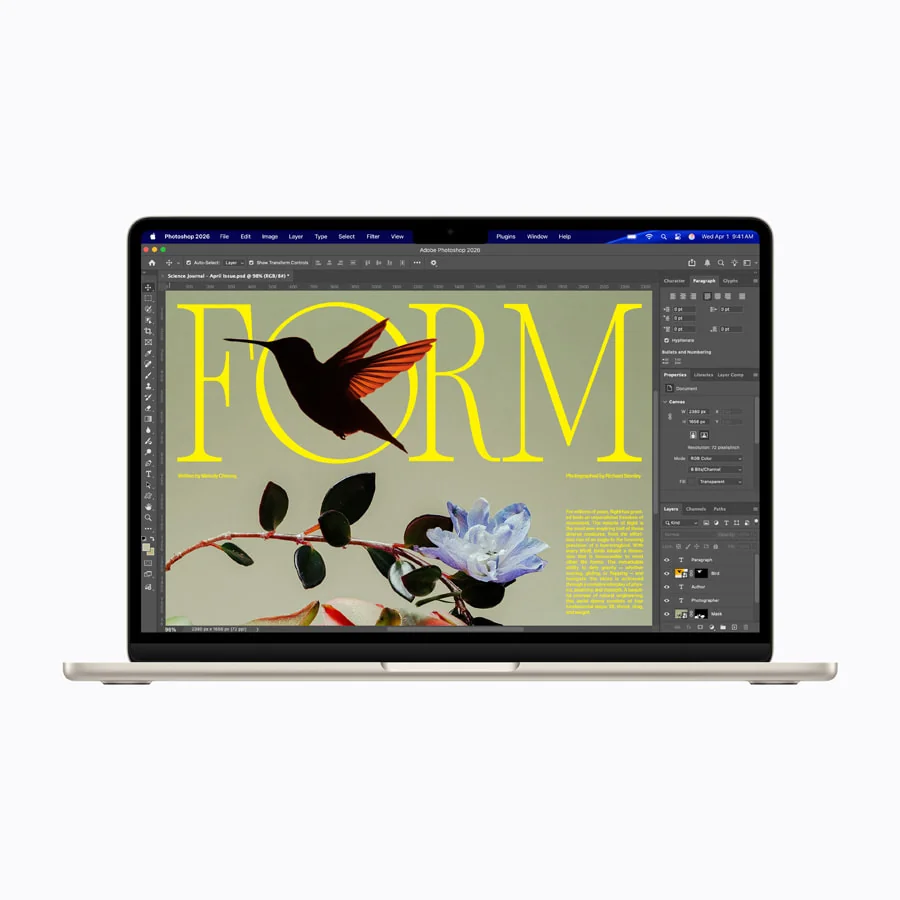
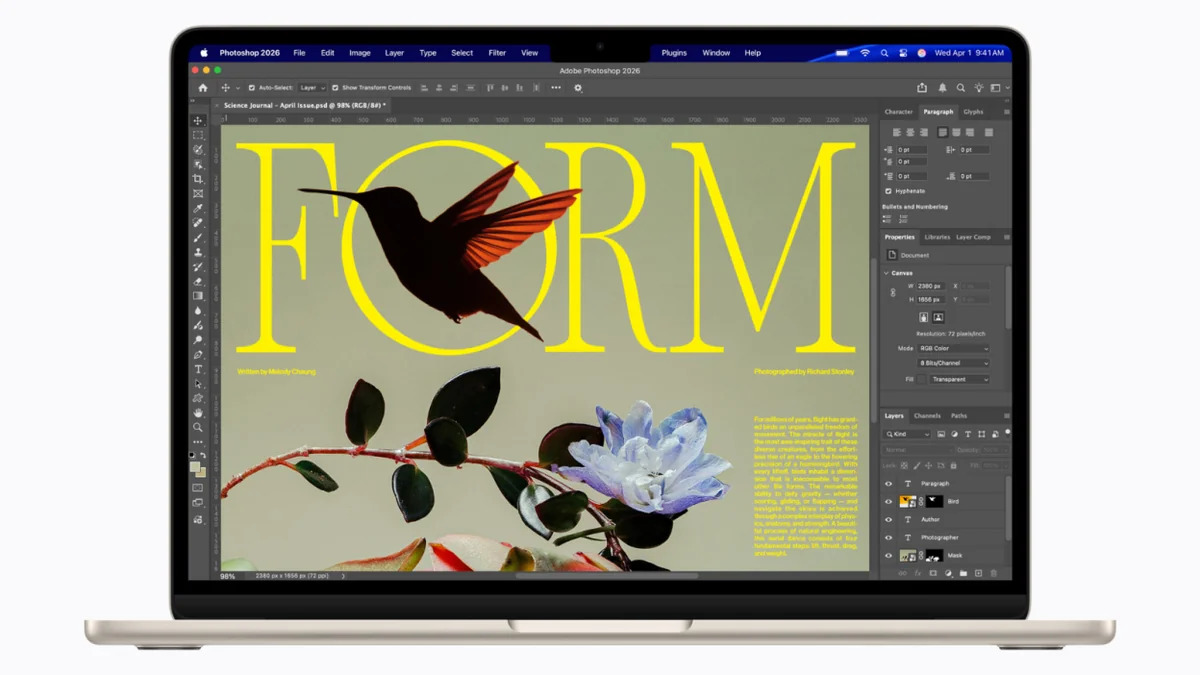
The Apple MacBook Air 13-inch (M5, 2025) is a sleek powerhouse designed for creatives and commuters craving ultraportable efficiency without bulk. It dazzles with a 10-core M5 chip, doubled 512GB SSD storage, and an impressive 18-hour battery life that keeps pace all day. Experts praise its silent fanless design and speedy multitasking thanks to 153 GB/s memory bandwidth, though users note thermal throttling under heavy loads and the sting of just two Thunderbolt ports. The familiar Liquid Retina display charms in color but sticks at a modest refresh rate. This blend of power, portability, and pragmatic trade-offs makes it a compelling pick for those valuing refined performance over flash—and ultimately shapes its well-rounded appeal.


Find Yours
What will be your primary use for the laptop?
Answer to find your best matches.

The Field
Browse top contenders, or compare all options ranked by score and key attributes.
5 Options





The Scoreboard
Does this improve your life? Considers, health, habits, and environmental impact.
Benefits
M5 Neural Engine enables local LLMs, keeping your data private and processing fast.
53.8Wh battery plus M5 efficiency reduces charging interruptions, easing daily cognitive fatigue.
Fanless thermal architecture keeps workspace noise low, improving focus and lowering stress.
512GB base and faster SSD reduce external drives, extending usable lifespan and reducing waste.
Wi‑Fi 7 and N1 chip provide stable remote connections, lowering commutes and workflow friction.
Trade-Offs
Fanless M5 thermal limits cause throttling under prolonged loads, lengthening tasks and stress.
Soldered RAM/SSD and SoIC packaging reduce repair options versus modular designs, increasing e‑waste.
Aluminum unibody and advanced packaging carry higher carbon intensity than recycled-material alternatives.
Sealed lithium‑polymer battery complicates recycling, adding environmental disposal burden over time.
Limited ports force adapters and hubs, producing more plastic waste and daily annoyance.

 Alternatives


Join the Circle
Where real meets deal
Know what's worth buying-and when.
Tips, special offers, and rewards for buying and sharing.

Publications
9 LEADING PUBLICATION REVIEWS

Lance Ulanoff from TechRadar highlights the Apple MacBook Air 13-inch (M5, 2025) as the best ultraportable laptop currently available, praising its blend of sleek design, near-pro-level performance, and impressive battery life. He emphasizes the M5 chip’s enhanced speed and efficiency over its predecessor, alongside doubled base storage and faster SSD speeds, which justify the modest price increase. The review applauds the laptop’s premium build, excellent keyboard and trackpad, and vibrant 13.6-inch Liquid Retina display, while noting the lack of new colors and absence of a touchscreen as minor drawbacks. Ulanoff also explores macOS 26 and Apple Intelligence features, finding some AI tools useful but others less compelling. Real-world testing under heavy multitasking and gaming scenarios confirms the MacBook Air M5’s robust performance and all-day battery endurance. Overall, the review conveys enthusiastic approval, recommending the M5 Air as a worthy upgrade for M1 users and a top choice for ultraportable computing.
By Lance Ulanoff
Matthew Buzzi from PCMag highlights the 2026 Apple MacBook Air 13-inch (M5) as a well-built, ultraportable laptop that delivers a significant performance boost thanks to the new M5 chip and doubled base storage. While the design and display remain unchanged from the previous generation, the Air continues to impress with its speed, battery life, and premium build quality, earning a repeat Editors’ Choice award. Buzzi notes the lack of an OLED screen as a missed opportunity but understands the pricing pressures behind this decision. The review emphasizes the M5’s strong performance in both CPU and graphics tasks, positioning the Air ahead of many similarly priced Windows alternatives. Although the price increased by $100, the added storage and faster internals justify the cost for most buyers. The review advises that current M4 or M3 owners may not need to upgrade immediately, but those with older Macs will find this model a compelling and efficient choice.
By Matthew Buzzi
Andreas Osthoff from Notebookcheck highlights the Apple MacBook Air 13-inch (M5, 2025) as a remarkably efficient and high-performance laptop, especially praising its blazing-fast M5 SoC, silent fanless design, and excellent price-to-performance ratio at $1,099. The review emphasizes the impressive single-core and multi-core CPU performance, efficient gaming capabilities without throttling, and upgraded features like Wi-Fi 7 and doubled base storage with fast PCIe 4.0 SSDs. While the laptop retains the previous model’s chassis and 60 Hz IPS display—criticized for its limited refresh rate and blue tint out of the box—the reviewer appreciates the anti-reflective screen and good color accuracy after calibration. Connectivity remains limited, and soldered RAM/SSD restrict upgrades, but these trade-offs are balanced against the Air’s portability, battery life, and quiet operation. Overall, the review conveys strong enthusiasm tempered by measured critiques, positioning the MacBook Air M5 as an excellent choice for most users seeking a powerful, efficient, and silent everyday laptop.
By Andreas Osthoff
Matt Elliott assesses the Apple MacBook Air 13-inch (M5, 2025) as a solid but somewhat conflicted offering in Apple’s laptop lineup. While the M5 chip delivers meaningful performance gains over previous models—especially in AI and graphics workloads—the 13-inch Air has lost its position as the entry-level MacBook due to the introduction of the more affordable MacBook Neo. Elliott highlights that the 13-inch Air’s $1,099 starting price, now $100 higher than before, places it awkwardly between the budget-friendly Neo and the larger, more versatile 15-inch Air, which he ultimately recommends for most users seeking a balance of screen size, portability, and price. The review praises the upgraded base storage and faster SSDs, as well as improved networking, but notes the design and battery life remain largely unchanged. Overall, the 13-inch M5 Air is a strong performer but feels less compelling unless size constraints or specific performance needs justify its premium over the Neo or the larger Air.
Tony Polanco from Tom’s Guide praises the Apple MacBook Air 13-inch (M5, 2025) as a nearly perfect laptop that delivers strong performance, excellent battery life, and a vivid display within a lightweight, durable design. The review highlights the significant upgrade of the M5 chip, which boosts everyday and creative workloads, alongside faster Wi-Fi 7 and doubled base storage, making it a compelling choice especially for users upgrading from older models. Polanco’s detailed lab tests confirm impressive CPU benchmarks, SSD speeds, and solid gaming capabilities for an ultraportable. However, he notes the $100 price increase and relatively modest improvements over the M4 model, suggesting that current M4 owners may find the upgrade less essential. Despite these caveats, the review conveys genuine enthusiasm for the MacBook Air M5’s balance of power, portability, and premium features, recommending it as a top-tier option for most users seeking a high-quality, sub-$1,500 laptop.
By Tony Polanco
Nathan Ingraham from Engadget highlights the Apple MacBook Air 13-inch (M5, 2025) as a mature, well-engineered ultraportable that remains one of the best laptops for most users. While the design and display remain unchanged from the 2022 model, the M5 chip delivers notable performance gains, especially in GPU-intensive tasks like gaming and video editing. Battery life meets Apple’s claims, and the keyboard, trackpad, speakers, and webcam continue to impress. Minor criticisms include the lack of a higher refresh rate screen and limited port options, but these do not detract significantly from the overall experience. Ingraham emphasizes that although the Air isn’t groundbreaking this year, its combination of speed, build quality, and versatility make it a compelling choice, especially compared to the more budget-oriented MacBook Neo. The review conveys a balanced but clearly positive tone, appreciating the Air’s refinement and longevity rather than excitement over radical changes.
By Nathan Ingraham
Jason Cross from Macworld highlights the Apple MacBook Air 13-inch (M5, 2025) as a reliable and steady performer that continues Apple’s tradition of incremental improvements rather than groundbreaking changes. The review emphasizes the impressive year-over-year CPU and Neural Engine performance gains brought by the M5 chip, alongside notable SSD speed enhancements and excellent battery life that comfortably supports all-day use. However, Cross points out that the MacBook Air’s design and features remain largely unchanged, with only minor updates like the new wireless chip and keyboard glyphs. He also notes the Air’s limitations for demanding tasks such as sustained heavy workloads or AAA gaming due to its fanless design. While the display and speakers could be better for the price, the MacBook Air remains a durable, quiet, and versatile mid-range laptop that suits most users well. Overall, the review conveys a tone of measured appreciation—acknowledging solid strengths without much excitement over innovation.
By Jason Cross
Kyle Barr from Gizmodo highlights the Apple MacBook Air 13-inch (M5, 2025) as a well-balanced, mid-tier laptop that excels in portability and solid performance for demanding creative tasks. Praising its excellent screen, sound quality, and all-day battery life, Barr notes the M5 chip delivers impressive speed for 3D modeling, video editing, and moderate gaming, while maintaining consistent thermal management despite its fanless design. However, he points out notable drawbacks such as limited ports, a distracting screen notch, and a somewhat uninspired color selection. The review emphasizes the MacBook Air’s position between the entry-level MacBook Neo and the more powerful M5 MacBook Pro, with the latter offering better sustained performance, more ports, and a superior display at a higher price. Barr’s nuanced assessment underscores the Air’s appeal for users prioritizing portability and solid performance, while acknowledging that those needing top-tier power or connectivity might prefer the Pro.
By Kyle Barr
Henry T. Casey from CNN Underscored praises the Apple MacBook Air 13-inch (M5, 2025) as a reliably excellent laptop that builds on a proven formula with modest but meaningful improvements. He highlights the device’s sharp, color-accurate display, solid audio quality, and comfortable keyboard, emphasizing its appeal as a well-rounded mid-range laptop. Performance gains over previous models are noticeable, especially for more demanding tasks like video editing and gaming, while battery life impresses with a 14% increase over the M4 version. However, Casey notes the $100 price increase without significant design or feature changes, making the upgrade less compelling for current M4 owners. He also points out the MacBook Neo as a more affordable alternative, though less customizable and smaller in size. Overall, the MacBook Air M5 is described as the “Goldilocks pick” — striking a balanced blend of power, portability, and price, ideal for most users seeking a dependable, stylish laptop without radical innovation.
By Henry T. Casey

YouTube
14 LEADING EXPERT & INFLUENCER REVIEWS
 Brandon Butch
Brandon Butch praises the M5 MacBook Air’s impressive performance gains, especially its doubled SSD speed, enhanced AI capabilities, and improved connectivity with Wi-Fi 7 and Bluetooth 6. He highlights the 13-inch’s portability versus the 15-inch’s larger display and better speakers, offering nuanced advice based on use case and travel needs.
The Tech ChapThe Tech Chap praises the MacBook Air 13-inch (M5) for its significant storage upgrade, faster SSD, and powerful M5 chip with enhanced AI and graphics performance, making it a solid all-rounder. However, he notes thermal throttling due to the fanless design and a dated 60Hz IPS display, suggesting the Air suits most users but pros may prefer the pricier MacBook Pro.
zollotechAaron from Zollotech praises the MacBook Air 13-inch (M5, 2026) for its significant performance gains, faster SSD speeds, and improved AI capabilities, highlighting the 10-core CPU/GPU and 16-core Neural Engine. He notes minor design tweaks and forced updates but appreciates the lightweight build, excellent battery life, and strong real-world benchmarks, offering a balanced yet positive first-hand perspective.
Brian TongBrian Tong praises the M5 MacBook Air as a solid, incremental upgrade with a faster 10-core CPU, enhanced GPU, doubled base storage (512GB), and modernized connectivity like Wi-Fi 7. He highlights its strong video editing performance and suitability for students and creatives, while noting it’s not a must-upgrade for recent M-series users.
iPhonedoFaruk from iPhonedo praises the M5 MacBook Air’s impressive performance and portability, highlighting its near-parity with the pricier M5 MacBook Pro in CPU, GPU, and AI tasks despite lacking a fan. He notes excellent SSD speeds, strong creative app handling, and surprising gaming capability, while acknowledging thermal throttling under heavy loads mitigated by cooling.
GregsGadgetsGregsGadgets praises the M5 MacBook Air for its significant upgrades, including the faster M5 chip, doubled 512GB base storage, and Wi-Fi 7 connectivity, calling it a great value for most users. He notes the Air’s lightweight design and recommends the base model, while acknowledging the MacBook Pro’s advantages in display, ports, and sustained performance for pro workloads.
Andrew TsaiAndrew Tsai praises the M5 MacBook Air 13-inch for its silent, fanless design and solid gaming performance across 12 tested titles, including native Mac games and Windows titles via emulation. He notes some thermal throttling under long loads but finds overall smooth, playable frame rates, highlighting impressive compatibility and optimization despite the base model’s reduced GPU cores.
Andru EdwardsAndru Edwards praises the M5 MacBook Air’s substantial upgrades, especially the doubled 512GB base storage, faster SSD, and striking sky blue color with matching braided MagSafe cable. He expresses genuine enthusiasm for the lightweight design and improved performance, while noting the modest price increase and debating the appeal of the 13- versus 15-inch models.
HardReset.InfoHardReset.Info praises the MacBook Air 13-inch (M5) for its premium aluminum build, long battery life, and strong performance with the M5 chip. However, they criticize the persistent notch, lack of included charger, and restrictive upgrade options forcing higher-tier GPU for more storage or RAM. Overall, a solid but pricey ultraportable.
Mute PCMute PC provides a measured yet positive comparison of the Apple MacBook Air 13-inch (M5) against the M5 MacBook Pro, praising the Air’s superior wireless connectivity, lighter design, and strong value. However, they note the Air’s 60 Hz display and passive cooling as key drawbacks versus the Pro’s brighter, 120 Hz screen and active cooling, making the Air ideal for most users but the Pro better for sustained performance needs.
Matt Talks TechMatt Talks Tech praises the MacBook Air 13-inch (M5) for its doubled base storage, 28% faster memory bandwidth, Wi-Fi 7, and notably improved AI performance, calling these meaningful upgrades. While excited about the M5 chip’s efficiency gains, he advises budget-conscious buyers to consider the M4 model, highlighting the price increase and minor GPU core reduction in the base M5.
Jam AnchetaJohn of Jamalign.ph praises the MacBook Air 13-inch (M5) for its lightweight design, efficient M5 chip, and strong AI and gaming performance, especially with titles like Cyberpunk 2077. He notes the excellent keyboard and large trackpad but mentions the limited two Thunderbolt 4 ports and 60Hz display as minor drawbacks.
Michael CaputoMichael Caputo praises the M5 MacBook Air as a compelling upgrade with a powerful 10-core CPU, enhanced GPU, and significant AI performance gains. He highlights doubled, faster storage and modern connectivity but notes the $100 price increase and fanless design may limit sustained heavy workloads. Overall, he sees it as excellent value for students and creative professionals.
GenixGenix praises the MacBook Air 13-inch (M5) for its impressive M5 chip performance, silent fanless design, and doubled base storage of 512GB SSD, making it a strong value alternative to the pricier MacBook Pro. While the display brightness and 60Hz refresh rate are modest, it suits most users, especially students and creatives.

Social
2 INFLUENCER REVIEWS
 The Verge
The Verge highlights the 2026 MacBook Air’s modest updates, focusing on the new M5 chip and doubled base storage of 512GB, which now starts at a higher price point of $1,099. While the faster Wi-Fi 7 support is a nice addition, the overall design and experience seem very similar to last year’s model, with few standout changes. Overall, The Verge offers a measured view, acknowledging the improved storage and connectivity but expressing cautious anticipation for a full hands-on review. They suggest the MacBook Air remains a solid choice but imply it may not feel significantly different from its predecessor, recommending potential buyers weigh the price increase against these incremental upgrades.
Главный ТехноблогГлавный Техноблог highlights the MacBook Air M5 as an optimal choice, praising its powerful 16GB/512GB base model, improved graphics performance (+25% over M4), Wi-Fi 7, Bluetooth 6, and stable 60 FPS gaming at 2048x1280 resolution. They note the impressive 18-hour battery life and seamless accessory connectivity but point out the lack of fans and minimal upgrades from previous Air models. Overall, Главный Техноблог recommends the MacBook Air M5 especially for new buyers seeking strong performance and efficiency at a reasonable price, while suggesting existing Air users may find upgrading less compelling due to unchanged display and speakers. The review balances enthusiasm for its power and value with practical caveats, offering a confident yet measured endorsement.

Forum Reviews
CUSTOMER REVIEWS FROM 1 FORUM
Reddit users generally view the Apple MacBook Air 13-inch (M5, 2025) as a solid, efficient upgrade with notable improvements in storage and WiFi capabilities, though performance gains over previous models like the M4 are modest due to thermal throttling inherent in its passive cooling design. The design remains largely unchanged, with some users expressing a desire for features like a 120Hz screen and better port placement. While new shoppers appreciate the value and efficiency improvements, those considering upgrades from recent models often question the necessity given the incremental performance boost and similar RAM options. Overall, the consensus balances appreciation for its portability and efficiency with critiques on thermal limits and display features.
Many comments

In-Depth Review

Highlights
- •Generous base storage and faster SSDPromoted as having 512GB base and 2× SSD speed
- •M5 SoC with stronger CPU, GPU, and AIDesigned to boost CPU, GPU, and Neural Engine performance
- •Long battery life and efficiencyManufacturer testing claims up to 18 hours runtime
- •Silent, fanless portabilityPromoted as having a quiet, lightweight aluminum design
- •Next‑generation wireless connectivityCompany highlights its Wi‑Fi 7 and Bluetooth 6 support
- •Higher memory bandwidth for smoother multitaskingAdvertised to offer 153 GB/s unified memory bandwidth

Considerations
- •Thermal throttling and surface heatRuns hot and throttles under sustained loads
- •Low refresh rate display and notch60 Hz IPS screen and visible display notch
- •Limited port selectionOnly two Thunderbolt 4 ports and a jack
- •Non‑upgradeable internalsSoldered RAM and SSD limit future upgrades
- •Higher starting priceEntry price above $1,000 may affect buyers
- •Restrictive configuration trade‑offsCertain upgrades require costlier GPU or tiers
Apple’s latest ultraportable ups the ante with its M5 chip packing a 10-core CPU and a 16-core Neural Engine, turbocharging AI tasks and creative workflows alike. Designed for students, creatives, and mobile pros craving power without bulk, this refresh doubles base storage to a generous 512GB SSD with twice the speed, easing file-heavy workloads. Multitasking gets smoother thanks to an upgraded memory bandwidth of 153 GB/s unified RAM, while battery life stretches impressively up to 18 hours—perfect for long days away from outlets. The familiar yet refined chassis balances lightweight portability with solid build quality but keeps only two Thunderbolt 4 ports, which may leave some wanting more connectivity options. Display-wise, it sticks to a crisp Liquid Retina panel that dazzles in color if not refresh rate. Whether you’re chasing raw speed or seamless efficiency, these highlights set the stage—read on to see how this MacBook Air holds up when pushed beyond everyday basics.
Memory and Multitasking (Unified Memory and Bandwidth)
With standard unified memory set at 16GB—and options stretching to 32GB—the M5's upgraded 153 GB/s bandwidth smooths multitasking like butter sliding on warm toast. Faster RAM means quicker app switching without hiccups or lag spikes; creatives running multiple demanding apps will appreciate this seamless dance of data throughput. However, soldered RAM limits future upgrades—a trade-off buyers should weigh against the benefit of integrated performance enhancements baked into Apple’s SoC magic.
SoC Performance (CPU, GPU, Neural Engine)
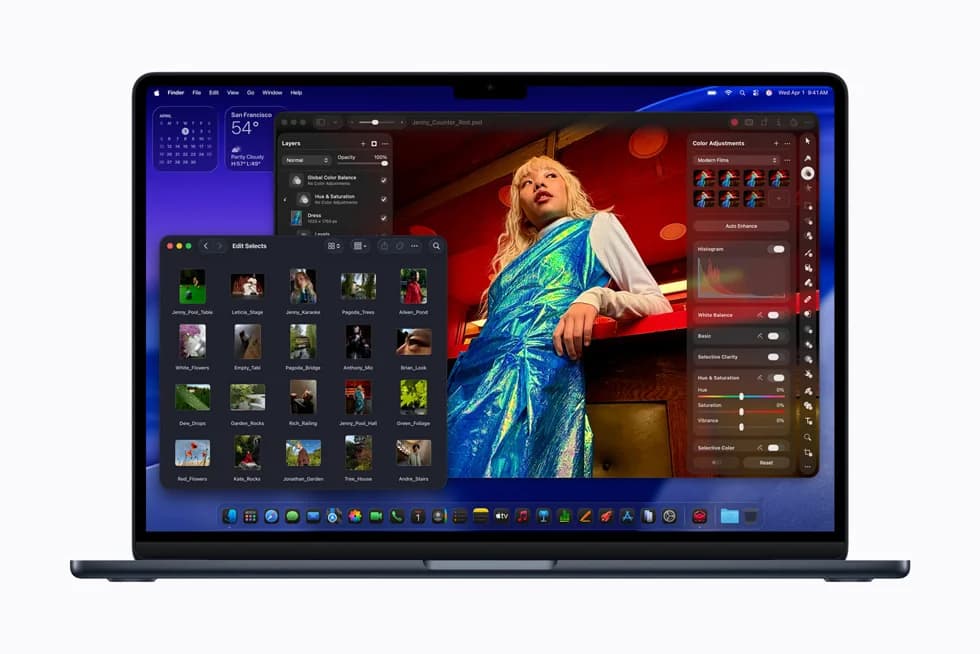
The M5 chip is the brainy upgrade you didn’t know you needed—boasting a 10-core CPU with power-packed super and efficiency cores alongside a 16-core Neural Engine that turbocharges AI tasks. Its third-gen hardware-accelerated ray tracing makes gaming and 3D rendering smoother than ever. While experts applaud its silent fanless design paired with robust performance, users note some thermal throttling during heavy loads. Still, this powerhouse strikes an impressive balance between speed and stealth for everyday creative workflows.
Battery Life and Power Efficiency
Boasting up to 18 hours of video streaming, this lightweight wonder proves endurance can be elegant. The efficient M5 chip coupled with refined performance-per-watt delivers all-day productivity sans charger anxiety—a blessing for commuters craving quiet reliability thanks to passive cooling's whisper-quiet humlessness. Yet beware: sustained heavy workloads may trigger thermal throttling due to no fans onboard—still, most users find their daily grind well covered by this long-lasting dynamo wrapped in aluminum finesse.
Storage Performance and Capacity
Apple doubled down on storage by starting at a spacious 512GB SSD, configurable up to 4TB—a sweet spot for creatives juggling hefty files without external drives slowing them down. The drive boasts read/write speeds twice as fast as its predecessor, which reviewers found accelerates workflows dramatically. This leap in storage not only frees your desk from clutter but also ensures snappy app launches and file transfers, solidifying the MacBook Air’s reputation as an ultraportable that packs serious punch under the hood.
Conclusion
Peeling back the layers reveals a chip that punches well above its weight, with SoC performance flexing through CPU, GPU, and Neural Engine upgrades that make AI and creative tasks feel brisk. The storage leap to 512GB SSD, paired with double-speed read/write magic, untangles bottlenecks for file jugglers. Meanwhile, an ample 153 GB/s memory bandwidth keeps multitasking smooth as silk—though soldered RAM tempers future-proof dreams. Battery life dances close to two dozen hours in lighter use cases but leans on efficiency over brute force during sustained work bursts. The familiar Liquid Retina display dazzles in color yet sticks stubbornly at 60Hz, leaving refresh-rate enthusiasts wanting more. As for design: featherweight aluminum and whisper-quiet fanless operation charm commuters, though the scanty two Thunderbolt ports invite connectivity compromises. This MacBook Air is a polished performer for students and creatives who prize portability without chasing radical innovation—proof that refinement can still command respect without reinventing the wheel.

Feature Scores
This reflects reviews and ratings from established critics, journalists, and users who have evaluated the item. Their opinions provide a comprehensive assessment.
Performance
CPU Performance
4/5
GPU Performance
4/5
Battery Life
5/5
Thermal Management
3/5
Storage Speed
5/5
Build Quality
5/5
Value
Price to Performance Ratio
4/5
Warranty and Support
4/5
Resale Value
4/5
Design
Portability
5/5
Display Quality
4/5
Keyboard and Input Ergonomics
5/5
Aesthetics
4/5
Health
Blue Light Emission and Eye Strain
4/5
Material Toxicity
4/5
Ergonomic Support
4/5
Safety
Battery Safety
4/5
Electrical and Regulatory Compliance
5/5
Data Security Features
4/5
Sustainability
Energy Efficiency
4/5
Recyclability and End of Life
4/5
Repairability and Upgradability
2/5
Sustainable Materials Use
4/5
Experience Style
User Interface Simplicity
5/5
Customization and Configurability
3/5
Preinstalled Software
4/5
Connectivity and Ports
4/5

Specifications
This section outlines the product's key facts, covering essential features, details, dimensions, materials, and any unique characteristics that define its functionality and usability.
Performance
Value
Design
Safety
Sustainability
Experience Style

Frequently Asked Questions
9 Questions



Find Yours
What will be your primary use for the laptop?
Answer to find your best matches.